September 2025
It would be a massive understatement to say a lot has happened here since my previous visit. I’m in Croatia, and last time I was here it was 1990 and it was still part of Yugoslavia. As young, carefree backpackers, we were mostly ignorant of Yugoslavian politics and had no idea that the brutal wars that would tear this country apart were just a few months away. Yet even then it was obvious to us that all was not right – that there was a backdrop of local tensions to our partying and sightseeing. Both Serbs and Croats who I had met on trains or in hostels around Yugoslavia spoke very openly and gave their own personal takes on the situation.
Now, 35 years later, the Homeland War is long over, and Croatia is a proud and prosperous independent nation, attracting more than 25 million tourists in a year – something that is immediately obvious in any of the beautiful cities on the Dalmatian coast.
ZADAR
I started off in Zadar. The large, partly-walled old town is fully pedestrianised and an absolute pleasure to walk around, especially early in the morning before the streets fill with other tourists. On the afternoon I arrived I immediately felt relaxed in a way I usually don’t until a few days into a vacation.

As evening approached, I headed along the waterfront promenade – along with seemingly the entire population of Zadar – to the northern tip of the old town. Here you can watch sunsets that Alfred Hitchcock described as the best in the world, accompanied by the haunting, melancholy notes of the Sea Organ. This is an art installation by Croatian architect Nikola Bašić, consisting of a series of pipes embedded into the sea wall that play notes when the motion of the water forces air through them. The effect is relaxing and hypnotic, with the sound rising to a dramatic crescendo whenever a boat passes close inshore and the wake hits the harbour wall.
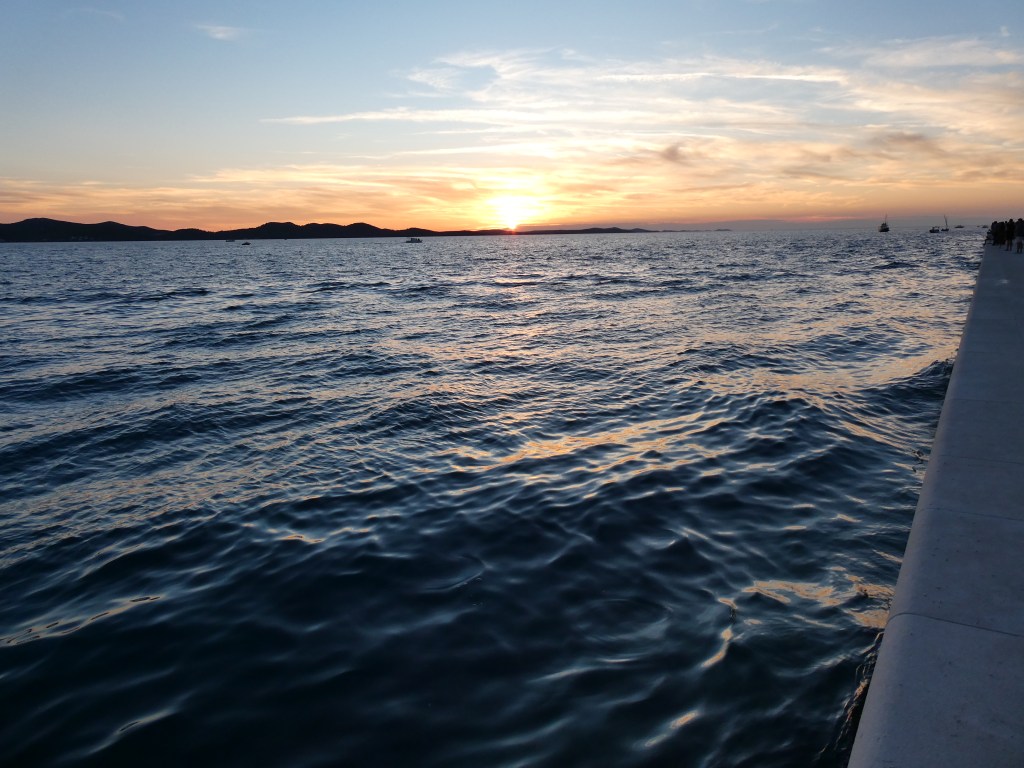
I returned the following evening and the Sea Organ was still playing the same tune. You would think it would mix it up a bit and play some different genres. Presumably it doesn’t do requests.
Nearby is another installation called Greeting to the Sun, by the same artist. This time a large disc of solar cells inlayed into the promenade that charge up during the day and unleash that stored energy through the night in a pulsating light show. The cells also capture enough of the sun’s energy to power the street lighting along the promenade.
As in most Mediterranean countries, an evening promenade along the waterfront or town square is a daily social ritual for the locals here, and I can’t help noticing what a good-looking population Croatia seems to be blessed with. They were also possibly the best dressed people I’ve seen anywhere in the world!
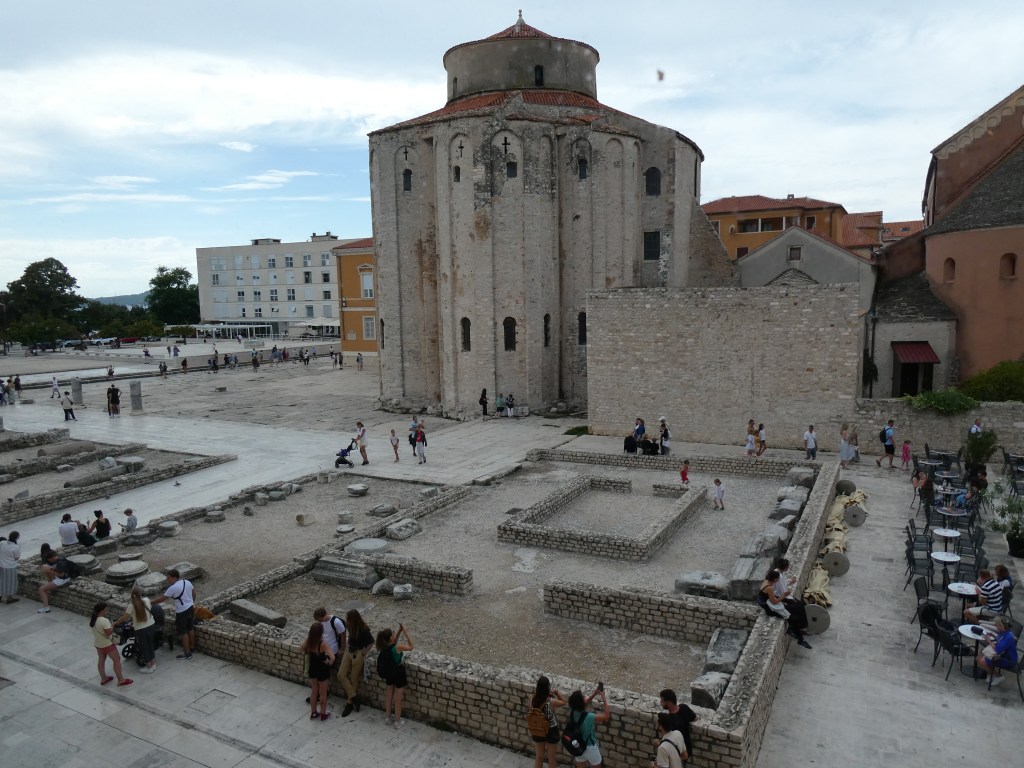
I spent three nights in Zadar and, with accommodation prices in the city being high even compared to other places along the coast, I stayed in a hostel right in the centre of the old town. My room had four bunks with blinds that could be pulled down to form cute little private sleeping pods. The price was similar to hotel prices elsewhere in Croatia, but the hostel itself was excellent, very well run, and the central location was unbeatable – the remains of the Roman forum on which Zadar old town is centred were right outside the window. There were many bars and restaurants in the vicinity, but the city noise wasn’t too bad. One night a huge storm (that had been visible as distant lightning earlier in the evening) rolled through town, and a sudden thunder-clap directly overhead made people in the square outside scream loudly in shock at its power and volume.
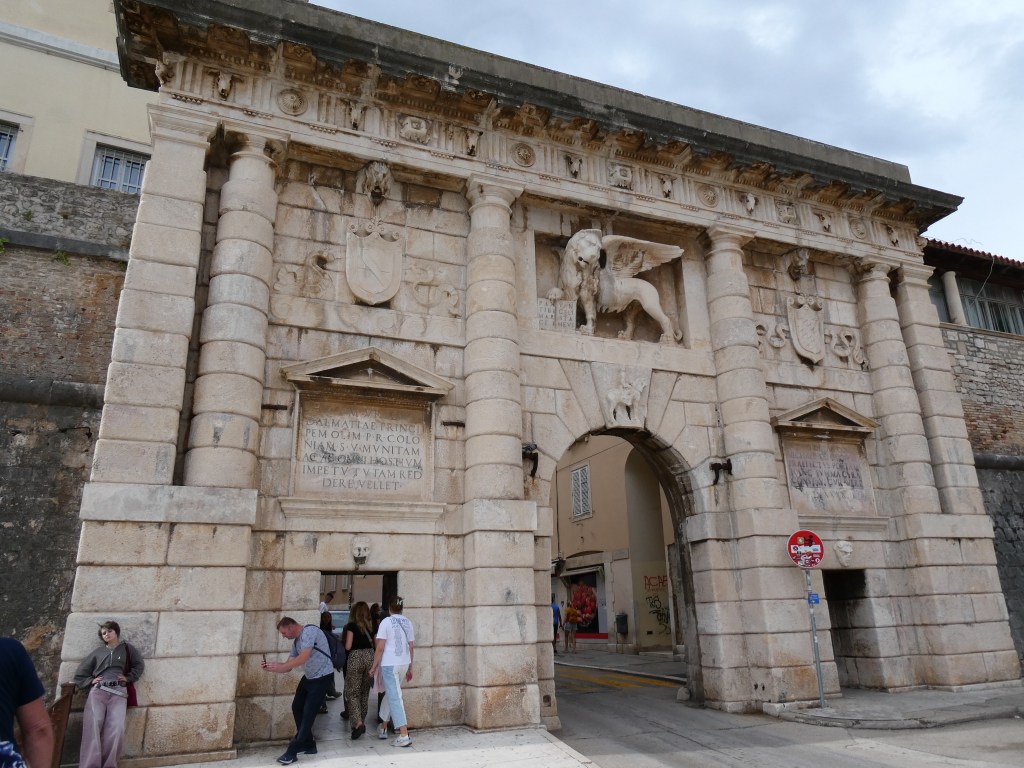
The forum is just one of the many Roman remains in Zadar and they stand alongside other sites, such as the Venetian Land Gate, that tell of the many empires that have come and gone and left their mark on this coast. Wandering the grid of the old town reveals history around every corner and I spent the days visiting churches, parks, city walls, and museums, as well as eating burek (which I hadn’t eaten since 1990), delicious fish dishes, and ćevapi, and stopping for the occasional outdoor coffee or beer, depending on the time of day. It was a great city for aimless wandering.

The Archaeological Museum in the forum was a major highlight. Over three beautifully-presented floors it showcased the pre-Roman Liburnian civilisation on the top floor, the middle floor had an excellent Roman collection, and the ground floor dealt with the arrival of the Croats in the Middle Ages.

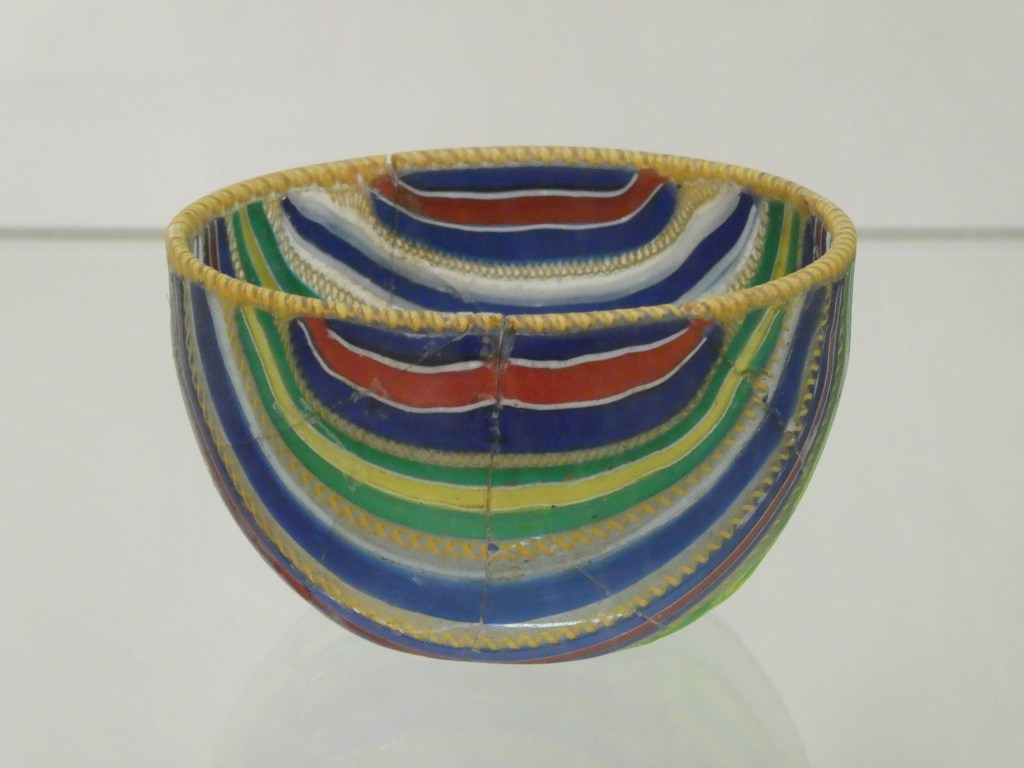
The museums opened until 9pm, so pushing museum fatigue aside, I moved straight on to the Ancient Glass Museum. So much Roman era glass has been found around here that it needs a museum all to itself. I wasn’t expecting much but I was completely enthralled by the tastefully displayed exhibits of beautiful glassware – domestic items, jewellery, and funerary urns from a nearby Roman necropolis. Much of it was so delicate that it’s hard to believe it survived, often completely intact, for nearly two millennia.
I visited the rugged, circular Church of St Donatus late at night, when the interior had been darkened and projections were cast on the internal walls. Mesmerising music was piped in to complete an atmospheric experience and provide a fitting finale to my time in Zadar.

PLITVICE LAKES
For an easy day trip, I visited Plitvice Lakes – one of Croatia’s oldest and largest national parks and a UNESCO World Heritage Site. I first saw jaw-dropping photos of this place decades ago and have wanted to visit ever since.
The park consists of a series of forested lakes at different elevations connected by waterfalls. A network of paths and boardwalks guides the visitor through this stunning landscape of crystal-clear water in varying shades of blue and green, where shoals of fish and the occasional aquatic Dice Snake swim by. The surrounding forest is home to Brown Bears, but they are shy and stay well away from the areas accessible to visitors… and there are a lot of visitors!
It was a gorgeous day out but, being late Summer, the waterfalls were not at their maximum capacity. It would be nice to return some time in Spring, when the birds are singing and the snowmelt from the mountains increases the volume of flowing water, or even in Winter, when the crowds have dispersed and the waterfalls are frozen solid.
ŠIBENIK
Another day, another World Heritage Site – this time the Cathedral of St James in Šibenik, a little way south of Zadar along the Dalmatian coast. I stopped off here for a few hours on the way to Split and wandered the labyrinthine streets of the old town. I walked up through a maze of narrow alleys to the castle overlooking the town, then back down to the attractive waterfront, before continuing my journey to Split.

SPLIT
Split was the only place I visited on this trip that I had previously visited in 1990. Back then I only stayed for one night and I can remember very little about the city except the main tourist area near the cathedral. It is much larger and more crowded than I remember. These days there is much written about over-tourism, and it is definitely in full effect here – something to which I am obviously contributing.
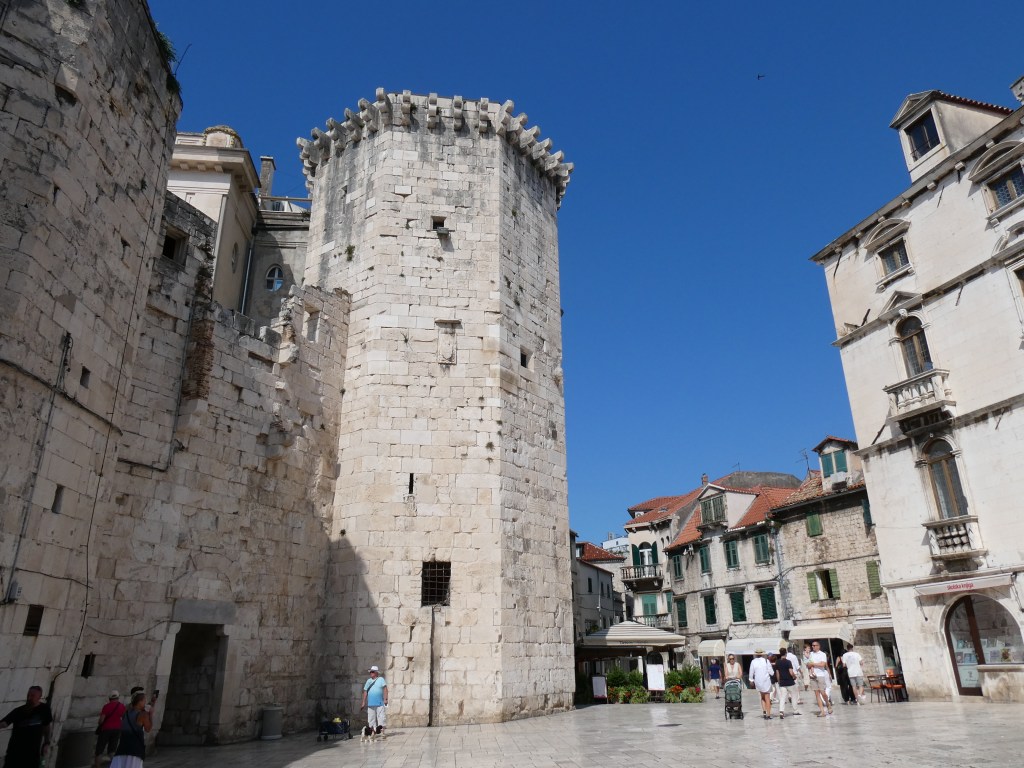
I largely avoided the worst of the crowds by going out early in the mornings, and also staying in a quiet hotel a good two kilometres from the centre – a sweaty, mostly-uphill walk away. I walked it a couple of times before discovering a bus that stops right outside.
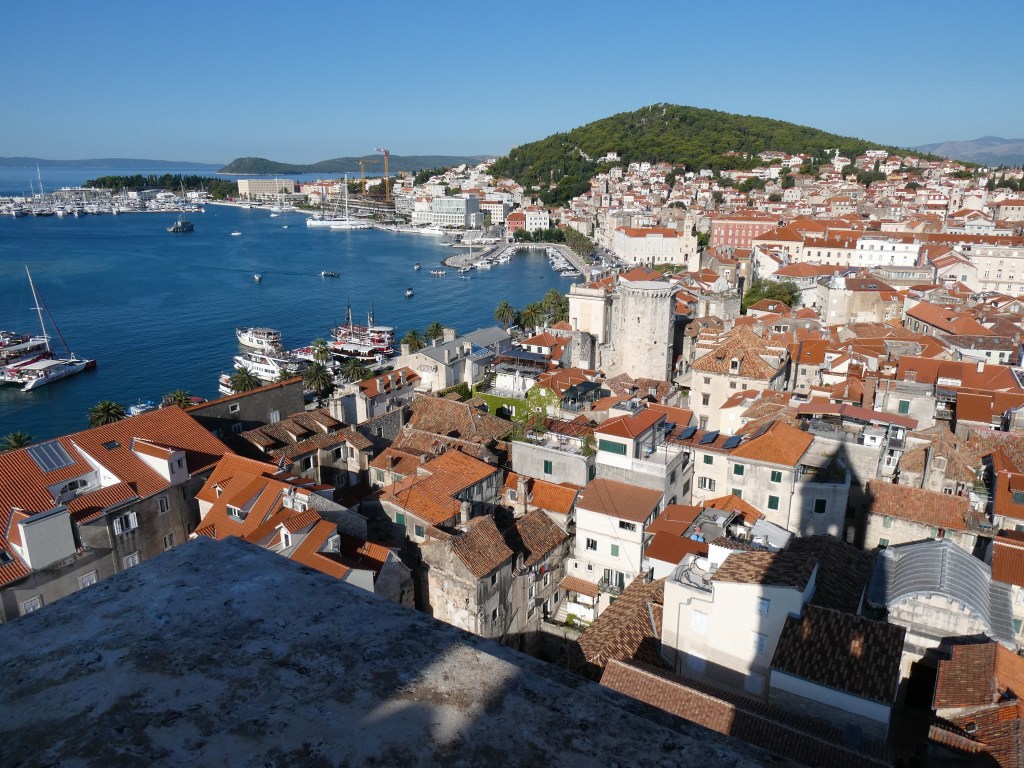
Split is a spectacular-looking city and totally justifies all the attention it gets. The old town mostly lies within the walls of the enormous palace built between 295 and 305 AD by the Roman Emperor Diocletian as his retirement home. It is, needless to say, another UNESCO World Heritage Site.

Diocletian spent the latter part of his life persecuting Christians, so he probably wouldn’t be too pleased to know that the impressive Cathedral of St Domnius now stands on the site of his tomb. It has a baptistry located in a well-preserved Roman Temple of Jupiter, and the bell tower can be climbed for a 360° view of the city.
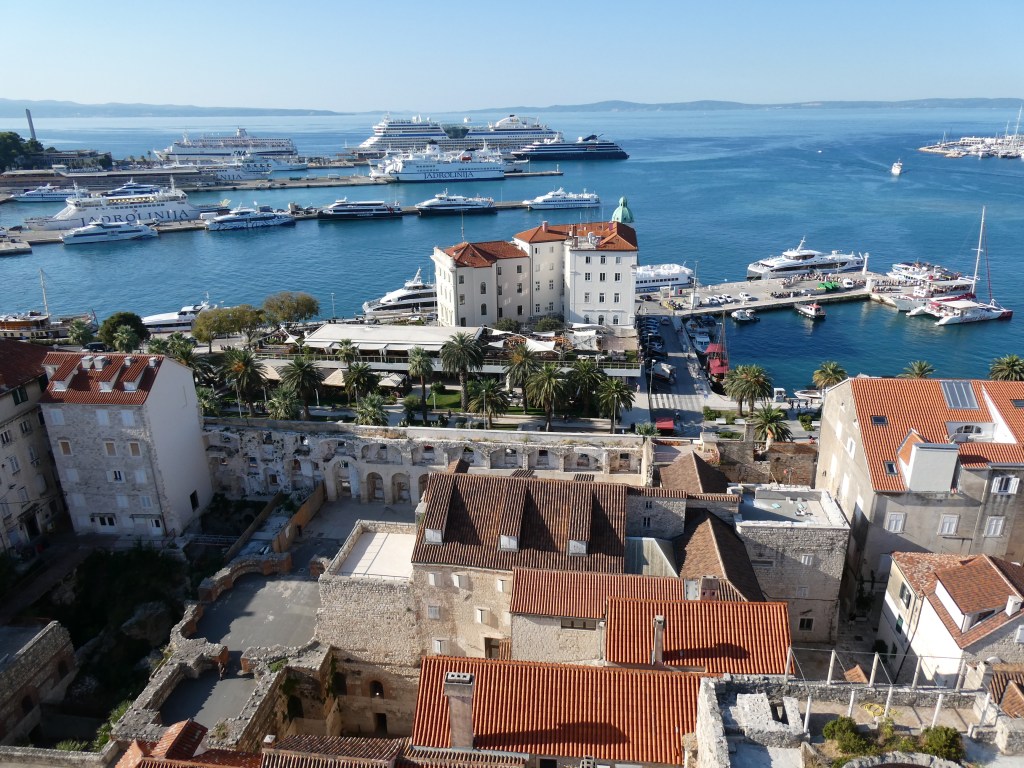
As seems to be the case with all the towns on the Dalmatian coast, you can spend hours wandering aimlessly through the maze of streets filled with Roman and Venetian antiquities, restaurants and bars (and cruise ship passengers). I even had a look underground as the palace substructures are also open to the public.

Further along the coast lies Dubrovnik – the Dalmatian coast’s main attraction. In 1990 I spent a few days there and made some friends who I travelled with for the next few weeks. One person in particular I remained friends with for years after returning home and they altered the course of my life somewhat. Since then, the old town had been badly damaged in the wars of the 90s and subsequently rebuilt. I wanted to visit again but was moving on to Bosnia and didn’t have time. Besides, I have such good memories of my time there in my early twenties that returning might prove to be a disappointment. You can never really go back.
From a western perspective, the 90s felt like a culturally rich, energetic and optimistic time, whereas Eastern Europe was emerging from decades of communism and suffering from the damage and stagnation that communism always brings. Yugoslavia carried the additional burden of a rapidly deteriorating political situation. Nowadays, however, Croatia feels prosperous, proud and confident, at least to an outside visitor. The Croatian lifestyle seems enjoyable and their society looks happy and healthy, with strong family connections, respect for tradition, and pride in their culture. When I look at the current state of my own country – the stagnant economy; the falling birth rates; the lack of social cohesion; the denouncing and dismantling of culture and tradition; the increasingly atomised and demoralised population; and the general feeling of being part of a failed social experiment – it’s hard not to feel just a little bit envious.
Accommodation:
Boutique Hostel Forum, Zadar – €43 per night
Hostel Spinut, Split – €47 per night


 Vole Explosion
Leave a comment