May 2025
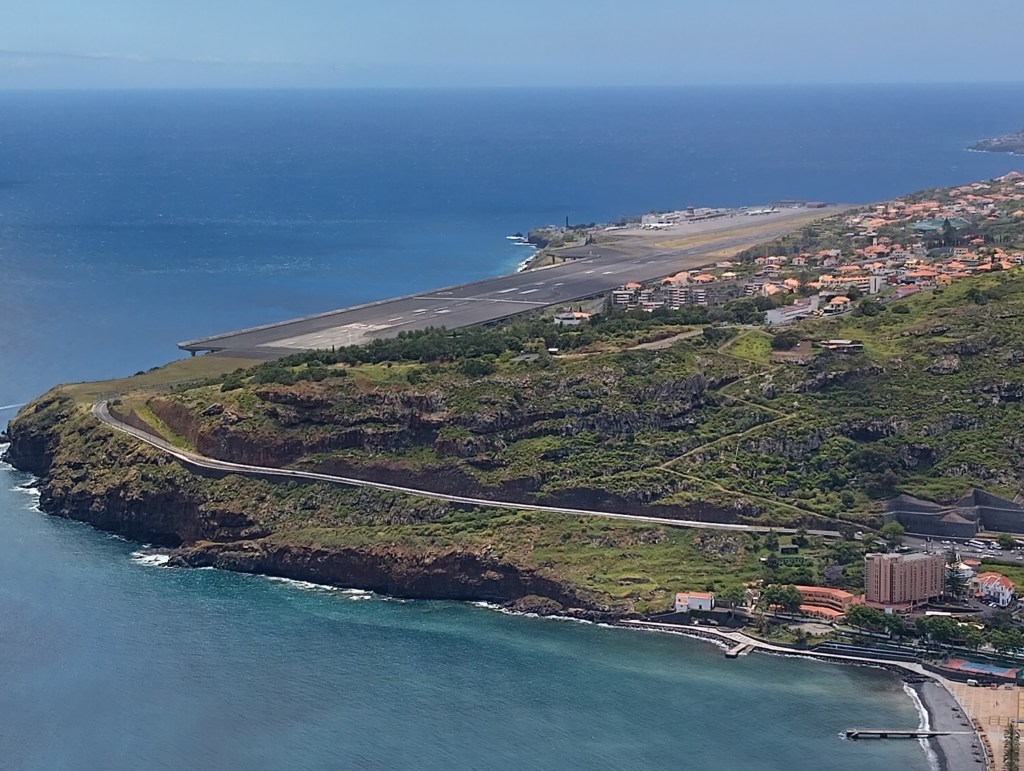
The Portuguese island of Madeira strikes you as a remarkable place before your plane has even landed. Forming the tip of an oceanic volcano, the main island is steep and mountainous. This leaves very little flat land to work with, so Cristiano Ronaldo International Airport is a marvel of engineering with the runway fixed to the side of the island and partly supported above the sea by a forest of giant pillars. The approach and landing make for quite a spectacle, whether viewed from a seat on the plane, a viewpoint on the island, or a boat on the sea.
The islands are about 650km (400 miles) west of Africa and 840km (520 miles) from the nearest point on the European mainland in south-west Portugal so, while being culturally European, they have a sub-tropical feel, with pleasant weather all year round and a large variety of exotic fruits grown locally – the indoor Mercado dos Lavradores in the capital Funchal almost feels like south-east Asia.
Forming part of the Macaronesian Islands (Madeira, the Azores, the Canary Islands, and Cape Verde), Madeira was uninhabited when first claimed by Portugal in 1419, an event that kicked off the European Age of Discovery, eventually leading to European colonialism, world-wide trade routes, and globalisation. Today Madeira is a destination for thousands of (mainly European) tourists, with welcoming people, great food, spectacular scenery, and varied activities.
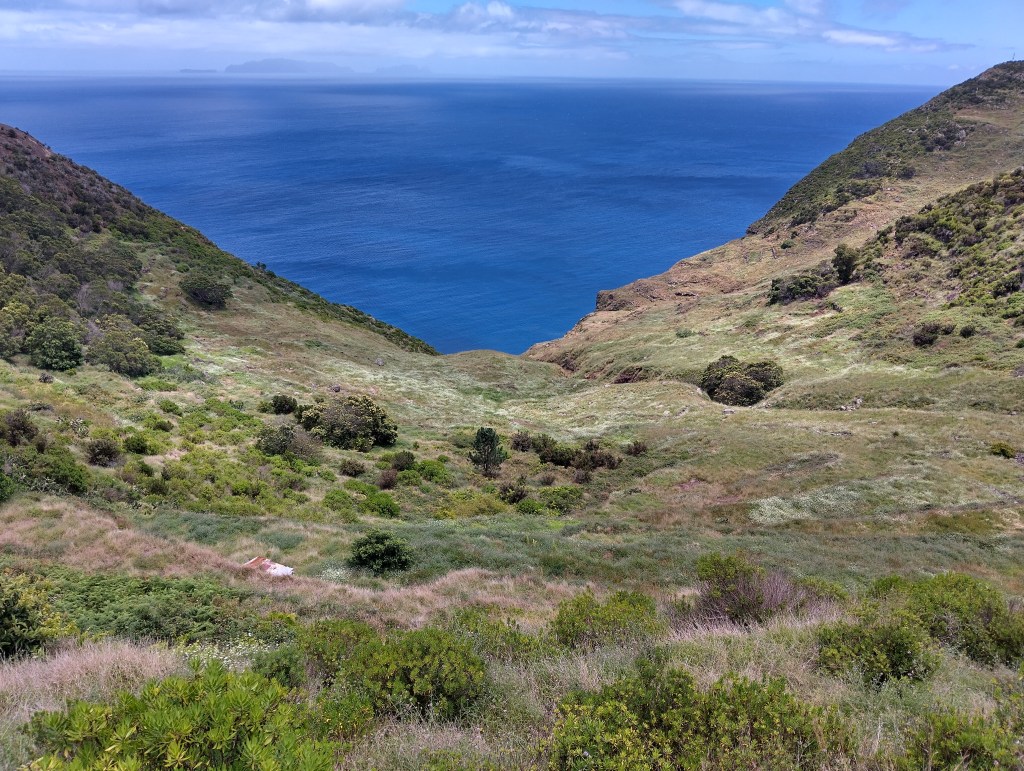
My main reason for visiting was to spend time out on the water searching for cetaceans and rare seabirds. Being a good distance out in the Atlantic Ocean, these islands attract thousands of seabirds of a variety of species to breed on the islands and feed in the highly productive waters. A local company called Madeira Windbirds takes small groups out in their fast boat, over a three day period, to get amongst them and hopefully spot some of the rarer specialities of Madeira. In between these excursions I tried to fit in as many other activities as possible, both on land and sea.
I based myself in Funchal for the first three nights before moving to nearby Machico for a further five nights. Arriving in the afternoon, I had a few hours to explore the town and wasted no time in trying a glass of poncha, Madeira’s signature cocktail – made with rum, sugar, honey and fruit juice (usually orange or lemon) – which I bought from a street stall that was part of the annual flower festival. On a stage, a variety of bands played, and the streets were filled with women in spectacular floral dresses. These women represented different dance troupes involved in a traditional dance contest taking place in an arena on the seafront.
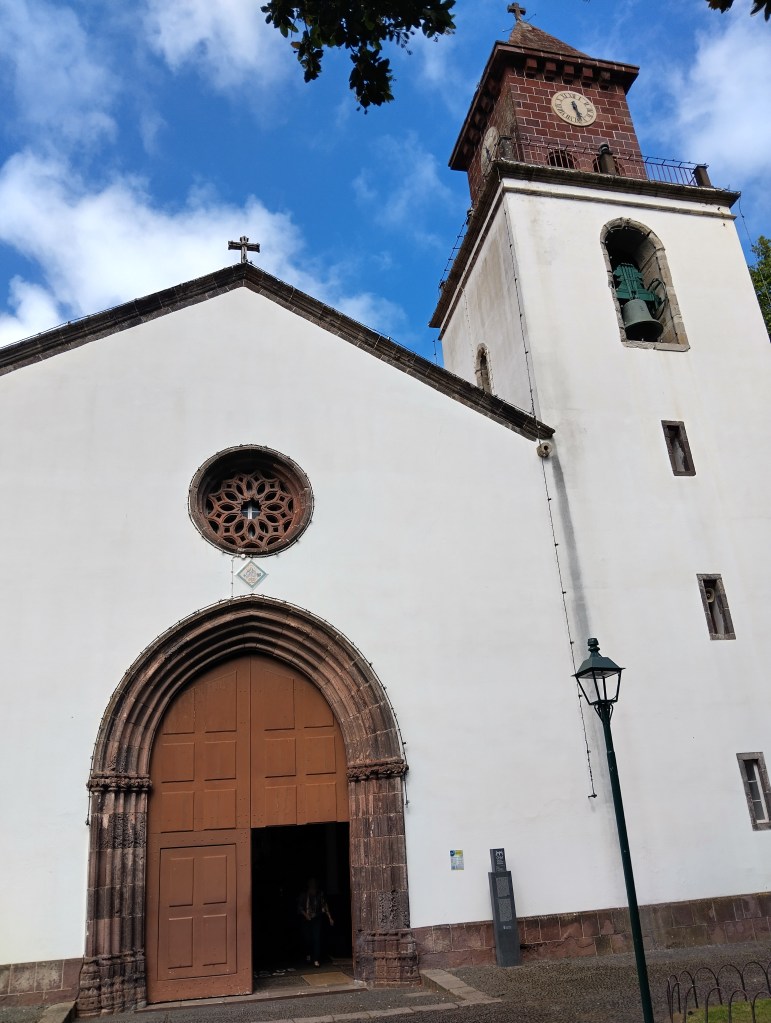
I wandered around attractive streets and parks and paid a visit to the Cathedral, which is decorated in a Moorish style despite the Muslim conquest of Iberia never having reached Madeira. For dinner I tried espetada, a Madeiran speciality consisting of large, seasoned beef chunks grilled on a skewer which is then suspended from a metal stand over your plate and served with milho frito (a type of polenta) and bolo do caco – a local garlic bread placed under the meat to catch the meaty drips. Later in the trip I tried the same dish, but with the meat skewered on a sharpened laurel branch from the surrounding forest, giving it extra bay leaf flavour.
For my first full day in Madeira I had booked a boat trip to the Desertas Islands – a group of three islands visible distantly off shore. In stark contrast to the lushly-forested main island of Madeira, these mostly uninhabited islands are barren and rocky. My main reason for visiting was the very slim chance of encountering a Mediterranean Monk Seal. These seals are fairly large (around 2.5m, 8ft) and very rare and elusive. Thought to number only around 700 individuals, they are mostly found around the coasts and islands of Greece and Turkey, although even here they are shy and rarely seen. The rest are scattered in small, isolated colonies on the coast of North Africa and here in the Desertas.
We were welcomed on board the Margarita Sunset with a glass of Madeira wine and then we set off towards the islands. It wasn’t long before we were passing amongst flocks of the Atlantic Ocean’s charismatic sea birds – but more about those later. The boat slowed as we approached a Sperm Whale close by on the port side, and we watched as it blew spray from the lop-sided blowhole near the end of its square-profiled head. Eventually the whale lifted its tail fluke high in the air as it dived in search of food. Sperm Whale dives can last over an hour, so we knew we wouldn’t be seeing it again any time soon and continued our journey. Not long after, three Bottlenose Dolphins swam close to the boat.
It took around three hours to reach the islands, where we had the option of landing on Deserta Grande, the largest of the Desertas. We were ferried across in a dinghy a few at a time and had to jump in the shallow water to get onto the beach. Here there was a short trail with information boards about the history, geology, fauna, flora, and scientific research of the Desertas. We were also accompanied by our two local guides and I spotted a couple of Berthelot’s Pipits, a bird found only in the Macaronesian Islands, and an endemic Madeiran Red Admiral butterfly.
Back on the boat we were served lunch and then there was time for swimming and sunbathing (or trying to spot Monk Seals, if you’re that way inclined) before it was time to head back to Funchal. On the way we were accompanied by a few Bennet’s Flying Fish making surprisingly long glides alongside the boat. They were very attractive, with bright blue and white bodies and pink-tinged ‘wings’. Another Sperm Whale was also seen, but this time more distantly. No Monk Seals were seen, but with a Madeiran population of fewer than thirty it was hardly surprising. I was slightly annoyed to learn from a couple I had met on the boat that there had been one swimming around in Funchal harbour yesterday, seen well from some of the whale-watching boats. I had been at the harbour yesterday but it never occurred to me to look for seals.
Back on dry land I gave the harbour an optimistic scan in case the seal was still around, then went for a dinner of grilled sardines with salad, and garlic bread made with sweet potato. As it got dark I was hoping to glimpse another local mammal – Madeiran Pipistrelle Bat. This is the commonest of Madeira’s three bat species and is found nowhere else in the world. Unfortunately it wasn’t quite common enough and I failed to see even one during my stay.
For my next activity I left the sea behind and headed into the mountains for a day’s hiking along one of Madeira’s levadas. These are narrow, man-made watercourses that have been cut into the hillsides all over the island with the purpose of channelling water from the wetter, forested highlands down to the drier coastal communities. The first ones were built in the 16th century and it’s hard not to admire the amount of work that must have gone into them, and it’s thanks to that effort that we now have a network of excellent hiking trails. Along the way I was hoping to see Madeira’s three endemic land birds (found nowhere else in the world) – Madeira Chaffinch, MadeiraFirecrest, and Trocaz Pigeon.
The bus to Ribeiro Frio climbed up out of Funchal and into the interior, with spectacular views back down to the coast. The road twisted through forests of non-native pines and eucalyptus until we reached the highest point at the village of Poiso. From here we descended slightly and reached the native laurel forest that used to cloak the whole island and is now a UNESCO World Heritage Site. Shortly after, we arrived in Ribeiro Frio, the village that is the starting point for two of Madeira’s most accessible levada hikes.
The first of my three target birds gave itself up easily, with a male Madeira Chaffinch waiting to meet me straight off the bus. There were many more Chaffinches at the end of the Vereda dos Balcões (PR11) trail. This is a very short round trip of only about 3 km (1.9 miles) to a spectacular view of some of Madeira’s highest peaks. Numerous Chaffinches were hopping around on the railings and eating crumbs from people’s hands (despite signs telling them not to feed the birds). As I walked back to the road, the number of people coming the other way suggested that the tour buses had arrived and I was looking forward to getting onto a quieter trail.
After this appetiser, the main course was the 11 km (6.8 miles) Levada do Furado hike (PR10) from Ribeiro Frio to the village of Portela. This trail was still fairly popular, but nowhere near as busy as the short PR11. The walk was very easy as the levada descends only slowly, and it’s impossible to get lost as the trail never leaves the flowing water, which sometimes gurgles gently besides the path and other times flows silently, almost at a standstill. Occasionally you pass through short tunnels in the rock or the trees open up to reveal impressive vistas into deep valleys below. There are even a couple of waterfalls and small pools suitable for a dip.
I hadn’t walked far along the trail when I heard my first Madeiran Firecrest and, with a bit of patience, managed to get a brief glimpse. Pleased with my sighting, I wasn’t prepared for how common they actually were and towards the middle of the hike I was getting great views of these tiny jewels at regular intervals. Alongside the other species of Firecrests and Goldcrests, these are Europe’s smallest birds. Greenish in colour, with black and white markings on their wings and face, a glowing golden smudge across their shoulders, and an orangey-yellow crest on their head, these hyperactive sprites never stay still for long.
The Trocaz Pigeon was proving much harder to pin down. I had no sight nor sound of one and was beginning to think I would leave empty handed. That is until 3 km from the end of the trail the view opened up onto a wide valley and, scanning with binoculars, I spotted a grey shape at the top of a dead tree. By zooming in as much as my camera would allow, and then zooming in on the grainy image, I could make out the banded tail pattern that identified it as a Trocaz Pigeon. It was a terrible view, but at least I had found all three endemics. Despite what Meat Loaf might say, two out of three is bad. It’s annoying and frustrating, and I was glad to score the hat-trick before the end of the hike.
I had much better views of at least four Trocaz Pigeons the next morning at Palheiro Gardens, including one building a nest and another singing its strange song in a tree just above me. Earlier that morning I had checked out of the hotel in Funchal and paid a quick visit to a supermarket in a nearby shopping mall. For some reason, the mall had a display of medieval torture instruments – as if shopping malls aren’t torture enough.
A large cruise ship had appeared in the harbour and it completely dwarfed the not-exactly-small ferry that was sailing past it on the way to Porto Santo, the other inhabited island of the Madeiran archipelago.
I had to negotiate Funchal’s tortuously complicated bus network to find the correct bus stop for Palheiro, but the gardens made for a pleasant morning excursion, with more Firecrests and Chaffinches, a couple of Plain Swifts (only found in the Macaronesian Islands), Clouded Yellow butterflies, and some introduced Iberian Water Frogs.
There are a few botanical gardens in the area around Funchal and some can be reached by cable car, an often-used mode of transport all over Madeira – much simpler than finding the right bus, though more expensive. I love me a cable car, but unfortunately I didn’t have time to ride any on this occasion. You can even slide downhill back to Funchal in a wicker basket if you really want to.
Arriving back in Funchal by more conventional means, I made an afternoon visit to the Natural History Museum. They had some good displays here and I was able to put names to some of the creatures I had already seen. Outside there was a beautifully-smelling herb garden with Monarch Butterflies flying around, and numerous Madeiran Wall Lizards scuttling around on the path. These lizards, with stripy females and larger, green-flecked males, are found only in Madeira and are very common everywhere. I saw them every day of my stay, from the first ones in a small park near the airport.
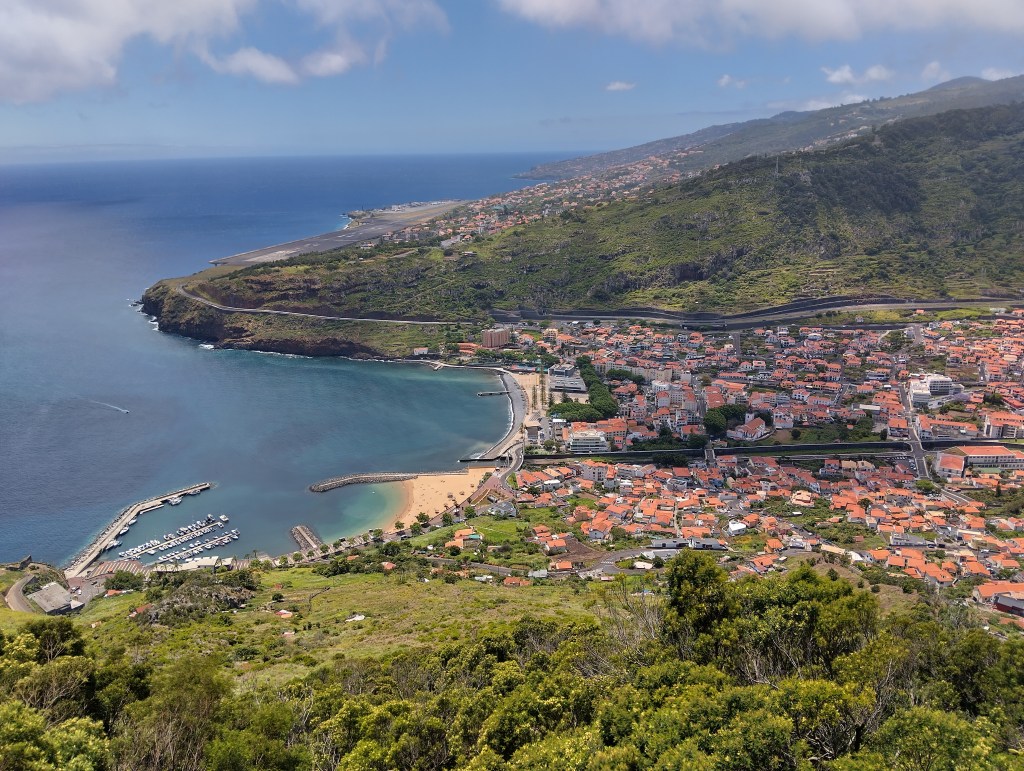
By mid-afternoon it was time to catch a bus along the coast to Machico, where I checked into a new hotel and then went for a look around town. Machico is much smaller and more relaxed than Funchal, with a nice beach. It is Madeira’s oldest settlement, but it mostly looks very new. I located the bus station, supermarket, and harbour from where I would be catching the boat for the pelagic trips over the next three days. I also found a few Common Waxbills, introduced here from southern Africa, in the river that flows through town. For dinner I had scabbardfish in a white wine and garlic sauce – another Madeiran speciality and a fish I had seen earlier, in a much less appetizing form, at the Natural History Museum.
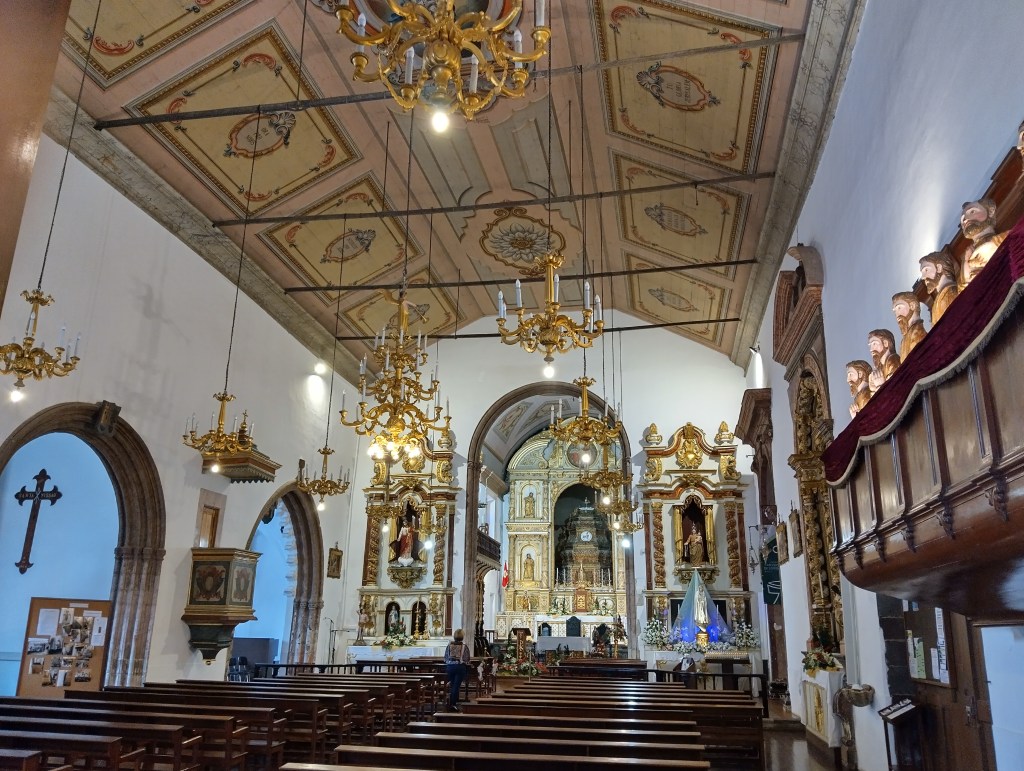
Later that night I had an activity lined up that was a bit special. I was picked up near the hotel by Hugo and Catarina from Madeira Windbirds and, along with a small group, driven inland to Pico do Areeiro – at 1818 m (5965 ft) Madeira’s third highest peak. Here we paid a nocturnal visit to the world’s only breeding colony of Zino’s Petrels, an incredibly rare seabird with only around 80 pairs. Outside the vehicle we put on warm clothes and walked along a rocky path by torchlight until we reached the colony, where we switched off our torches and made ourselves as comfortable as possible out of the wind to wait for the birds to arrive. Most seabirds spend the day foraging out on the oceans and only return to their nests well after dark to avoid diurnal predators.
A Barn Owl of the endemic Madeiran sub-species was heard screeching in the distance and we enjoyed a cloudless, moonless sky filled with stars, as well the occasional meteor and passing satellite. It wasn’t long before the first Zino’s Petrel was heard calling. At first the sound was fairly distant, but soon many more were calling as they flew by very close, with the females calling at a lower pitch than the males, making it easy to distinguish between the two.
At first they were just atmospheric noises in the dark, but eventually I was excited to see a recognisable silhouette pass by at close quarters against a lighter patch of sky. This was the first of at least seven petrels that I could definitely make out in the dark, including one passing by very slowly and two flying past together. Other shapes that I thought I possibly saw further away could also have been birds, but were more likely my eyes playing tricks on me.
Hugo passed around a thermal imager – the first time I’ve ever used one – and by pointing it towards a nearby peak we could easily make out about a dozen tiny dots flying around above it. All the time the ghostly wailing of the birds was increasing in all directions, including directly above. It must be a terrifying sound for anybody stuck up the mountain at night who didn’t know where it was coming from. It’s no surprise that the calls of seabirds were once believed to be cries from the souls of the dead.
After over an hour of this spectacle it was time to rise, cold and stiff-legged, and make our way back to the car – a fairly steep uphill climb, as the nesting colony was downhill from the road.
What we had only glimpsed in the dark, we would soon be seeing in broad daylight. This applied to both birds and humans, as most of the group from last night were also taking part in the next three days of pelagic expeditions. We were a group of ten and for the next three afternoons we would meet at Machico harbour and wait for Catarina and Hugo to arrive in Oceanodroma – an 11 m (36 ft) Rigid Hulled Inflatable Boat on which we would spend at least six hours per day bobbing in the Atlantic swell.
On each day we visited a different area of sea, sailing out for about two hours to reach the places where we would see the most birds. Once we were in position, a large bucket pierced with holes would be lowered over the side and filled with ‘chum’ – a stinky mixture of fish oil and discarded fish bits. We would then sail upwind and drift back along the chum slick spreading out from the bucket and see which birds had been lured in. The birds we were looking for were various species of petrels, shearwaters, and storm-petrels. These belong to a group of birds that also includes the albatrosses, collectively known as ‘tubenoses’ because of a tube-like structure above their bills that helps rid them of excess salt. This family of birds has an incredible sense of smell which it uses to forage for food in the vastness of the ocean. Once the chum goes in the water, seabirds will smell it from miles away and will (hopefully) fly in to investigate.
We didn’t have to go very far from land before we started running into our first seabirds. Three species made up the bulk of our sightings on all three days: large Cory’s Shearwaters with brown backs and white underparts; smaller, all-dark Bulwer’s Petrels; and black-and-white Manx Shearwaters – the species I’m most familiar with as they breed in vast numbers around the northern and western coasts of Britain.
It was always a pleasure to sail amongst large numbers of these masters of the air and watch them elegantly glide past the boat, sometimes only a few metres away. These birds spend their whole lives at sea, often in the worst conditions, and only come ashore to visit their nesting islands. Their long wings are beautifully adapted to glide just above the water’s surface, making use of the turbulent air rising and falling around the peaks and troughs of the waves, flipping from one side to the other with their wing tips scything just a couple of inches from the water. When there is no wind they mostly just sit on the sea, so rough and windy conditions are better for seeing the birds, but not necessarily better for the birders in the boat – waterproofs and sea sickness tablets are vital for these excursions!
On the first day we headed north of Madeira. The sea was calm on the south side as we left Machico and headed past the long eastern peninsula. This soon changed as we sailed through a narrow gap between the peninsula’s tip and a rocky islet. Here the water became considerably more lively and the small boat was suddenly being tossed around a bit more. We all looked at each other apprehensively and I quietly wondered if they could drop me off on the island and pick me up on the way back. Within minutes, though, the ‘we’re-all-going-to-drown’ vibe subsided and the bumpy ride became quite enjoyable. The boat was furnished with two rows of high seats that you had to almost perch on, much like sitting on a saddle and riding a horse. Your feet were planted onto foot rests and you had to lean forward and hold a pair of handles on the seat in front. It wasn’t the most comfortable arrangement, but we soon got used to it. I was sitting in the front seat, so at least I got the childish thrill of imagining I was steering the boat as we bumped along getting soaked with spray.
Once the chum was released we could sit back and watch the birds flying in. As well as the usual Cory’s, Bulwer’s and Manxies we had close views of about five Zino’s Petrels – possibly even the some of the individuals we had heard last night. We also had a couple of European Storm-petrels and a Loggerhead Turtle which drifted close to the boat. An excellent start.
For the second pelagic we headed south of the island and spotted a pod of at least eight Atlantic Spotted Dolphins very close to the boat, including some well-marked mature adults – a new species for me – and somewhat appropriately, given our location, a Portuguese Man O’ War drifted past. But today was all about storm-petrels – the smallest of the tube-noses. These are tiny birds that thrive in some of the roughest sea conditions. Usually all black except for a thick white band across the rump, they can present an identification challenge for someone like me who has only very limited experience with this group. Fortunately we had Caterina and Hugo on hand to deliver an ID masterclass and we saw four different species in 15 minutes.
First there were at least ten European Storm-petrels – the smallest species, with an erratic, bat-like flight and white patches on the underwings. Around five Band-rumped (or Madeiran) Storm-petrels showed up – slightly larger, with a more shearwater-like flight on longer wings. A single Wilson’s Storm-petrel was seen – recognised by having longer legs that stick out beyond the tail, and finally the easiest identification of the four: a single White-faced Storm-petrel with white underparts. We also had a couple more Zino’s Petrels, as well as Common Terns and the ever-present Atlantic Yellow-legged Gulls, appearing clumsy and brutish compared to the elegance of the shearwaters and petrels.
On the way out we had the wind behind us and we had reached the chumming spot quickly, but to sail back we had to go into the wind which made for a bumpy ride, with some exhilaratingly big jumps on the swell and a good amount of spray blowing across us.
The worst of the bouncing and splashing was saved for the third and final pelagic. The journey out to the east of the island, into the wind, wasn’t enjoyable at all. My face was by then sore from a combination of sun and salt water and my eyes were stinging. It became a lot more pleasant when we finally reached the chumming spot and the birds graced us with their presence. It started slowly, but eventually a couple of distant petrels were said to be Desertas Petrels. Fortunately, first one and then another came in close enough for them to be definitively identified as such. These are very closely related to Zino’s Petrels but can be told apart by subtle differences: Desertas Petrels are altogether chunkier than the slim, elegant Zino’s, with a thicker bill. Zino’s also has white patches on the underwings which Desertas lacks. The two birds also have different flight styles, with Desertas moving in a ‘calmer’ manner than the crazy, erratic flight of Zino’s.
The entire population of Desertas Petrels, as the name suggests, breed in the Desertas Islands (on an island called Bugio) and they were only just starting to appear for the nesting season. This was the final seabird species that we could reasonably expect to see on these pelagic trips, so it was pretty much a clean sweep. A small shearwater seen distantly was said to be a shy Barolo’s Shearwater, but I didn’t see it anywhere near well enough to tick it.
Towards the end of the session, the three days were rounded off with a grand finale of birds around the boat – numerous Cory’s, Bulwer’s and Manxies, three Zino’s Petrels endlessly circling and coming in close, a Madeiran Storm-petrel, and good, prolonged views of European and Wilson’s Storm-petrels. Everybody onboard was happy. It’s no wonder that the Madeira Windbirds pelagics are often described as the best seabird experience in Europe.
When we sailed back into Machico there was a big rave in full swing on the harbour, but for me it was bed time.
Because the pelagics didn’t start until 3pm, I had most of the day free for other activities. These included a trip to the nearby town of Caniҫal to visit the whale museum, with displays about Madeira’s whaling history and marine biology. Some actual whales were seen on a three hour whale watching trip out of Machico, where we spotted another Sperm Whale blowing and diving, and at least eight Short-finned Pilot Whales surfing through the swell.
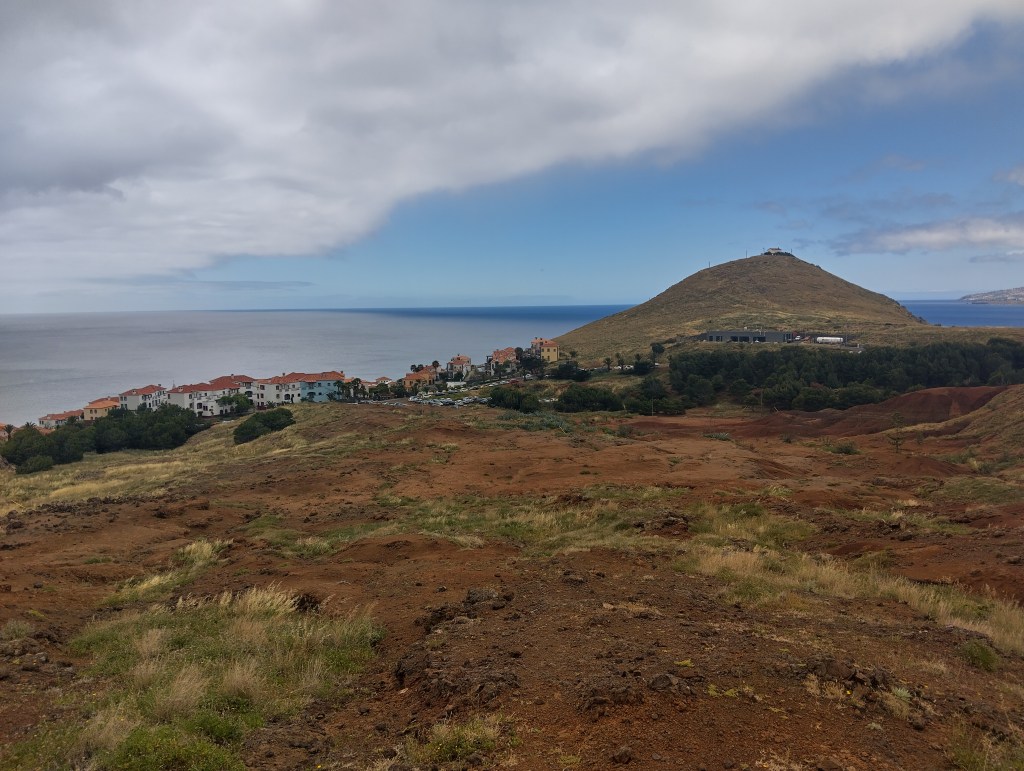
One morning I took the bus out to the Ponta de São Lourenҫo to do the PR8 hike. This is the eastern peninsula that we sailed past on the boat and a location for a spectacular hiking trail. The walk is incredibly popular and the numbers of people here made it difficult to fully enjoy it, despite the fabulous scenery. A steady stream of drizzly rain showers blew through on the wind which, when combined with the scenery and crowds, made it feel like a day in the English Lake District (minus Kendal mint cake). I didn’t make it all the way up to the peak at the end because I had to get back to the harbour, but I saw two Rock Sparrows and a Berthelot’s Pipit, and I heard a Hoopoe calling nearby. There were also large numbers of Atlantic Canaries, which I had seen commonly around the island every day.
I also spent a bit of time at the beach and had some relaxed lunches. In one restaurant I ordered Iberian pork steaks and halfway through my meal I started wondering if they hadn’t served me some kind of fish steaks instead. You might think it would be easy to tell those two meats apart, but the texture could have been either and it was so generously covered with well-flavoured sauce that I remained undecided until the end of the meal. When they brought my bill I saw that I had in fact just eaten the fish of the day – it was delicious though, and about half the price of what I actually ordered, so no complaints from me. I can only assume that some other customer had eaten my pork thinking it was fish. Hopefully they weren’t Jewish.
On my final day in Madeira, as if I hadn’t spent enough time bobbing about on the sea, I took another boat ride – this time along the peninsular again, because someone told me a Monk Seal was being seen along there a couple of days ago. It turned out to be a waste of time and no seals were seen.
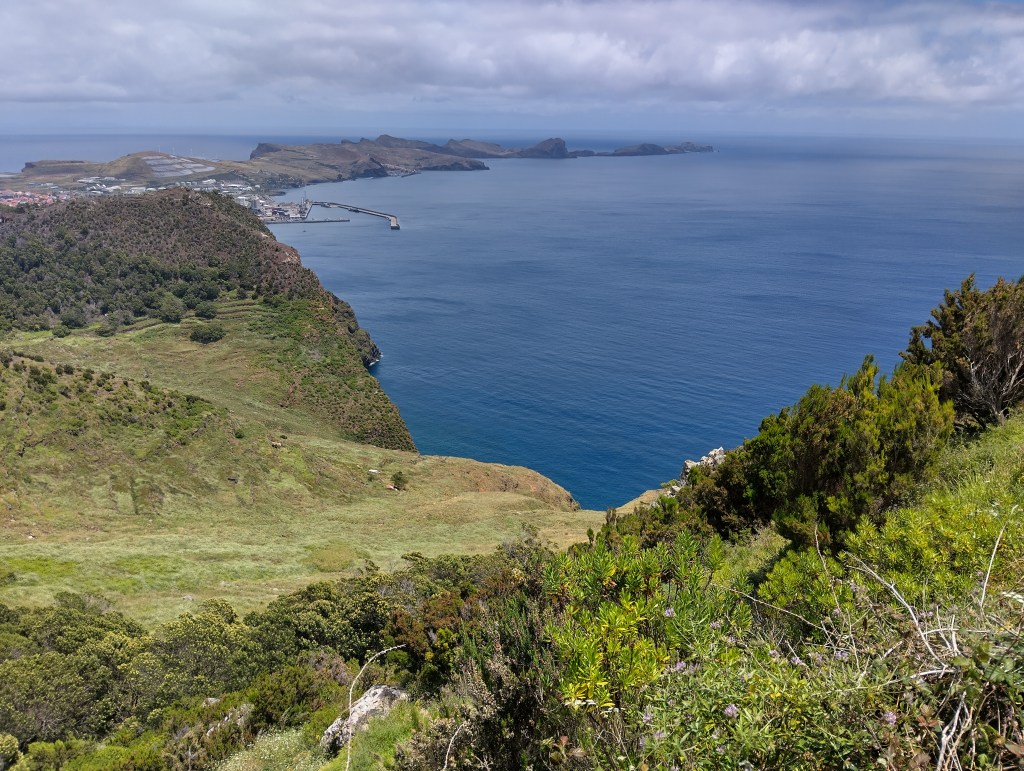
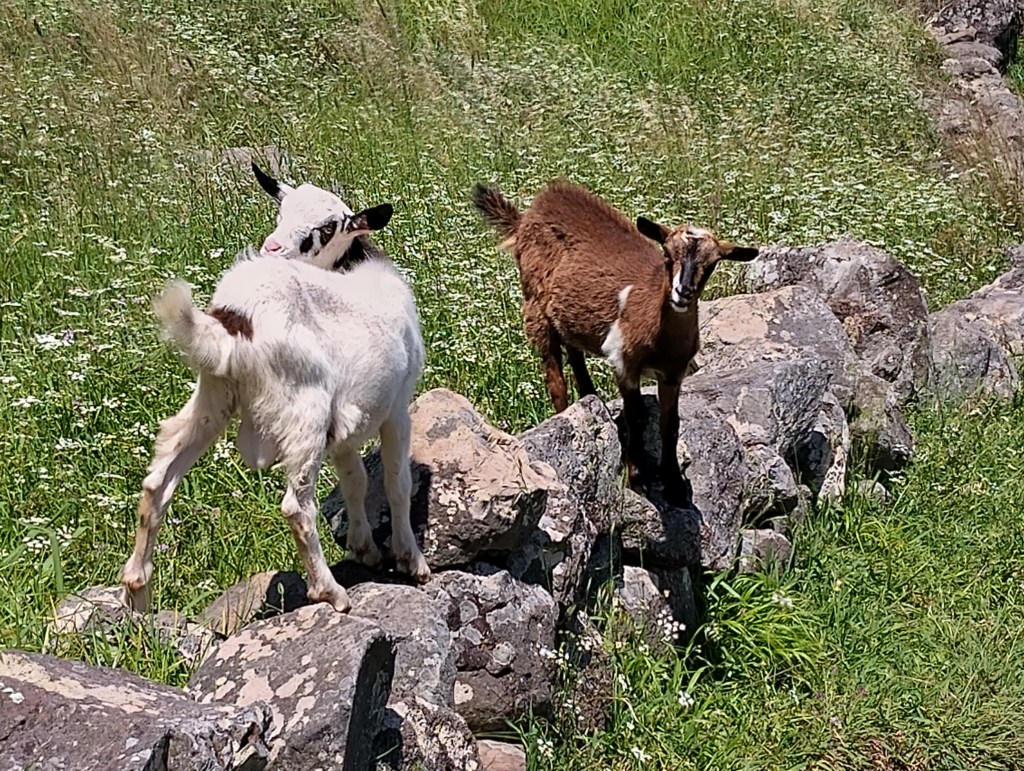
On the bus ride back to Machico I hopped off just before the town to take a short hike to Pico do Facho – a clifftop viewpoint with fantastic views over Machico. From here I took a hiking trail through spectacular coastal scenery looking for one more bird I wanted to see: Spectacled Warblers of the endemic Madeiran sub-species proved easy to find here and, after getting some great views, I ended up following the trail all the way to Caniҫal. It was a very beautiful path and I met some cute Feral Goats.
My time in Madeira was coming to an end and I finished as I started – with an espetada and a couple of glasses of poncha. My flight home was early in the morning, so I found myself at 3am walking to the airport, which was only a couple of kilometres away from my hotel. The road took me underneath the runway on the way to the terminal, but not before I got one last bird hunting on a grassy area at the end of the runway – a Madeiran Barn Owl was briefly glimpsed in my torch beam before disappearing again.
While in Madeira I took many photos of this most photogenic island, and I would have liked to have illustrated this post with some. Unfortunately I lost my camera somewhere on the journey home and I only had a few photos on my phone. I had it before I left the hotel and I didn’t have it when I got home. I’m not bothered about the camera – it was already on its last legs and had been finally finished off by salt spray – but I was upset to lose all the photos. Oh well. I guess I’ll have to go back some day.
These are the companies I used:
Madeira Windbirds: https://www.madeirawindbirds.com/
Desertas Islands tour: https://madeira.best/product/desertas-islands-boat-tour
Boat trip along the eastern peninsula: https://madeiraseaemotions.com/
The whale and dolphin watching trip from Machico was booked at their cabin on the harbour – Scorpio Madeira Wildlife. They don’t currently appear to have a website.


 Vole Explosion
Leave a comment