One of my favourite local walks runs along the top of the ancient earthwork known as Devil’s Dyke in east Cambridgeshire. I have been going there for five decades, ever since my dad used to take me there as a child. Back then we didn’t really know who built Devil’s Dyke or for what purpose. It was wrongly thought to be built by the Iceni as a defence against the Romans or neighbouring tribes, at least that’s what I was told at the time. It wasn’t until the 1990s that archaeologists used carbon dating to establish that it was most likely built in the late 6th or early 7th centuries by the newly established Saxon kingdoms that invaded Britain following the withdrawal of the Roman Empire. The earthwork would have provided protection from the Britons to the south-west and also allowed the Saxons to control the routes into East Anglia as it crosses three Roman roads.
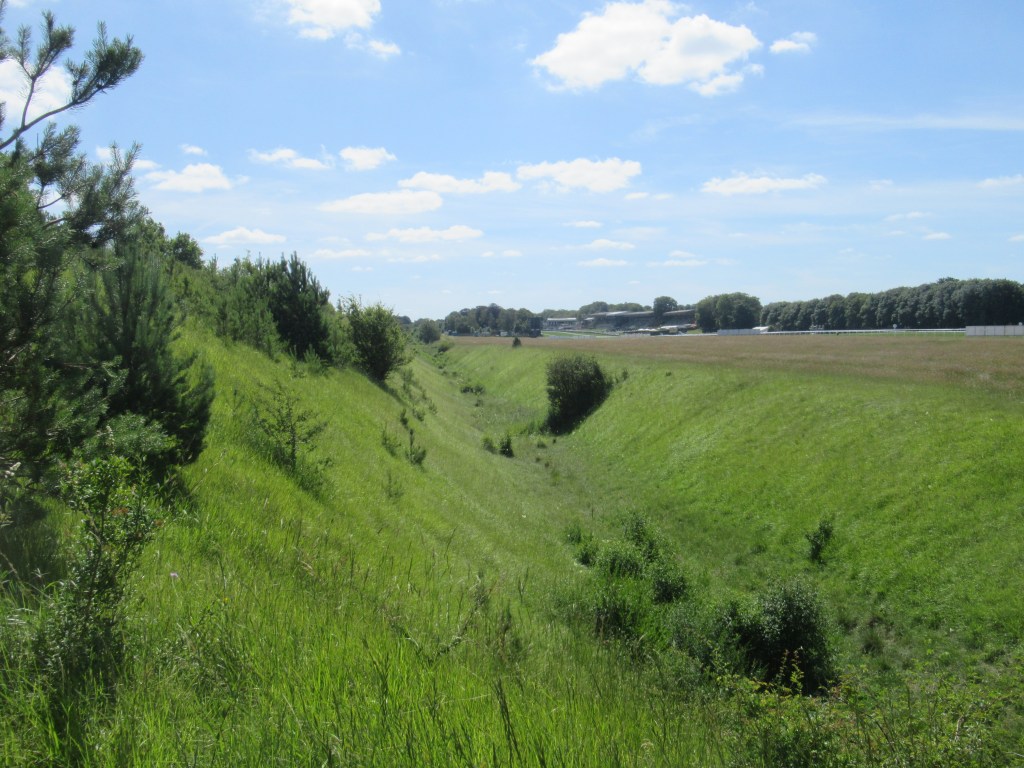
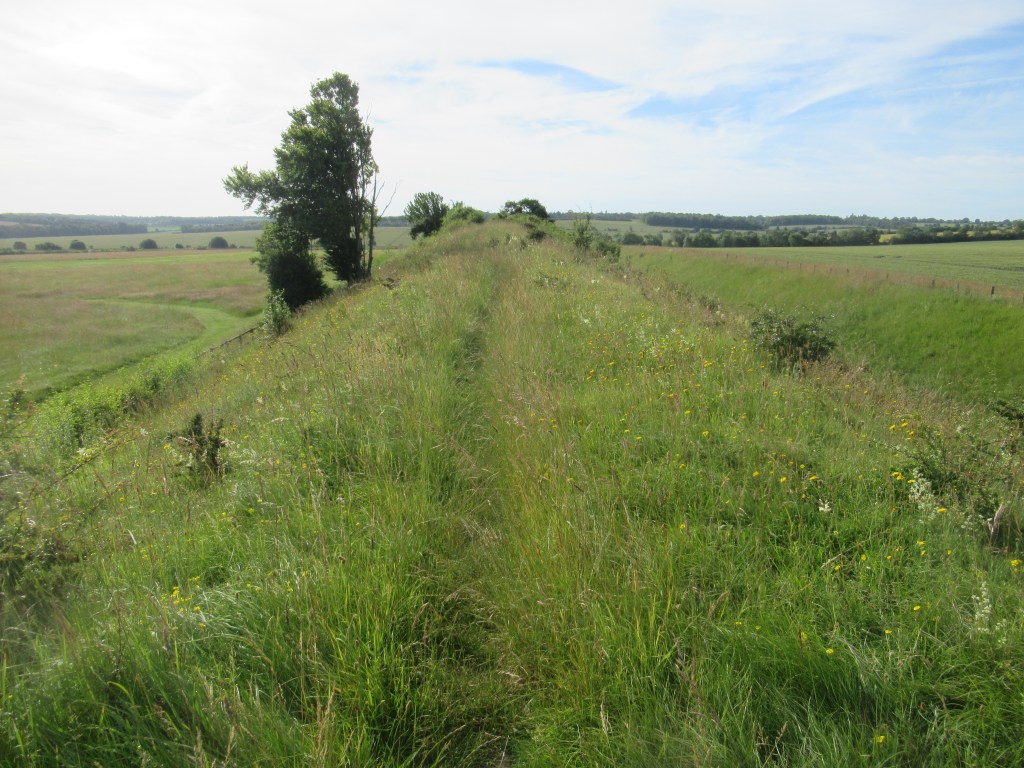
Devil’s Dyke runs in a straight line for 12 km (7.5 miles) from the wooded village of Wood Ditton to the village of Reach on the edge of the Fens. It consists of a deep ditch running alongside a high embankment, through the gently undulating chalk grasslands where Cambridgeshire meets Suffolk. On the best preserved sections, such as at Gallows Hill, it reaches a height of 10.5 m (34 feet) from the bottom of the ditch to the top of the bank, allowing panoramic views across the surrounding farmland.
As well as my childhood ignorance of the dyke’s history, it wasn’t until decades later that I came to fully appreciate the nature and wildlife that is protected on this site. Back then we were told that rare orchids grew on the sunny embankments, and that someone spent the summer living in a tent to keep a watchful eye over them. In all my visits I’ve never seen any tent-dwelling orchid guardians, so I suspect this may have been a bit of local myth-making, but there are definitely orchids growing there in abundance.
A walk along Devil’s Dyke is best attempted on a sunny day in summer, when the wildflowers are in bloom and the abundant butterflies are on the wing. Classic birds of open grassland and scrub are singing all along the route: Skylarks, Yellowhammers, Corn Buntings, Whitethroats, Willow Warblers and Meadow Pipits, to name a few.
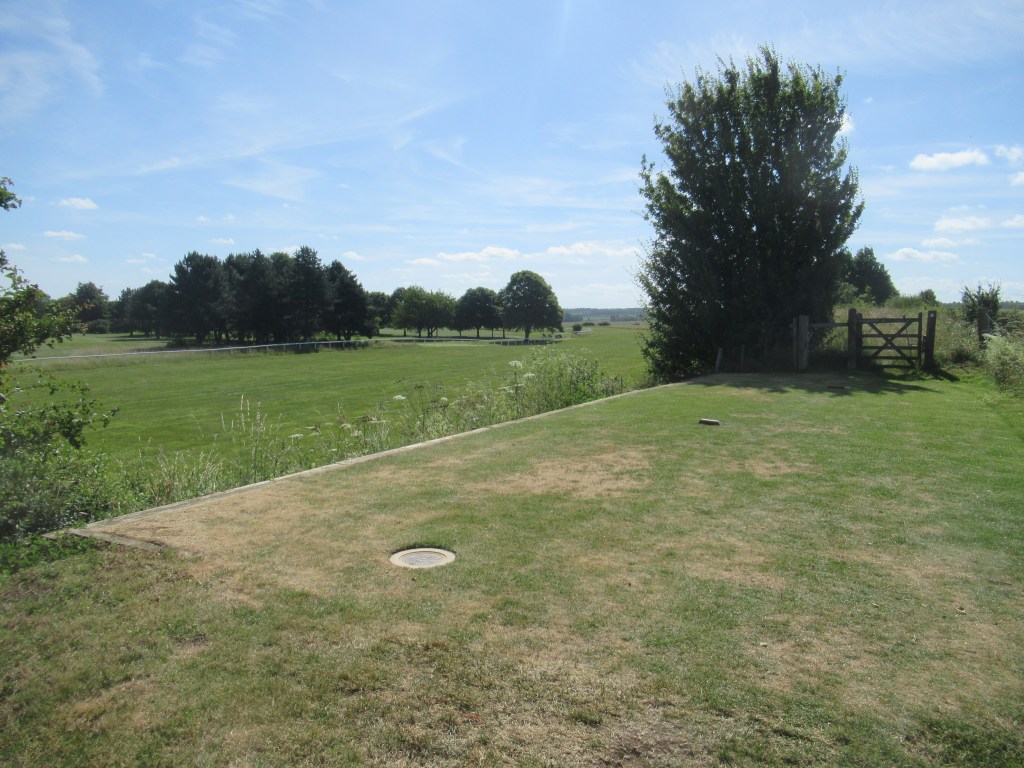
Start at the well wooded southern end, to keep the sun behind you, and you soon emerge from the trees into open grassland with a golf course below the embankment on your right. In fact, two of the holes tee off from the top of the bank and you may have to wait while golfers take their shots.
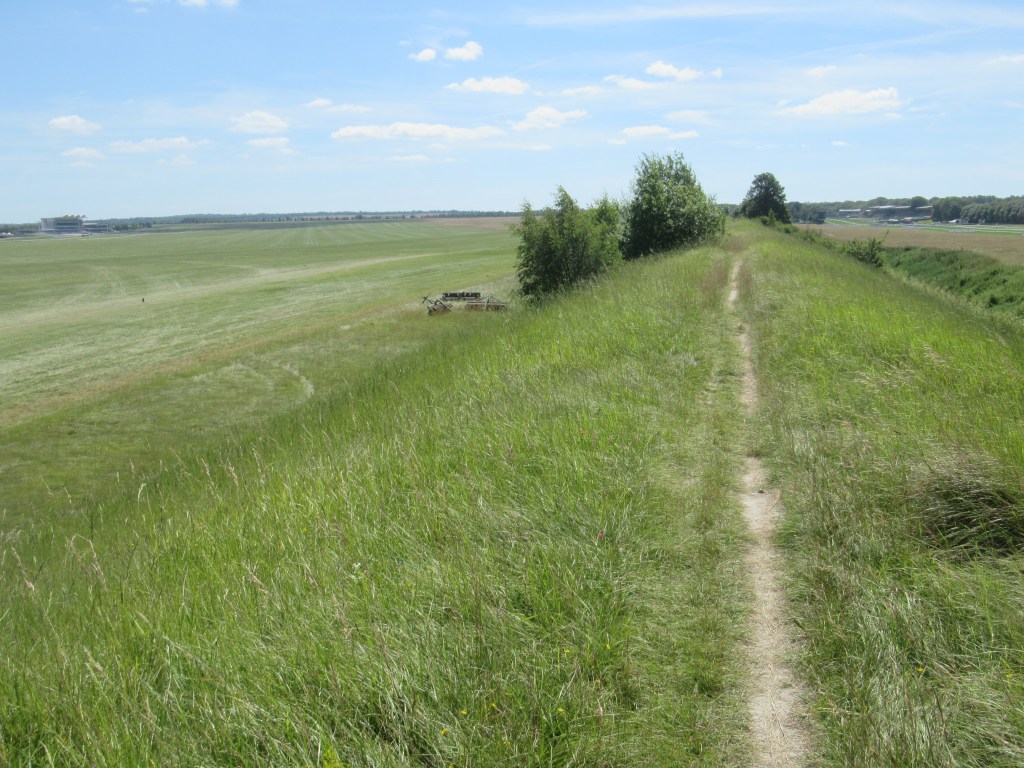
Near here you will cross the railway line between Cambridge and Newmarket before arriving at the main road into Newmarket. This town is the British headquarters of horseracing and has two straight race courses: the Rowley Mile and the July Course. The two race tracks form a V-shape and Devil’s Dyke runs between them alongside the July Course, giving good views into the stands. The Rowley Mile stands are visible more distantly across Newmarket Heath, a huge expanse of mown turf. Thoroughbred racehorses can be seen training here in the mornings and, if an afternoon meeting is in progress, all that expensive horseflesh can be seen galloping along the course to the cheers of the crowd.

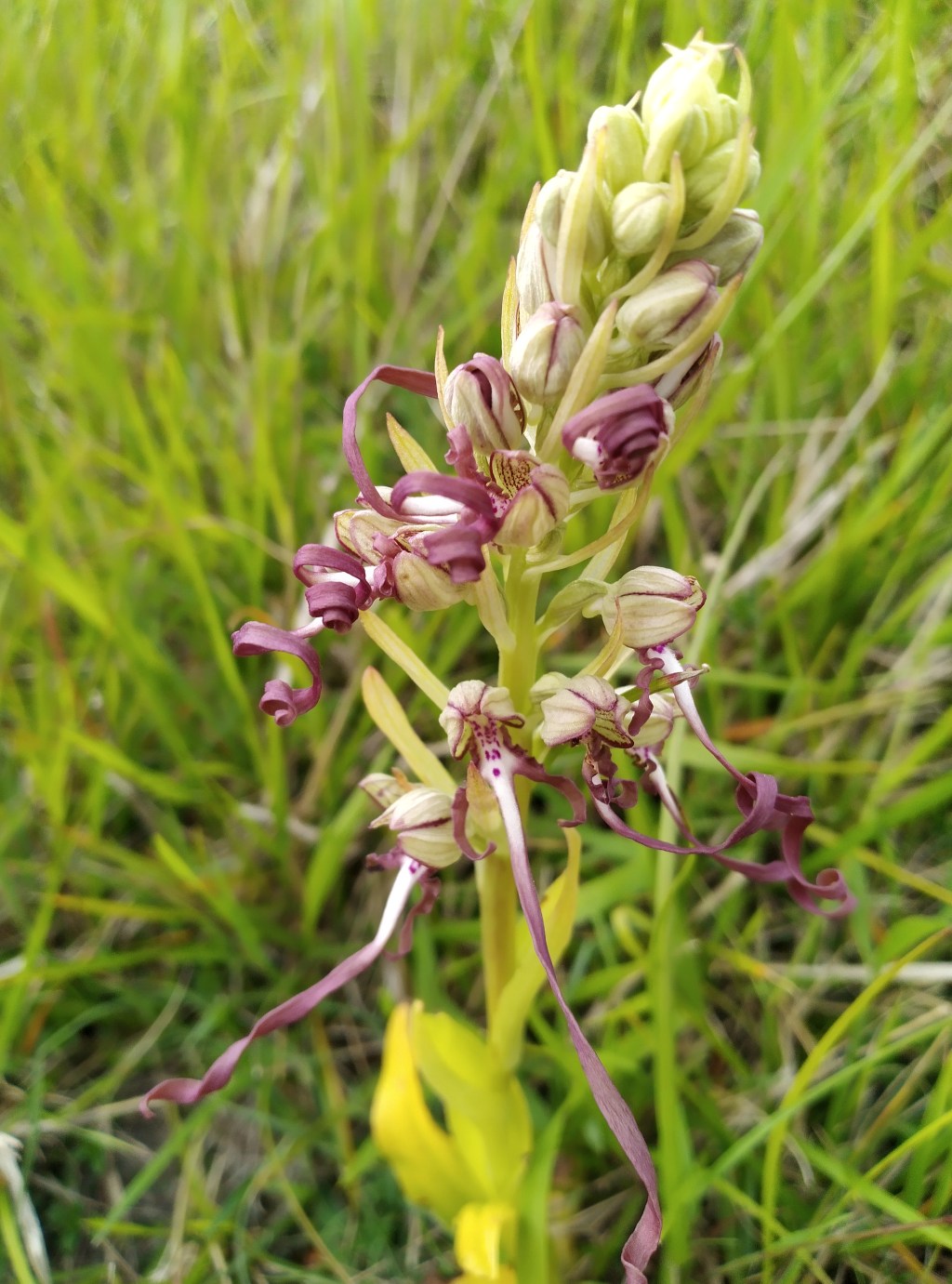
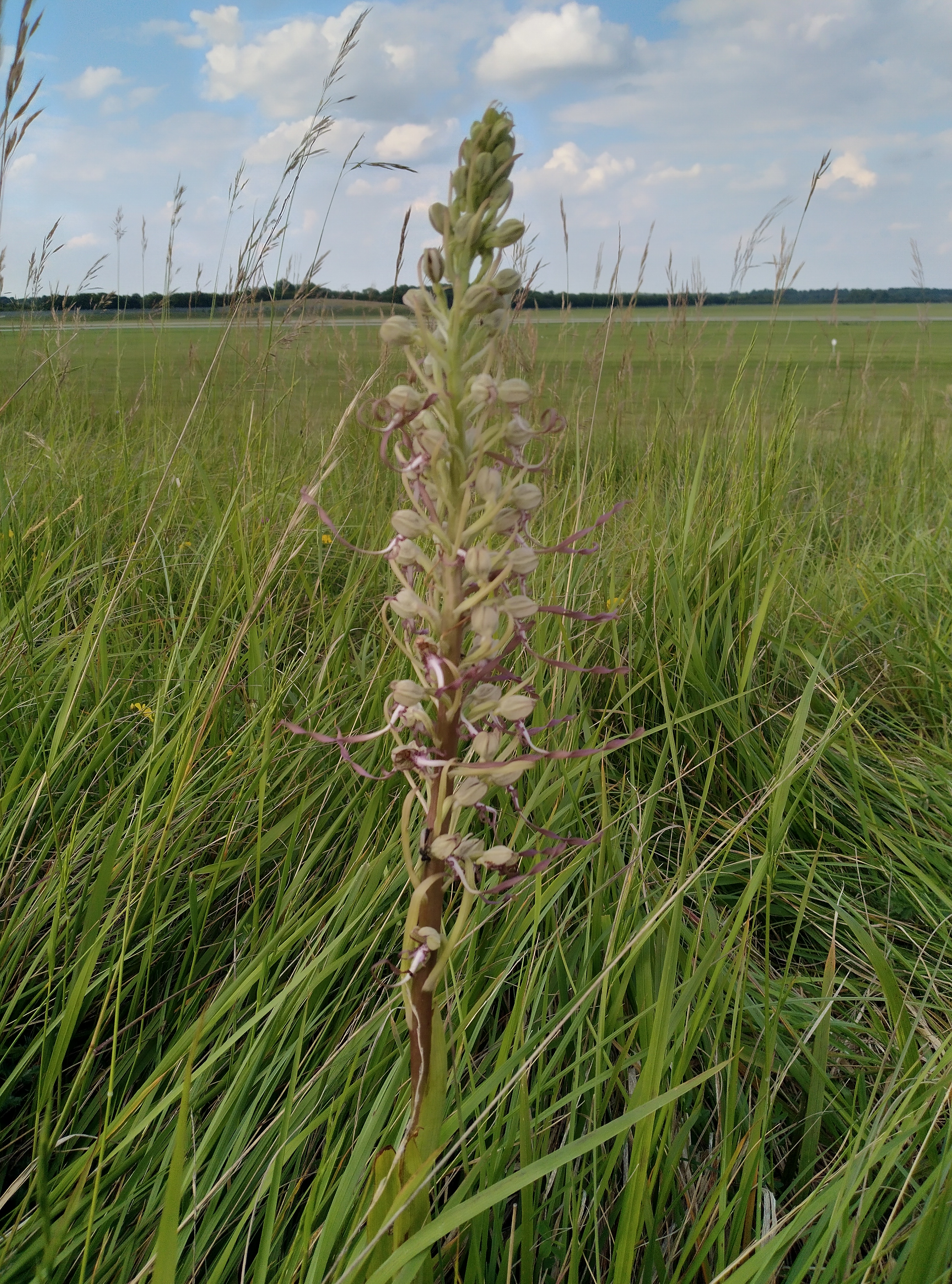
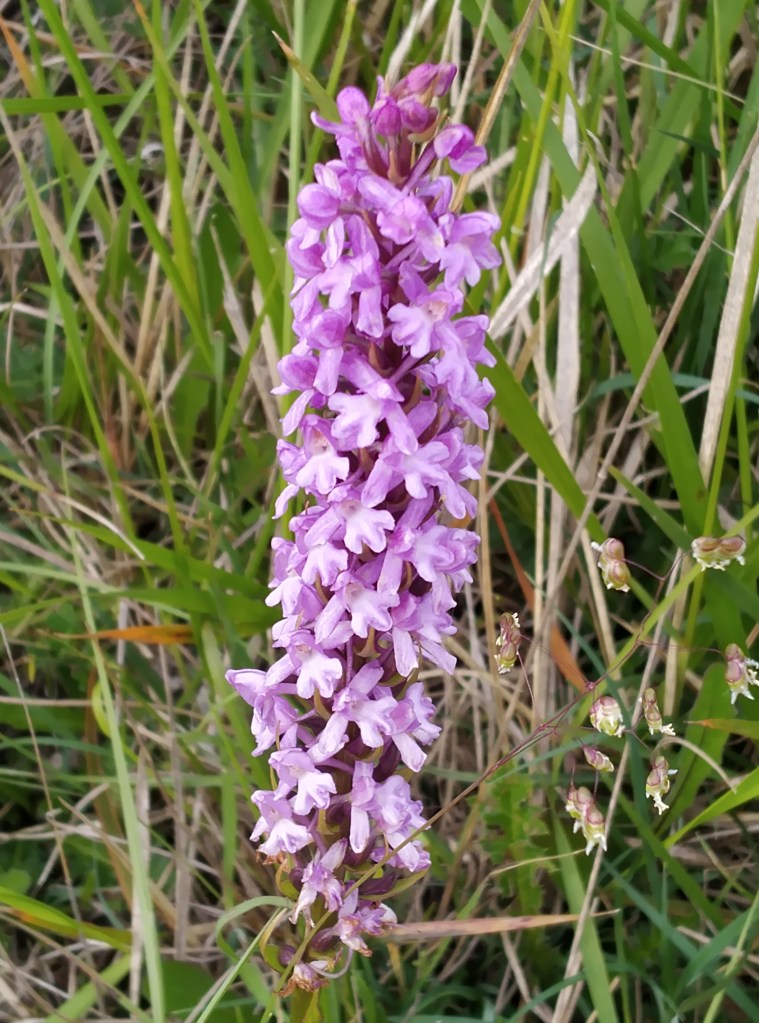
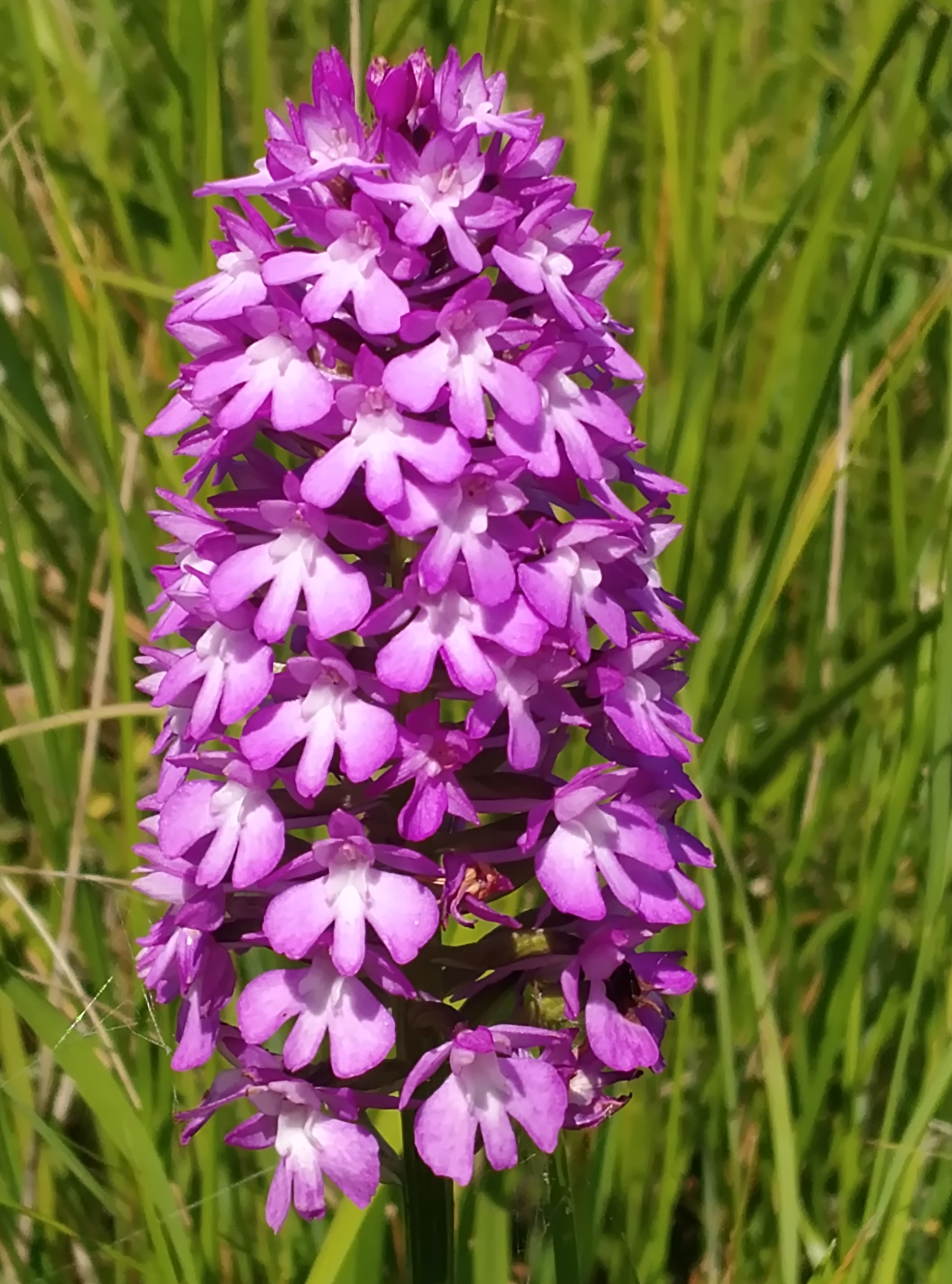
It is along this stretch that most of the orchids are found. Pyramidal Orchids seem to be the most common, but the stars of the show are the Lizard Orchids. These are tall and striking, and can be seen in good numbers on the grassy slope of the ditch. They are a very scarce and localised species but seem to do well here in the well-drained, chalky soil. Flattened patches of grass next to some of the best looking specimens are an indication that people come here just to spend time in their presence. Lizard Orchids are reputed to smell strongly of goats. I’m not in the habit of sniffing goats, but these plants definitely have a distinctive livestock odour.

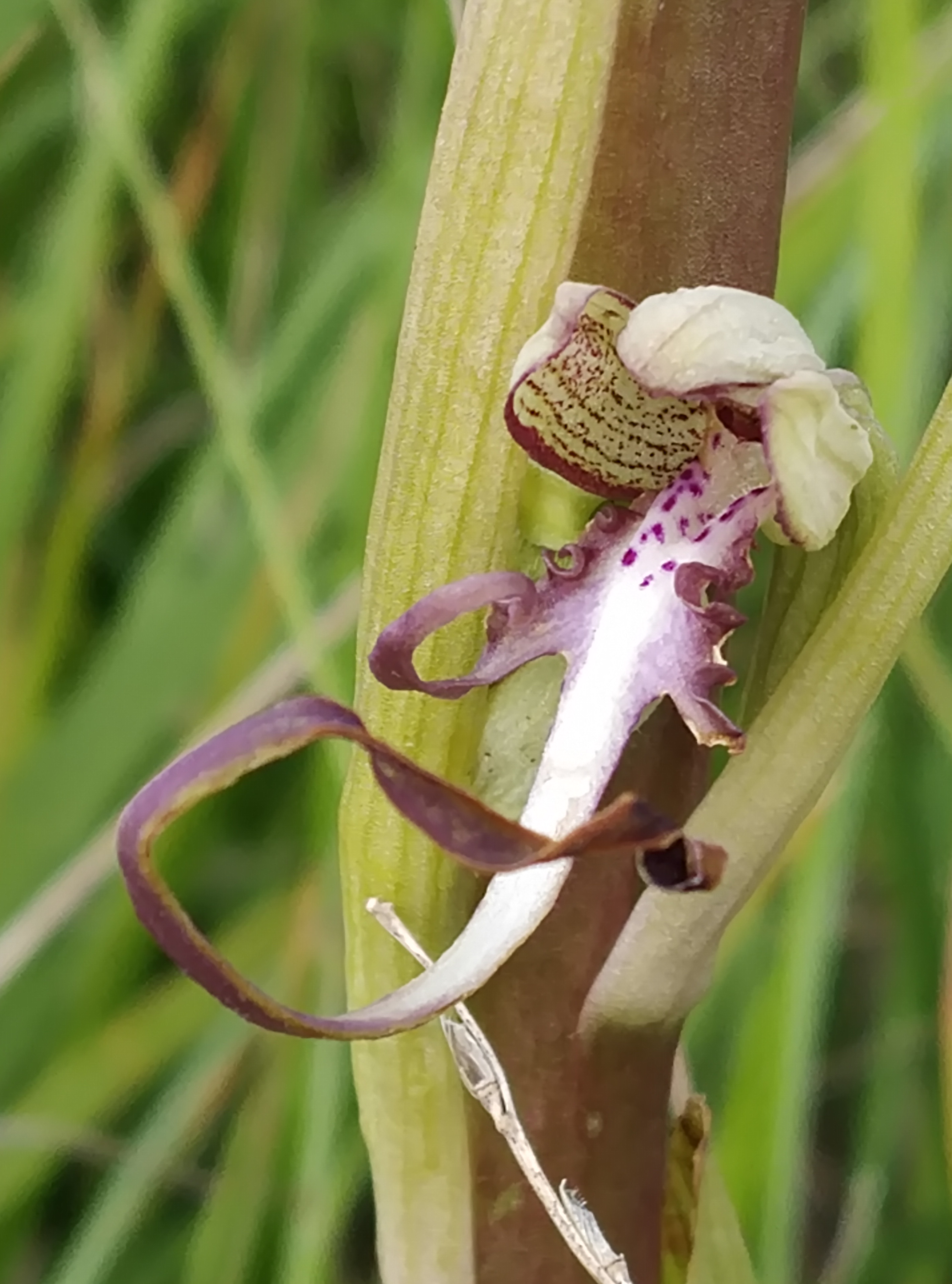
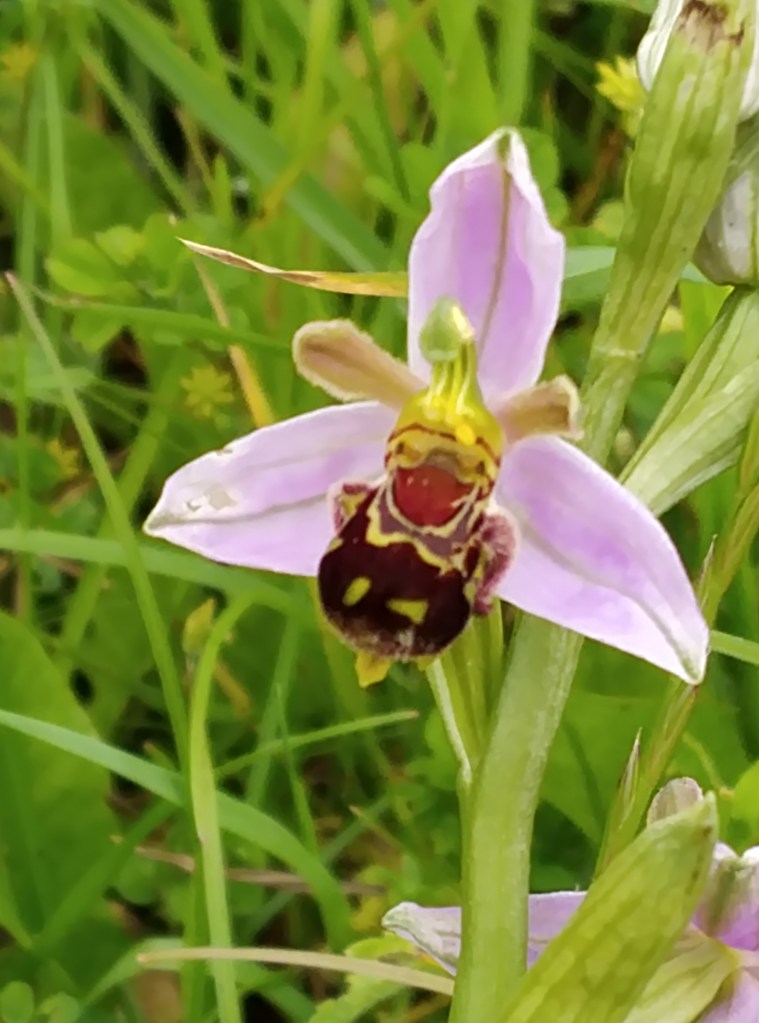
I have also found a single Chalk Fragrant Orchid, which I forgot to sniff but, judging by the name, it probably smells nicer than goats. Bee Orchids supposedly grow here too, but I’ve never found any at this location.
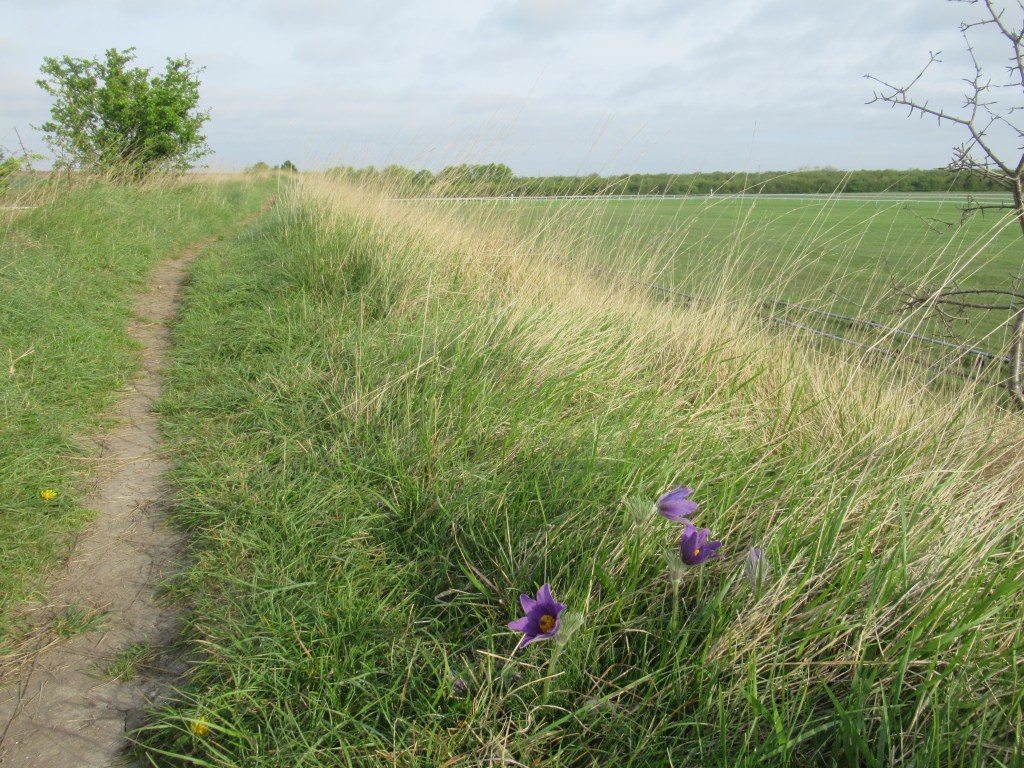
Earlier in the spring, Pasqueflowers can be seen here in good numbers – another scarce and localised species that I saw this year for the first time.
“…the chance to find a pasque-flower is a right as inalienable as free speech.”
Aldo Leopold 1948
On the heath itself I identified for the first time another unusual flower that looked somewhat like an orchid but isn’t related – a single spike of Common Broomrape. This plant, with a slightly dodgy name, is a parasite of other grassland plants such as clovers and thistles.

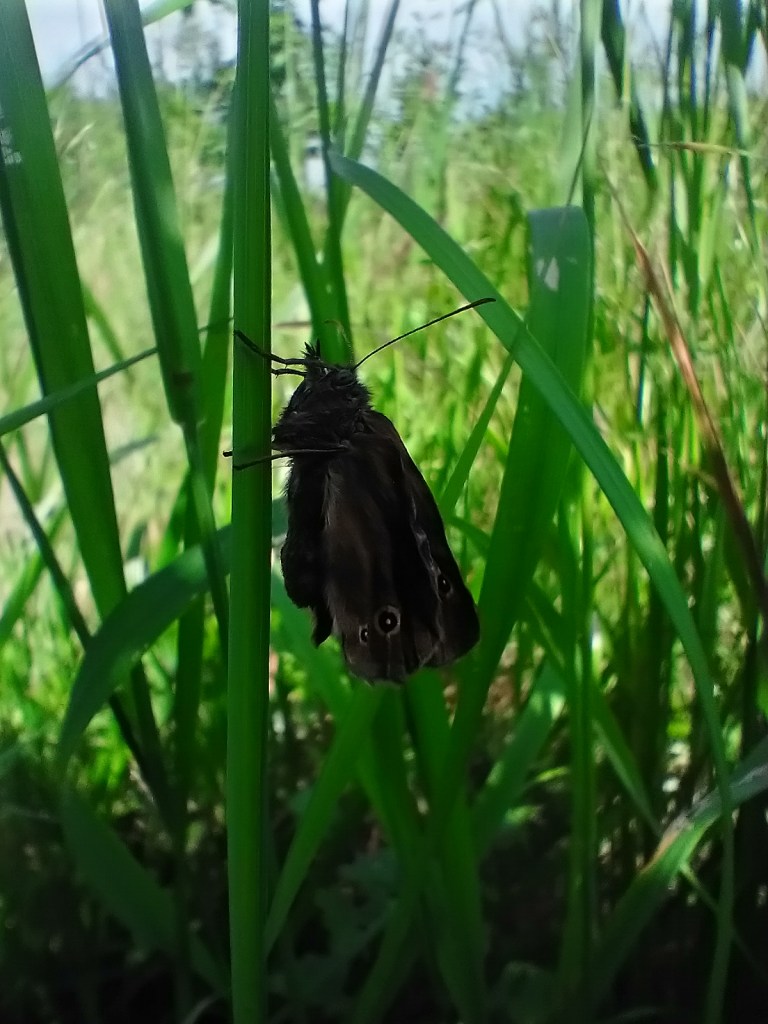
Most of Devil’s Dyke is managed with wildflowers in mind. Scrub is routinely cleared away to prevent it shading out the characteristic chalk grassland plants and this also makes it an ideal site for butterflies. As well as many common and widespread species, the Dyke is home to some more localised insects such as Chalkhill Blue and Marbled White, which can be abundant on sunny days at the right time of year.

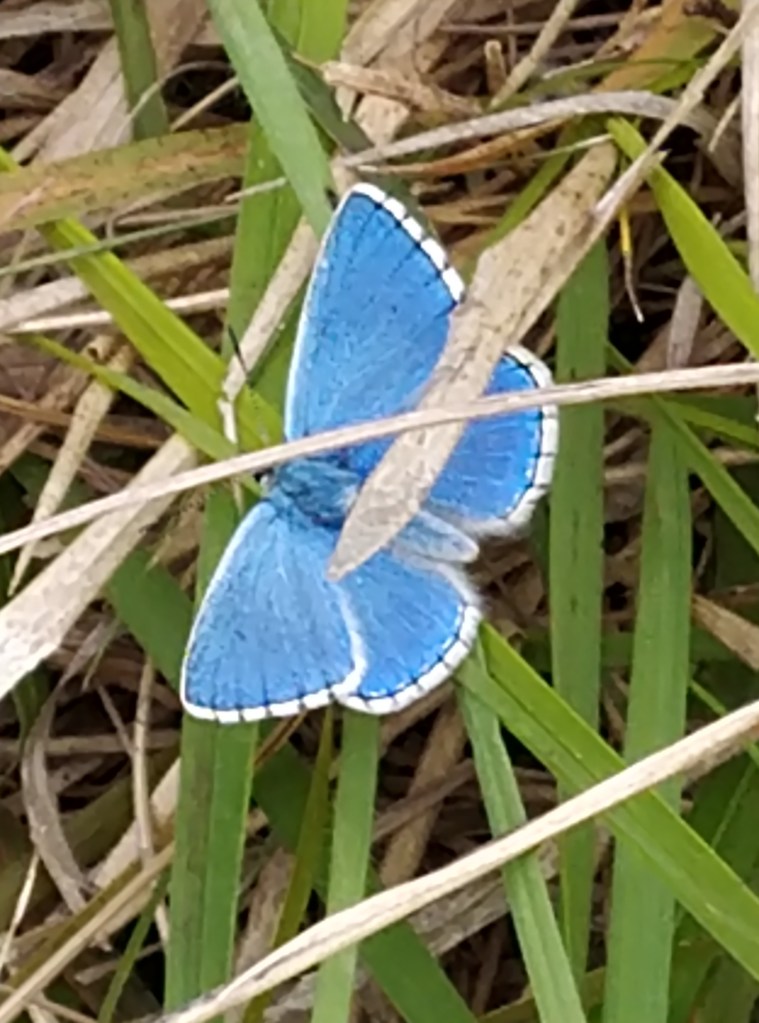
I managed to see a few individuals of the dazzling Adonis Blue, which has been unofficially re-introduced here by persons unknown.
Beyond the racecourses, the dyke is cut through by the dual carriageway that by-passes Newmarket and must be crossed via a narrow footbridge. Leaving the sound of traffic behind, it continues into an area that is grazed by sheep to create a short grass sward and a stunning display of wildflowers. Pyramidal Orchids are abundant here.
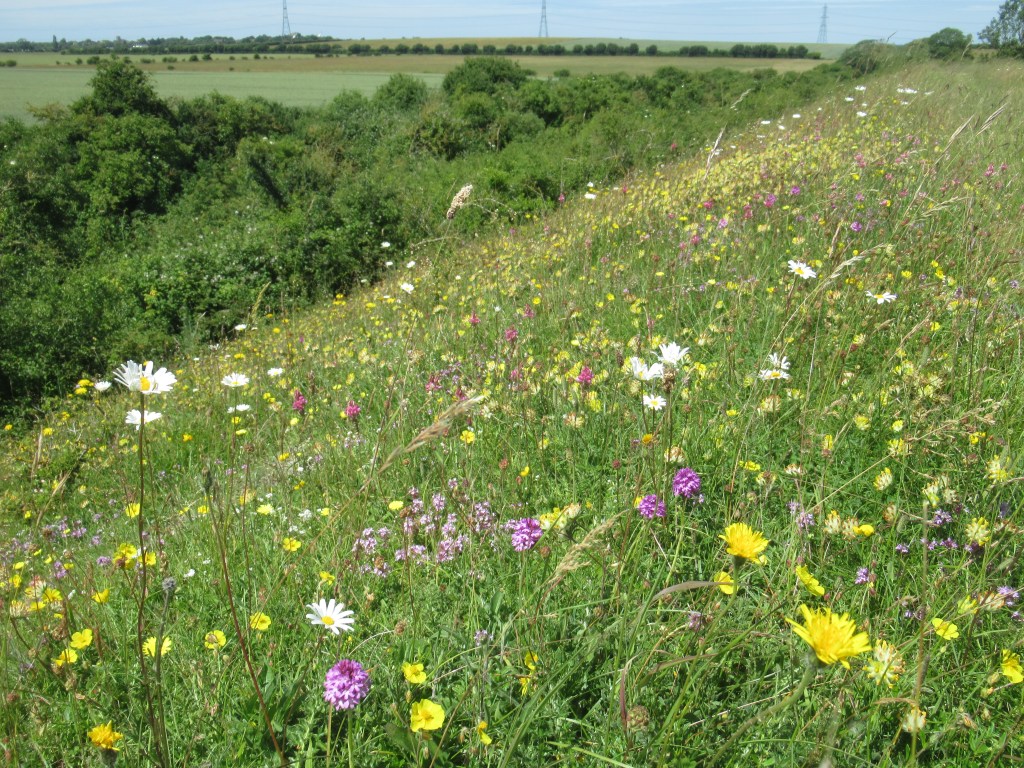
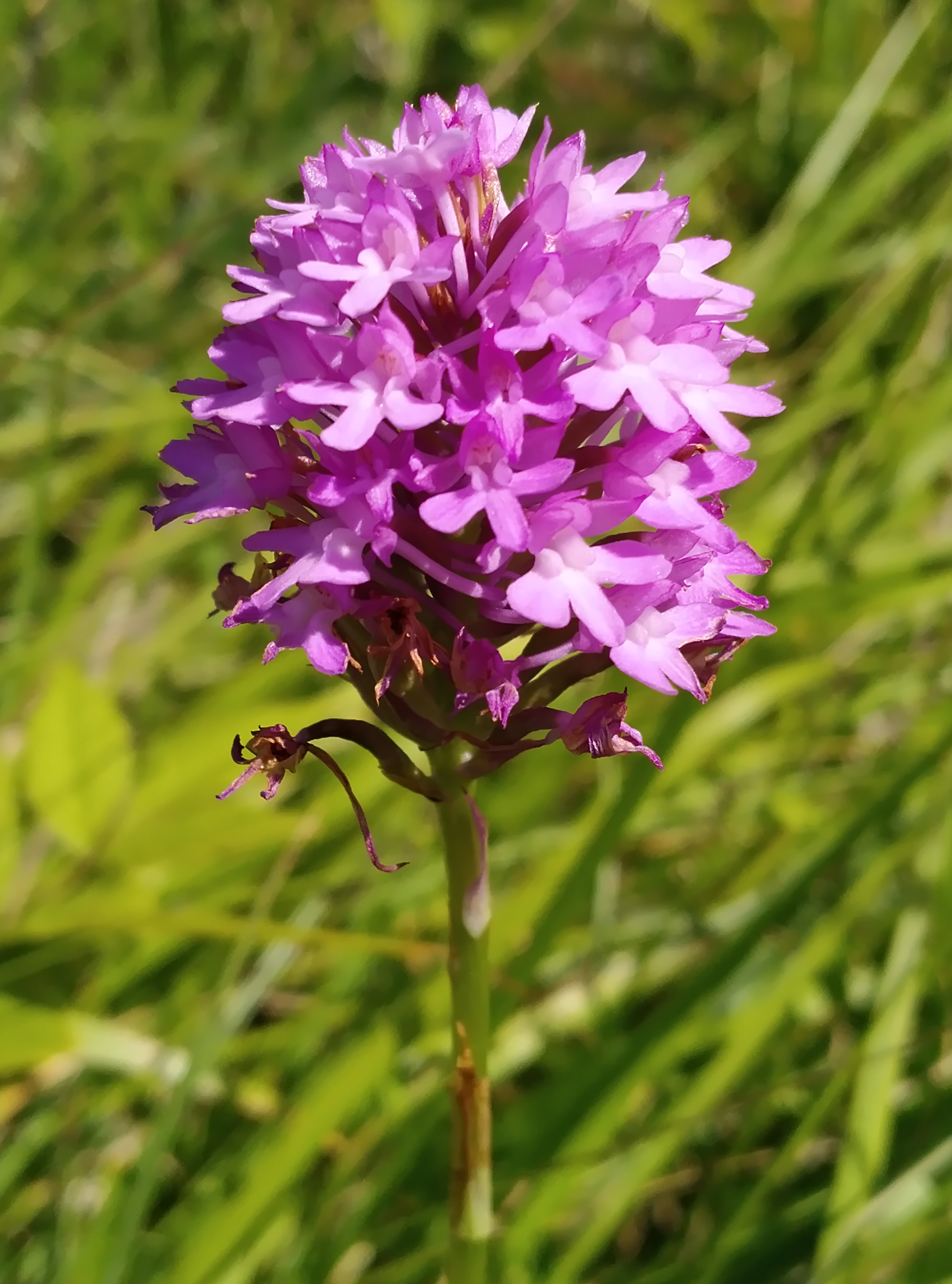
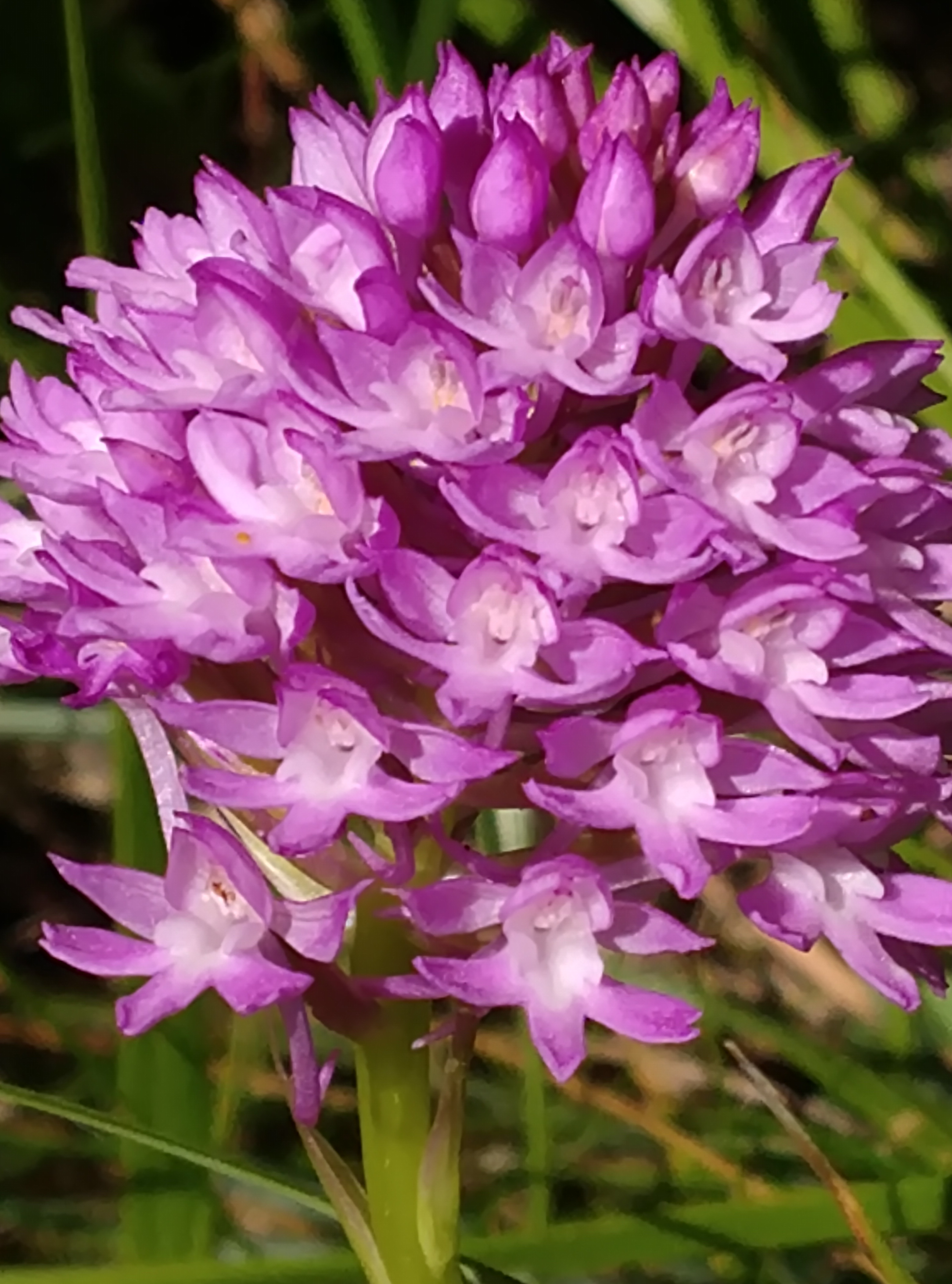
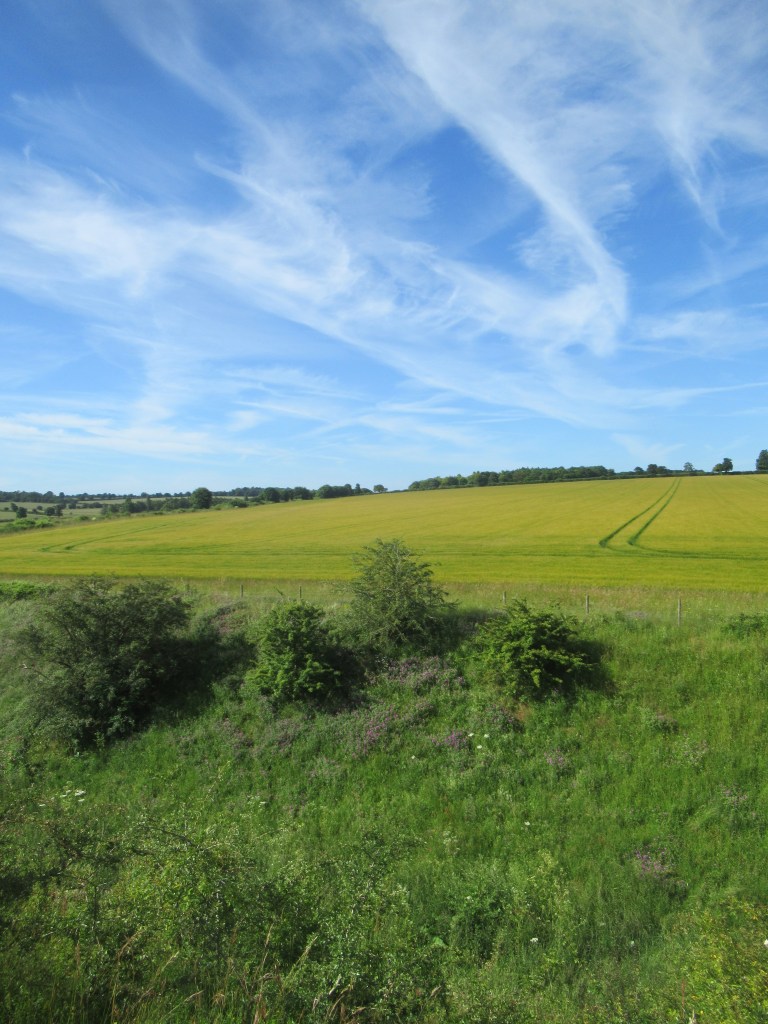
Further along, the dyke rises to its highest point and it is worth turning around to admire the extensive view behind you, as well as the 360° panorama. Roe Deer and Brown Hares can be easily seen in the surrounding arable land.
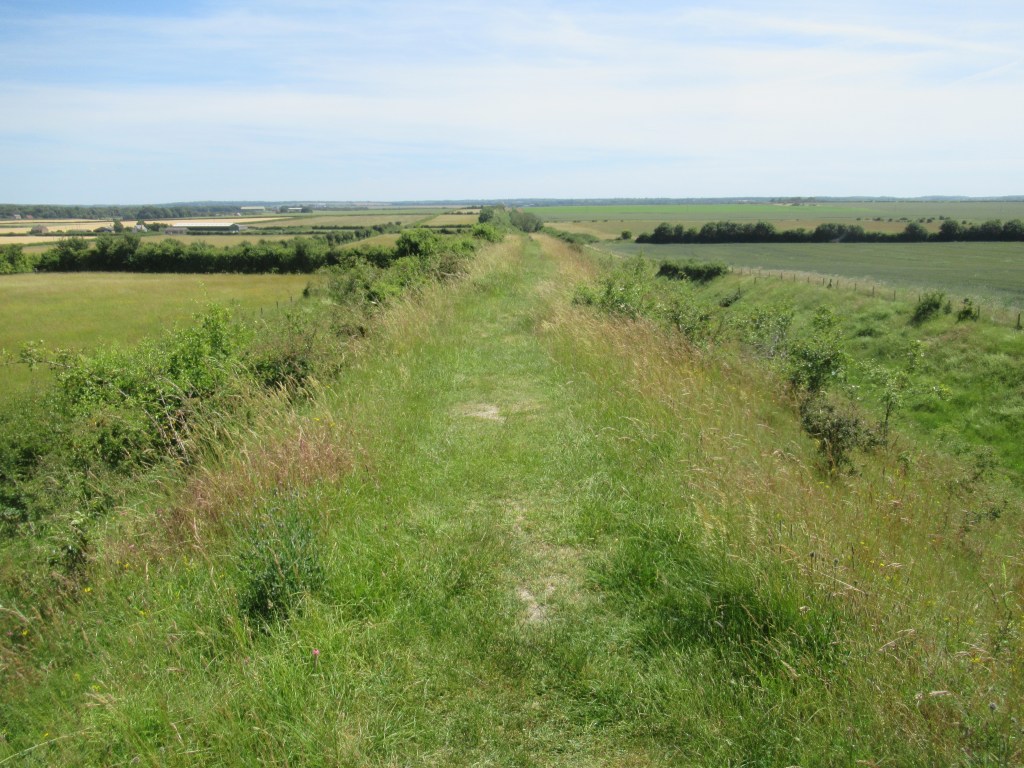
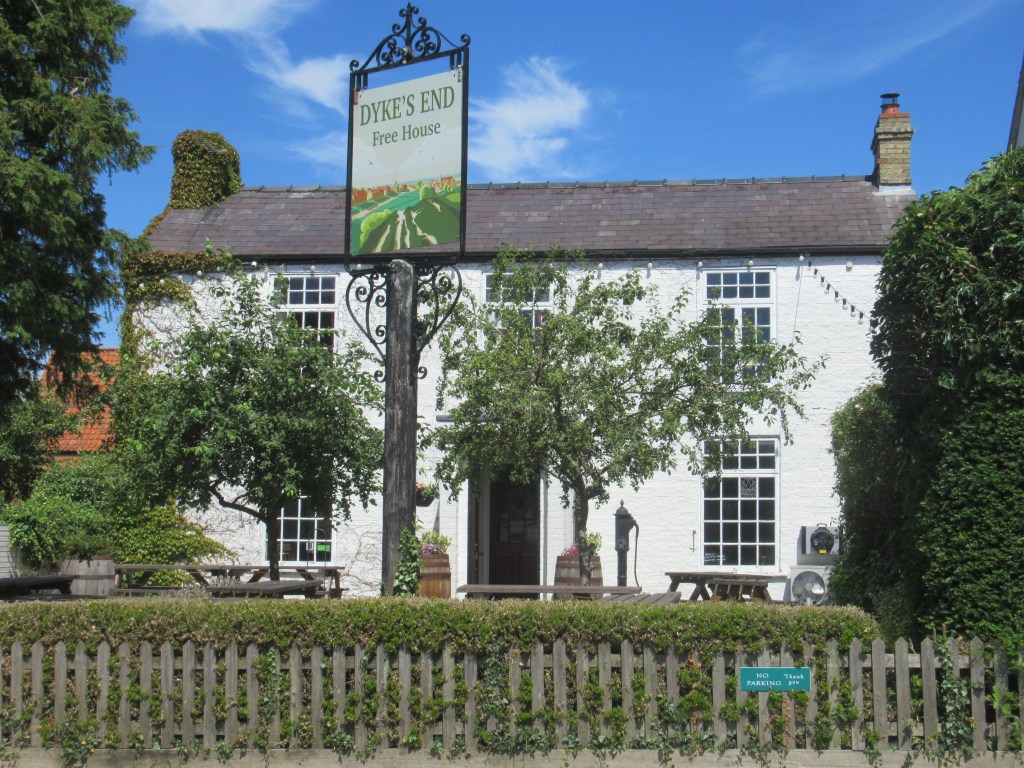
Scrub has been allowed to encroach onto Devil’s Dyke towards its northern end, and the final mile or so of the walk follows a path between tall bushes until you suddenly step out onto the village green of Reach. This is a textbook sleepy English village, with attractive cottages and a lovely country pub where you can refresh yourself in the beer garden before catching a bus back to Newmarket or Cambridge.


 Vole Explosion
Leave a reply to Carlos Davies Cancel reply