29th September 2024
‘Poppyland’ is a quaint name given to an area of coastal north-east Norfolk, UK, between the seaside towns of Sheringham and Mundesley. It was popularised by the 19th century poet and theatre critic Clement Scott, who first visited the area from London in 1883 and coined the term Poppyland in his poem The Garden of Sleep. Scott was an influential figure in London society and this poem, along with his other writings, soon popularised this area of the country with Victorian holiday visitors – something Scott was later to regret as he watched the crowds descend on this rural idyll of farmland and fishing villages, accelerated by the coming of the railway around the same time.
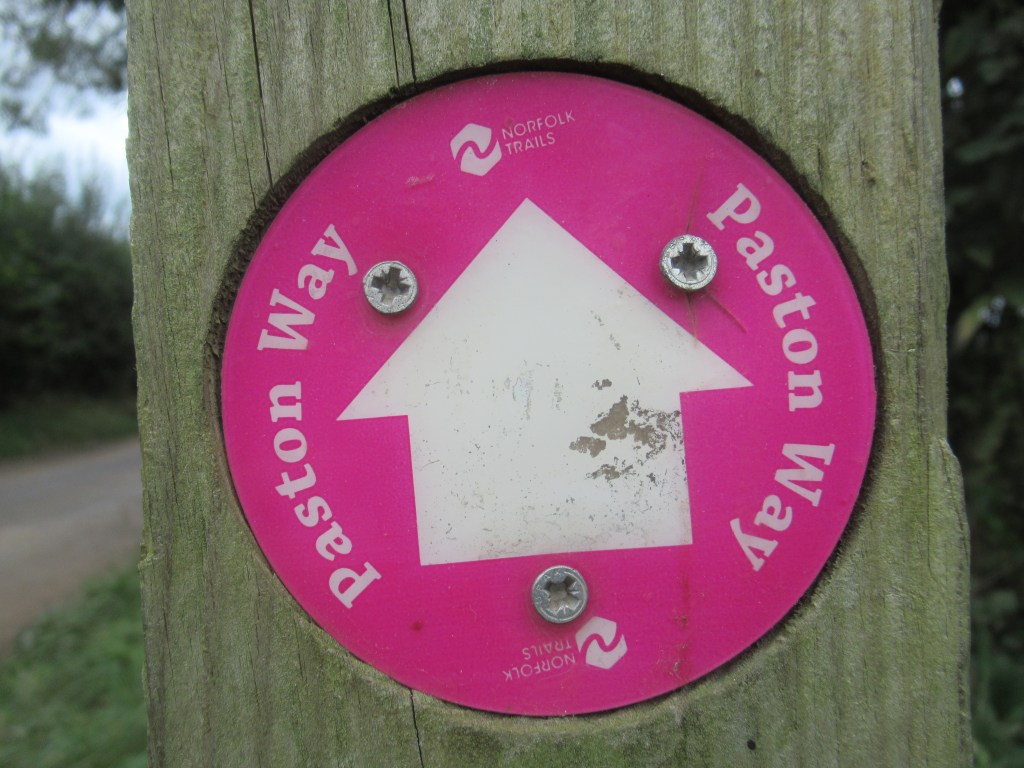
The Paston Way is a well-marked trail through the area which includes some coastal stretches and some inland lanes and footpaths, meandering eccentrically through the farmland with frequent changes of direction. The trail is 22 miles (35 km) long and it links a number of historic village churches. More churches lay just off the route and it can be increased to 29 miles (47 km) by visiting all of them, but I decided to just walk the basic 22 mile trail over two days.
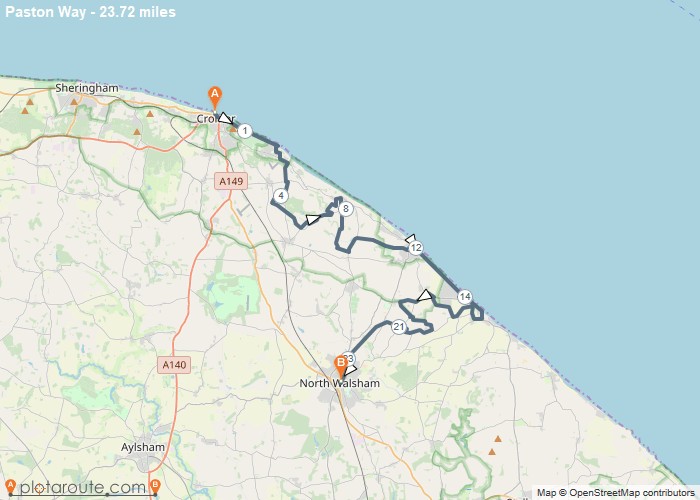
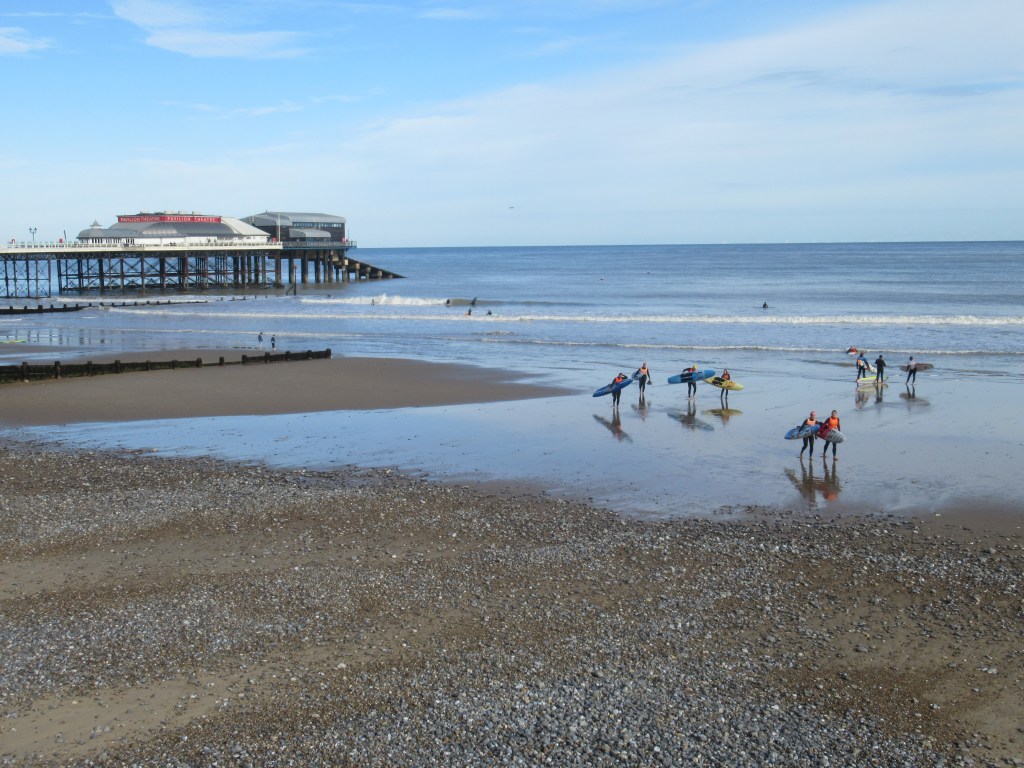
I started from the pier in the seaside town of Cromer and walked east along the beach. Because of limited Sunday public transport, I didn’t start walking until after 10am. The weather was warm and sunny and Cromer was fairly busy. There were quite a few surfers near the pier.
I passed lots of fishing boats on the beach, with tractors to pull them to the sea, and within fifteen minutes I was out of sight of Cromer and had the beach to myself. The beach is very wide and backed by sloping, well-vegetated sand cliffs. Below these cliffs the beach is covered in large pebbles, turning to fine sand nearer the water. The tide was out, so the walking was easy on firm, wet sand.
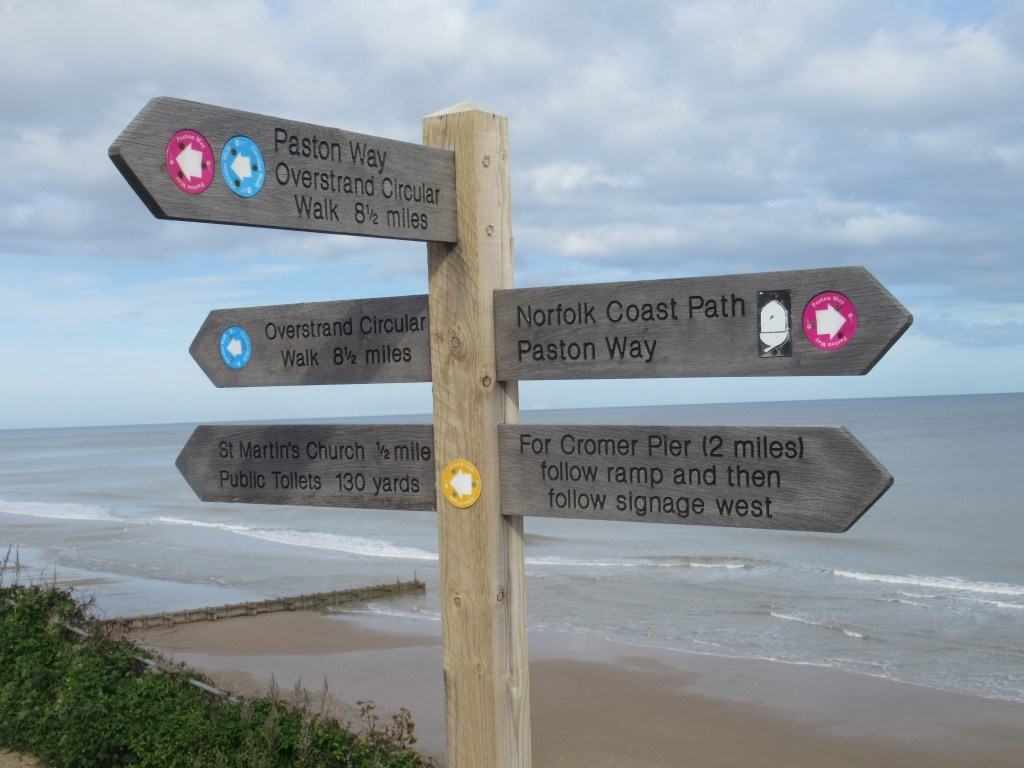
I soon left the beach and climbed a steep ramp up the cliff to the village of Overstrand, filled with traditional Norfolk flint houses, of which I would see many on this walk. Some of the grander buildings in this small village were designed by Sir Edwin Lutyens, the architect responsible for the design of much of New Delhi, India, as well as the Cenotaph in London, and many other buildings and war memorials around the world.
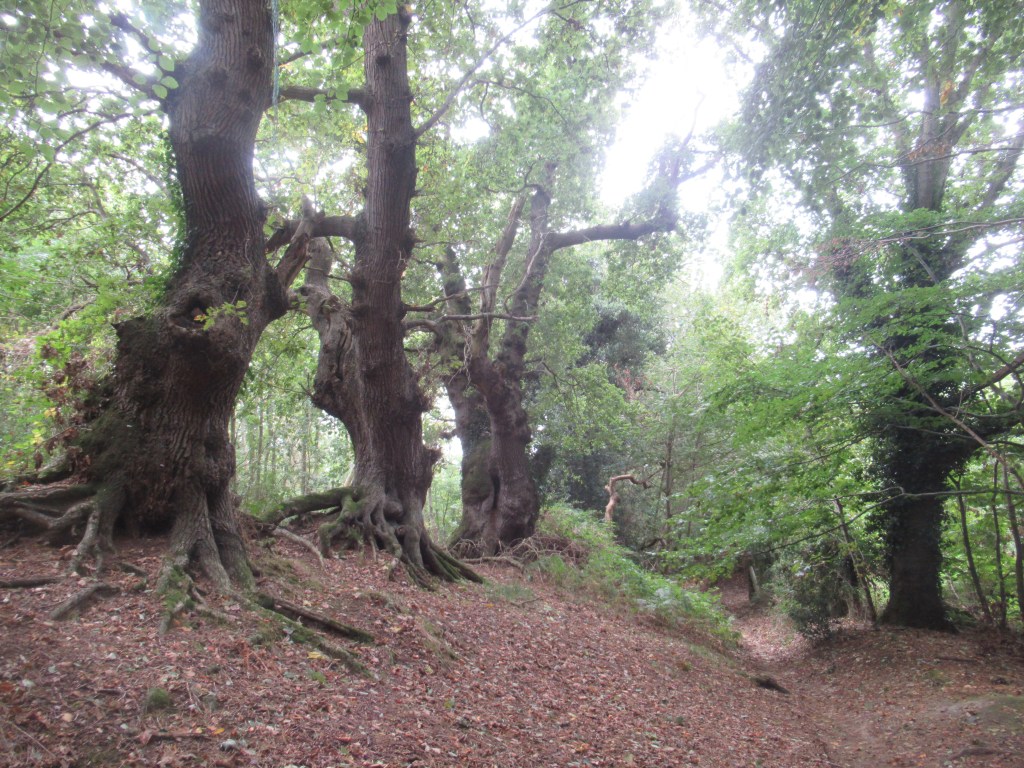
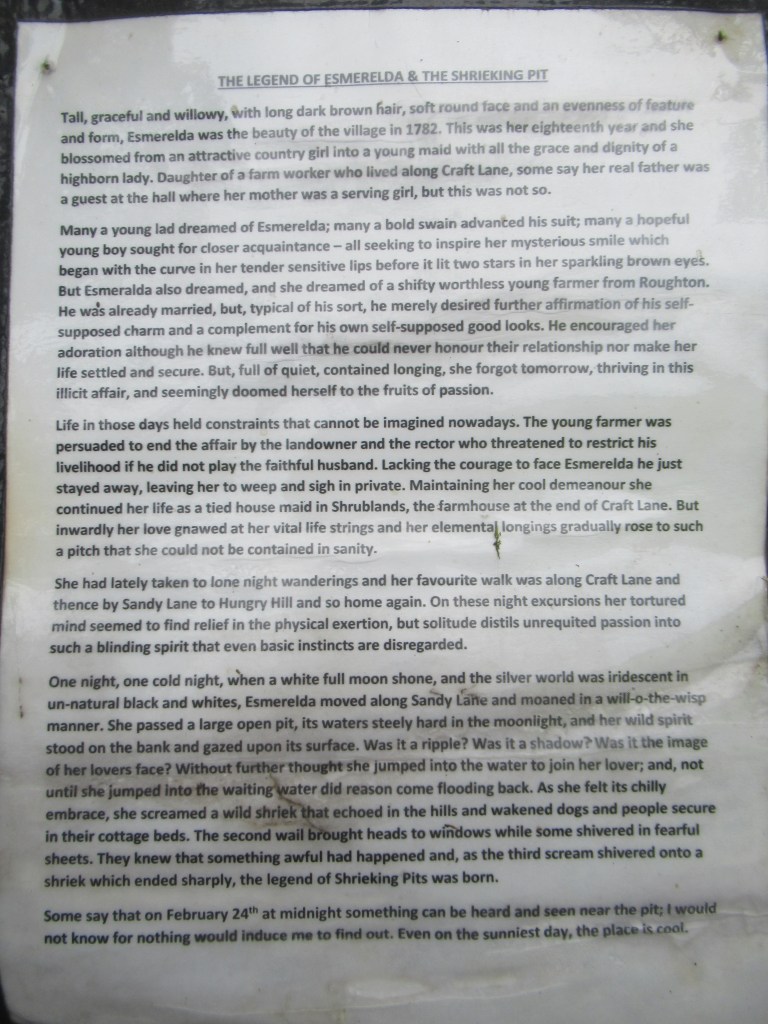
The trail was surprisingly hilly as it headed away from the coast and underneath a disused railway line, through a small patch of woodland with a large fairy-ring of parasol mushrooms, and then out into the open onto some typical Norfolk farmland. Along an oak-lined lane I passed a pool of water known as The Shrieking Pit, where someone had pinned a sheet of paper bearing the legend of Esmerelda – a broken-hearted local girl said to have drowned here 1782.
Not far from there, but not on the route, is the seaside village of Sidestrand. This is where Clement Scot wrote The Garden of Sleep (his ‘Poppyland’ poem) in the churchyard. By the time of his visit, the church had already been demolished a couple of years earlier and rebuilt further inland to avoid the rapid coastal erosion that plagues this part of Britain. All that remained when he wrote the poem was the church tower, and this too eventually toppled into the sea in 1916.
After walking through more farmland and small woods the trail headed back towards the coast at the village of Trimingham, where I stopped for a rest. I came here in summer 2022 to visit a nearby sand quarry where a flock of European Bee-eaters were rearing their chicks in nesting burrows they had excavated in the quarry walls. These exotic-looking birds are more commonly seen in southern Europe but, with rising temperatures, they are increasingly attempting to nest in the UK.
The trail then headed back inland again and, not far outside Trimingham, there was some confusion with the signage. I think the trail has been re-routed and some of the old waymarks had been left up. I followed the old route (which apparently ran parallel to the new route) for about a mile before getting back on track. I stopped for another brief rest in Gimingham, then continued east towards the coast again.
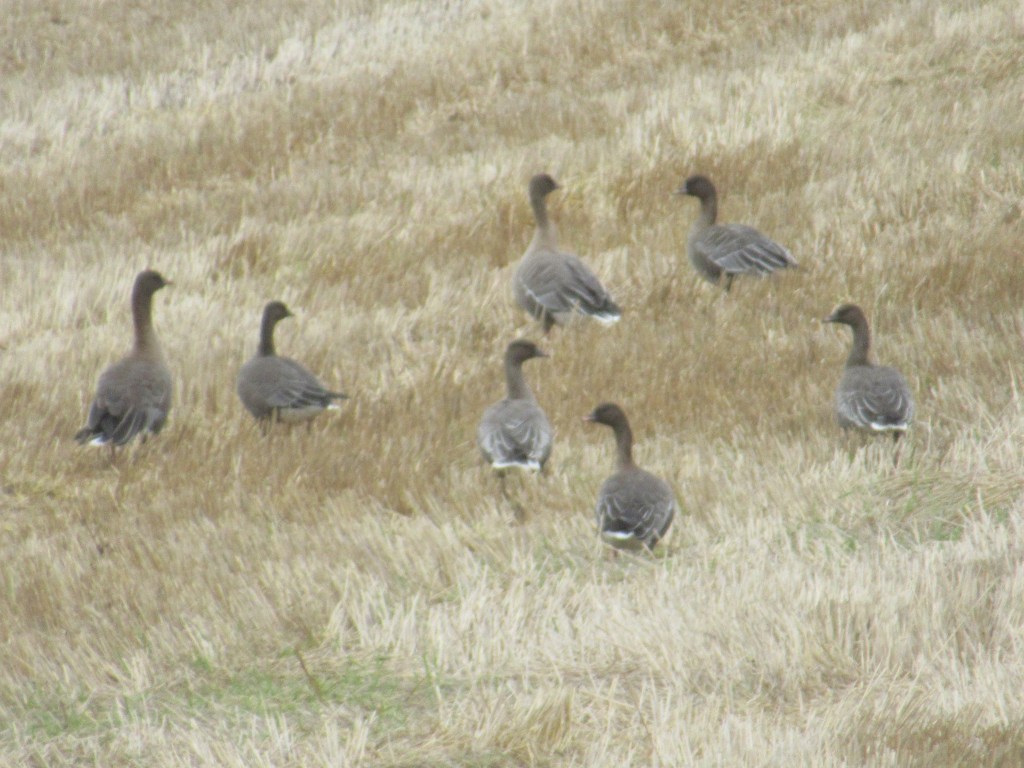
Before reaching the half-way point at Mundesley I passed about 200 Pink-footed Geese in a field. These wild geese breed in Iceland, Svalbard, and eastern Greenland before flying to the UK to spend the winter, so presumably they had arrived here recently. Normally they’re quite shy, but they didn’t seem too bothered as I passed by fairly close.
I arrived in the seaside town of Mundesley before 2.30pm and this was originally meant to be the end of the first day’s walking. I was due to catch a bus back to my accommodation in Sheringham and return tomorrow morning to continue. However, the weather forecast for tomorrow looked terrible so I decided to attempt the whole walk in one day. This meant I would have to pick up the pace to finish the second half before nightfall.
I stopped for a quick half-time beer in the Ship Inn before setting off. The fish and chips sold on the seafront smelled delicious, but unfortunately I didn’t have time to eat any. There was also traditional Norfolk dairy ice cream on sale but the weather had already cooled down significantly since the warmth of this morning. It had also clouded over and the wind had increased.
For me, Mundesley will always be associated with school trips. Aged nine, I spent a week here on my first ever school holiday, having recently started at a new middle school. The friends I made on that trip remained friends throughout our teens and into our twenties before we inevitably went our separate ways and lost touch.
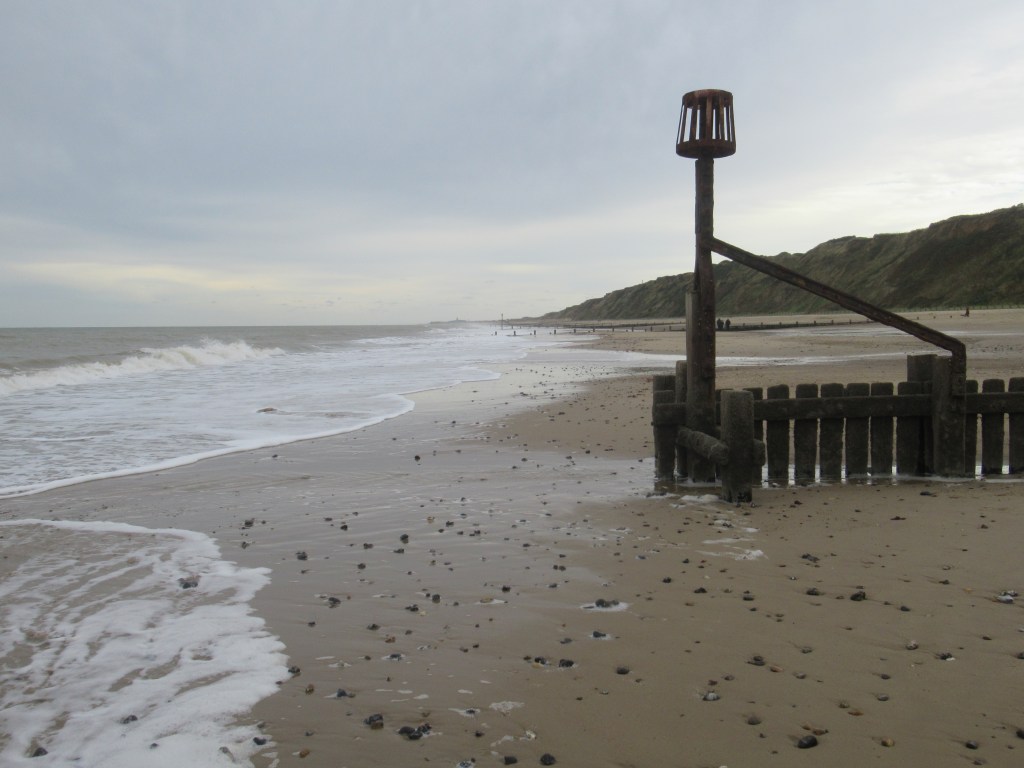
The start of the second half of the Paston Way looks remarkably similar to the start of the first half. I left Mundesley along the sea shore again – another wide beach backed by tumble-down sandy cliffs. These soft cliffs around Norfolk are a good place to find fossils. They are constantly eroding to reveal fossils of mammalian megafauna, including the largest mammoth ever found in the UK, and the remains of rhinoceros, wolf, hyena and bison. Footprints of early humans have also been found nearby and dated to 850,000 years ago, making them the oldest human footprints found outside of the Great Rift Valley in Africa, and the earliest evidence of humans in the UK. Consequently this area of Norfolk sells itself as the ‘Deep History Coast’ and many palaeontological information boards are located along the way.
I vaguely remember that we buried one of our school teachers in the sand around here, but I’m fairly sure we dug him out again, so there’s little chance of him ending up in a natural history museum.
Further along the coast stands the industrial sprawl of Bacton Gas Terminal at the top of the cliffs. This was my cue to leave the beach and head inland again, but I missed the turning and ended up walking too far along the beach. I had to loop back around through the village of Bacton to get back on track, adding an extra mile and a half to the walk.
Once back on the trail I stopped for some snacks and a rest before zig-zagging through the countryside again in a roughly south-westerly direction towards the route’s end at North Walsham, well inland. I had to complete the final section at a gallop in order to make the most of the remaining daylight and to catch my train, which meant I didn’t get to fully appreciate it. At one point I stopped to photograph some remarkable cloud formations that I later learned are called Mammatus Clouds, so called because of their resemblance to breasts.
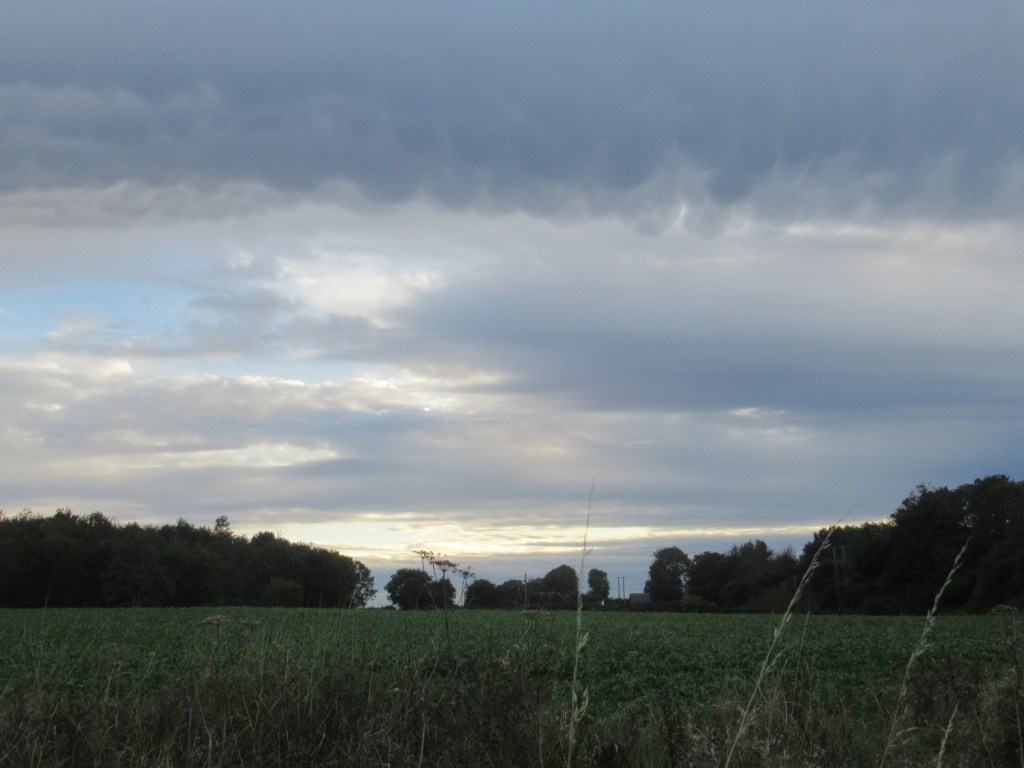

As much as I would have liked to stand around ogling saucy clouds all day, I had to keep moving. I soon learned that this walk requires a bit of self-discipline to resist the urge to take short cuts. The convoluted nature of the trail offers some opportunities to cut corners, but I resisted temptation and kept plodding onwards across fields and down quiet country roads, past more village churches and the 16th century Paston Great Barn which, as well as being a Scheduled Listed Building, is also designated as a Sight of Special Scientific Interest and a Special Area of Conservation because of the maternity colony of rare Barbastelle Bats it contains.
Darkness fell just as I arrived at a disused railway which forms the final 2 miles (3.5 km) of the walk. Fortunately this was a straight, flat path along the top of a wooded embankment that was easy enough to walk at night. I only needed to use a torch to descend some steps to a bridge where the disused railway crosses a disused canal, then up more steps back onto the embankment. This whole area now forms a nature reserve and I would have liked to have seen it in daylight. As it was, I had the company of a couple of Tawny Owls calling to each other in the tree tops.
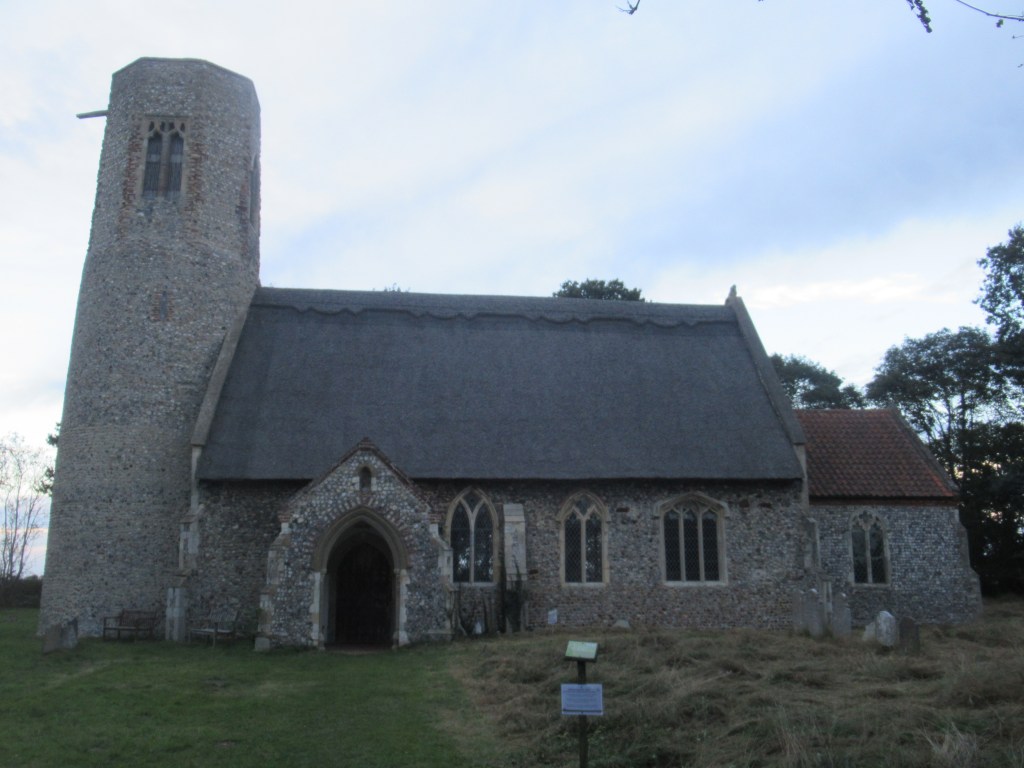
I came off the embankment on the edge of North Walsham, a small town on the Norwich to Sheringham railway that marks the end of the Paston Way. From here it was an easy walk along a well-lit suburban street to the trail’s end at a 14th century church in the centre of town.
23.7 miles; 38.2 km; 9.5 hours
The Garden of Sleep
On the grass of the cliff, at the edge of the steep,
God planted a garden – a garden of sleep!
‘Neath the blue of sky, in the green of the corn,
It is there that the regal red poppies are born!
Brief days of desire, and long dreams of delight,
They are mine when Poppy-Land cometh in sight.
In music of distance, with eyes that are wet,
It is there I remember, and there I forget!
O! heart of my heart! where the poppies are born,
I am waiting for thee, in the hush of the corn.
Sleep! Sleep!
From the Cliff to the Deep!
Sleep, my Poppy-Land,
Sleep!In my garden of sleep, where red poppies are spread,
Clement Scott
I wait for the living, alone with the dead!
For a tower in ruins stands guard o’er the deep,
At whose feet are green graves of dear women asleep!
Did they love as I love, when they lived by the sea?
Did they wait as I wait, for the days that may be?
Was it hope or fulfilling that entered each breast,
Ere death gave release, and the poppies gave rest?
O! life of my life! on the cliffs by the sea,
By the graves in the grass, I am waiting for thee!
Sleep! Sleep!
In the Dews of the Deep!
Sleep, my Poppy-Land,
Sleep!


Leave a comment