NOVEMBER 2024
For those of my generation, growing up in 70s and 80s Britain, South Africa will forever be associated with the dark days of apartheid. Never far from the TV news, this was the era of protests outside the embassy in Trafalgar Square, boycotts of Sun City and Cape apples, necklacing, and “Free Nelson Mandela!”. South Africa has come a long way since then. The nation still faces the challenges of racism, inequality, poverty, and rising crime, but Madiba’s dream of a prosperous Rainbow Nation still lives on.
When I visited as a tourist I was somewhat shielded from these negative aspects and so, rightly or wrongly, I found the online scare stories to be greatly exaggerated. Everyone I met was friendly and courteous and at no point did I feel in danger. On the other hand, I couldn’t help noticing that every wall was topped with electrified razor wire, even in suburbs that I was assured were completely safe, and we did drive through a few neighbourhoods that I wouldn’t have fancied walking through on my own.
But I wasn’t there for the sociology, I was there for the ornithology: more than 650 species of bird, plus a wealth of impressive mammals, reptiles, amphibians, plants and invertebrates. We had an enthusiastic group of international birders consisting of three Brits, two Americans, two Germans, and a Belgian, and we were determined to see as much as possible on a reasonably-priced, three week tour covering the majority of this fairly large nation.
After assembling in Durban, we began our tour of South Africa by immediately leaving South Africa and heading into the Drakensberg Mountains, up the Sani Pass, and into the Kingdom of Lesotho – the small, highland nation completely land locked by South Africa. Fun fact: Lesotho’s has the world’s highest lowest point – in other words, its geographical lowest point is higher above sea level than the lowest point of any other nation.
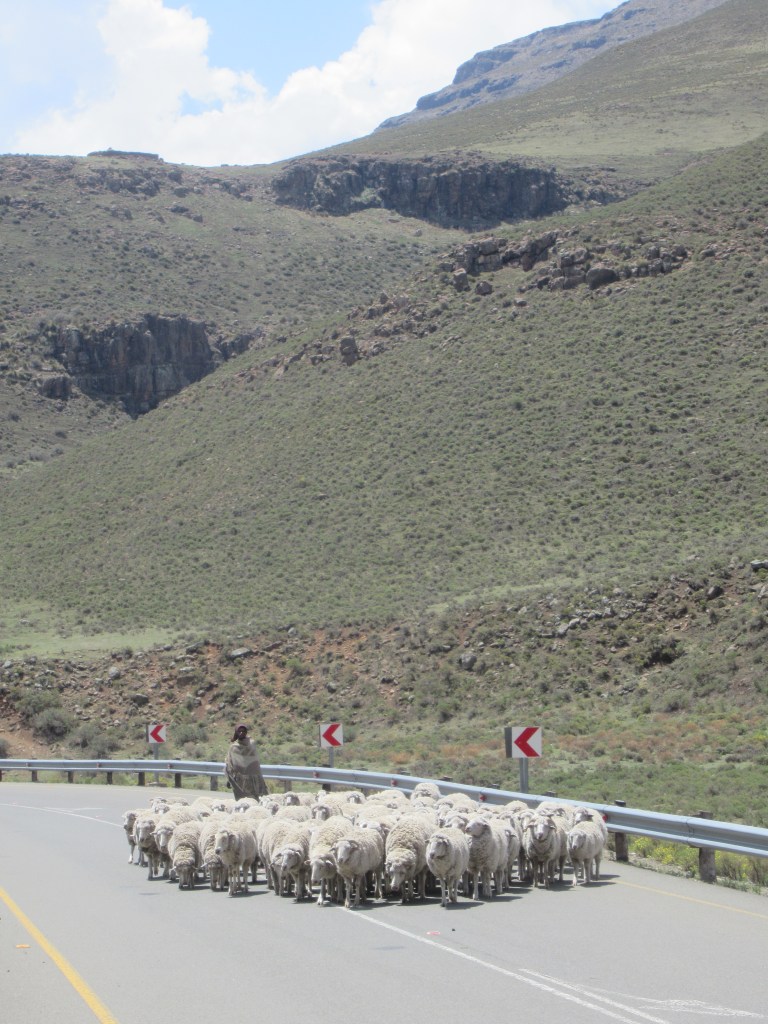
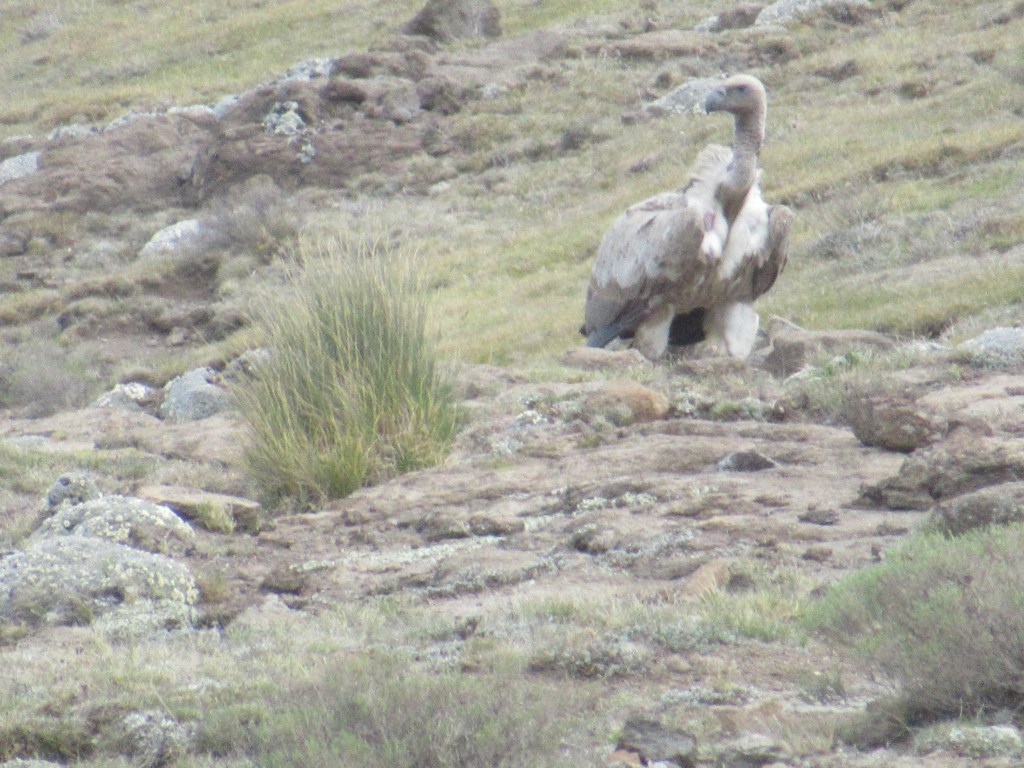
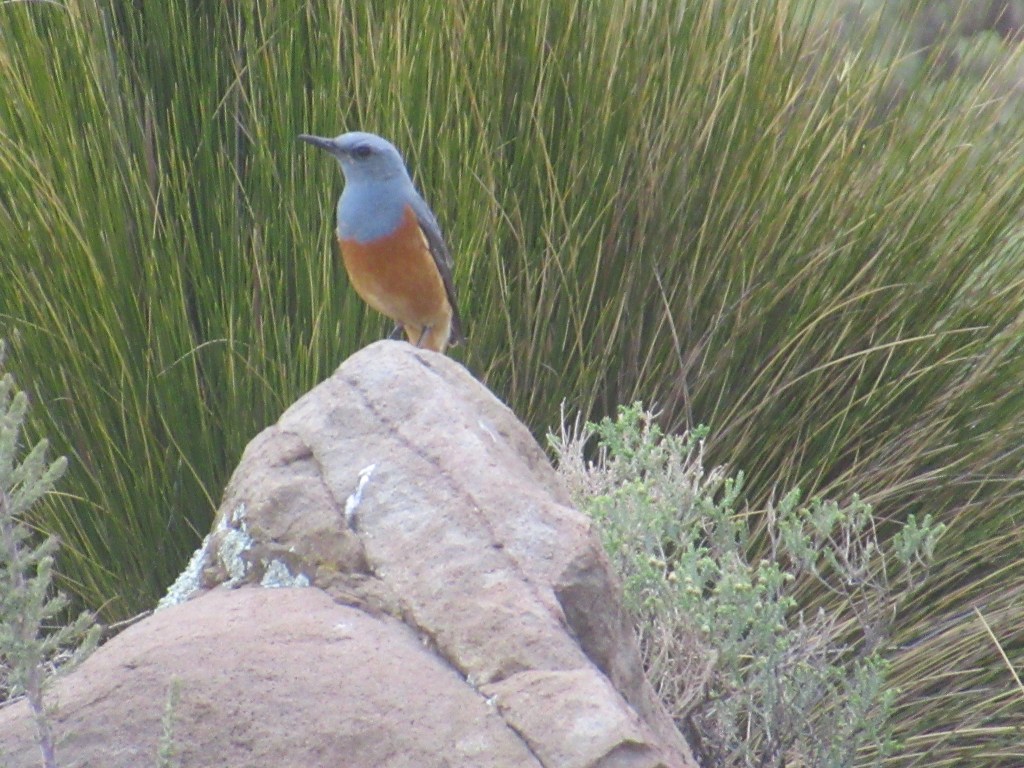
Most of our tour was to be conducted in a minibus, but for our day trip to Lesotho we transferred into two 4×4 vehicles. The wisdom of this was made immediately obvious by the gradients and appalling state of the roads. The borders of South Africa and Lesotho are surprisingly far apart, and the no-man’s-land in between is not maintained by either nation. When you arrive at the South African border crossing you park up and walk to the checkpoint to get an exit stamp in your passport, then you leave the tarmac and bounce uncomfortably along steep, deeply-rutted, spine-jarring dirt tracks until you reach Lesotho’s border crossing. Here you leave the vehicle again to get your entry stamp, and then you’re back on a much more pleasant paved road on a high plateau.

By the time we reached Lesotho we had already racked up nearly a hundred bird species, plus some lizards and our first mammals – Vervet Monkeys, Chacma Baboons, and a couple of antelopes: Bush Duiker and Grey Rhebok. These would be the first of many antelopes. Africa has lots of antelopes! But the award for top mammal of the day goes to Slogget’s Vlei Rat. Much cuter than their name suggests, these little Guinea-pig look-alikes were easily seen nibbling grass outside their burrows.
The most interesting birds of the day were Gurney’s Sugarbird and Drakensberg Rockjumper, representing completely new bird families for me, and both occurring within tiny ranges restricted mostly to the Drakensberg Mountains. There are only two species of Sugarbird and two of Rockjumper, the other member of each family occupying an equally small range near Cape Town (which we were to see later).
Other range-restricted birds that we could only see around these mountains were Southern Bald Ibis, Mountain Pipit, Drakensberg Prinia, and Drakensberg Siskin.
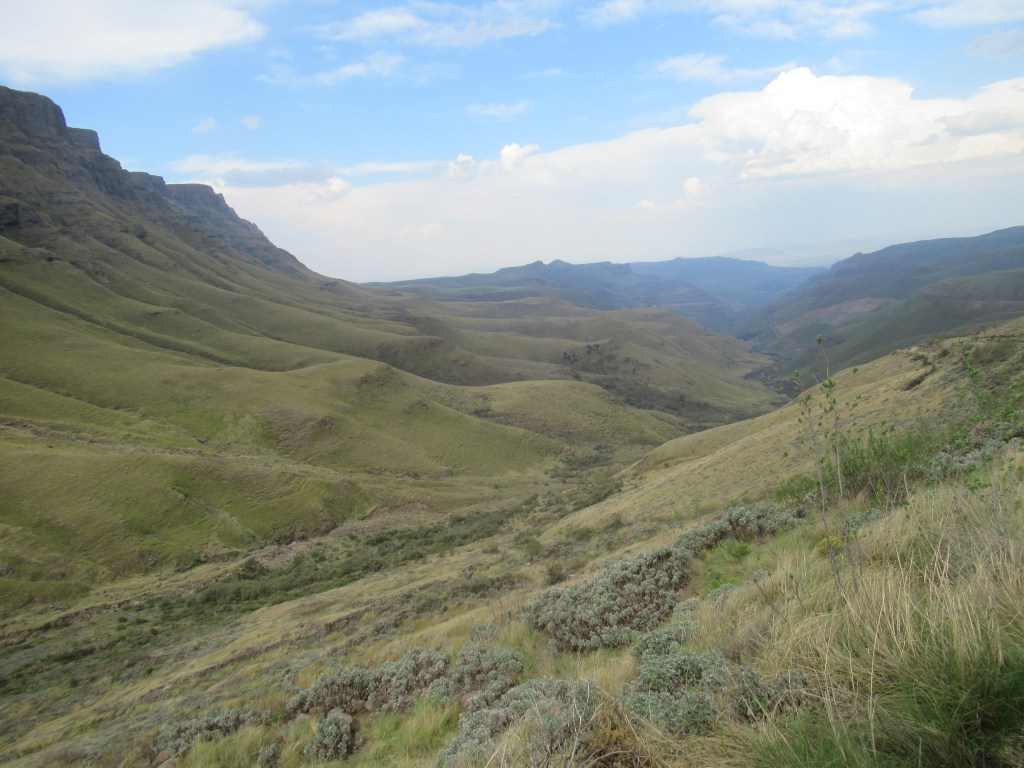
We continued about 20-30 km (12-18 miles) into Lesotho, over Sani Pass at 3240m (10,600 feet), then turned around and returned to South Africa. By the time we bounced back downhill (through the two passport controls) we were all feeling tired and physically battered, but we had seen over a hundred bird species and were awed by the spectacular scenery of the Drakensberg Mountains. Their name comes from the Dutch colonists and means “Dragon Mountains” and their Zulu name translates as “Barrier of up-pointed spears”.
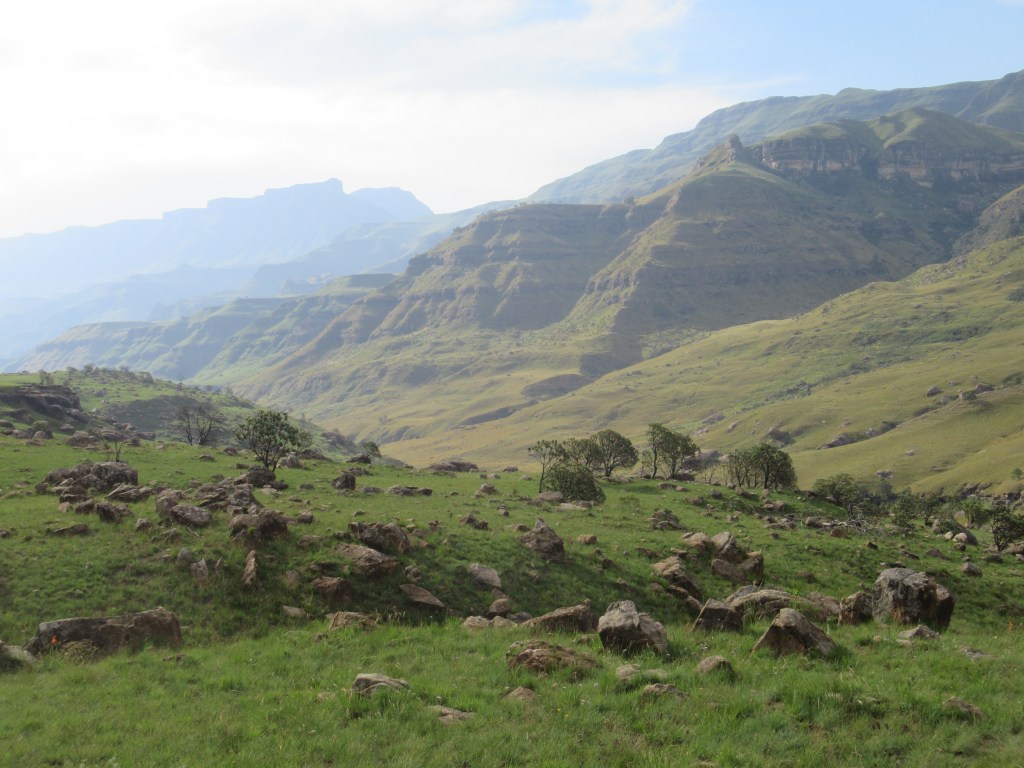
For the next couple of days we explored some forest reserves in the KwaZulu-Natal region and did our best to avoid the heavy storms that were passing through, all the while adding numerous birds to our trip list, with rare Cape Parrots being one of the more elusive highlights. South Africa has different weather systems in the east and west, and we were experiencing the eastern rains. Later we would be travelling in the west, which we were assured would be hot and dry.
Blue Crane is the national bird of South Africa and we saw many of these elegant beauties around the country, as well as Grey Crowned Cranes and a single Wattled Crane, all in the open grasslands. In the forests we saw Narina Trogons and three species of colourful Turaco, amongst many other birds.
One morning we visited a private nature reserve belonging to the owner of the tour company to search for Black-rumped Buttonquail, a small, quail-like grassland bird that likes to remain hidden in the vegetation and only reveals itself if it absolutely has to. The technique employed here was an ‘organised flush’ – we spread out in a line and then walked forward through the grassy hills until this shy bird was sufficiently intimidated by the approaching humans to fly a short distance to its next hiding place. A thick, atmospheric fog rolled in, severely reducing our visibility and making me feel like we were scouring the hillside for the remains of a lost child in a Scandinavian crime drama. Fortunately, it didn’t take long for a Buttonquail to fly up from beneath somebody’s foot, and we got a brief flight view.

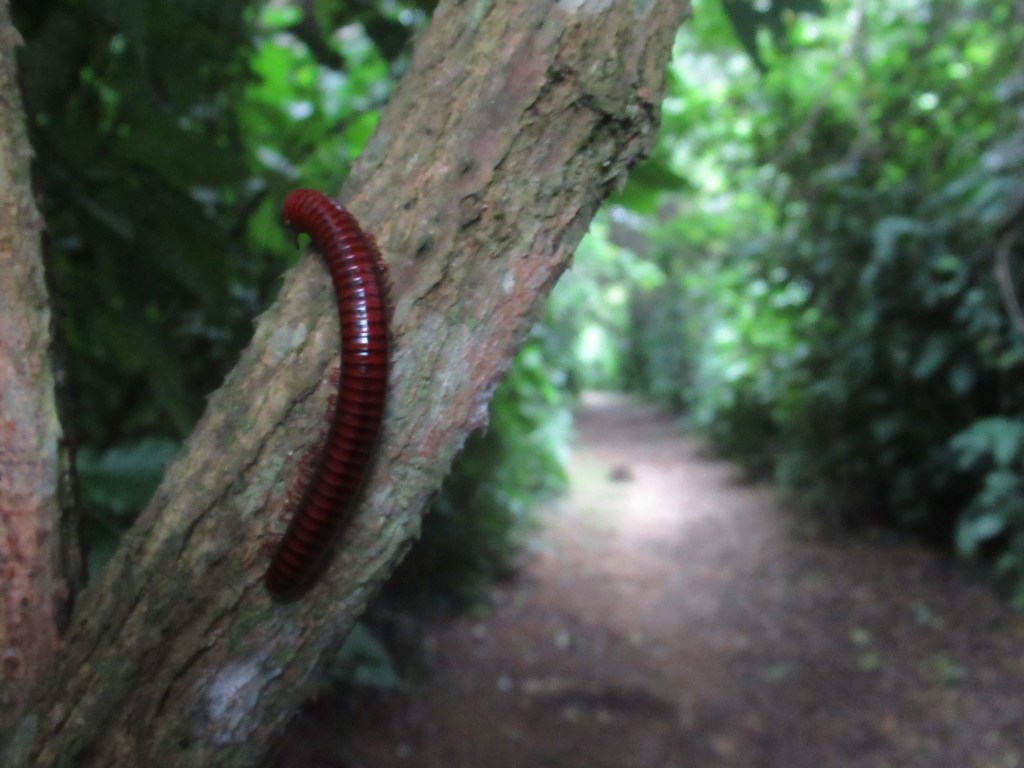
Later we headed back to the east coast north of Durban, walking a boardwalk through mangrove forest, and spending some time in the Raffia Palm Monument – a forest containing the world’s largest palm trees – before arriving at the town of St Lucia and the World Heritage Site of iSimangaliso Wetland Park. Here we took the first of our night drives, transferring to open safari vehicles to capture in powerful spotlights such creatures as Hippo, Plains Zebra, Cape Buffalo, Spotted Hyena, Bushbuck and Southern Reedbuck, as well as some nocturnal birds and a couple of colourful Flap-necked Chameleons and Painted Reed Frogs. All over South Africa we saw a variety of frogs with great names like Bush Squeaker Frog, Clicking Stream Frog, and Raucous Toad (which was disappointingly quiet and sedate).
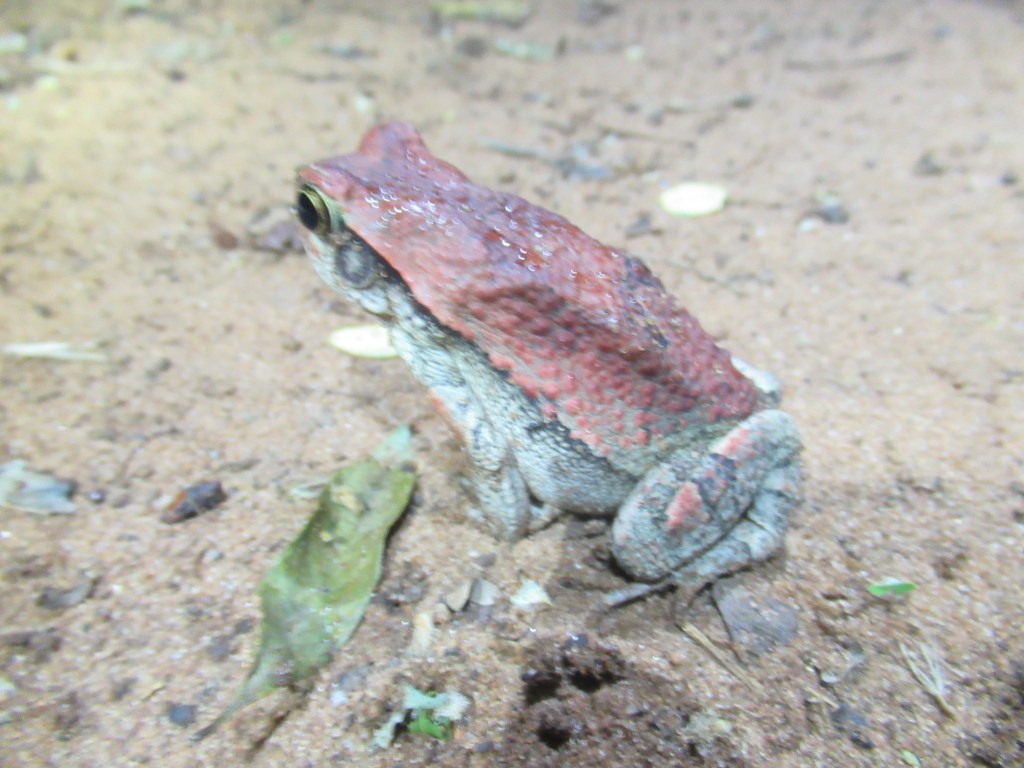
A daytime visit to iSimangaliso on the following day added Warthog, Waterbuck, Blue Wildebeest, Impala, Greater Kudu, Blue Monkey and some distant White Rhinos to our tally of mammals. Our bird list was also growing quickly, reaching almost 250 species by this point.
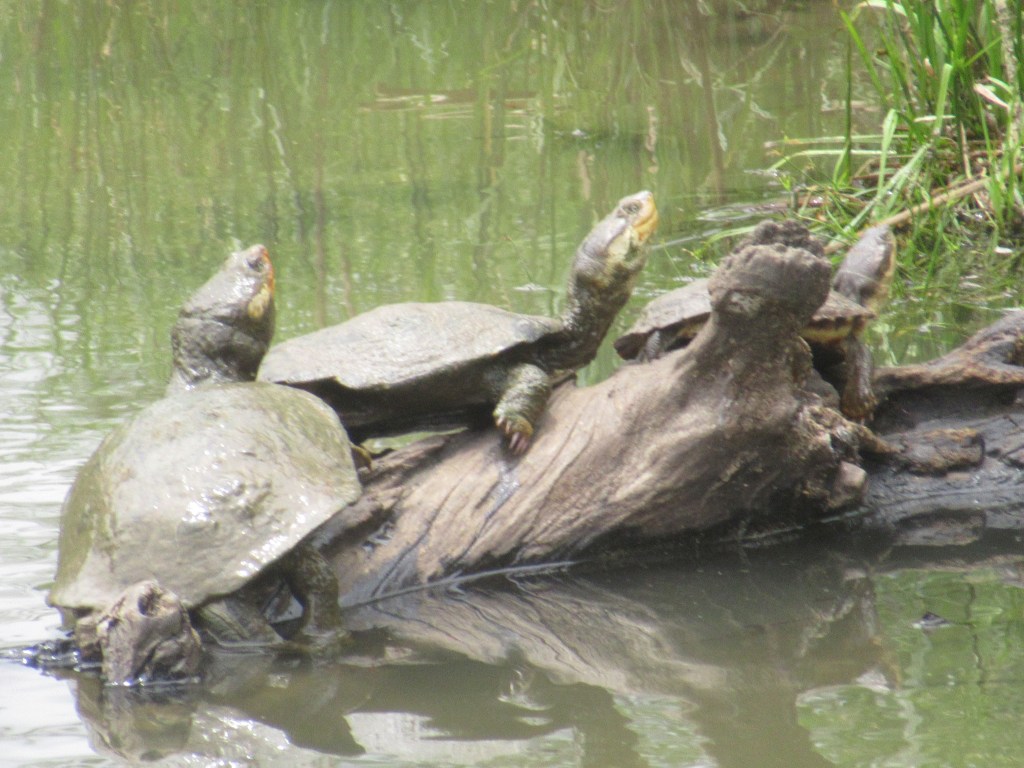
Later that same day we visited the beach at St Lucia for some coastal birding, plus sightings of Nile Crocodile, some more Hippos, and an unidentified dolphin, before continuing up the east coast to Mkuze, tucked away in a corner near the borders of Eswatani and Mozambique. A couple of days visiting various habitats in this location increased our bird list beyond the 300 mark, with the highlights being great views of Pel’s Fishing Owl (adult and chick – a huge and often hard to find owl), a powerful Crowned Eagle on a nest (also with a chick), and a female Pink-throated Twinspot – a tiny and rare finch that took us a while to find. A group of Southern Giraffes was the top mammal sighting, alongside some amazingly close views of Nyalas – arguably the most handsome of Africa’s antelopes. We were also building up a respectable list of reptiles, with various species of lizards and turtles.

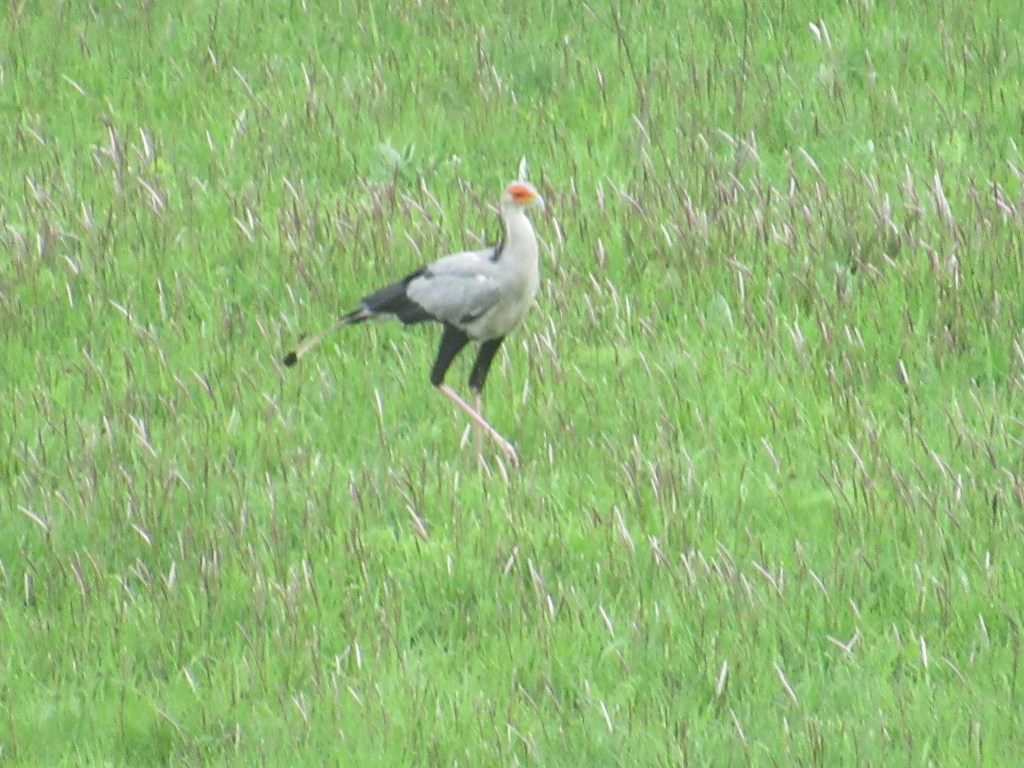
With our time on the east coast completed, we headed inland to the area around Wakkerstroom. By now we had found a few smaller mammals such as Cape Clawless Otter, African Savanah Hare, and a few species of Mongoose (of which South Africa has many), including a small group of Meerkats. The birding highlight here was the Secretarybird, a bizarre bird of prey classified in a family on its own. It strides around grasslands preying on snakes which it stamps to death with its long, thin legs.
In the wetlands of Wakkerstroom we were lucky enough to find one of my favourite and most wanted birds of the tour: Red-chested Flufftail. The Flufftails are a highly secretive family of tiny ground birds found only in Africa. Preferring to stay hidden in the vegetation, they are notoriously difficult to see. We had already failed to see one species in the forests of St Lucia, only hearing its strange train-whistle hoot at the edge of the woods, but with the bird stubbornly refusing to show itself. I was beginning to think I would never get the chance to see one, so I was delighted when we finally got one to appear for good views at the edge of some reed swamp.
One morning in Wakkerstroom we were joined by a local guide named Lucky, who had access to private land where we were to search for Rudd’s Lark, a highly endangered bird found only in a tiny patch of Africa and severely threatened by habitat loss. This involved another organised flush, with the group spreading out in a line and walking through the grassland again. We marched back and forth for most of the morning without seeing any sign of the bird and eventually we had to admit defeat and continue on to the next location. I decided that ‘Lucky’ was probably an ironic nickname.
Despite missing this one, we had already seen four other species of Lark and still had many more to find. If there is one thing Africa has no shortage of it’s Larks. These little brown songbirds are a prominent feature of a birding trip to almost all parts of this continent, and we would be seeing plenty more once we drove to the arid lands in the west.
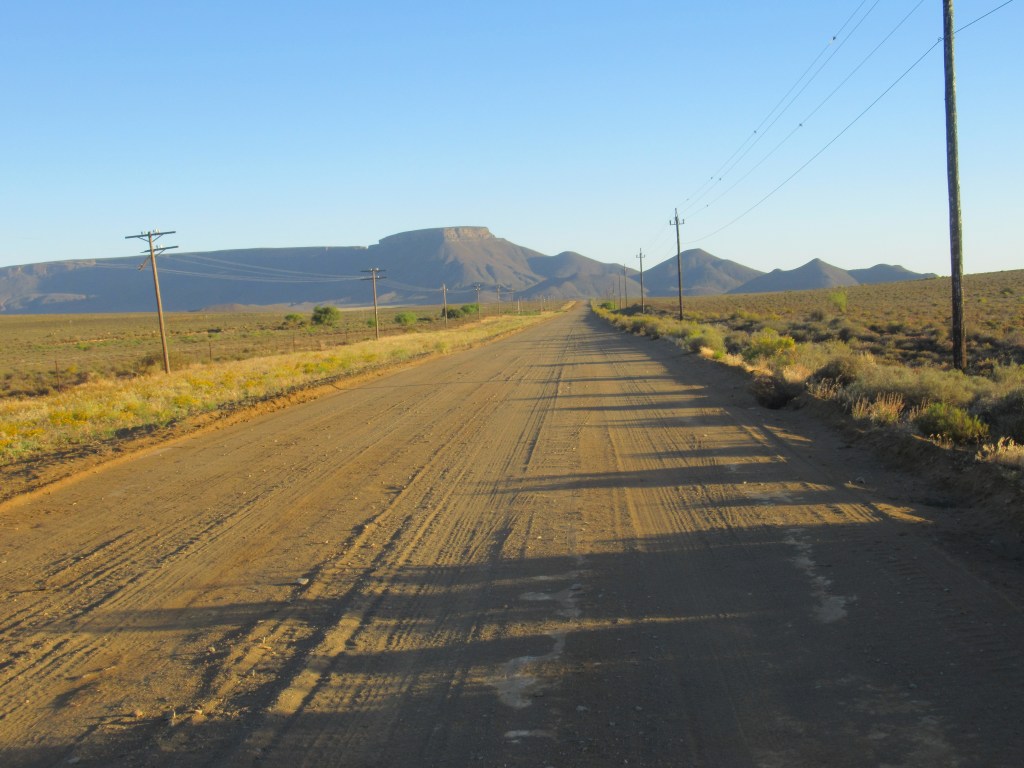
The drive across the country would involve some long hours on the road, hours I spent admiring South Africa’s dramatic scenery, reading, napping, fretting over what I might have left behind in the last hotel room, eating biltong, and pondering which was the largest antelope I could beat in a fight. I even managed to spot the occasional roadside bird, such as a large Spotted Eagle-owl partially hidden in a tree, and a pair of Namaqua Sandgrouse.
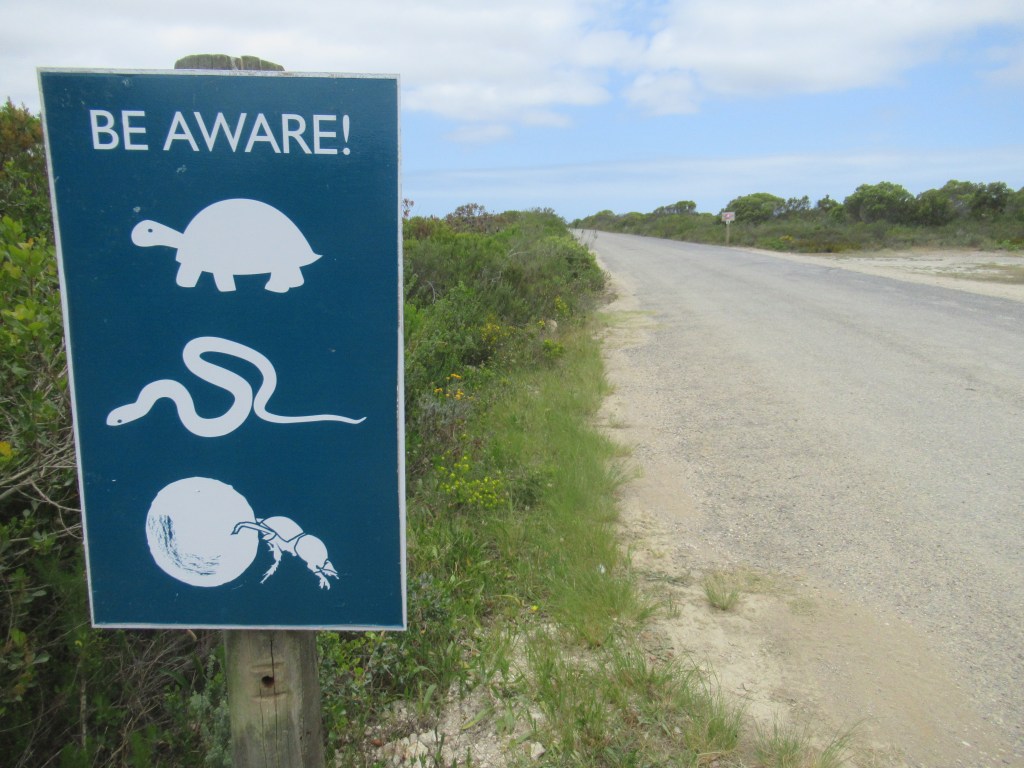
Halfway across the country we stopped for two nights at a private game reserve just outside Kimberley. As well as scoring another four species of Lark, there were also plenty more antelopes here. However, the game is hunted here so the larger mammals were hard to approach without them running away at the sight of the vehicles. None of them seemed to be up for a fight.
New mammals seen during the day included Blesbok, Black Wildebeest, Springbok, Gemsbok, Roan Antelope, Sable Antelope, Hartebeest, and South African Ground Squirrel. We also saw the first of many Ostriches and many other birds. With no predators or dangerous herbivores here, I was able to go out alone and do some birding on foot.

As dusk fell, we had the chance to go out on another night drive, where the best creature we spotlighted was the strange Aardvark, of which we saw three. The landscape here is scattered with thousands of termite mounds into which the Aardvarks dig to feed on the termites. Their name is an Afrikaans word meaning ‘Earth Pig’, and they transform the habitat here by creating thousands of underground homes for numerous other creatures, and by controlling the number of termites which would otherwise eat most of the vegetation. A real keystone species.
Some of the animals that make use of Aardvark holes were also seen that night: An Aardwolf (or ‘Earth Wolf’, actually a type of hyena), numerous comically bouncy South African Springhares, and a poor view of a Bat-eared Fox on the run. Half of our group, in a different vehicle, saw African Porcupines, but none of us saw the rarest and most hoped-for animals – Cape Pangolin and Black-footed Cat (Africa’s smallest wildcat), both of which occurred there in small numbers.

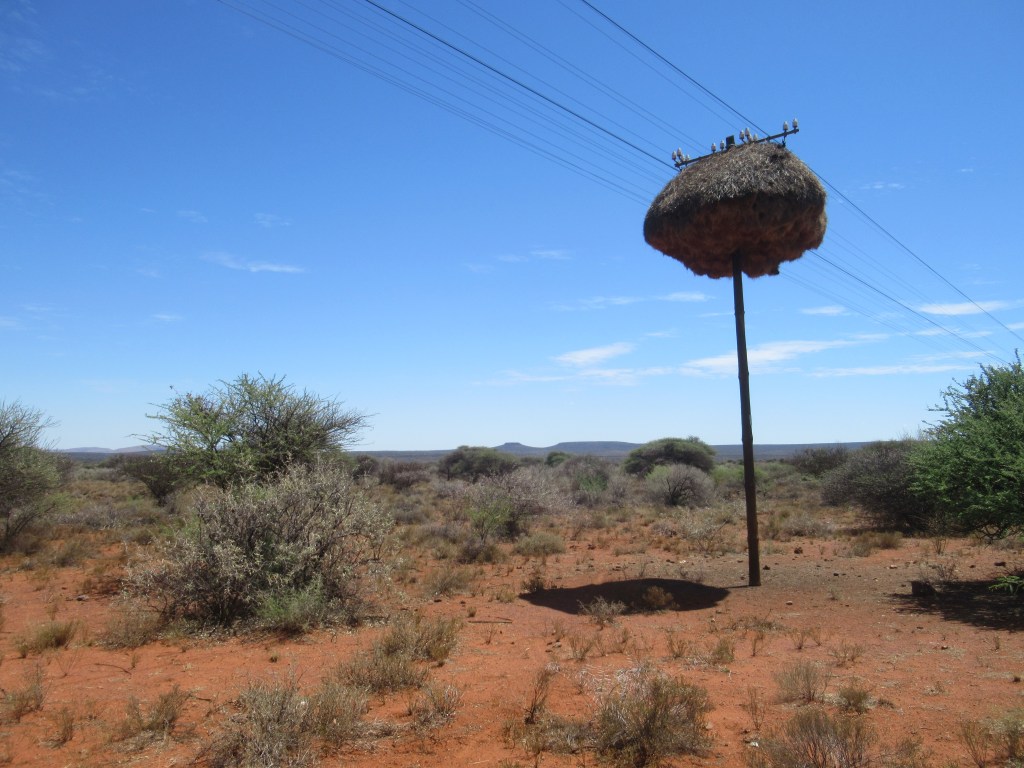
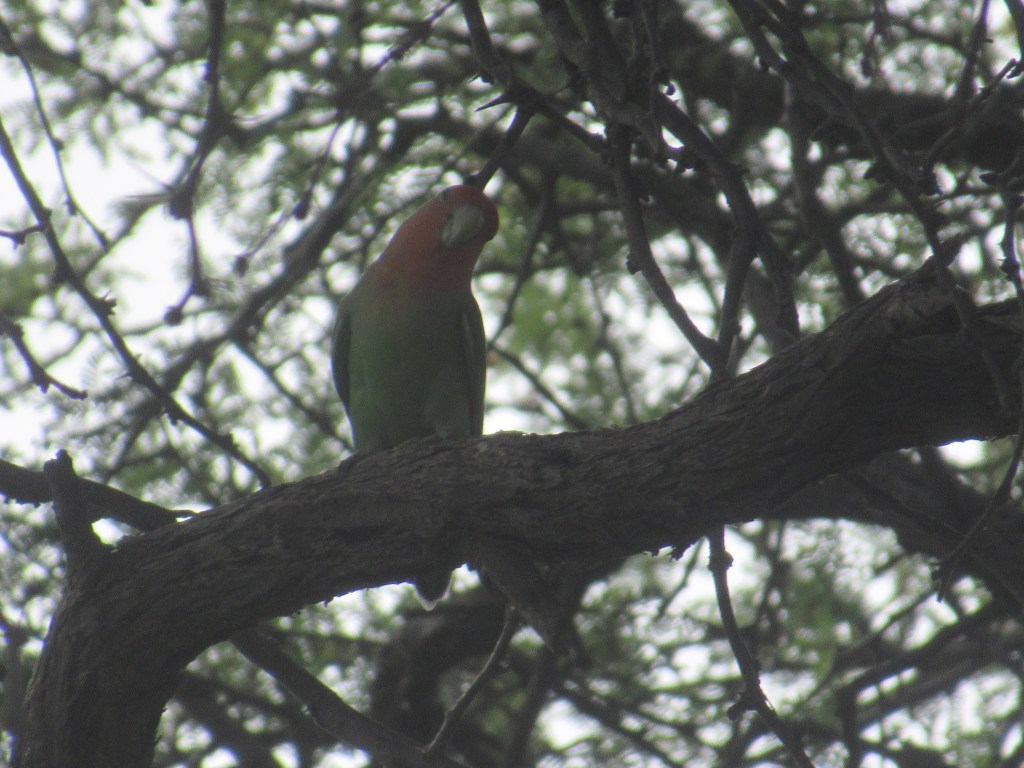
In the morning I found a Scorpion in the bathroom and then we continued westwards with another long driving day, stopping to see some giant, communal nests of Sociable Weavers by the roadside (one of 13 weaver bird species seen on the tour), and in the town of Keimoes to find Rosy-faced Lovebird in a suburban garden. We were close to the southern border of Namibia and arrived for our overnight stop at Augrabies Falls National Park.

Arriving before dusk, we were able to take a walk over to the falls themselves, where the Orange River carves a narrow channel through the spectacular rocky landscape. Rock Hyraxes (bizarrely, most closely related to elephants) ran around near our cabins and multi-coloured male Augrabies Flat Lizards chased after females on the wooden boardwalk.
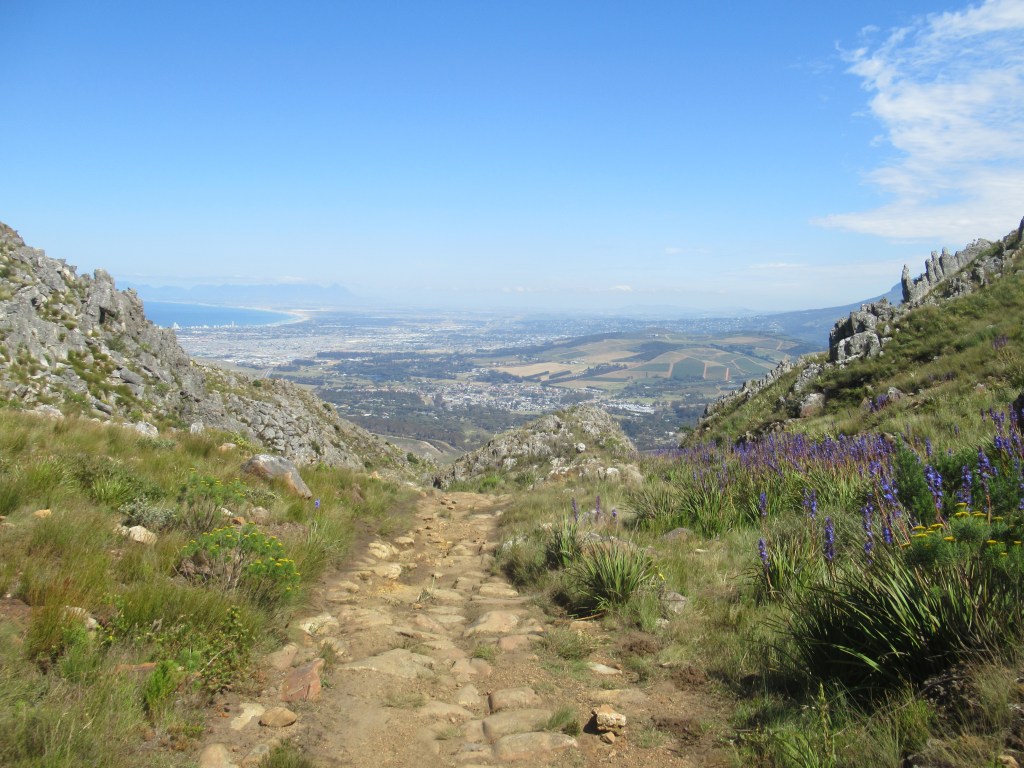
The next five days were spent driving between various locations in the Northern Cape and Western Cape provinces. This was the arid, open country of Namaqualand and the Karoo, although I was never quite sure exactly which region was which. Our overnight stops were in the towns of Springbok, Calvinia, and Langebaan, and in between we visited:
- Poffadder, from where we had a long, hot, bumpy ride on a dirt track towards the Namibian border and back without seeing any new birds.
- Goegap Nature Reserve, where we did see new birds, as well as rare Mountain Zebras.
- Port Nolloth, a coastal town where we saw our first seabirds and Cape Fur Seals, before heading to the Namibian border again, this time finding our target bird – a Lark again, obviously.
- Brandvlei, where we found Steenboks (another antelope), a family of very cute Cape Foxes, and a lone Meerkat.
- Kliphoek Salt Pans – for waders and other water birds.
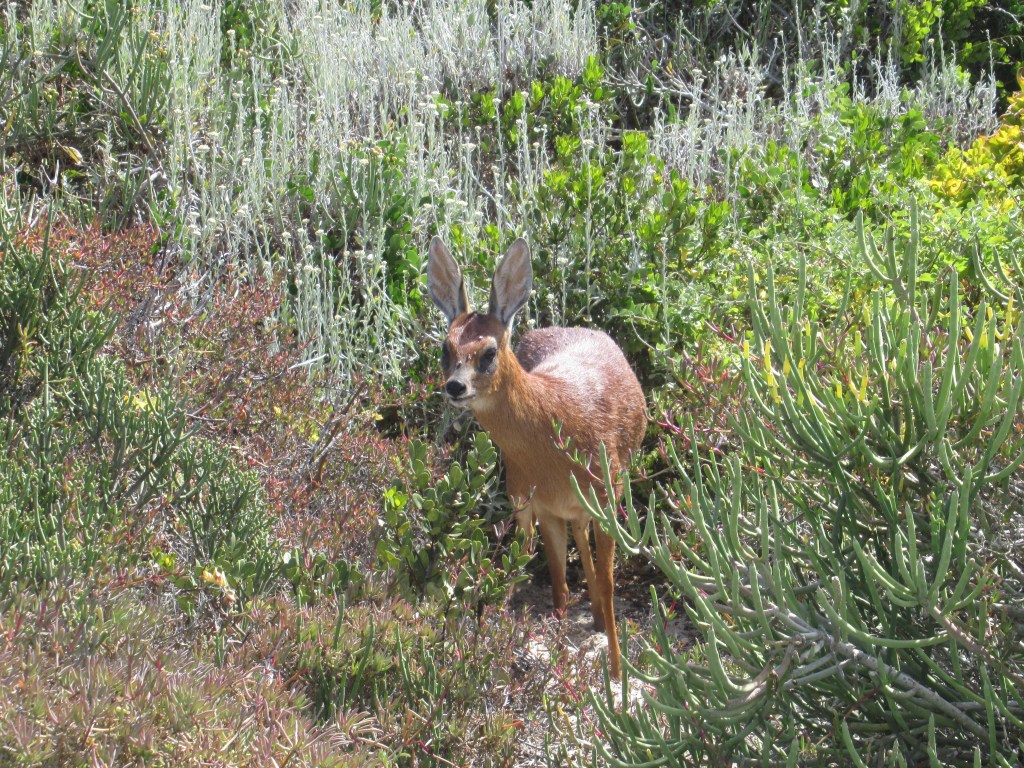
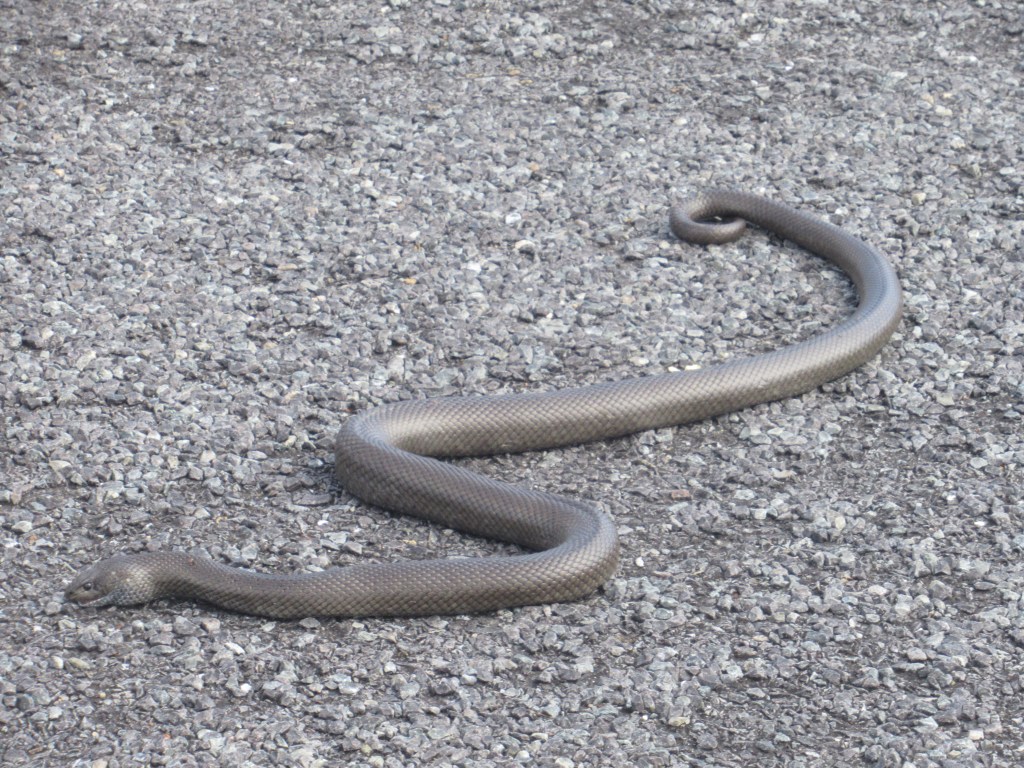
- West Coast National Park – a beautiful coastal lunch stop with a couple of new antelopes – Eland (definitely too big to fight) and Cape Grysbok, plus some more reptiles including lizards, tortoises and a non-venomous Mole Snake (our first snake of the trip), and a Xeric Four-striped Grass Rat (big name, small rodent). Nearby we visited a pair of Verreaux’s Eagles at a nest site.
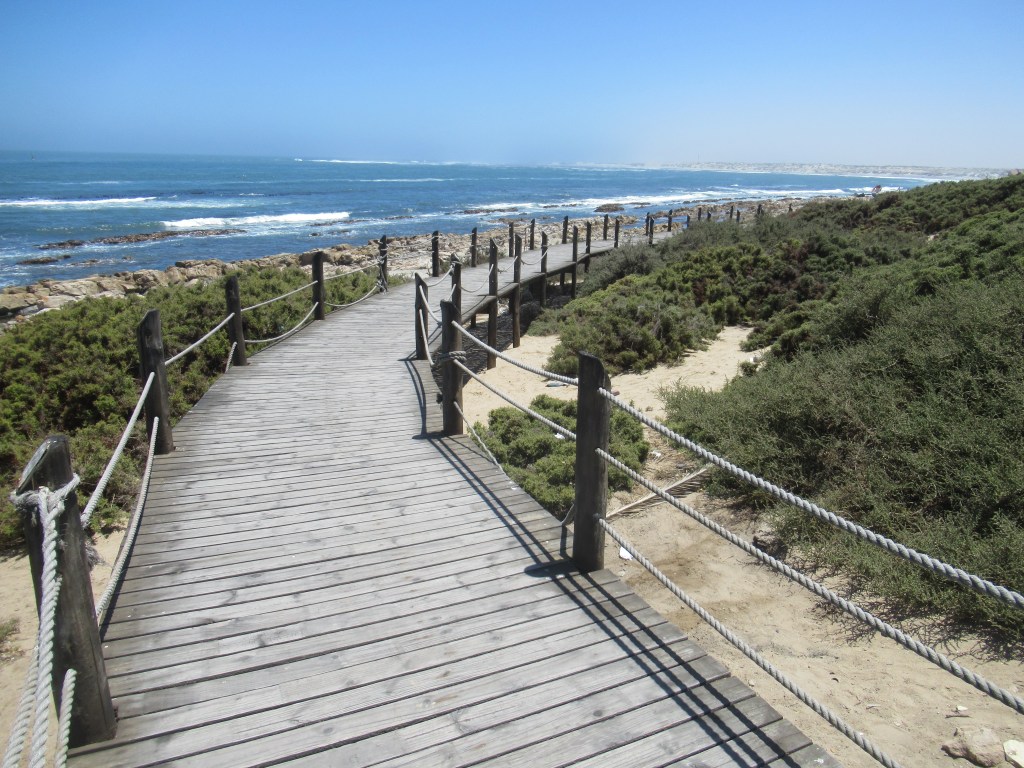

Those five days added a further ten larks to a bird list that was now over 450 species, but it was then time to drive south towards Cape Town as the tour was reaching its conclusion. We saw a couple more Larks, including the Cape Clapper Lark. The Clapper Larks were probably my favourites thanks to their comical display flight featuring a rapid round of applause from their wings followed by a wolf whistle.
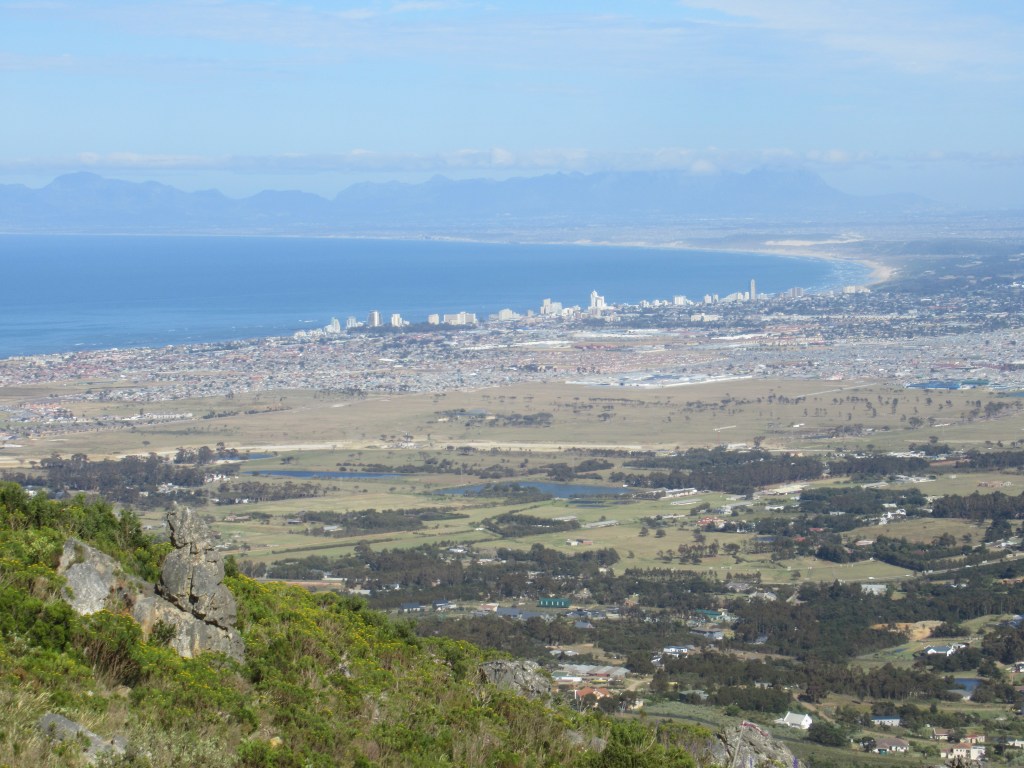
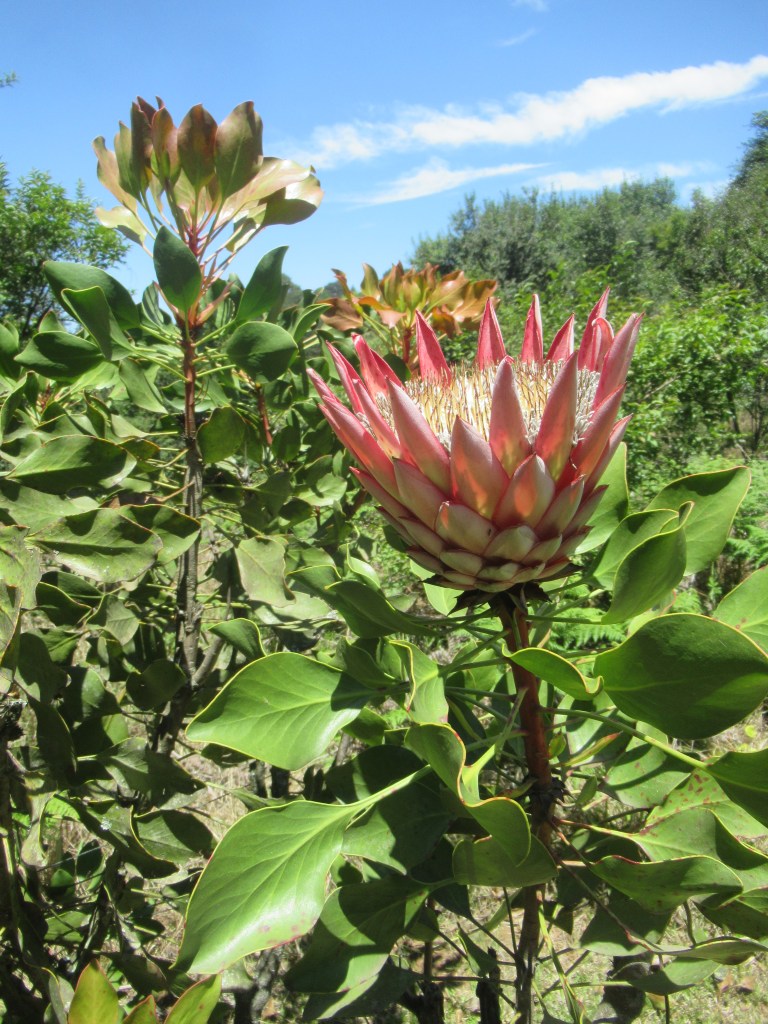
At the spectacular Sir Lowry’s Pass we found Cape Sugarbirds and a pair of Cape Rockjumpers before driving on to De Hoop Nature Reserve, where a highly venomous Cape Cobra crossed the road in front of our vehicle, and Bontebok antelopes gave very close views. We were only adding occasionally to our bird list by this point, but another organised flush at Sandberg Nature Reserve kicked up three Fynbos Buttonquails, a visit to the beach at Struisbaai got us a rare Damara Tern on a nest while its partner brought in food, and a quick visit to a small patch of trees on the outskirts of Cape Town scored a Rufous-breasted Sparrowhawk collecting nest material.
The final day of the tour took us to the African Penguin colony at Stony Point, where many penguins were huddling out of the wind, and we also scrutinised a mixed breeding colony of Cape Cormorants, Crowned Cormorants and Bank Cormorants. We also visited the Harold Porter Botanic Gardens for Swee Waxbill, and Strandfontein Sewage Works to see both Greater and Lesser Flamingos and other water birds.
After the tour I had a few days on my own around Cape Town. I visited the more famous Penguin colony at Boulders Beach, where the Penguins were much more numerous, more active, and had a much more photogenic backdrop.
I had booked myself onto a pelagic boat trip out of Simon’s Town to add some seabirds to my list and was rewarded with four species of albatross, Cape Gannets, and various Petrels, Skuas, Shearwaters and Storm-petrels. We stopped off at a Cape Fur Seal colony where we also saw a couple of Humpback Whales, and at one point were surrounded by Dusky Dolphins. A passing Shy Albatross flew low over the boat and threw a huge chunk of fish at me, which shattered and showered my jacket and trousers in stinky fish bits.

On my final day in South Africa I did a bit of sight-seeing at Kirstenbosch National Botanical Gardens, Hout Bay, and the V&A Waterfront. It had been a tiring three weeks, but we had seen a good chunk of the country and had stayed in some wonderful accommodation, eaten superb food everywhere we went, and met some lovely people.

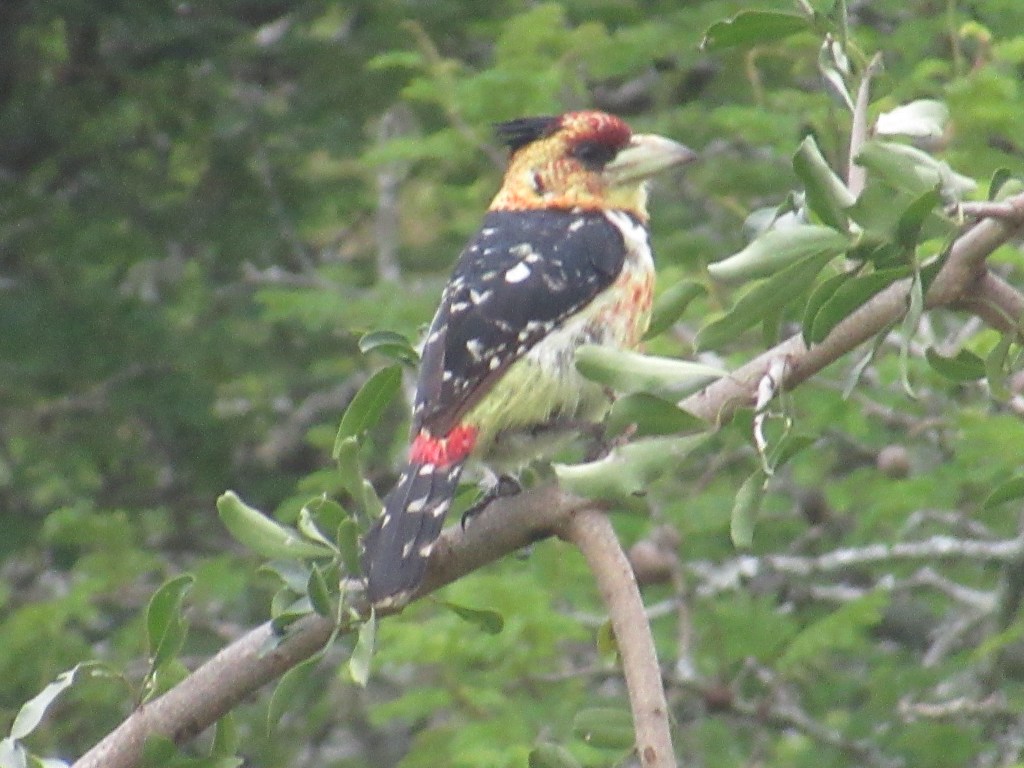
Flying home with a final tally of nearly 490 birds, 54 mammals, and 24 amphibians and reptiles, I reflected on the long list of wildlife we had seen, as well as the very small number of targets we had missed (a good reason to return to this beautiful country). As well as 18 species of Lark, we had also seen plenty of the more colourful and charismatic birds such as tall, stately Bustards and Korhaans striding through the grasslands, nocturnal Nightjars, soaring birds of prey, jewel-like, iridescent Sunbirds sipping nectar from garden flowers, and numerous species of Ducks, Francolins, Swifts, Cuckoos, Doves, Waders, Herons, Kingfishers, Barbets, Woodpeckers, Swallows, Shrikes, Canaries, Finches, and many, many more.



 Vole Explosion
Leave a comment