NOVEMBER 2023
Visiting Kuwait was mostly about ticking a new country off the list. I had a few days of annual leave to use before the end of the year and an air miles account that they were threatening to close due to lack of activity. Kuwait was the nearest destination outside of Europe that was suitable for a short city break with some guaranteed Winter sunshine. I say “city break” as there is more to Kuwait than just Kuwait City, but not much more. Its effectively a city-state set in a small area of desert, tiny farms, and oil fields. Ideal for a quick four-day visit.
My first impression of Kuwait was… lips! Specifically, female lips pumped full of hyaluronic acid (or whatever it is they use in lip fillers these days). My plane had yet to leave Heathrow, but I noticed that many of the hijab-wearing Kuwaiti women on my flight, returning from winter shopping trips to London in heavy clothing and heavy make-up, wore massively exaggerated duck pouts where their mouths used to be. This became a noticeable trend throughout the trip.
My flight arrived at 7.30am and one thing that quickly became apparent is that Kuwait, unlike other destinations on the Persian Gulf, is not set up for tourism. Few people are coming here for beaches, (non-alcoholic) cocktails, high-end shopping, soccer World Cups, or Formula 1 Grand Prix. Here it is strictly business. The vast majority of Kuwait’s visitors are here to work, not to sightsee.
At the airport, and indeed everywhere else, I saw no tourist information office, souvenir shops, or cultural excursions for sale. I couldn’t even find a map of the city. On the plus side, there was a refreshing lack of the hustle and hard-sell that you might expect in other, more touristy, Asian/Middle Eastern cities. I was approached by a couple of airport taxi touts, both of whom accepted a polite ‘no, thank you’… and then I was left completely in peace for the rest of my trip. I was barely even noticed as everyone just went about their business. Nobody cared who I was or where I came from – which is exactly how I like it! The people with whom I did interact were all unfailingly helpful and polite.
This lack of mass tourism does not mean that Kuwait is an insular, monocultural nation. Far from it, in fact. Two thirds of Kuwait’s 4.6 million population originate from outside the country. Impressively, Kuwait manages to squeeze the World’s sixth largest oil reserves under it’s tiny, sandy surface area, and as with any booming oil economy, it pulls in migrant workers from all points of the compass – mostly from elsewhere in the Arab world or from the Indian sub-continent, with smaller ex-pat communities from Africa and Eastern Asia. A population of well-off Kuwaitis, with large suburban houses and multiple SUV’s in the garage, have an insatiable hunger for nannies, drivers, security guards, etc, that keeps the migrant influx rolling. For my own part, I’m not sure that I met more than a small handful of actual Kuwaitis in my four-day stay. Pretty much everyone else – bus drivers; coffee shop, convenience store and fast food staff; hotel receptionists and cleaners; friendly park keepers and gardeners – were all from out of town. Westerners were represented in this melting pot by a female American teacher taking a school group around a museum, no more than half-a-dozen European businessmen in my hotel, and three women sight-seeing in the Souk (the only other tourists I saw all week).
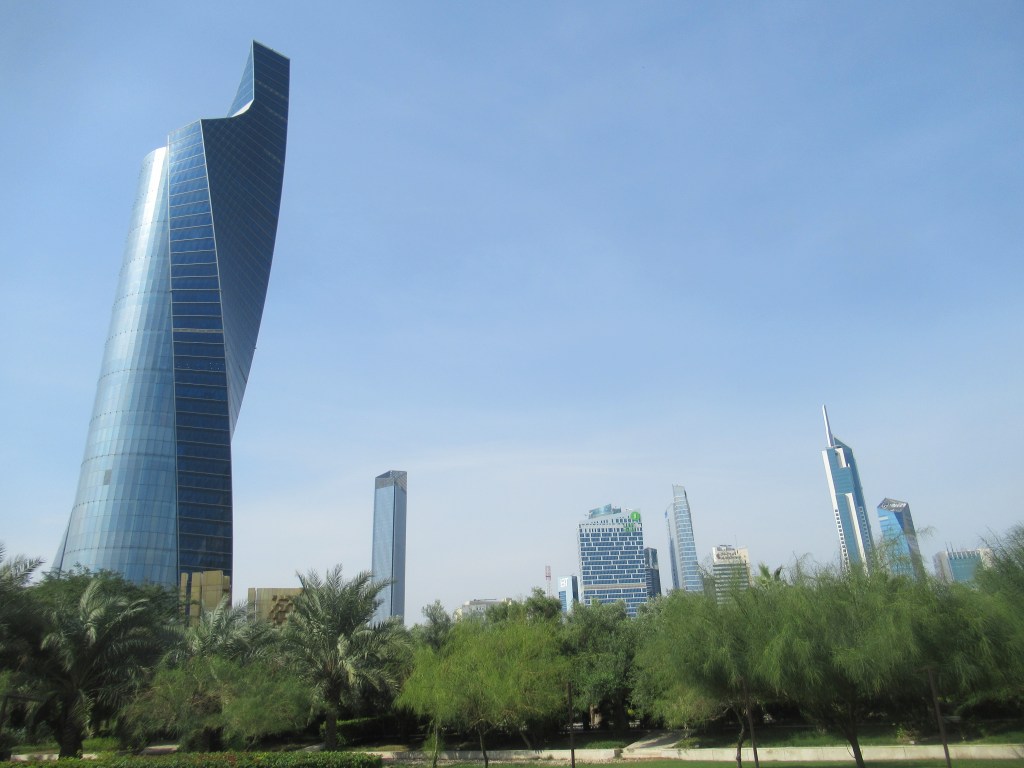
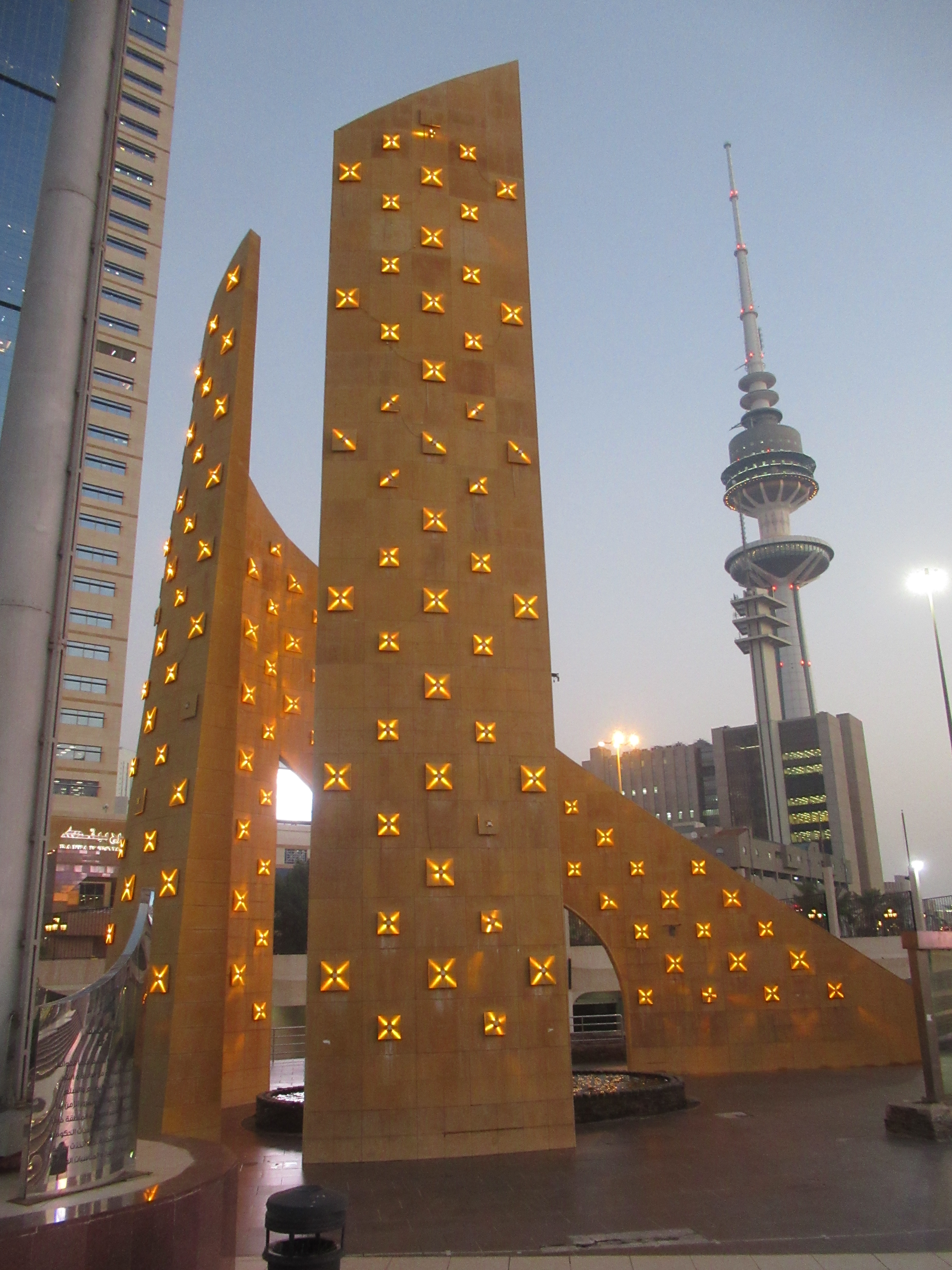
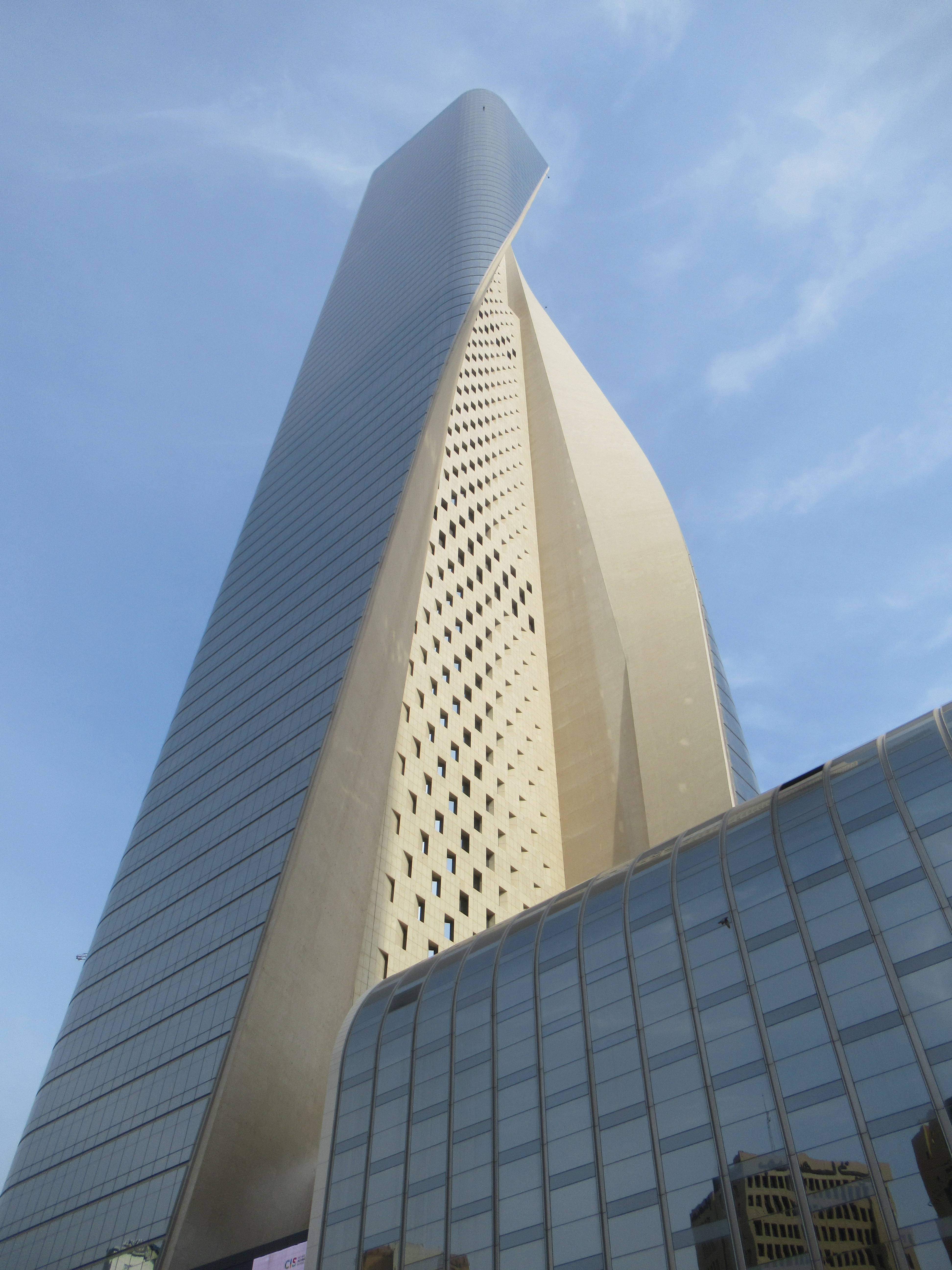
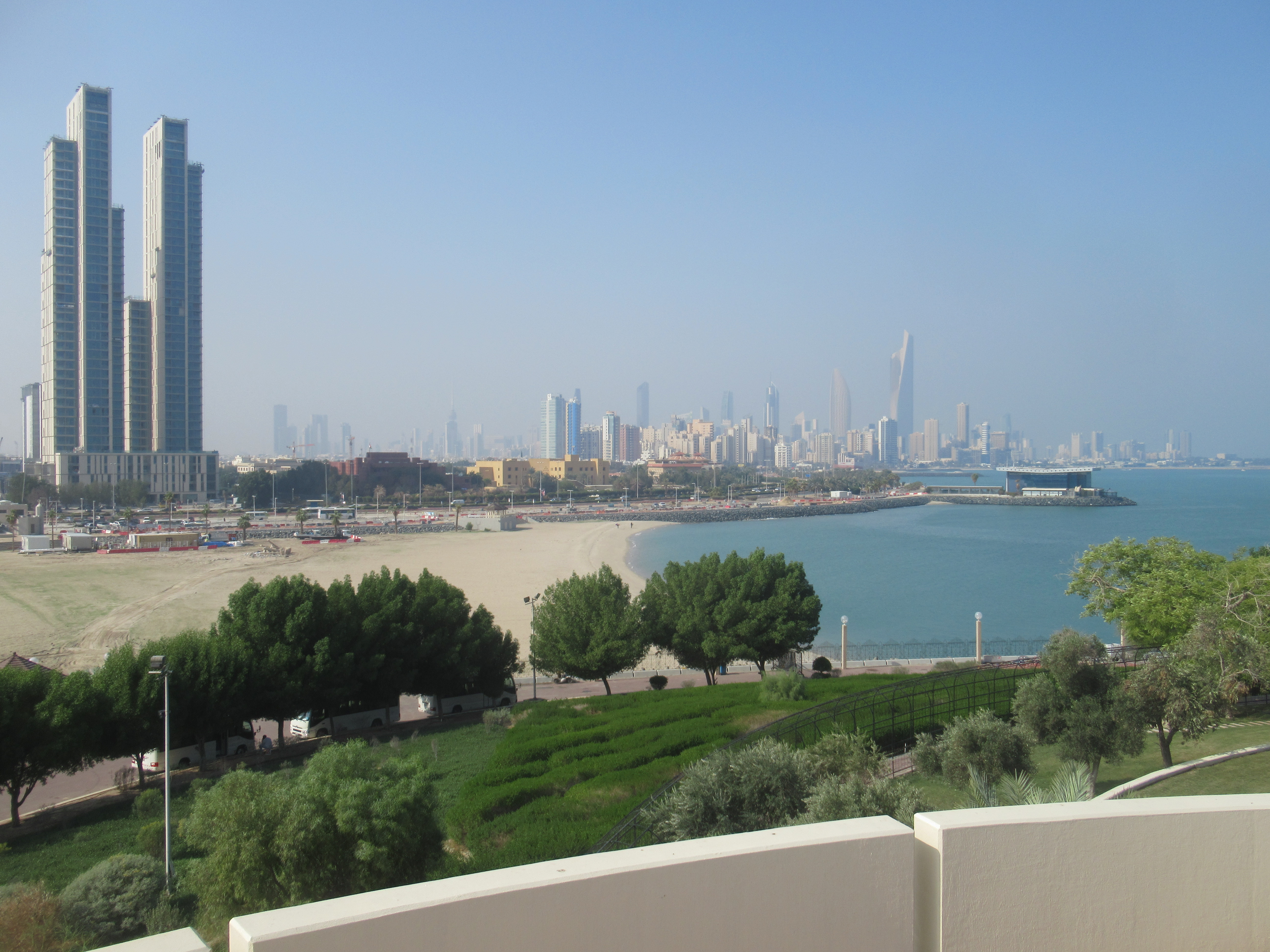
I couldn’t check in to my hotel until 2pm so, with plenty of time to kill, I had a slow coffee at the airport then caught the bus into the city centre, from which I was able to form my first impressions of the city. This is my first experience of the Persian Gulf, so I wasn’t entirely sure how Kuwait City would compare with the glitzy media images of near-neighbours Bahrain, Qatar, and Dubai, none of which I’ve ever visited. Thanks to Saddam Hussein’s 1990 invasion, occupation and destruction of the nation (followed by the liberation of the American-led Gulf War of 1991) Kuwait’s development has been slightly held back when compared with those cities. But this being said, we drove past some impressive clusters of attention-grabbing sky-scrapers. Between these were some less showy low-rise neighbourhoods, and some extensive areas of empty, dusty waste ground before we rolled onwards into another block of futuristic, vertical ambition. The city’s pace of growth has been astonishing in the last few decades, with seven new ring roads built each time it expands outwards, and I don’t think those empty lots will remain empty for very long.

Between the hyper-modern concrete-and-glass futurism and the rough-around-the-edges future potential, the over-arching impression I took away was one of unstoppable, frenetic progress. Building was happening everywhere – dual carriageways, tower blocks, seafront promenades, you name it. Every morning I would see half-built sky-scrapers that I’d swear weren’t there the day before. Kuwait was rushing headlong into the future, and there wasn’t a damned thing Saddam can do about it now.
One thing that wasn’t rushing anywhere was the bus I was on. Kuwait City has an extensive network of cheap and easy-to-use buses that I travelled on throughout my stay. The only problem was the heavy traffic and interminable traffic lights that made for slow progress. It always took me longer than expected to get anywhere, and so I missed out on a few places I wanted to visit.
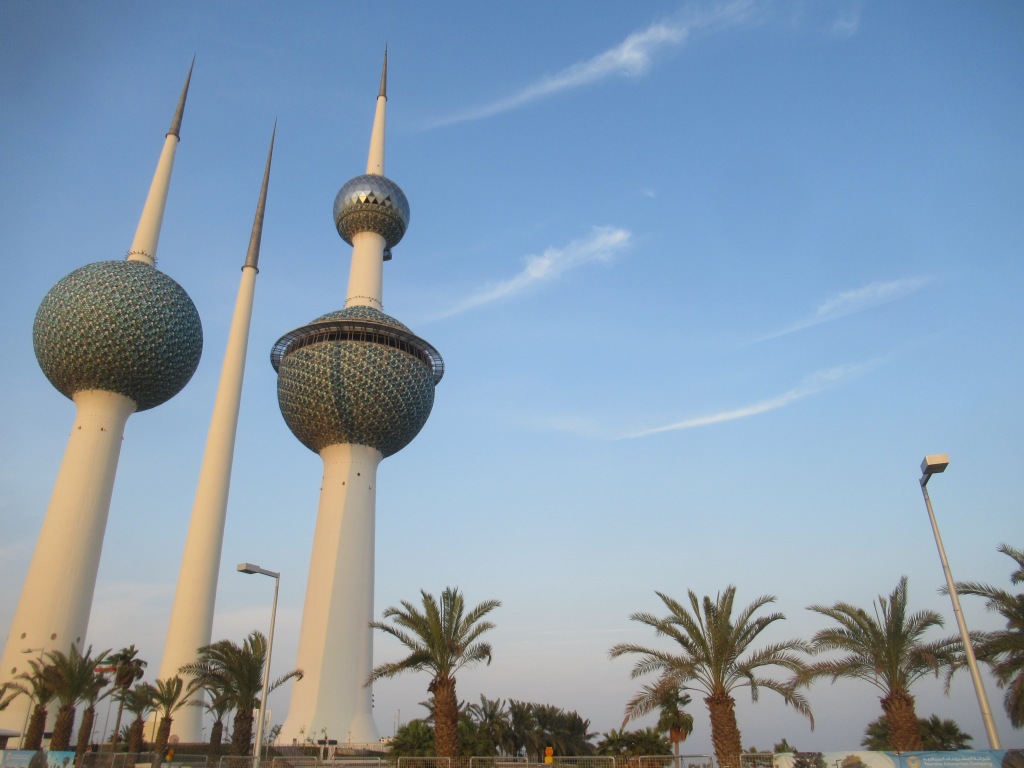
Walking around the city was another option, and I also did this a lot. Crossing roads took some time, but otherwise the city centre was more or less walk-able. A couple of times I found myself walking back a fair distance to my hotel at night, but at no point did the city ever feel unsafe. One day I walked a decent length of The Corniche – a seafront promenade – from a park known as Green Island (not actually an island) to the iconic Kuwait Towers. This part of The Corniche was in the process of development and will soon be an attractive strip of footpaths and cycle paths along the coast.
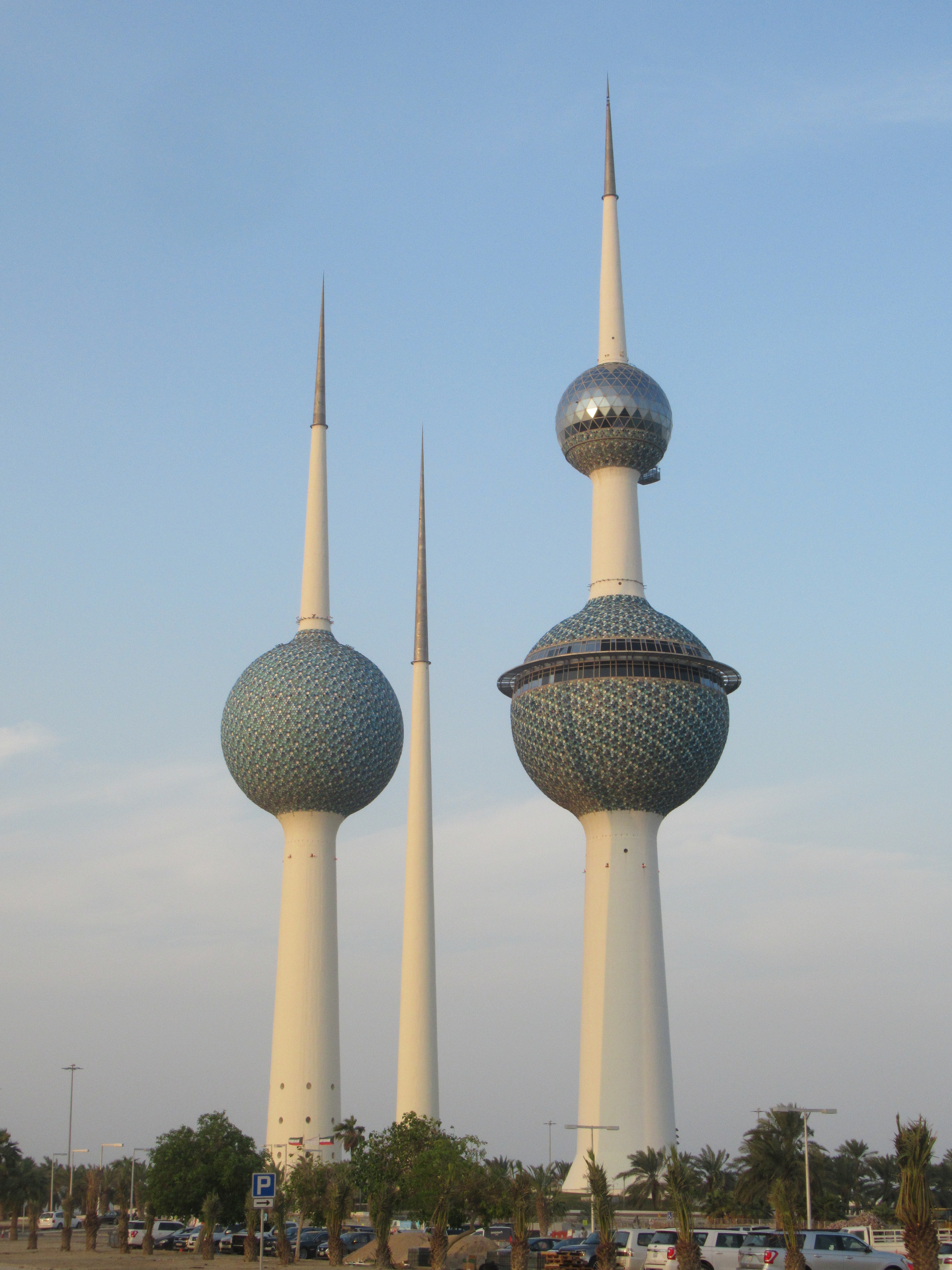
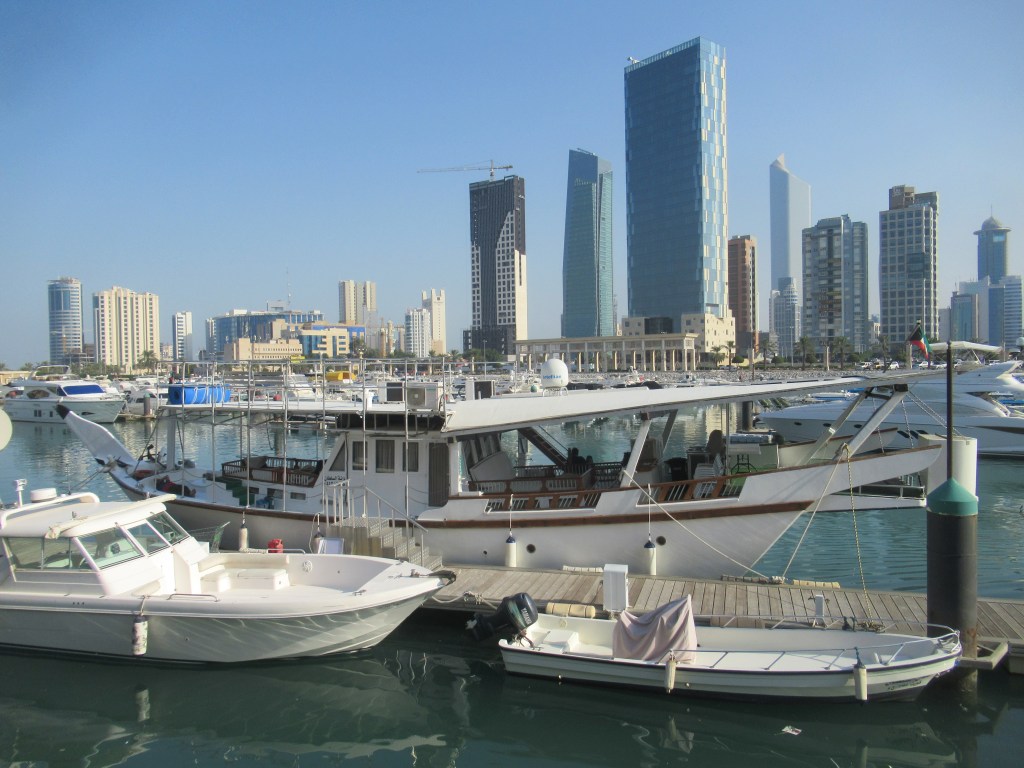
From Kuwait Towers I continued around the seafront past Souk Sharq Marina, through the fish market, alongside a marina for old, wooden ships, and then past the Grand Mosque and the Emir’s palace complex, eventually arriving near the impressive modern buildings of the Opera House and National Theatre towards dusk.

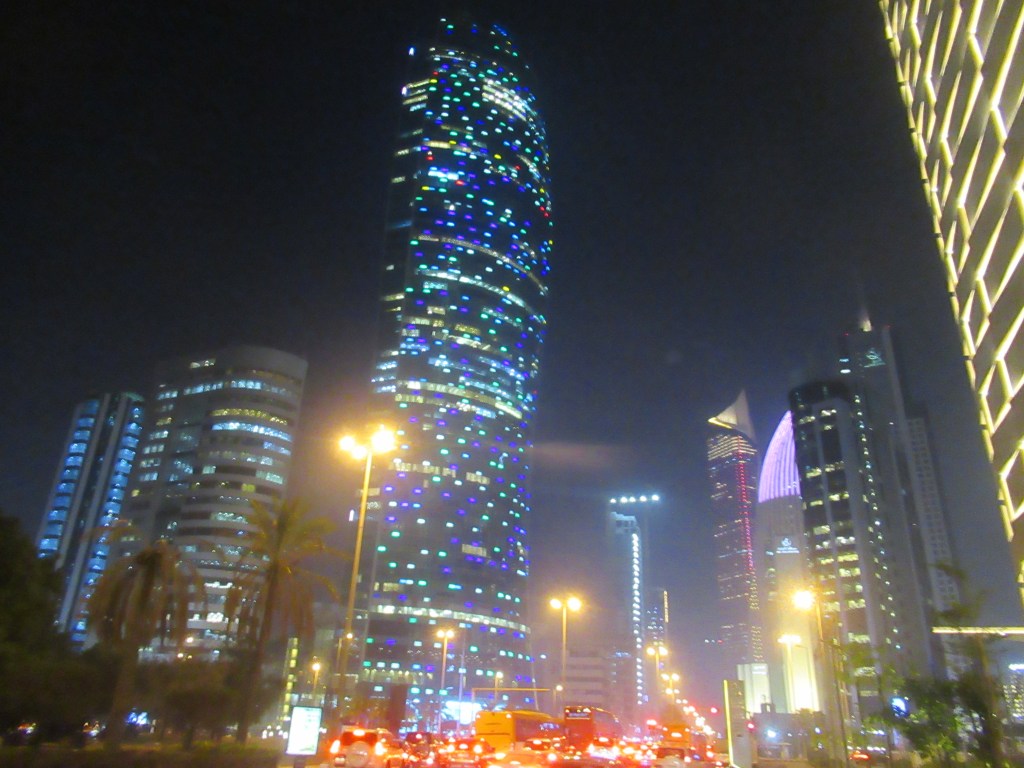
As the sun set, the reddish light combined with the slightly dusty air to create a strange atmosphere. Distant sky-scrapers glowing in the haze took on the look of a science fiction film set, and the muezzin’s call to prayer only added to the other-worldly feel. Once darkness had set in, the sky-scrapers were lit up in multi-colours and looked as spectacular as they had in daylight.
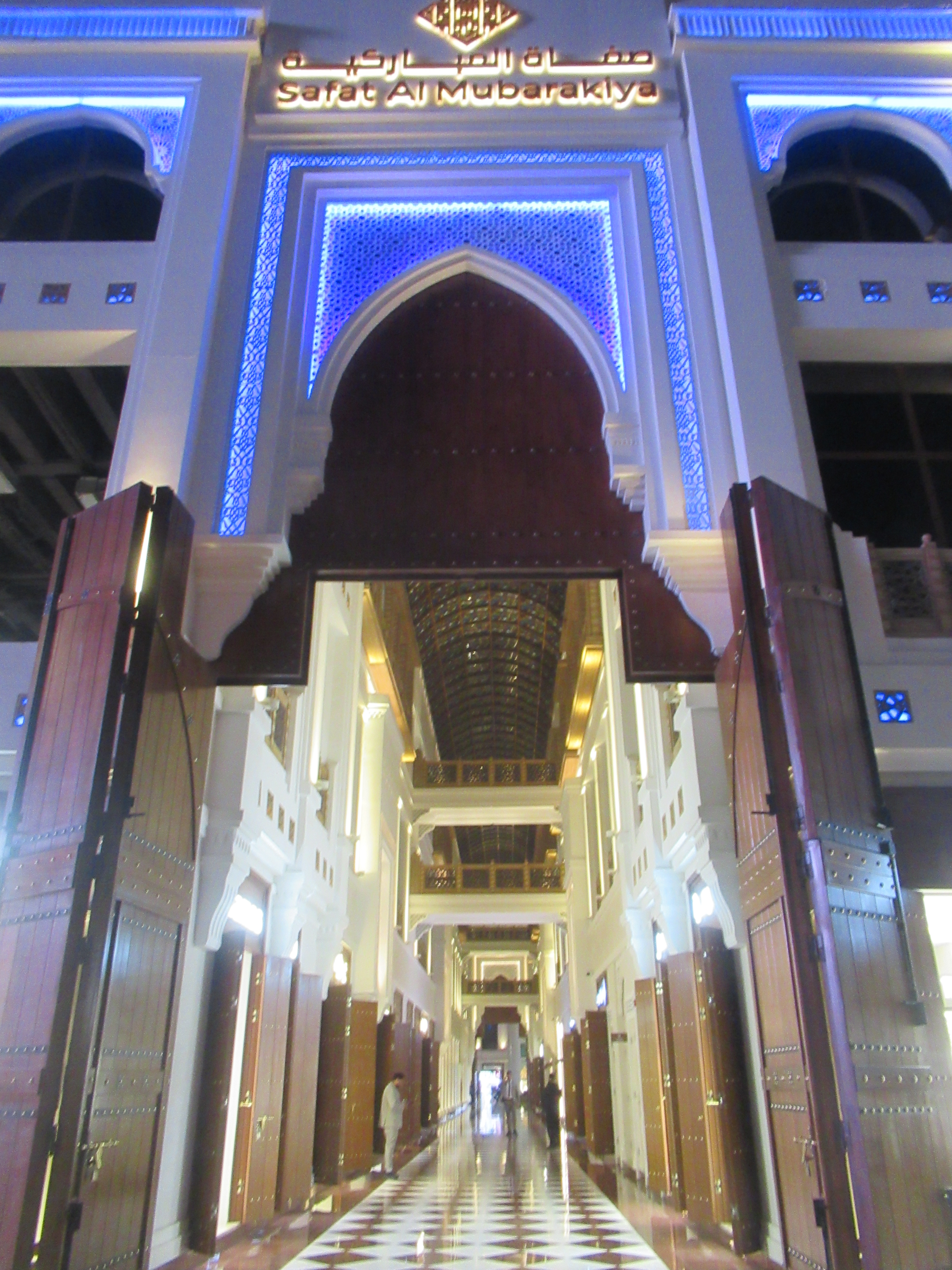
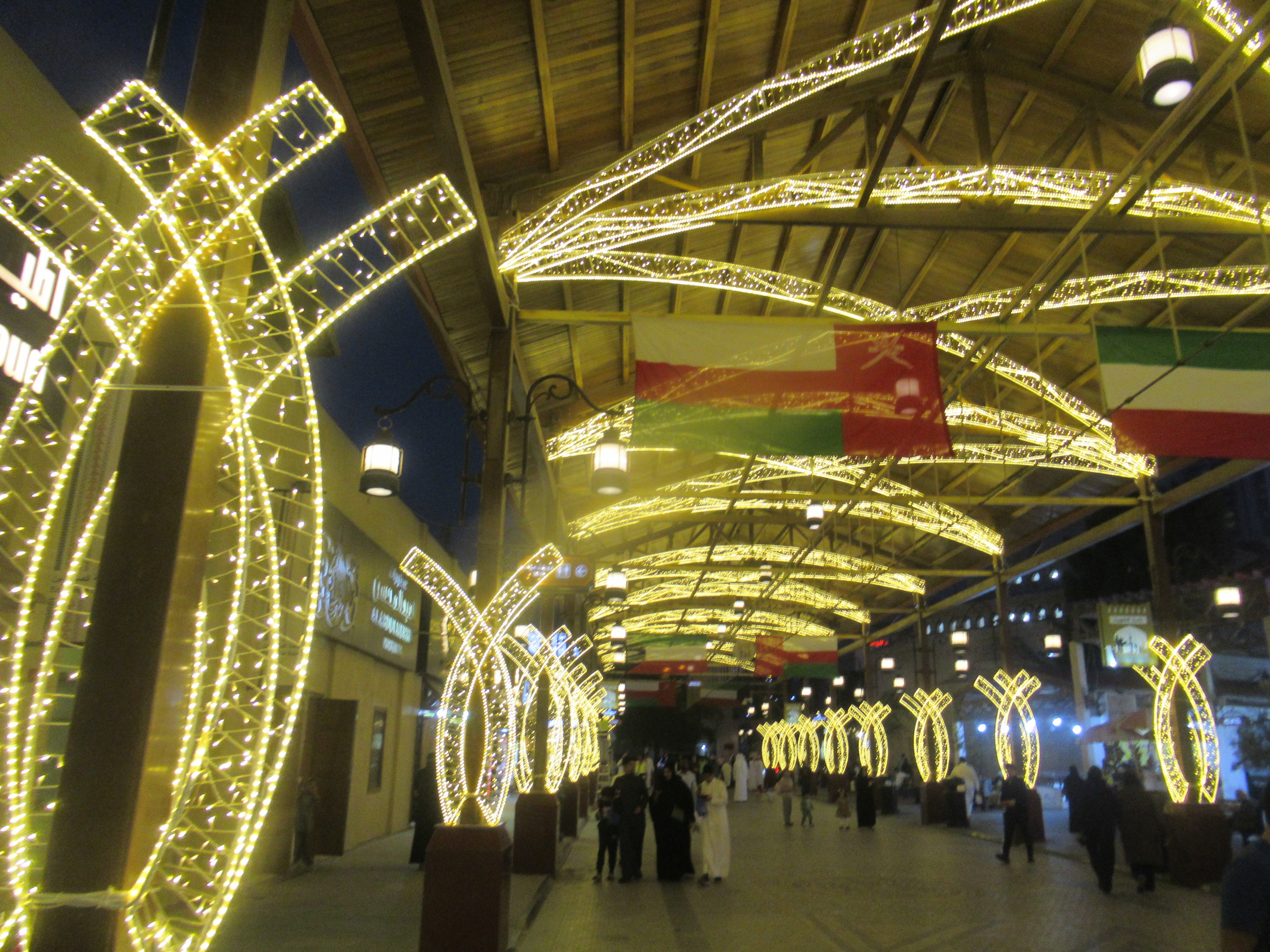
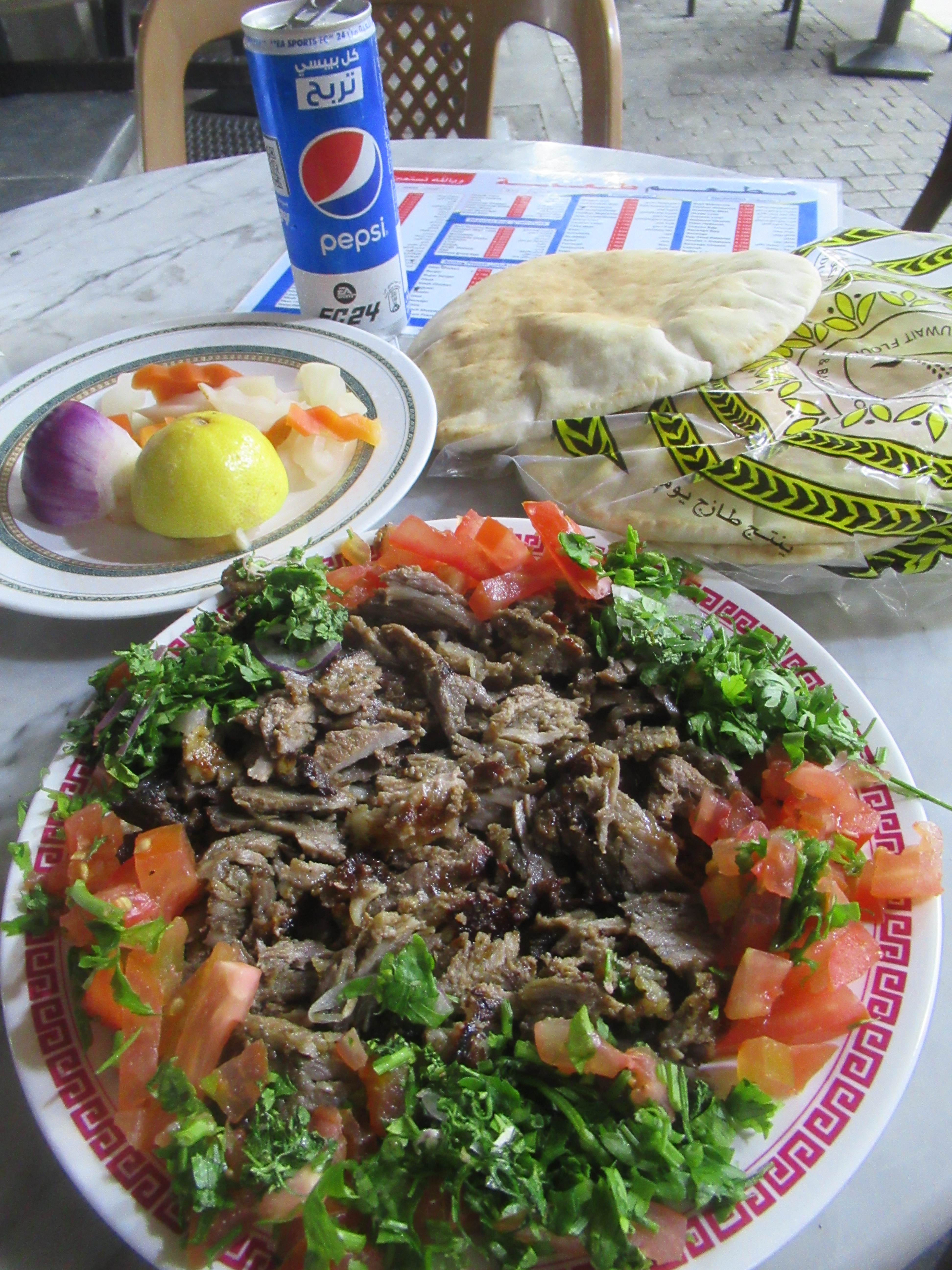
Later that evening I visited the sprawling Souk in the centre of town and spent a couple of hours wandering aimlessly through the various shopping sections, and having an outdoor dinner of schwarma, salad and pickled vegetables, scooped up with pieces of flatbread – no cutlery available here. There was nothing touristy about this Souk. All the people were regular locals doing their shopping. There were no souvenir stalls, nor vendors trying to drag tourists into their shops to haggle self-consciously over nik-naks that they don’t really want.. In fact there were no tourists to drag anywhere. I couldn’t even find a fridge magnet to buy.
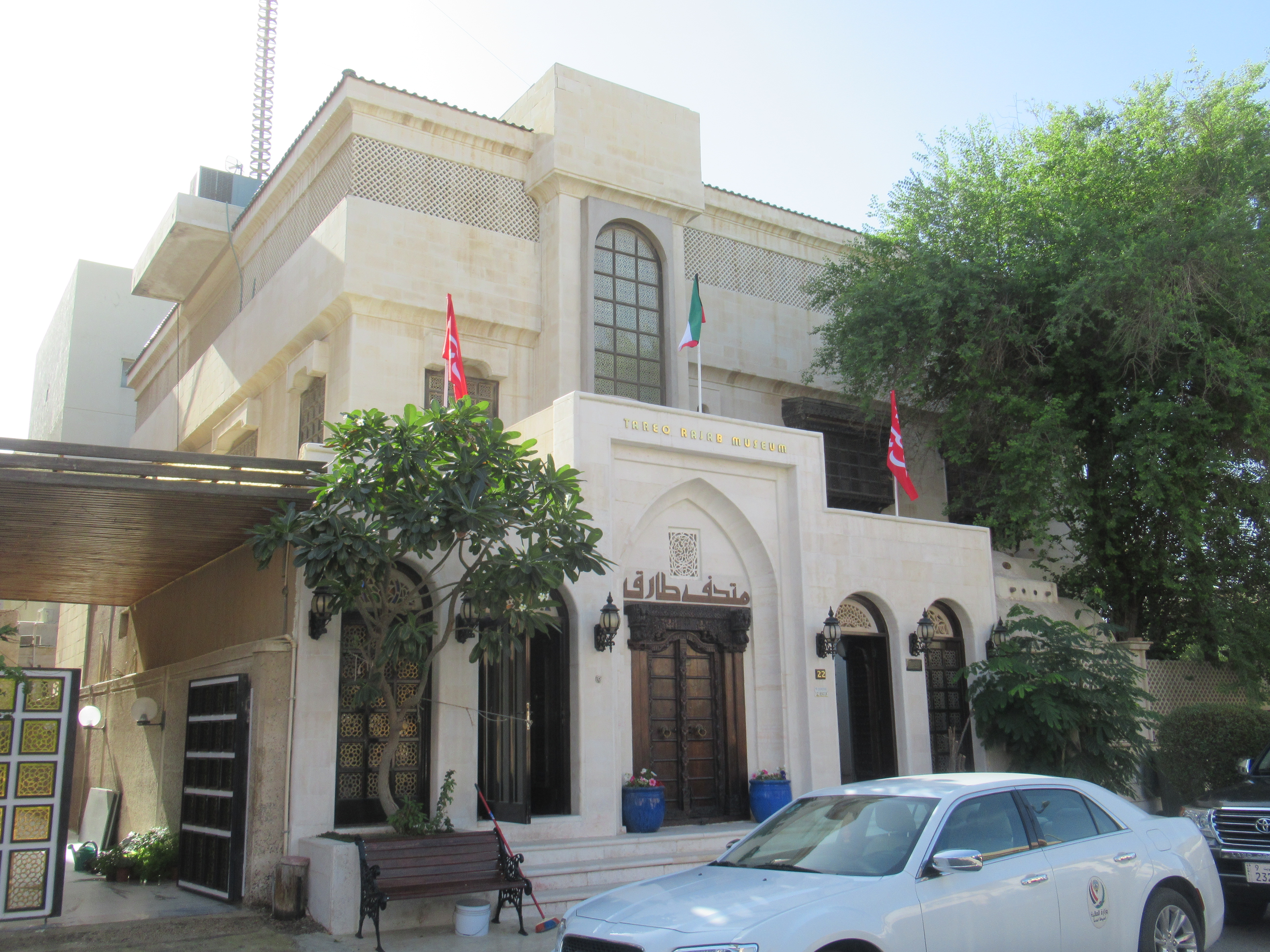
On a different day I visited the superb Tareq Rajab Museums. These are private collections started by Tareq Rajab when he acquired his first antiquities aged just fourteen. The first museum had a beautifully displayed collection of jewellery from across west and central Asia, with some from the Far East and parts of Africa, as well as weapons, fabrics and garments from across the Arab world. Some of the intricate craftsmanship of the jewellery was jaw-dropping. A couple of streets away was the Tareq Rajab Museum of Islamic Calligraphy, with just about anything you can think of adorned with elaborate Arabic script. A real feast for the eyes, despite my inability to understand a word of it.

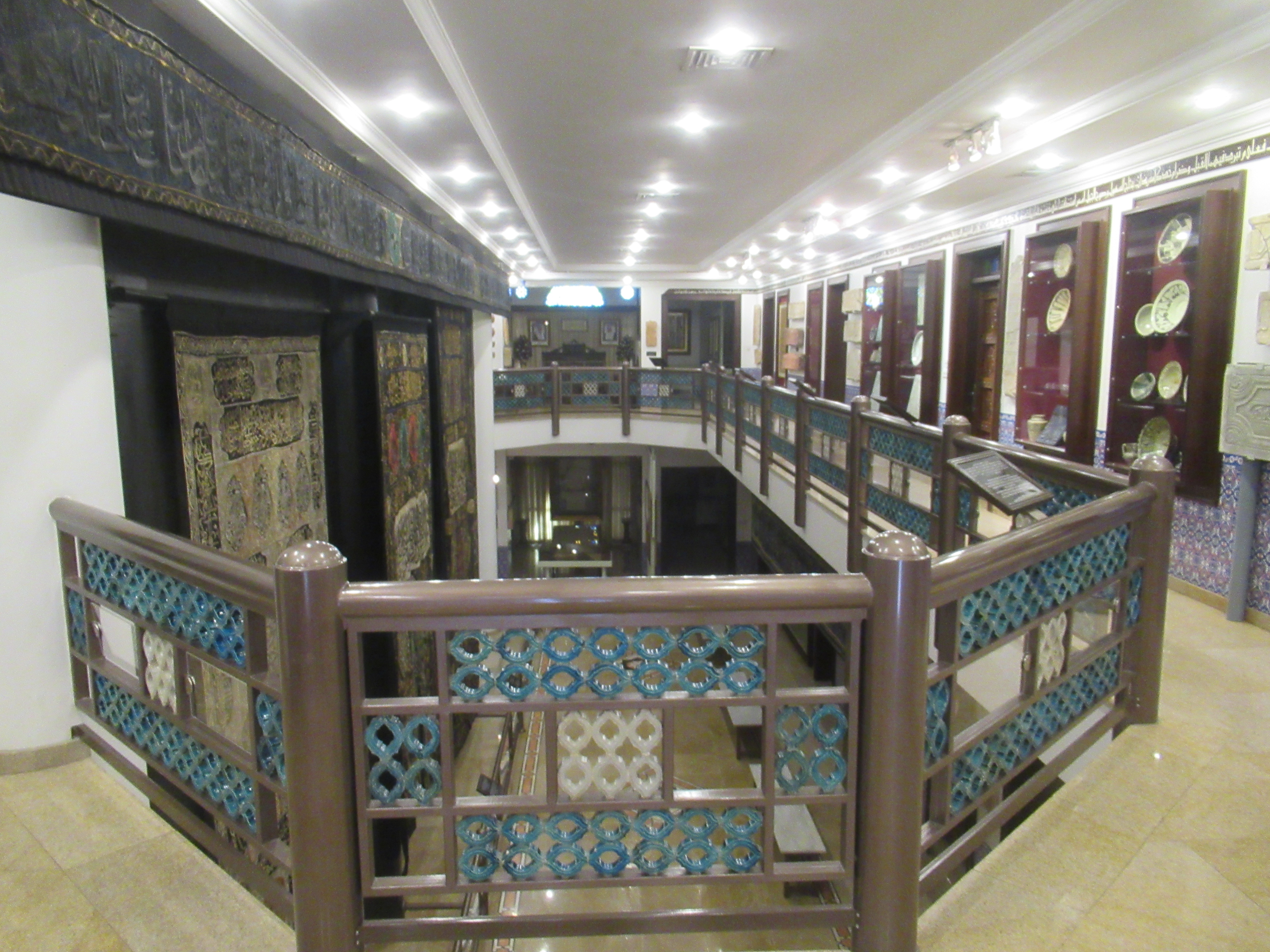
Later that same day I went to marvel at the fascinating sea creatures housed in the aquarium at The Scientific Centre:
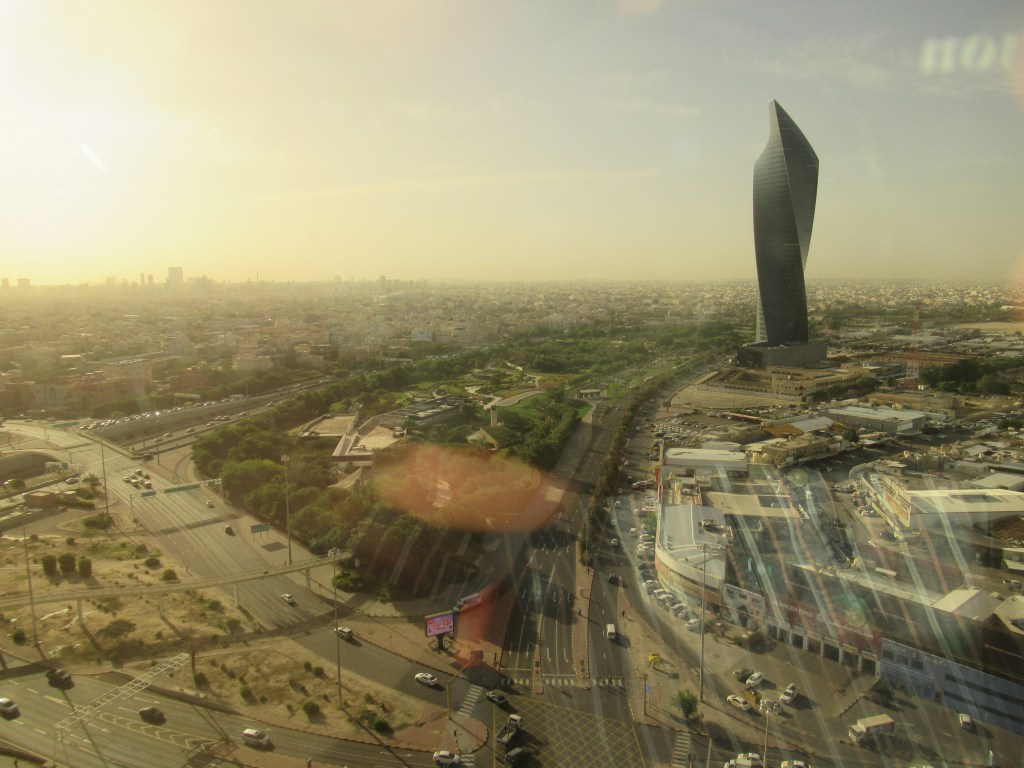
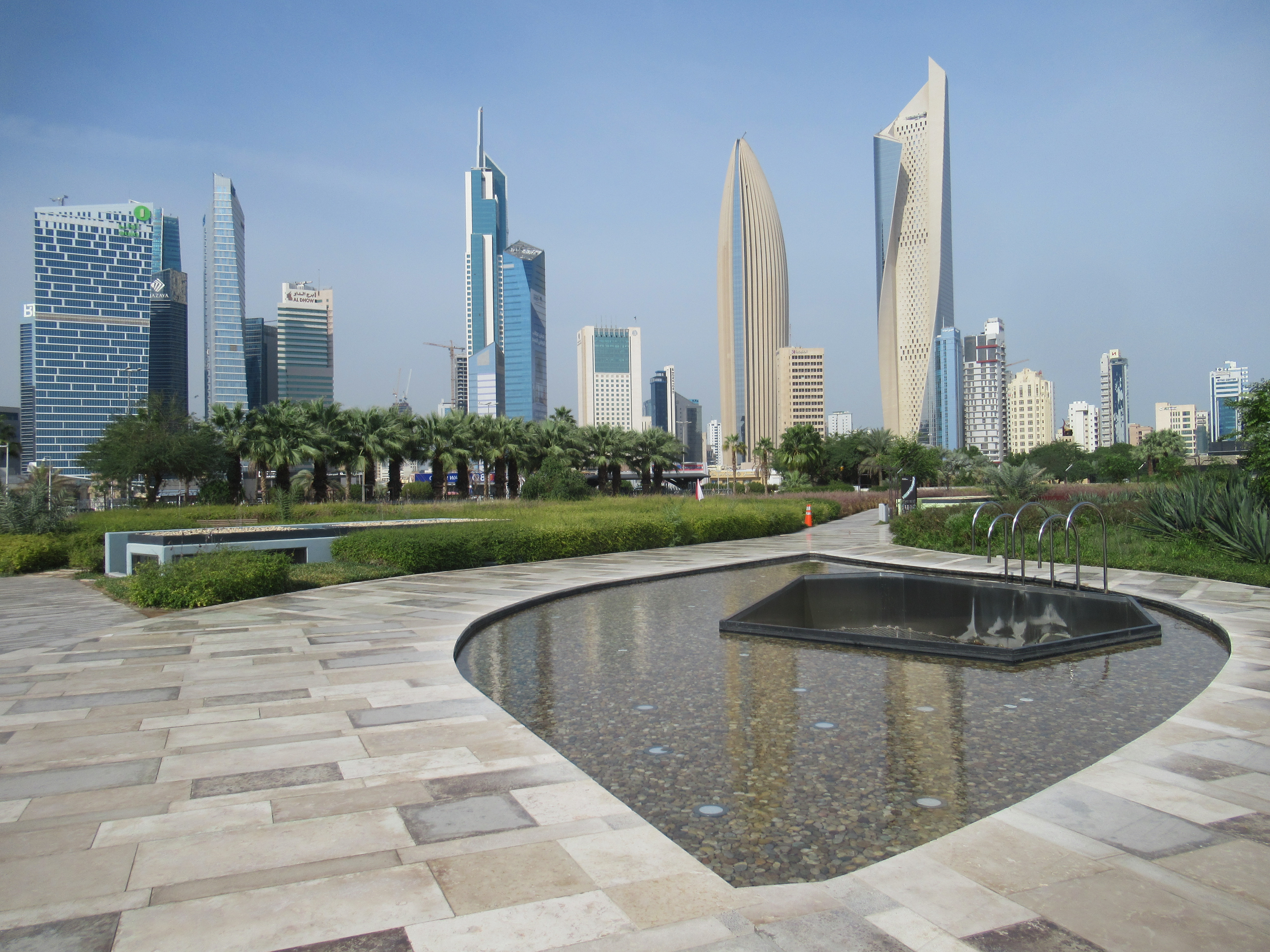
My hotel for the four days was in a high-rise block with fantastic views of the city. My room was nineteen storeys up, on the highest accommodation floor. Above this was a restaurant with even better views from three sides. When standing at my room’s floor-to-ceiling window it felt like one of the tallest buildings in the city, and I could easily make my legs go wobbly by imagining myself just a few inches further forward on the ledge outside the window. It was only from street level that I could see how relatively small the building actually was. It was dwarfed by the cluster of sky-scrapers in which it stood. It was on the edge of Al Shaheed Park, a long, curving, well-manicured park with abundant greenery, water features, cafés, and sculptures. I visited a few times during my stay, for early morning walks and encounters with local bird life.
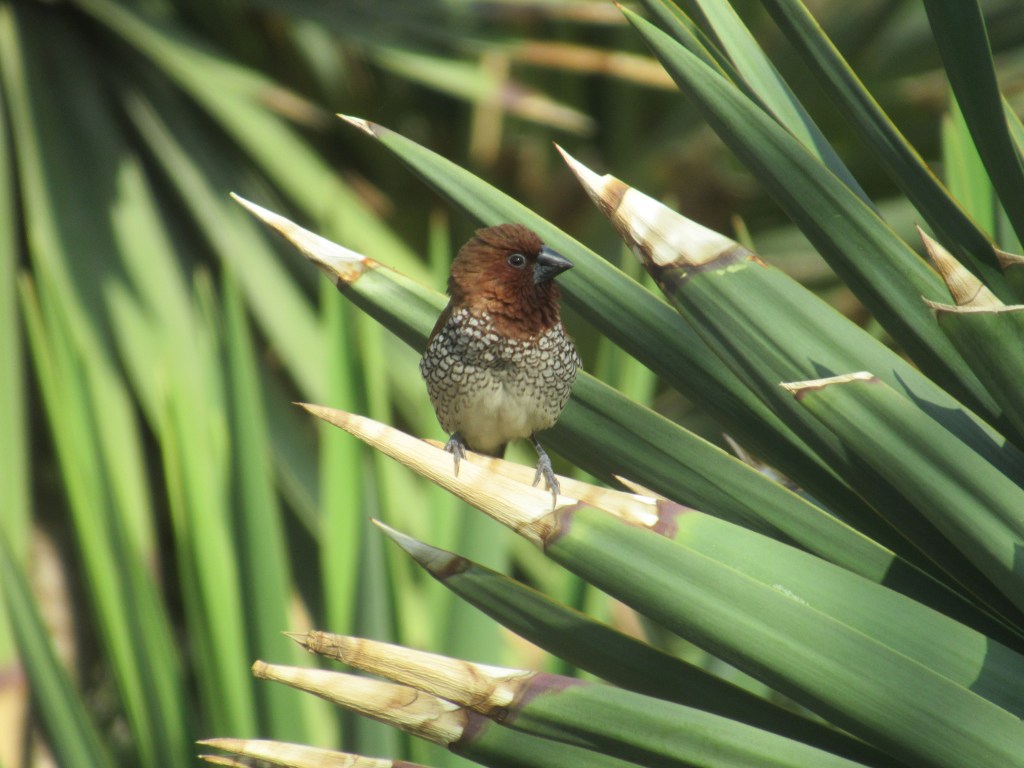


On the final day of my trip I took a bus a short way out of town to Sulaibikhat Beach, in the south of Kuwait Bay, for a day of birding. It was a scrubby, fairly unattractive beach but, with the tide out and a vast expanse of mud spread out before me, thousands of shorebirds were taking advantage of the rich feeding opportunities. There were various species of waders, herons, egrets, kingfishers, terns and gulls, many rare or non-existent back home. Thousands of feeding flamingos lined the expanse of the bay all around the tide line and off towards the distant city. As the tide gradually rose throughout the morning, the birds were pushed closer towards me and their numbers became more concentrated and impressive as the area of mud diminished. By far my favourites were the Crab Plovers – an unusual species of wader that breeds only around the shores of the Arabian Peninsula, and one which I’ve never seen before. I watched at least 34 of these oddities at close range, with adults catching crabs and abundant Mudskippers to feed to their attendant young.
At one point a sinister-looking SUV with tinted windows drove over and pulled up near me. I thought I was in some kind of trouble until the occupants got out and came towards me. It was two Kuwaiti women who were into photography and, thinking my telescope was a camera, were intrigued to see what kind of shots I was getting and keen to show me their own (expensive-looking) cameras.
I should have known there wouldn’t be any trouble. If the last four days had taught me anything it was that Kuwait is a country with no major hassles for the visitor. The pace of development may be frenetic, as is the traffic, but the way of life is laid back and relaxed – a country where everybody respects your space and nobody bothers you.


 Vole Explosion
Leave a comment