28th October 2023
There are Mermaids living around the coast of Britain. Plus-sized, meaty Mermaids inhabiting an ever-shifting domain where the land meets the sea. With their legendary beauty and seductive voices, these corpulent creatures come ashore on the beaches of Norfolk every winter to birth their podgy progeny.
Half human and half fish, these big-boned, body positive beauties are masters of their littoral realm. I say ‘half fish’, but they’re actually not fish at all. They’re 100% mammal… and they’re not human either. Basically, they’re seals. I don’t know why I didn’t just say that in the first place. But they are fat and they are in Norfolk, so two out of three ain’t bad!

Unlike the Sirens of nautical legend, their faces and voices may not be irresistible enough to lure sailors to their doom, but they still have enough pulling power to draw visitors to the east coast of Norfolk every winter to witness one of East Anglia’s best known wildlife spectacles.
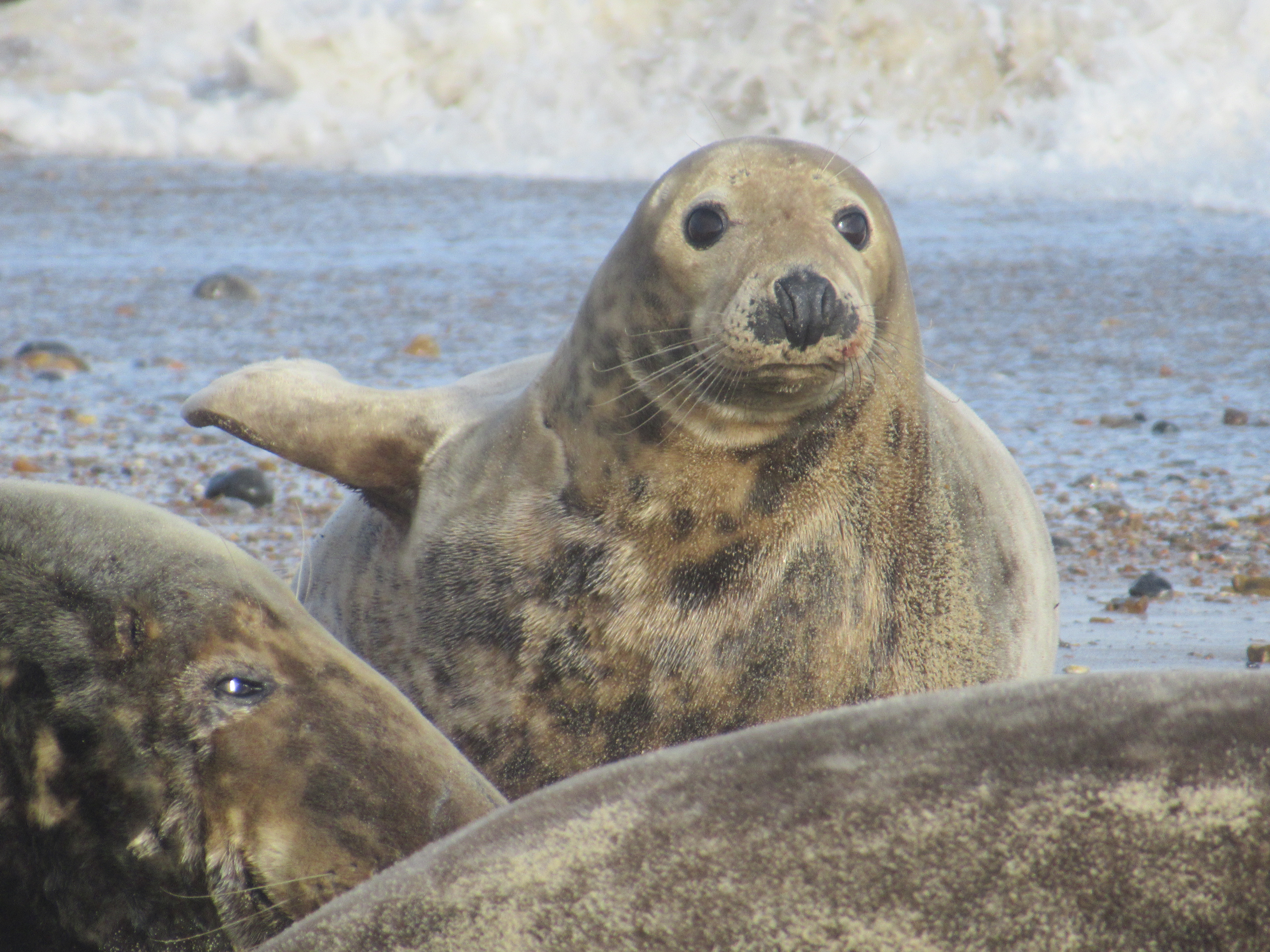
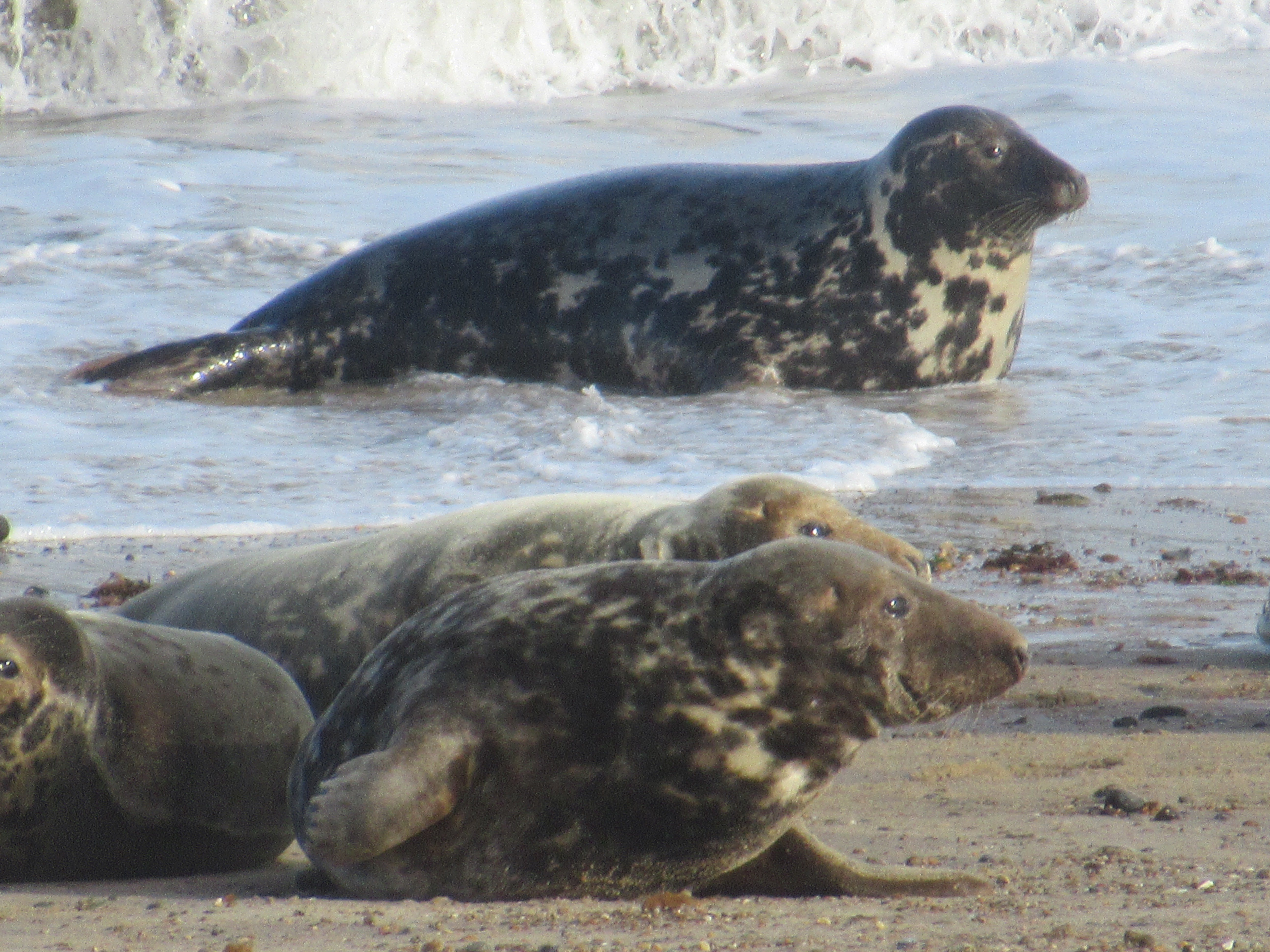
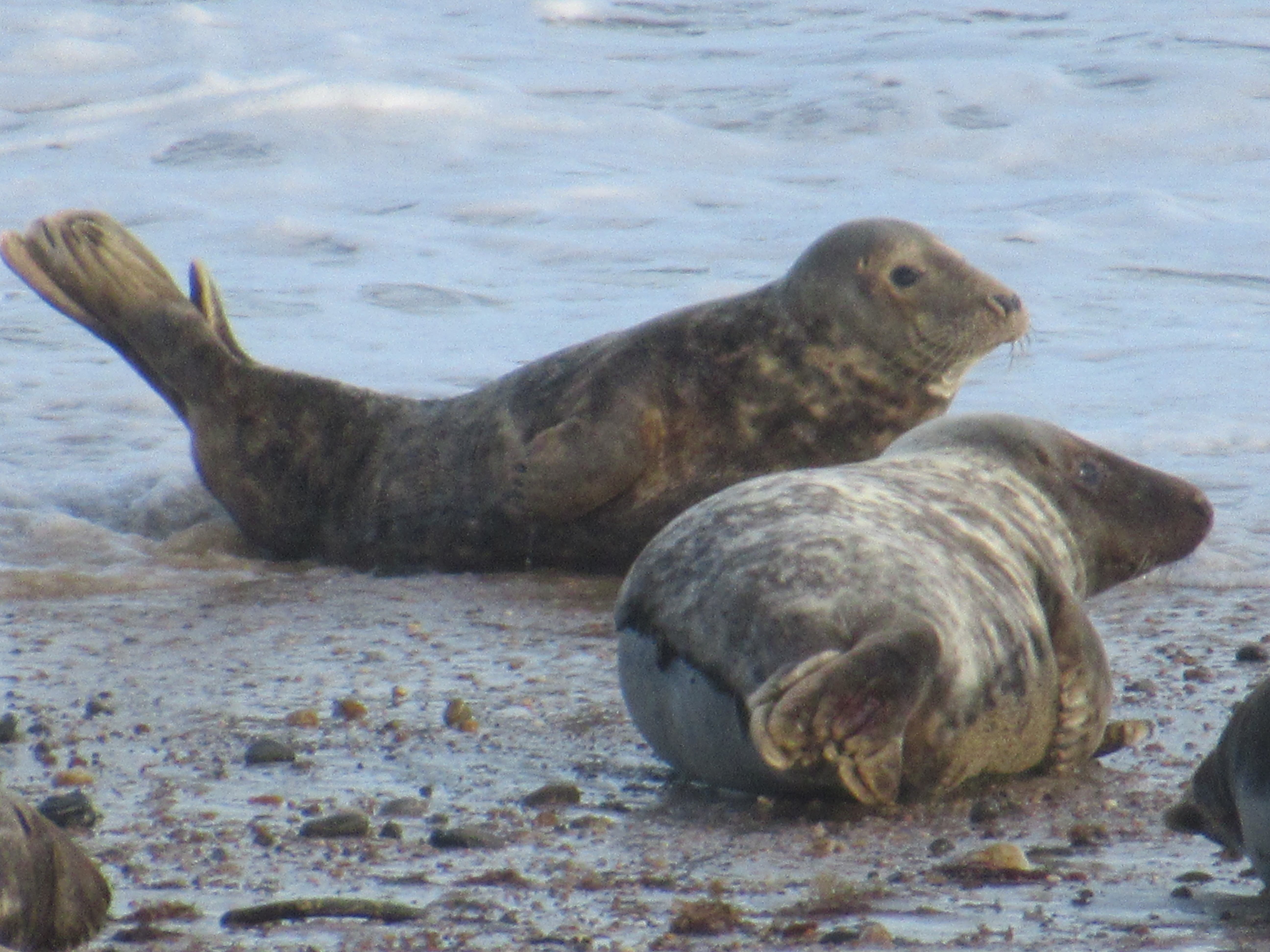
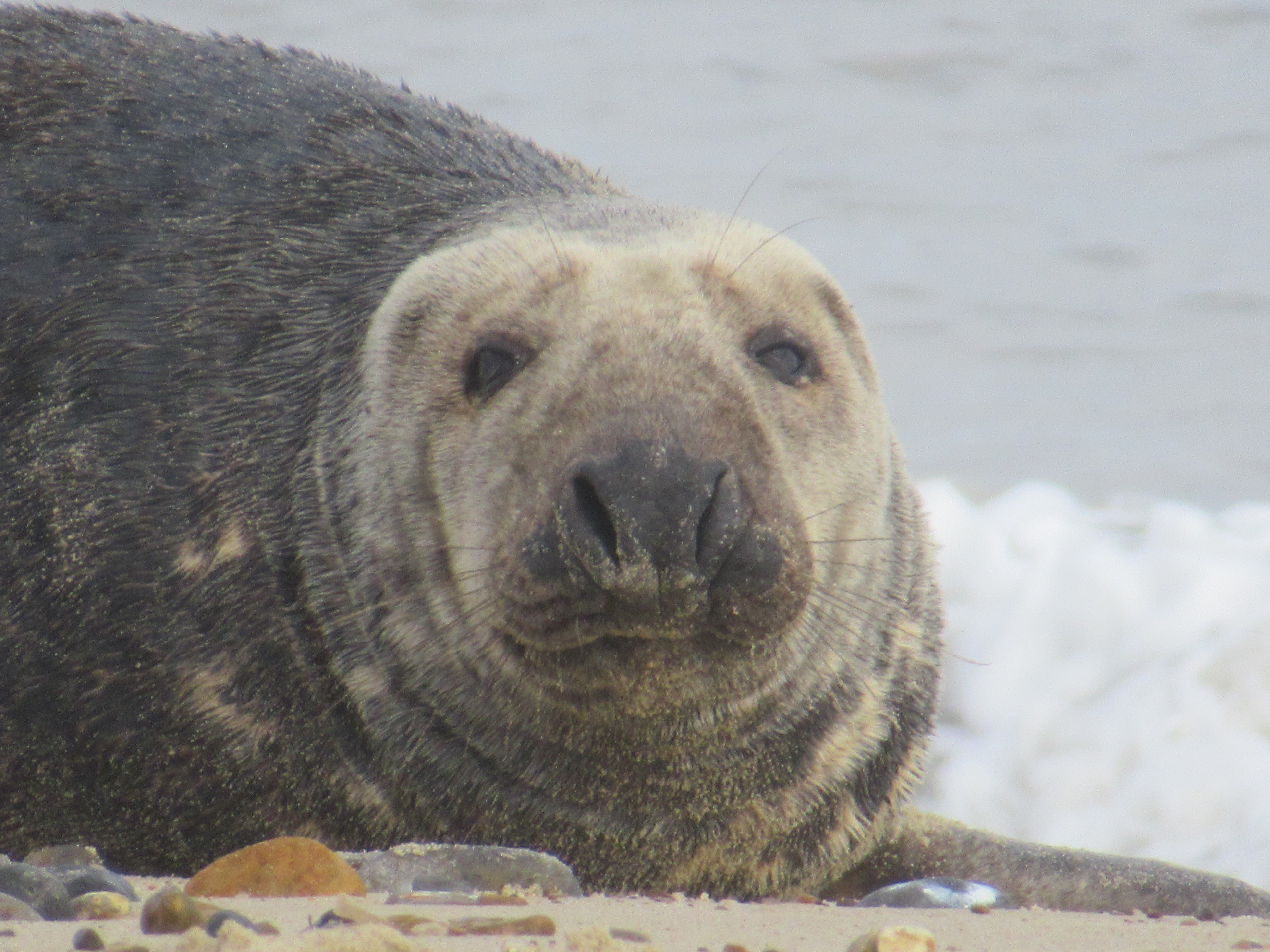
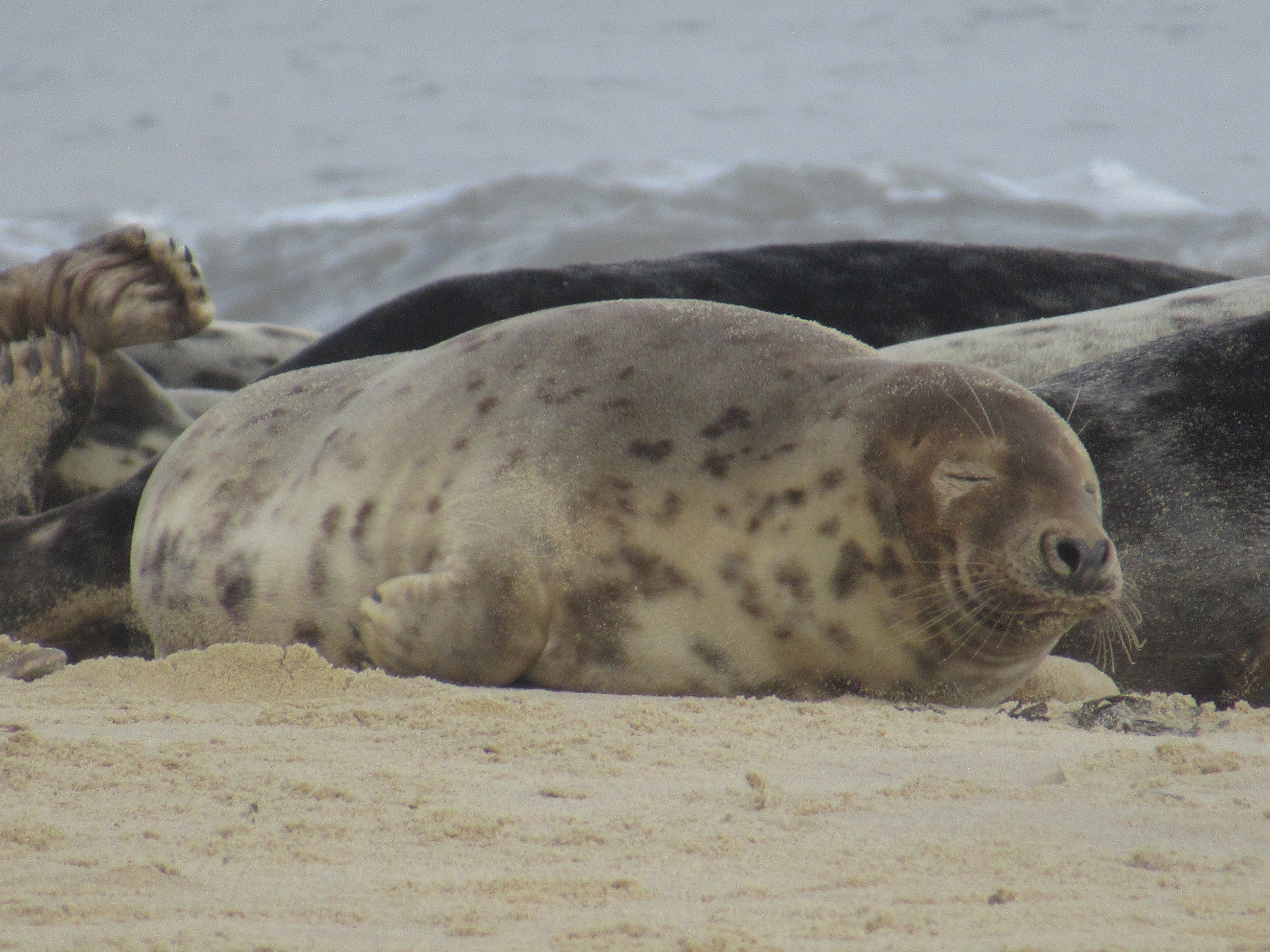
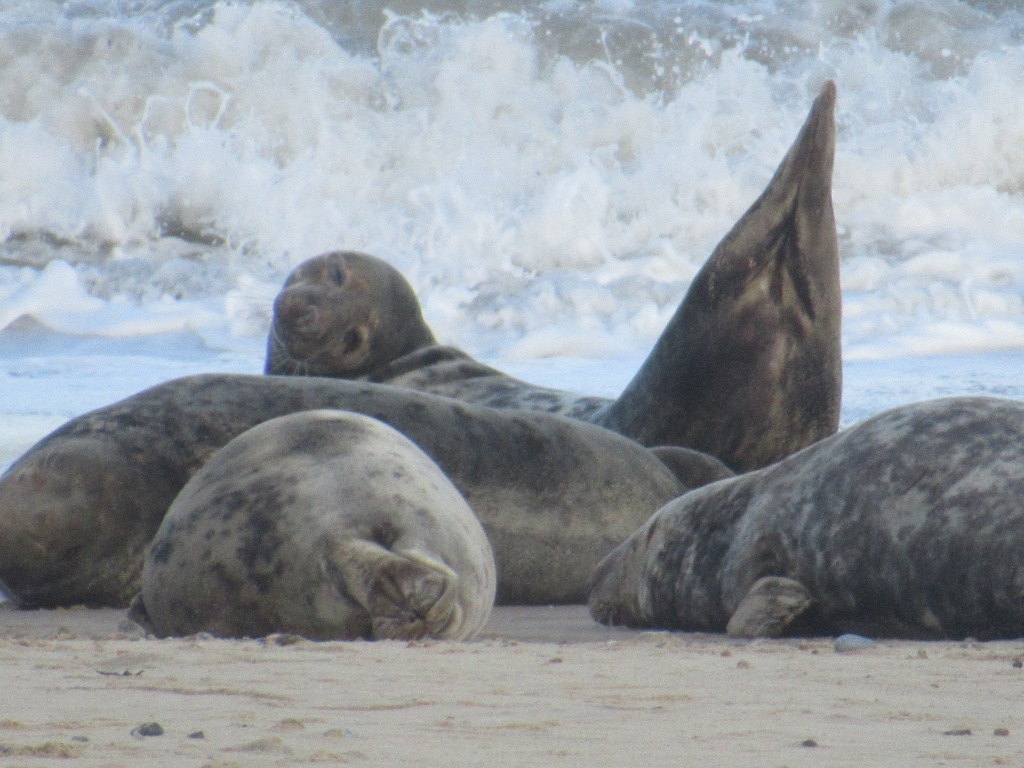
When I first started visiting Norfolk in search of wildlife in the late 80s, the smaller Harbour Seal was by far the more common of the county’s two seal species. Since then, following legal protection in the 70s, numbers of the much larger Grey Seal have boomed. Where once they gave birth mostly on the rocky shores, hidden caves, and remote islands of Scotland, they have now spread south to form their rookeries on the gently-shelving beaches of Norfolk. In the area I visit today – the beaches of Winterton and Horsey – between 2000 and 4000 Grey Seal pups are born every year, with an even larger colony on the less-accessible beaches of Blakeney Point further north. Theirs is a real success story, and the shores of Britain now hold almost 50% of the World population.

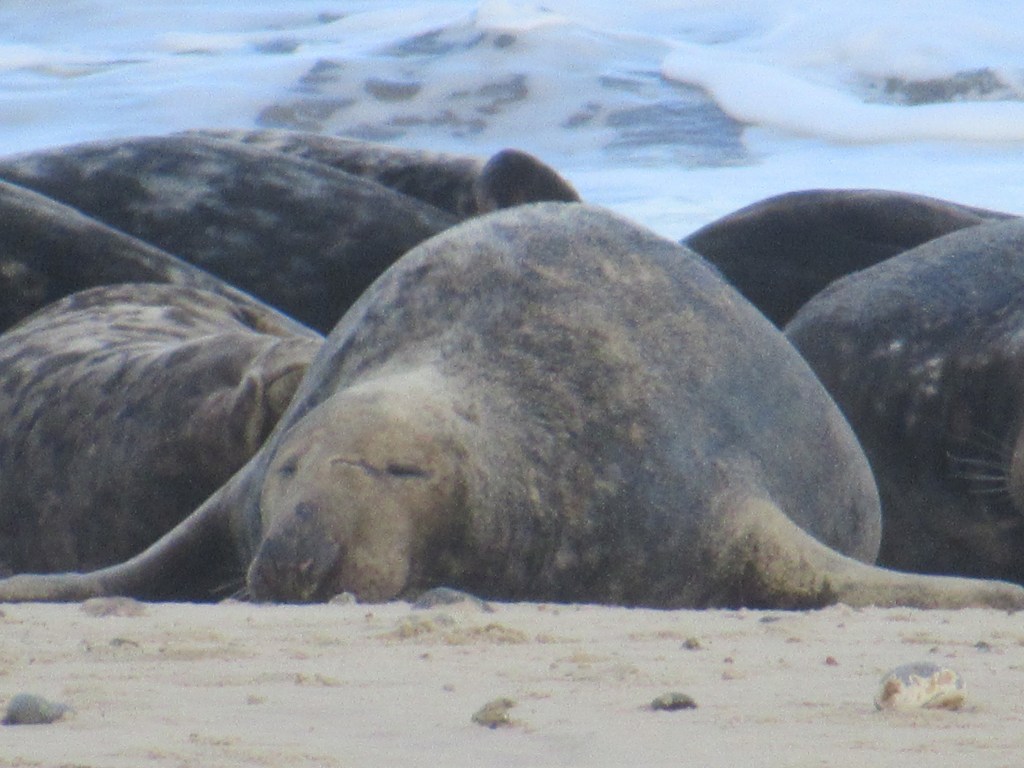
As well as being almost twice the size of a Harbour Seal, these portly Pinnipeds are best separated by their Roman-nosed profiles, compared to the ‘cuter’ rounded faces of the smaller species. Their scientific name – Halichoerus grypus – translates as ‘hook-nosed sea pig’. Adult male Grey Seals are much larger than the females, and this colony contains seals of various ages, so there is a wide range of sizes here, as well as a selection of different fur colours – greys, browns, black and cream, patterned with a variety of spots and blotches. This video gives a good demonstration of their diversity, as well as showing a range of behaviours. The sound isn’t great, but their wailing calls can just be made out above the sounds of wind and sea:
While Harbour Seals give birth in the summer, these Grey Seals have their pups from November to January. In what is thought to be an adaptation to life on ice, the pups are born with pure white fur which they keep for two to three weeks, during which they have to remain on land. Here they gain weight at a rate of 2kg per day thanks to a diet of their mother’s super-rich milk. Unfortunately, I’m a bit too early in the season to see any of these white furballs and this slightly older pup is the only one I find:
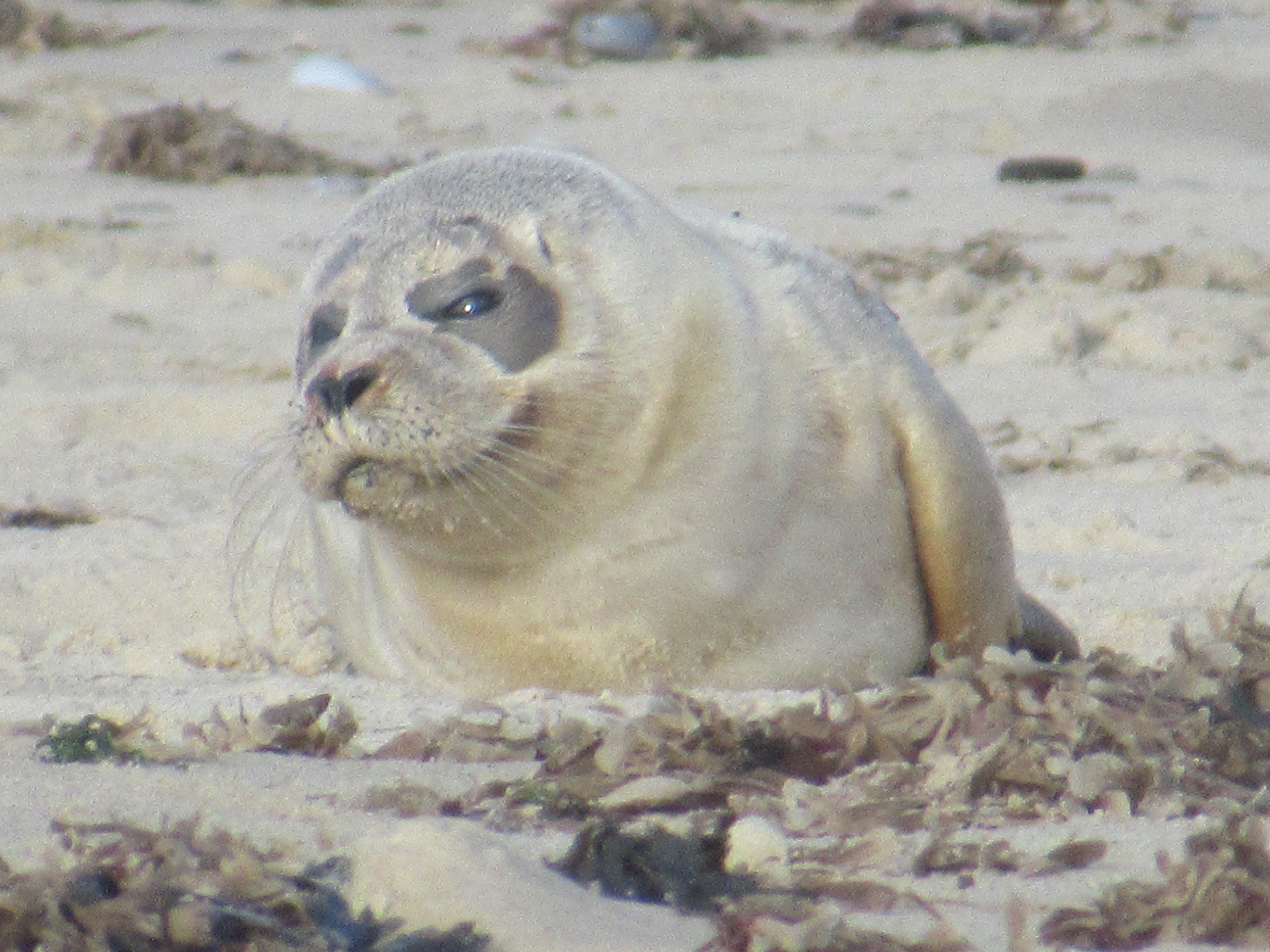
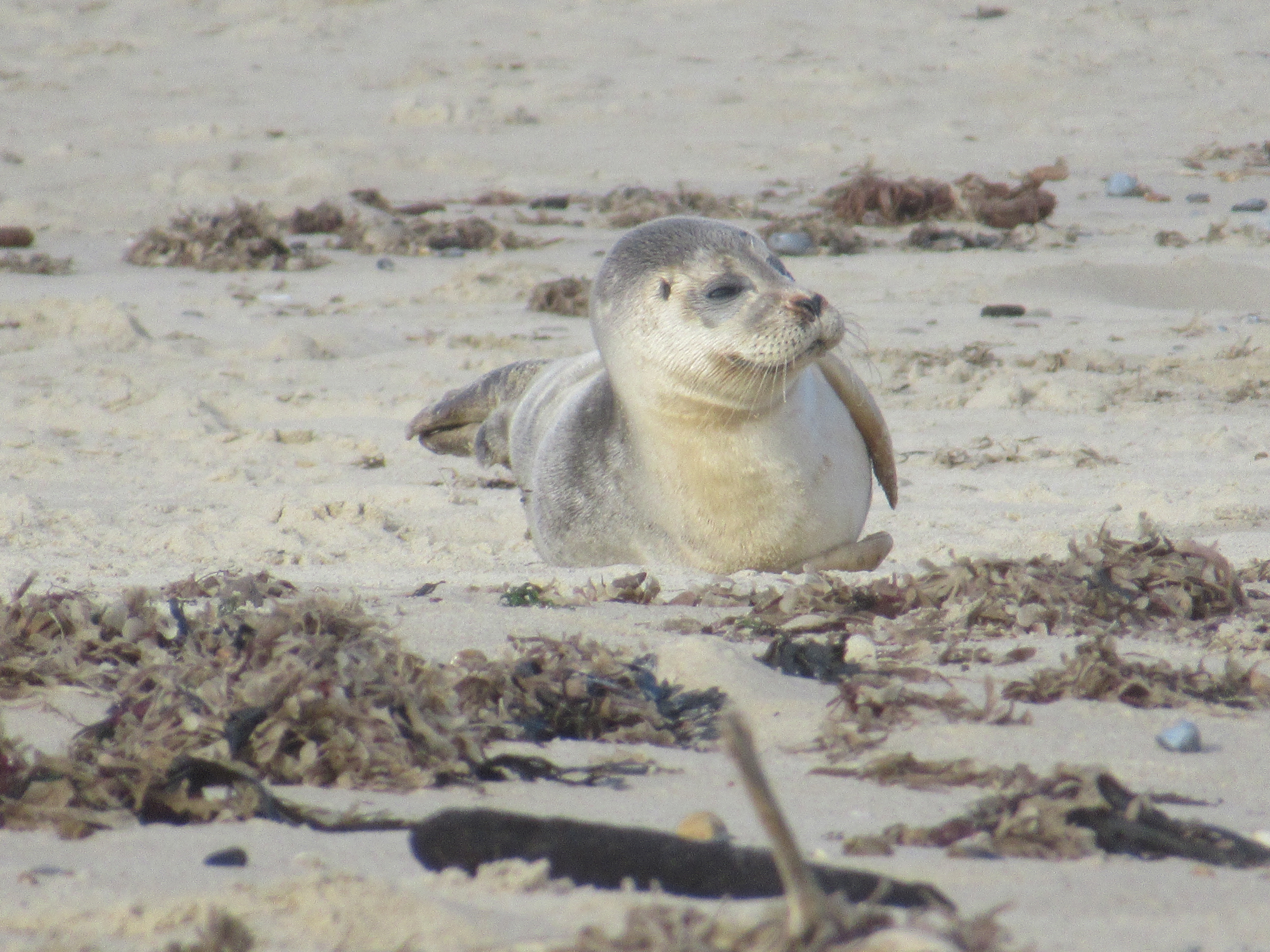
Here a male shows some interest in a female, only for her to escape his attentions by rolling away:
On the islands around Scotland, Grey Seals have for many years become the subject of myths and legends. There are numerous tales of seal-people who come onto land, take off their fur and grow legs, as well as stories of relationships between seal-people and humans. Not so long ago, some people were claimed to have been the descendants of these cross-species relationships. Whatever may have gone on in those islands, I’m pretty sure the good people of Norfolk aren’t having sex with these salad-dodging Selkies, but they certainly draw in good numbers of admirers and the beach is fairly busy on this sunny weekend. The seals seem to be remarkably tolerant of people here and the visitors are mostly well behaved and keeping their distance. All the dogs I see are kept on leads and I only witness one incident of two naughty boys getting close enough to cause alarm, with a few seals retreating into the water:
I confess that when I first arrived I got a little too close and some of the seals raised their heads to nervously check me out. I quickly retreated to the dunes at the back of the beach and used binoculars and camera zoom. When I felt I had got enough shots, and done enough fat shaming for one day, I left them loafing peacefully at the water’s edge.



 Vole Explosion
Leave a reply to Carlos Davies Cancel reply