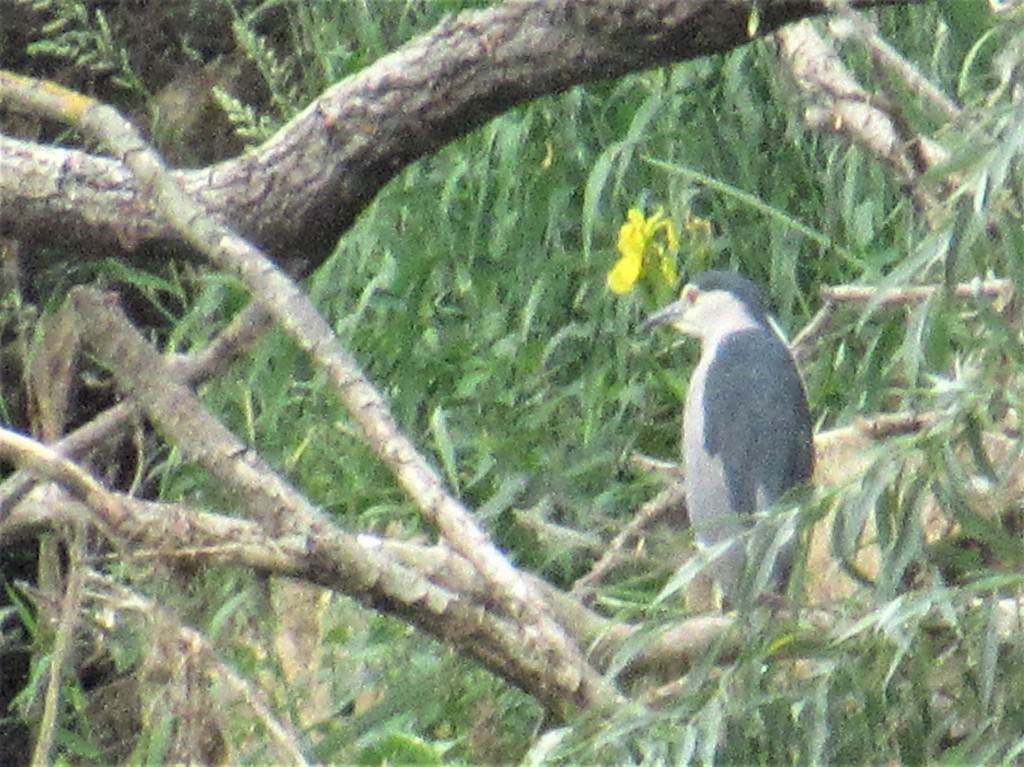
The Black-crowned Night Heron has a huge worldwide distribution, right across North and South America, Africa, Europe and Asia…but it isn’t usually found in the UK. In the last decade or so, one of the big stories in British ecology has been the colonisation of these islands by, and increased breeding success of, long-legged wetland birds. Little Egrets are now common, Bittern numbers increase every year, Cattle Egrets, Spoonbills, Cranes and Great White Egrets are now established breeders and are spreading. Purple Herons, Little Bitterns, Glossy Ibises and White Storks are being seen more frequently and have nested here in very small numbers. The Black-crowned Night Heron belongs in this latter category, with the tiniest of toe-holds as a UK breeding bird.
I have seen many abroad but never in my own country, so when three individuals set up shop at the RSPB’s Ouse Washes reserve in the Cambridgeshire Fens, I had to try my luck.
Fortunately my luck was in that morning, and when I arrived one of the birds had already appeared a few minutes earlier and was standing on a branch above one of the many drainage ditches, allowing me to get some poor quality photos. This mainly nocturnal bird is a medium-sized heron – slightly larger than a Mallard (if a Mallard stood vertically on long legs) – with a smart grey and black plumage. It has yellow legs and feet, three long, white head plumes draped down its back, and striking orange-red eyes. I watched it for fifteen minutes before it decided to drop down into the waterside vegetation, probably to spend the rest of the day in a hidden roost. Four other guys turned up to twitch it just then, two of them before it disappeared but their two friends just a few seconds too late. They weren’t happy.
With my British list increased by one, I had the whole day to enjoy the reserve. There were plenty more birds around, but I concentrated on some of the other summer wildlife, first finding a Viviparous Lizard basking on some rocks.
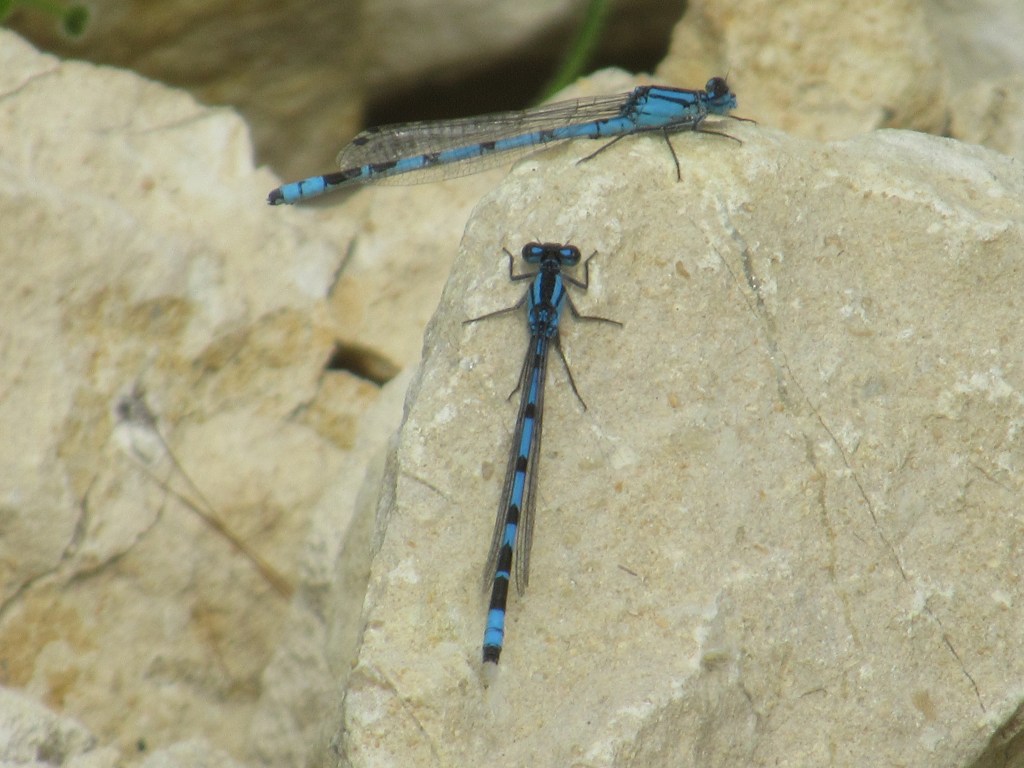
In late June and July, when the birding goes quiet, I try to up my dragonfly game. I had brought my Odonata field guide with me and, amongst some commoner species, I managed to find two that were new to me: at least three Norfolk Hawkers – gradually spreading from their eponymous county into other parts of the UK – and numerous Scarce Chasers, which on this reserve don’t appear to be particularly scarce at all. I managed to get my little camera onto both species.
The Ouse Washes consists of a long, straight swathe of land stretching for about 20 miles (32km) through the fens of Cambridgeshire and Norfolk. They are about a kilometre (0.62 miles) wide, between two parallel channels cut through the landscape by Dutch engineers in the seventeenth century in order to drain the fens and create some of Britain’s most fertile agricultural land.
High embankments run along both sides of the washes for their entire length and can be walked on public footpaths. The land in between holds a massive volume of flood water in the winter, when the washes are inundated from bank to bank. At this time they become a winter refuge for thousands of wildfowl of various species, most importantly for large flocks of wild Whooper and Bewick’s Swans that arrive here from Iceland, Scandinavia and Siberia. In summer, most of the water drains away and the vegetation grows to form one of the most extensive areas of lowland marsh and wet grassland in Britain. Cattle are grazed on the wet meadows, and the whole area is teeming with breeding waders and other wildlife.
I used to come birding here a lot in the 80s, but not so much these days. Easier access to other local wetlands has made me lazy. It’s a shame really, and I should come here more often. When I do visit, it always strikes me as having an old-school RSPB feel, with no cafés, state-of-the-art visitor centres, or public engagement activities – just acres of well-managed habitat as far as the eye can see, and tons of wildlife. There is a small car park, decent toilets, and an un-maned pre-fab hut with a few information boards, some feeders, and a sightings book, but that’s all.
Some of the old hides have recently been replaced with new ones, but thankfully these are in the traditional flap-fronted wooden style like yer mum used to make, rather than the sash windowed monstrosities the RSPB has been inflicting on certain East Anglian flagship reserves recently. A good collection of cobwebs inside shows that visitors are few and far between, which is just how I like it – away from the Night Herons I only met one other person, and it was him who pointed out the Norfolk Hawkers to me.
This reserve is a little awkward to get to. For me it’s a fairly long walk from the nearest railway station at Manea, and even with a car the long access road is narrow and uneven and not a pleasant drive. To get here you have to really want to come here, and that’s why it is still mostly a nature reserve for people interested in nature, somewhere to enjoy a bit of solitude, with none of the dog walkers, mountain bikers, picnickers, and shouty families looking for somewhere for the kids to “let off steam” that plague most other reserves in the region. I really should come here more often.
Before I left, I popped back to the Night Heron spot and one of the birds was on show again, this time slightly closer. With a bit of luck they’ll return and become a regular breeding bird in the county.
 Vole Explosion
Leave a comment