NORWAY’S VARANGER FJORD
6th – 8th March 2023
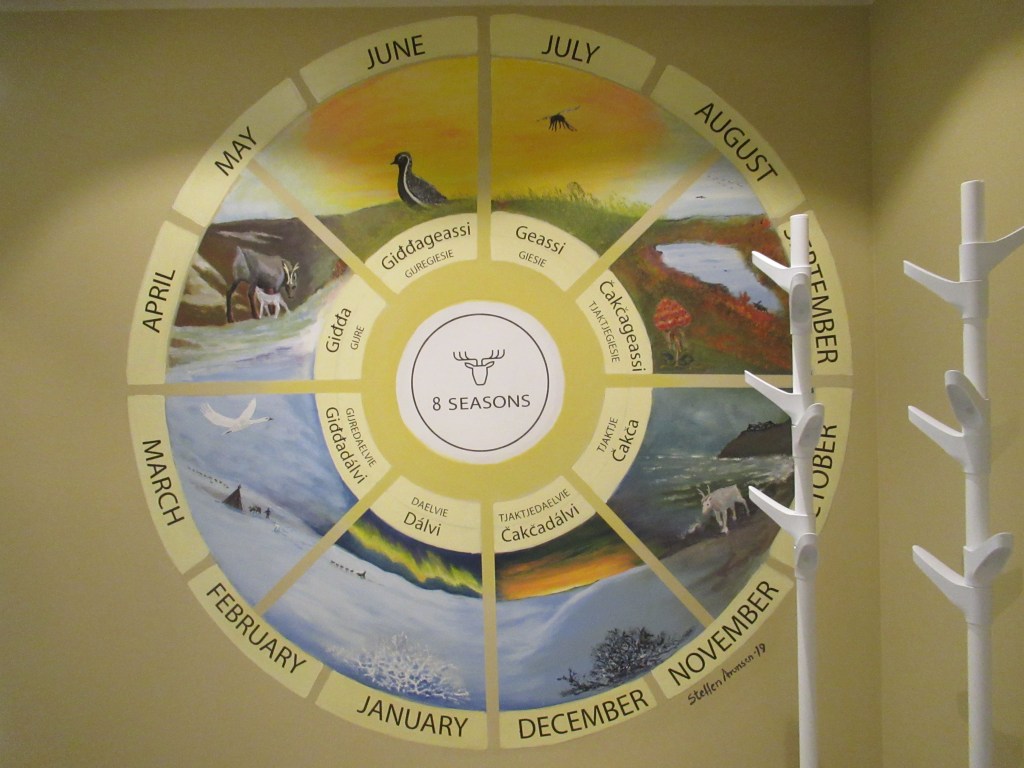
I wake up to a morning that is bright and sunny, but still cold at -20°c (-4°F). I hear that I’ve chosen a good week to come here as the previous week was snowy and windy and the roads were blocked. There are four onward buses to Vadsø today, so I’m in no hurry. My hotel, the Eight Seasons, is lovely – it’s owned by local Sami people and is designed in a classic Scandi style. The name comes from the eight seasons recognised by the Sami.
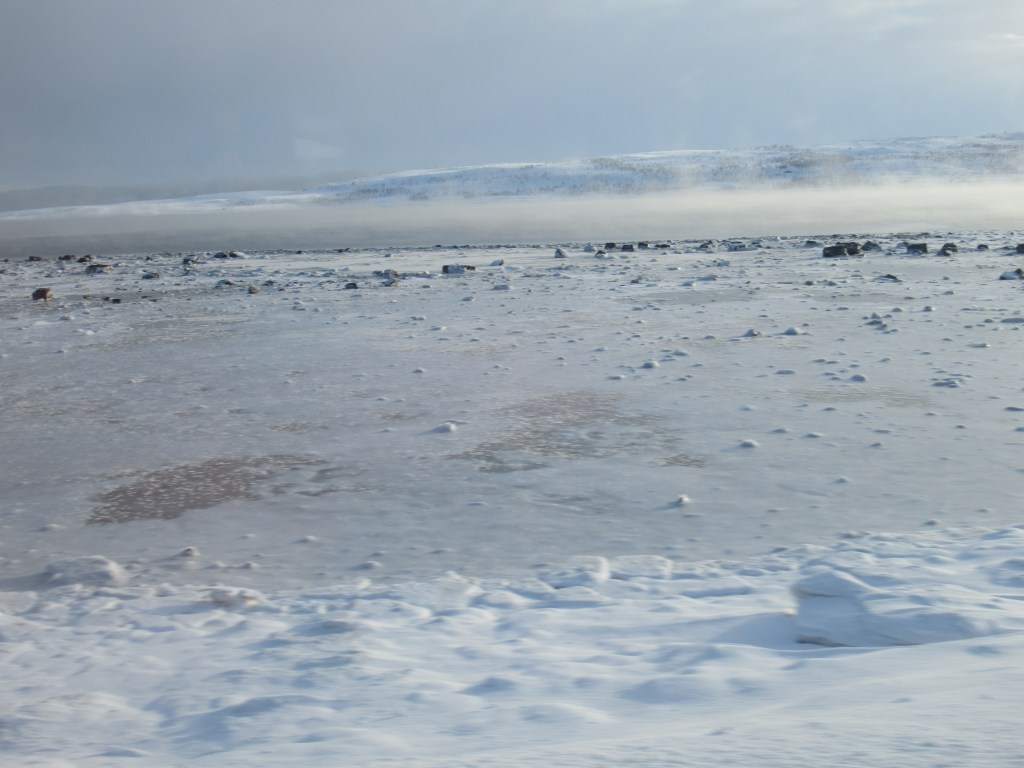
Varangerbotn is tiny, little more than a crossroads with a few buildings around it. On one corner is the hotel, a pizza restaurant, a petrol station, and a supermarket. Over the road is a café and diagonally across is the Sami museum, which is where I plan to spend the morning. The museum is situated not far from the waterside at the inner, western end of Varanger Fjord. There is a nature reserve and birding hide here, but at this time of year it is completely frozen over and no birds are in evidence.
The museum is small but interesting and beautifully presented. It tells the story of the development of the coastal Sami culture since their ancestors spread here from further east, as the ice retreated nearly 12,000 years ago. A couple of small tour groups pass through while I’m here.
By the time I leave it is almost lunchtime, so I go to the café. I intend to get something light but, due to a misunderstanding, I end up ordering a large portion of giant meatballs in gravy with potatoes, carrots, mushy peas and lingonberry jelly. I’ve already eaten a buffet breakfast this morning, so I don’t think I’ll be able to manage it. In the end it goes down a treat, and this kind of stodgy comfort food is just what I need in this climate. I wasn’t originally intending to come to Varangerbotn. I’m only here because the buses don’t run all the way to Vadsø on a Sunday, but it’s turned out to be a pleasant overnight stop and a fine place to spend a morning.
By early afternoon the weather has warmed up to a balmy -15°c (5°F) and I catch the bus to Vadsø, midway along the road that hugs the northern coast of Varanger Fjord, all the way to Vardø at the eastern tip of Varanger Peninsula. I’ve known about this fjord ever since I was young and have always wanted to come here. It is well known as one of Europe’s premier birding destinations and features in most site guides. The western end of the fjord around Varangerbotn is frozen, but five minutes into the journey we are passing by open water and I see a few new birds from the moving vehicle: Mallards, Red-breasted Mergansers, Great Black-backed Gulls, Common Eiders, Cormorants, and a fairly distant White-tailed Eagle being mobbed by a Great Black-back. A Buzzard-sized raptor I see perched on a waterside rock must surely be a Gyrfalcon, but my view isn’t good enough to be sure. Shame as this, the World’s largest falcon, would be a lifer for me. At one bus stop near Vadsø I see at least two Tree Sparrows amongst a flock of House Sparrows.
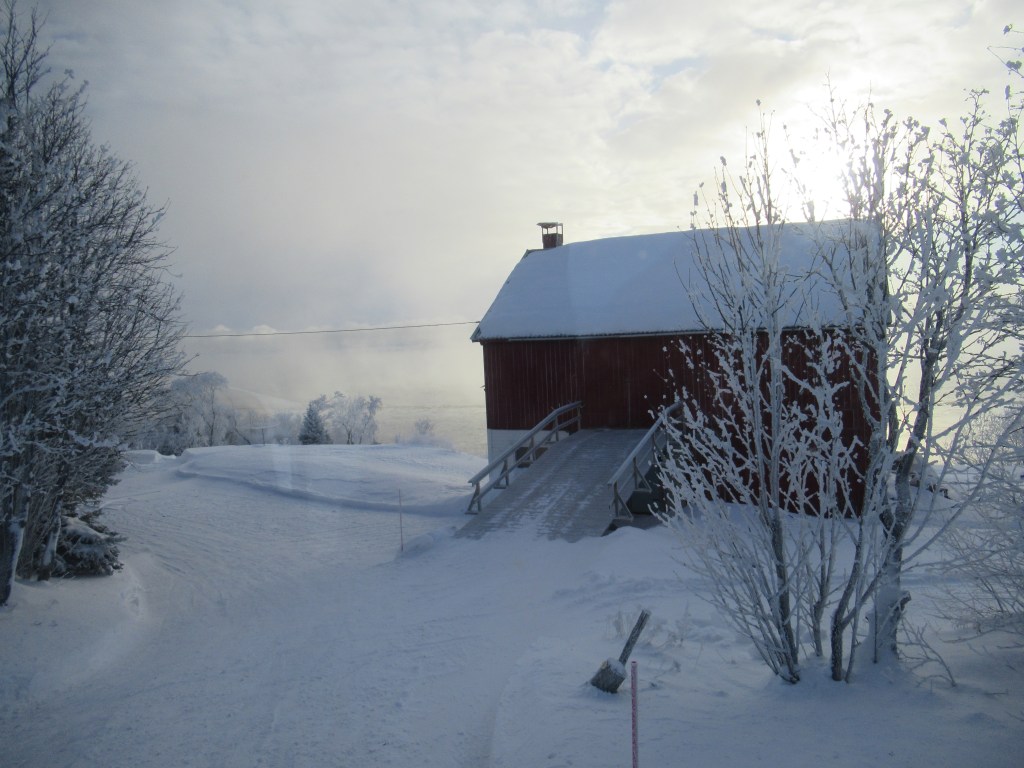
The one hour bus journey is very scenic and this area is much more populated than I imagined – I was picturing miles of bleak, empty tundra, but we passed villages and houses all along the road, and Vadsø itself is comfortably the most built-up settlement I’ve been to since Helsinki. Vadsø Fjordhotell is located on the island of Vadsøya, a short walk across a bridge from the bus station in town. From the bridge I get a few more birds, including another lifer: King Eider, as well as Long-tailed Duck, Herring Gull, Kittiwake, and Purple Sandpiper. A couple more Ravens fly over.
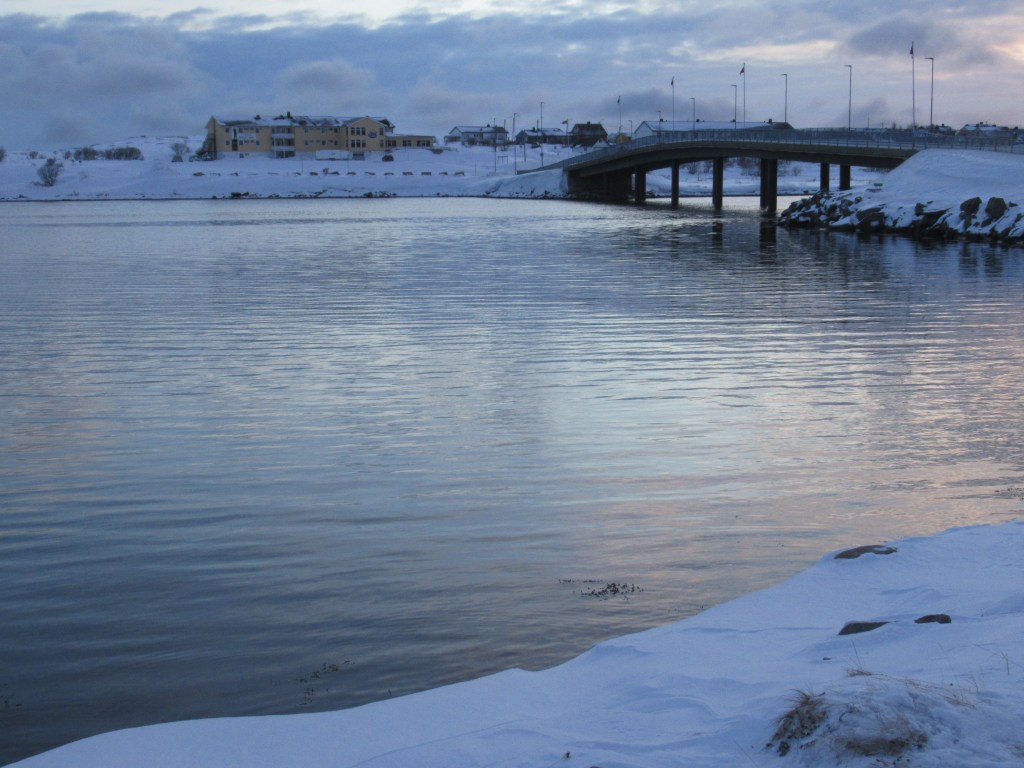
The hotel advertises itself as ‘The Birders Base Camp’ and has a wealth of birding information on the walls. From the corridor outside my room I scan the fjord, and there they are… Steller’s Eiders! My main target for this trip. These rare ducks are real high Arctic specialities, breeding in northernmost Siberia and remote parts of Alaska. In winter they are found in only two places in Europe – here in Varanger and off Saaremaa island in Estonia. I’ve looked for them in Estonia and, despite a day spent in sub-zero temperatures in the correct spot, failed to find them, so this is a highlight for me. With their striking black and white body plumage combined with delicate pastel shades on the head and breast, eiders are the supermodels of the duck world and Varanger sells itself as ‘The Eider Capital of the World’, the only place where Steller’s, King and Common Eiders can all be found together. Throw in Long-tailed ducks as well and it would be hard to find a smarter-looking set of Anatidae.
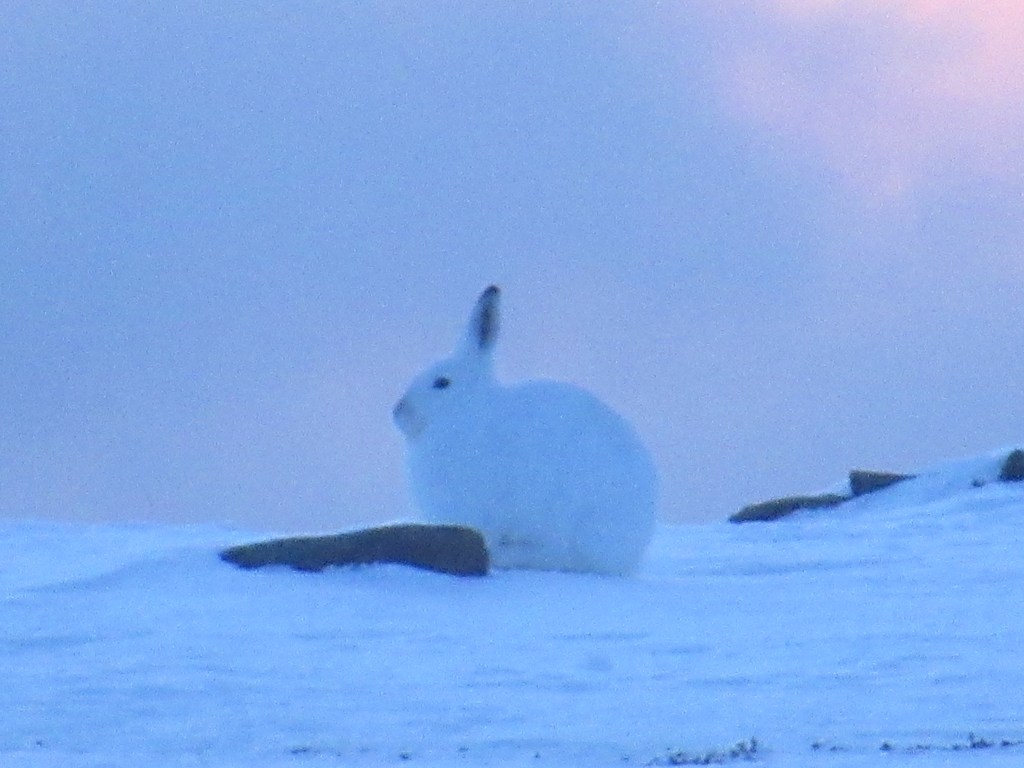
Going out for a birding walk, I see a seal species in the fjord. Probably a Harbour Seal, but this area holds some Arctic species such as Ringed Seal, which looks very similar. I then walk up onto some higher ground behind the hotel overlooking the water to the south. Here I find a lone Reindeer and a Mountain Hare in its white winter coat, which is a first for me having only previously seen them in summer.
Back at the hotel I need to recharge my camera battery for the third time today due to the cold weather, then I go out again at dusk to look for the Northern Lights. I’m back at the high area behind the hotel because there is no street lighting here. It’s not quite dark yet but I’m glad to get out early as the light show starts almost immediately. The moon is full and there is a bit of light from the town across the water, but the Aurora still puts on a decent show. It starts with a long, fairly bright, green streak across the sky above town. I stay out for a couple of hours and the lights come and go in the form of long streaks and green smudges, mostly over the town but occasionally directly overhead. It’s not as spectacular as last night but more so than my first night. I’ve learnt some lessons from last night – I’m wearing more layers, I keep my camera warm in my pocket and only fix it to the tripod when the lights start to get vivid, and I wear a small pair of gloves under my big gloves so my hands are never exposed. It’s not as cold as last night but still -12°c (10°F). So that’s three nights out of four that I’ve seen the Aurora Borealis, and some people come to the Arctic for a week or two and never see them.
As well as being spoiled with the Northern Lights the birding has also been remarkably easy, with all the realistic targets seen and two days left to explore.
Next day I find a birding shelter at the end of the harbour arm and this is a great place from which to observe the water birds. It’s also a lifesaver on the one day when a strong wind is blowing through the fjord. There are also a few snow falls.
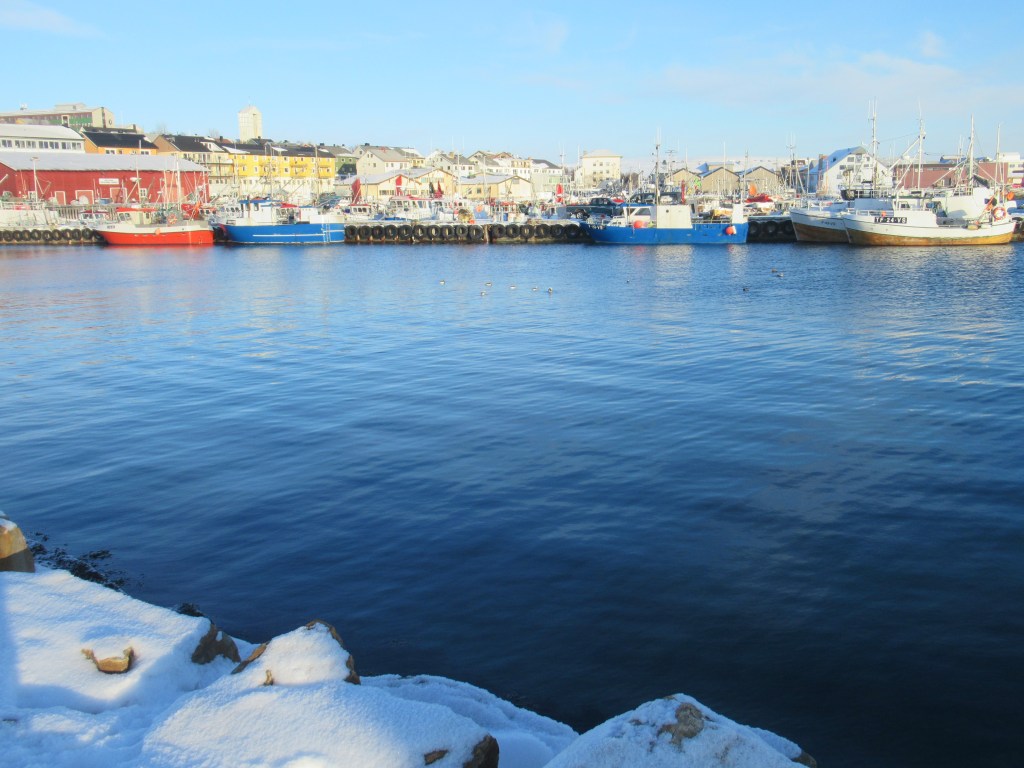
Walking around the eastern tip of the island I find a fairly large flock of Common Eiders with the males displaying, and 100+ Purple Sandpipers feeding on the shore when the tide goes out. The Arctic is home to huge numbers of breeding waders of various species, but these hardy little guys are the only ones that tough it out throughout the winter. Like many birds with ‘purple’ in their name, they’re not very purple. Other birds seen are Common Gulls and two Black Guillemots in pale winter plumage.
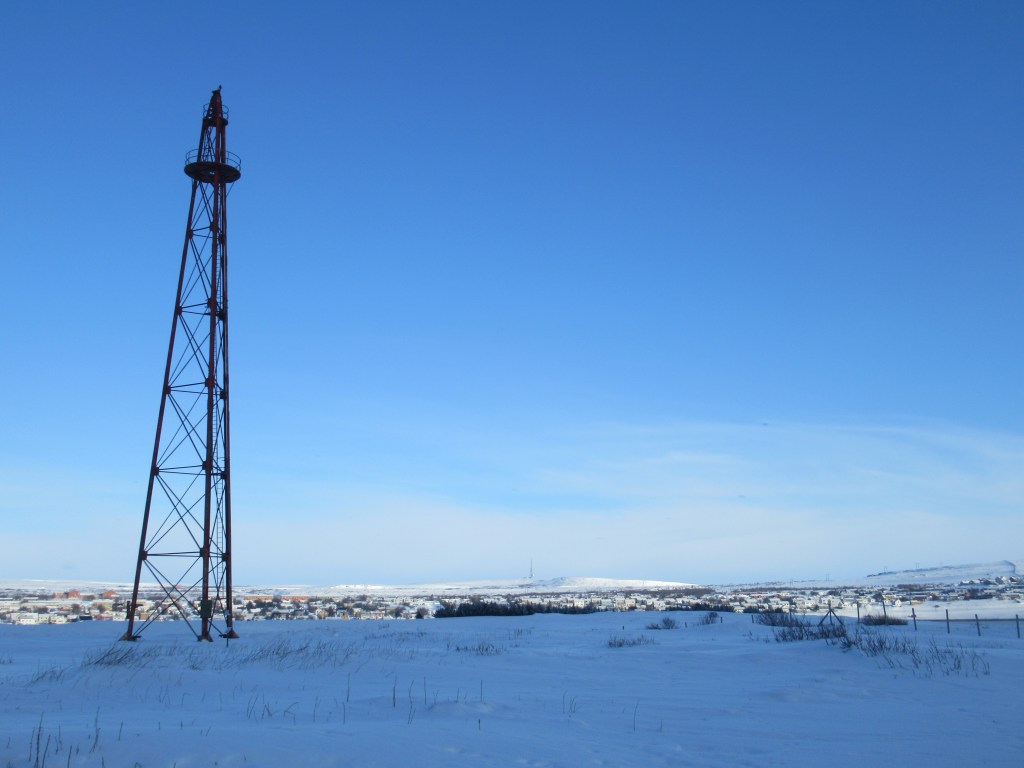
This part of the island also contains some historical sites. I read the information boards but can’t see the actual sites because they’re buried under snow. The only visible artefact is the tall mast for tethering airships. This was used in 1925 by Roald Amundsen, Umberto Nobile and Lincoln Ellsworth prior to their flight over the North Pole – the first time such a flight was achieved. In 1928 it was used again by Nobile, who crashed and had to be rescued. Amundsen joined the rescue attempt and died as a result. As a bit of an Amundsen fanboy, I’m far more excited than I should be at standing next to what is essentially a metal pylon.
On my second night here I go out for the Northern Lights again, this time really going to town with the clothing layers. From bottom to top I’m wearing thin socks, thick socks, walking boots, underpants, leggings, thick trousers, waterproof overtrousers, t-shirt, small jumper, large shirt, large jumper, fleece, overcoat, small gloves, large gloves, scarf, woolly hat, furry hat. I get outside and find it’s now much too cloudy, with only a small area of clear sky visible, so I only stay out for 20 minutes before coming back and taking it all off again. I spend longer getting dressed and undressed than I spend outside. On the final night it’s obviously too cloudy, so I don’t even try.
So just like in Finland, I have another couple of relaxed days of birding, reading, eating and generally pottering around. I’m thrilled to have finally birded Varanger Fjord, but I suspect it might not be my last visit. Varanger is a completely different place in late spring and summer, and I could come back and see a whole different suite of birds, and also do a bit of hiking and camping in the interior – a completely different experience. For now, though, it’s time to move on, and tomorrow morning I have a boat to catch.


 Vole Explosion
Leave a reply to Roberta Hill Cancel reply