September 2025
It feels slightly anachronistic to be showing my passport at a land border in Europe. With most countries now in the free travel Schengen Area, border formalities on the continent are largely a thing of the past. Still, here I am at the Croatian checkpoint standing in the hot mid-morning sun and trying to exit the country. We had to get off the bus at the border and queue for half an hour, approaching the passport window one at a time. A couple of people moved a few metres away to stand in the shade and were ordered back into the line, and some people were taken out of the line and questioned before being allowed to return. I wasn’t chosen, so I have no idea what they were being questioned about.
Once back on the bus we drove to the Bosnian checkpoint where the driver collected all our passports and took them into the office while we waited in the vehicle, and soon we were in Bosnia and Herzegovina and driving towards Mostar. The Roman ruins, blue seas, and yacht marinas of the Dalmatian coast were now behind us and the farmland scenery of Herzegovina was much more rustic. The final descent into Mostar, surrounded by high mountains, was absolutely spectacular.
In the tragedy of the 1990s wars that tore Yugoslavia apart, Bosnia and Herzegovina probably suffered more than any other region. With a population consisting of Bosnian Muslims, Orthodox Christian Serbs and Catholic Croats, they learned the hard way that diversity doesn’t always equal strength as they descended into ethnic conflict. Even today the nation remains divided. Not just into Bosnia in the north and Herzegovina in the south, but also into the Federation of Bosnia and Herzegovina, which is majority Muslim, and Republika Srpska, populated mostly by Serbs. When I changed some money into Bosnian Convertible Marks, the local currency, I found that each banknote denomination has two different designs, one for each region, but both legal tender throughout the country. The fault lines clearly still run deep here.
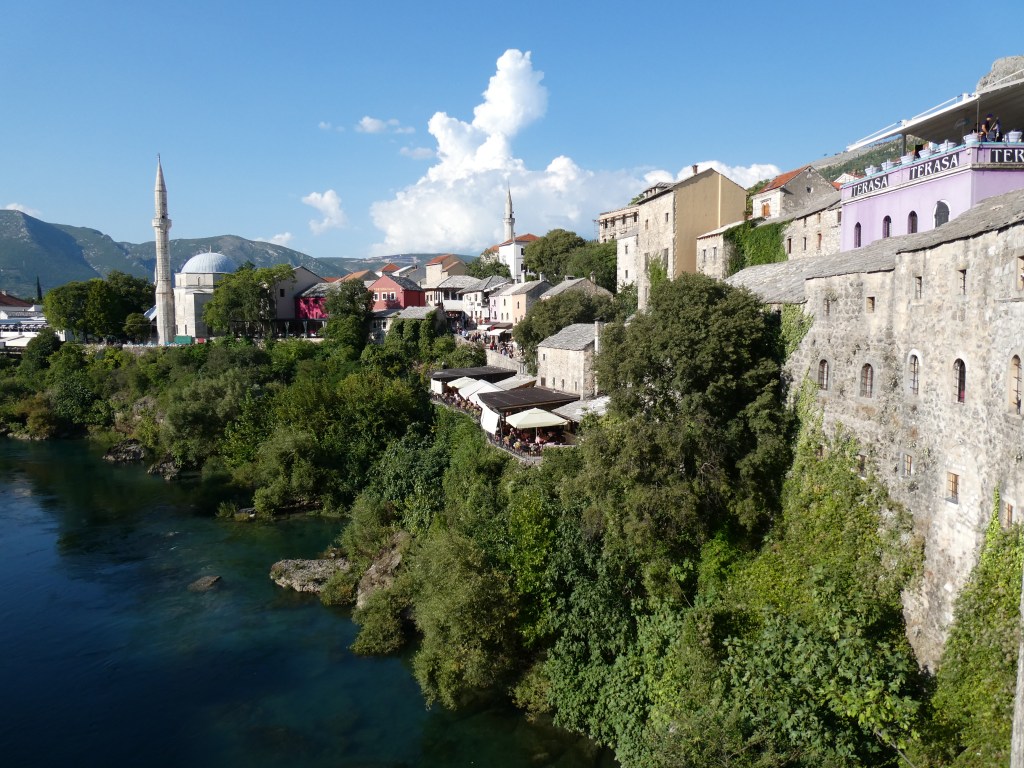
This recent history is immediately obvious on arriving in Mostar and seeing bombed out and bullet-riddled buildings, and it is commemorated in a number of museums, mostly in the capital Sarajevo, dedicated to the conflict. Later I visited the one in Mostar and read the harrowing accounts of those caught up in the horror. But my first port of call was Stari Most (Old Bridge) – the iconic bridge across the river Neretva that has become a symbol of the city.


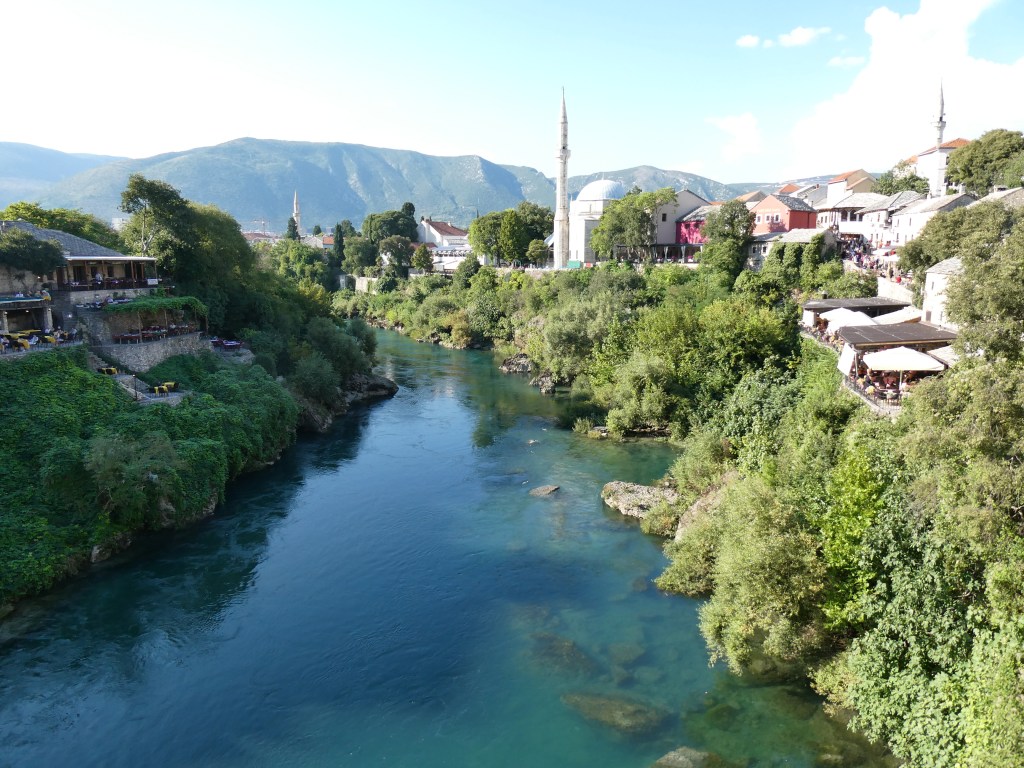
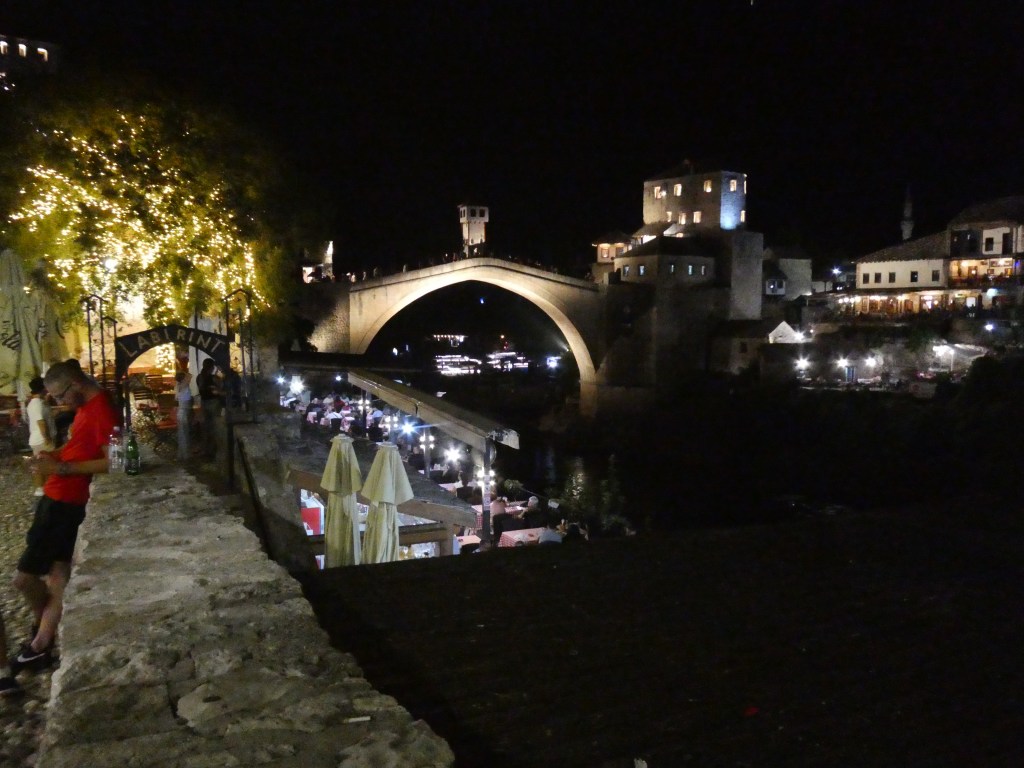
The bridge was commissioned in 1557 by Suleiman the Magnificent during the Ottoman period and deliberately destroyed by Croat military forces in 1993. Since then, the bridge has been beautifully reconstructed and is now a UNESCO World Heritage Site that forms the centrepiece of Mostar’s tourist attractions. In fact, it’s so popular with tourists that on my first visit I didn’t even bother trying to cross it through the afternoon crowds. A couple of early morning visits on subsequent days were much more pleasant.

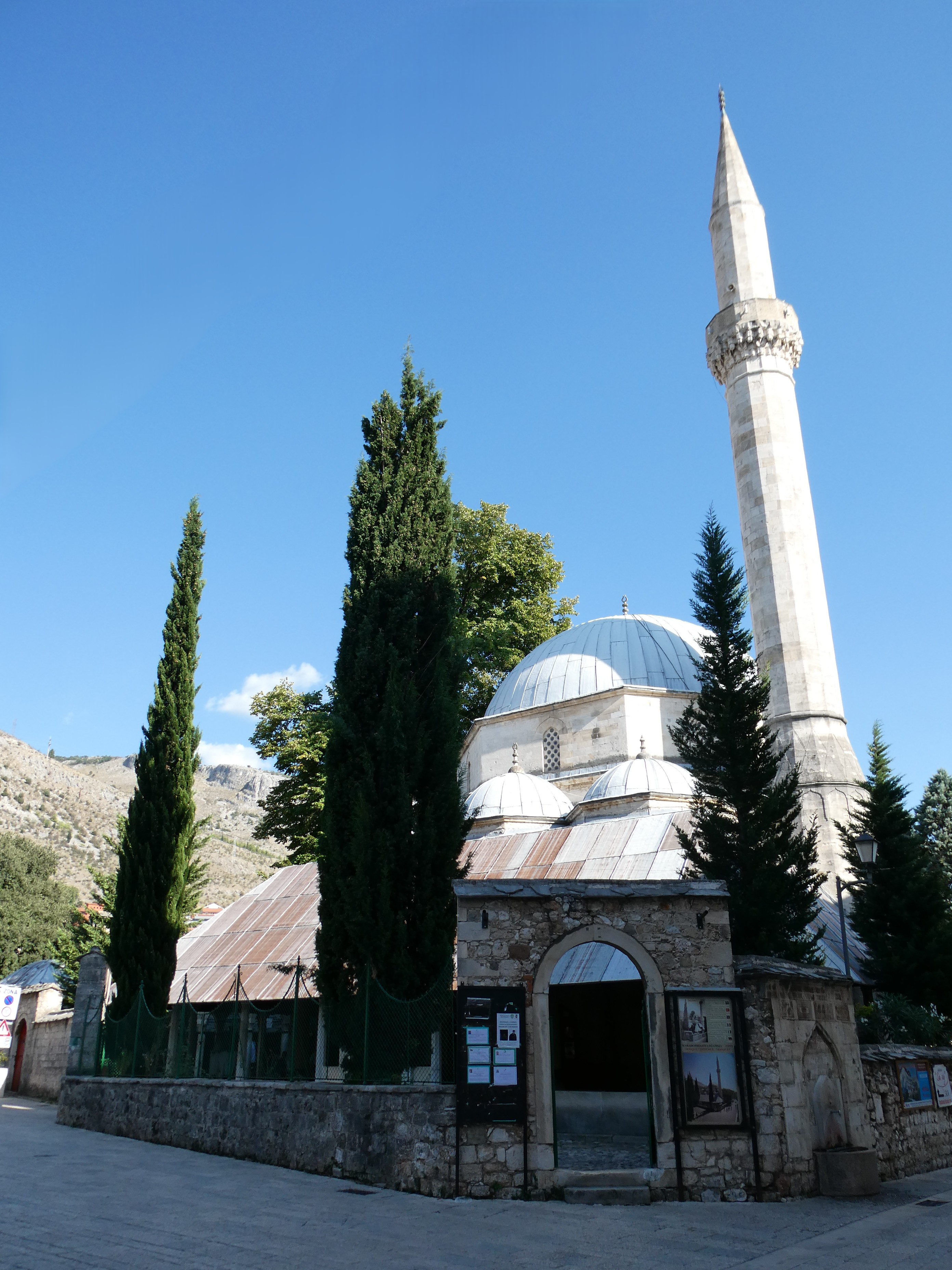
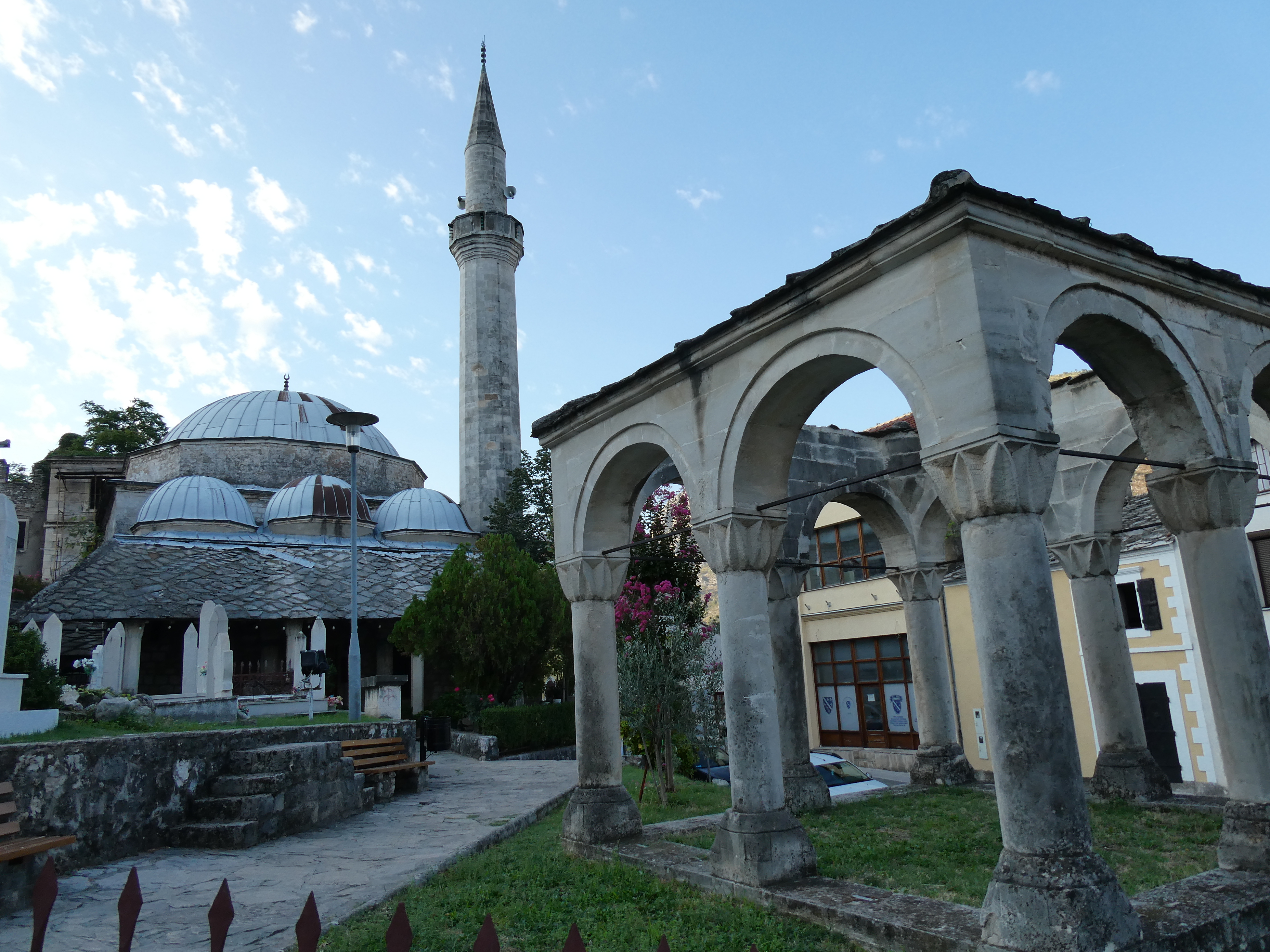
The picturesque streets surrounding the bridge are filled with tourist shops and restaurants, but it only takes a short walk along the main street of the old town, dotted with historic Ottoman mosques, to reach the cafés and restaurants frequented by the locals. I stayed in a lovely guesthouse near there and had everything I needed on my doorstep.
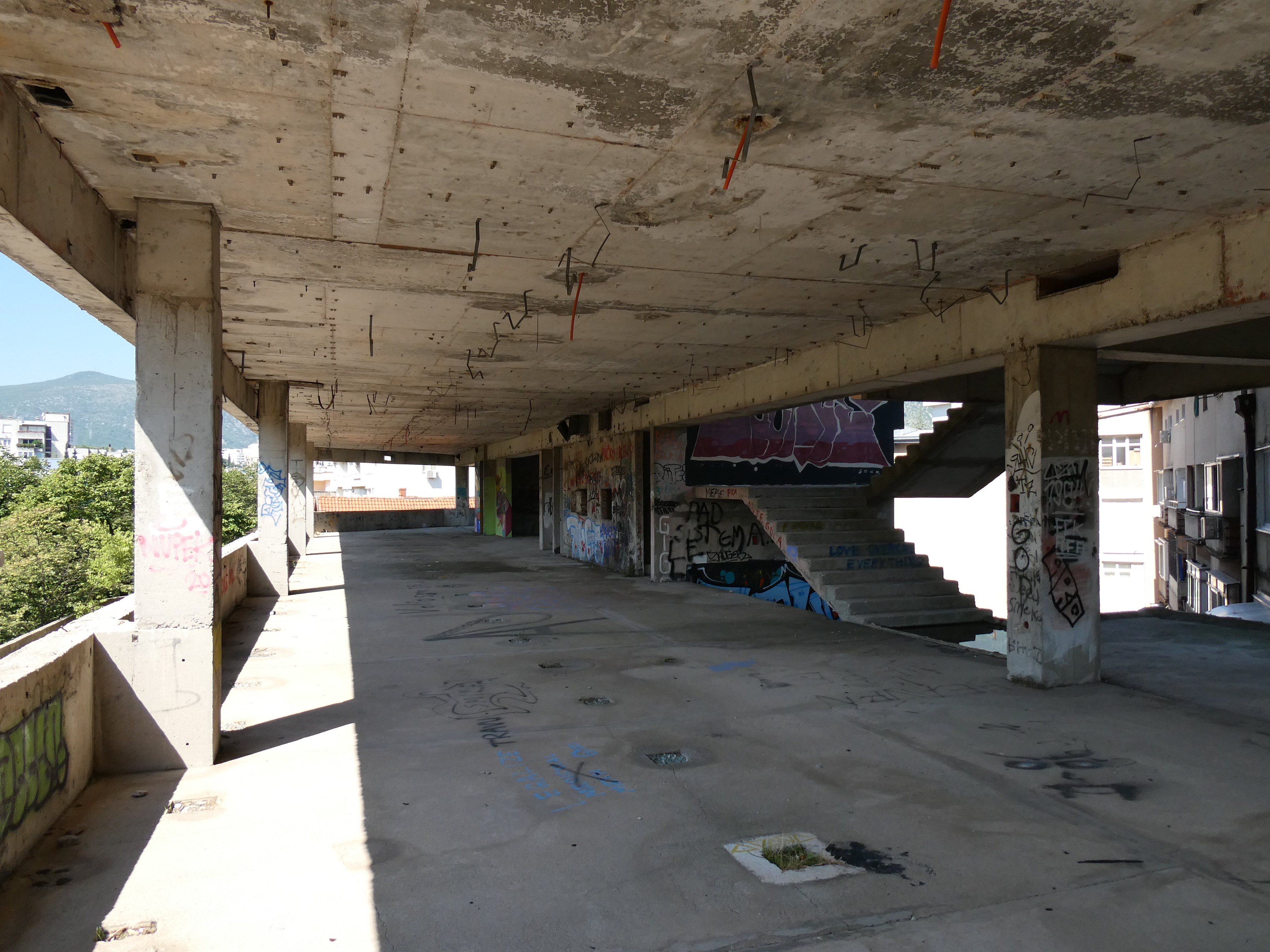
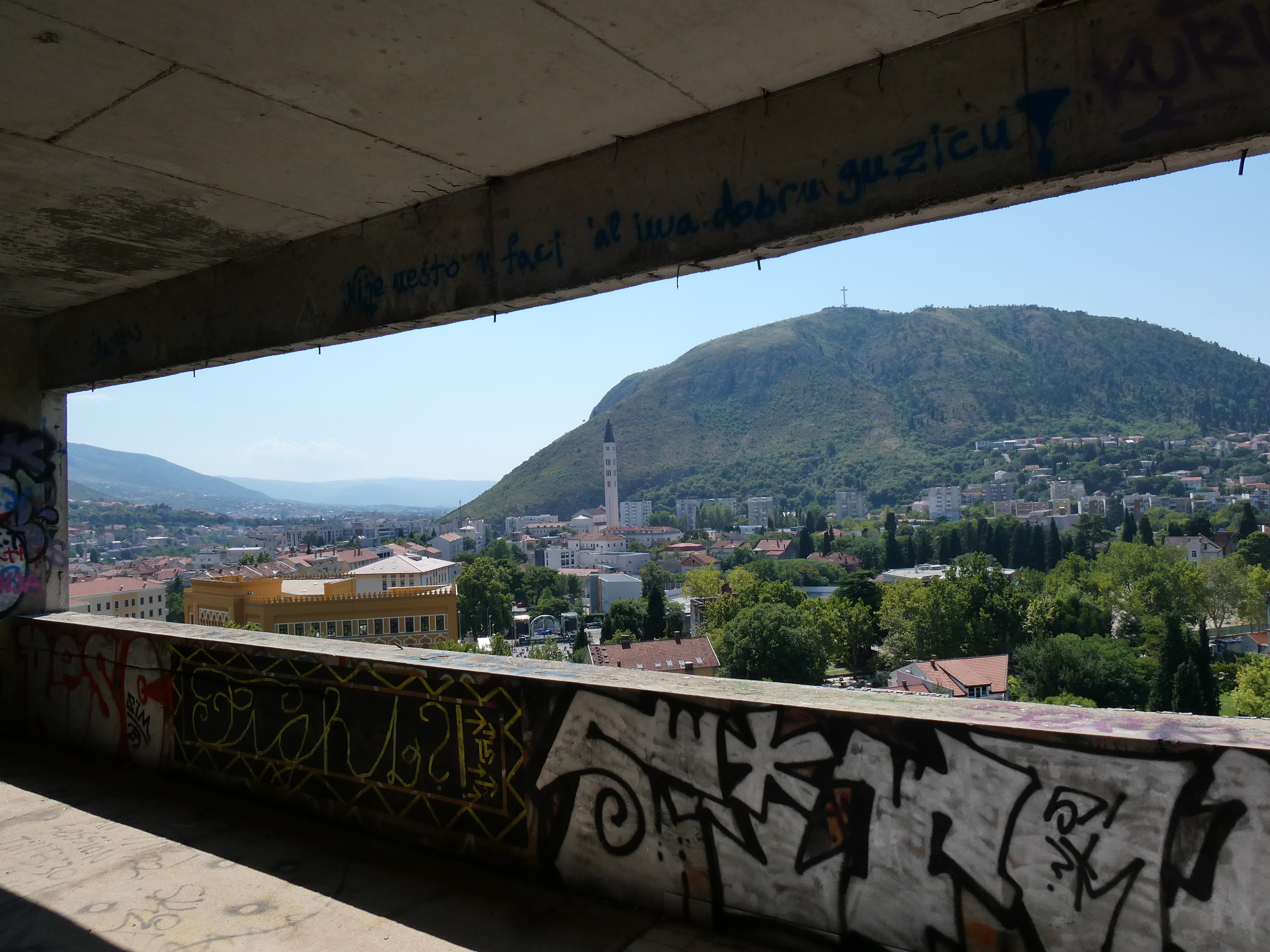
Slightly further away lies the modern city and a handful of newer bridges giving fantastic views over the river valley. I had to walk through this part of town a few times to reach the bus station, and I tried to take a different route each time to see more of the city. On one of these walks, I climbed up the Sniper Tower – a derelict, graffiti-covered, concrete building, that used to be a bank but has now become something of an unofficial tourist attraction. During the siege of Mostar, it was used as a vantage point by snipers targeting civilians in the streets below. The building is fenced off, but it was easy enough to push the gate back and slip in. I climbed up to the top floor via some slightly alarming staircases and was glad to find that the voices I could hear belonged to a couple of other tourists who had also climbed to the top. Its recent historical interest makes the tower safe enough to explore, and Mostar is a very safe city, but in almost any other town it wouldn’t be the kind of place I would want to hang around.

On my final afternoon I went back to the Old Bridge and watched people hurl themselves off it. By chance, the Red Bull Cliff Diving World Series was being held there and a tall platform had been attached to the bridge’s apex to make the plunge into the waters below even higher. The dives were highly impressive and, as someone who doesn’t even like jumping into a swimming pool, it certainly wasn’t something I would consider trying.
Sitting outside a nearby restaurant and enjoying a beer and some hearty mountain food is much more my speed, so afterwards I did just that and had a deliciously seasoned beef and vegetable stew for dinner – a local version of goulash that illustrates how the Austro-Hungarian Empire also influenced this region alongside the Ottoman Empire.

Checking myself out of the guesthouse, I couldn’t decide how to lock the door from the outside and leave the key on the inside. A gang of cheeky kittens took advantage of my indecisiveness and snuck inside to hide in various nooks and under tables, leaving me to try and herd them back out again. It was like… well, herding cats, I guess.
The bus trip from Mostar in Herzegovina to Sarajevo in Bosnia was beautiful. The road mostly follows the course of the Neretva River, with steep mountains on both sides and a railway running parallel on the opposite riverbank. The bus was almost empty, so I was able to change seats and sit on whichever side had the best views.
I had (sort of) visited Sarajevo before in 1990 when it was still part of Yugoslavia, but only to change trains in the middle of the night, so it doesn’t really count. Before the 90s, the city was best known internationally as the place where Gavrilo Princip shot dead the Austro-Hungarian Archduke Franz Ferdinand and his wife Sophia, so setting off the First World War (or from a British perspective, Torvill and Dean at the 1984 Winter Olympics). At the spot near the Latin Bridge where Princip fired his fateful shots you can stand in his footprints, which have been inlayed into the pavement. At least you can if you can slip in between the near-constant stream of tour groups.

I walked much of the way across the city from the bus station to my hotel in the old town, before realising I could catch a tram the rest of the way. The very nice hotel was located in a narrow alley directly opposite an Irish pub with outdoor tables right outside my window, so it was occasionally quite noisy but fortunately it closed at 11pm. One evening a group of lads spent a couple of hours repetitively singing what appeared to be a loyalist paramilitary song from the Northern Irish Troubles. If there’s one place that probably doesn’t need any more sectarianism it’s Bosnia!
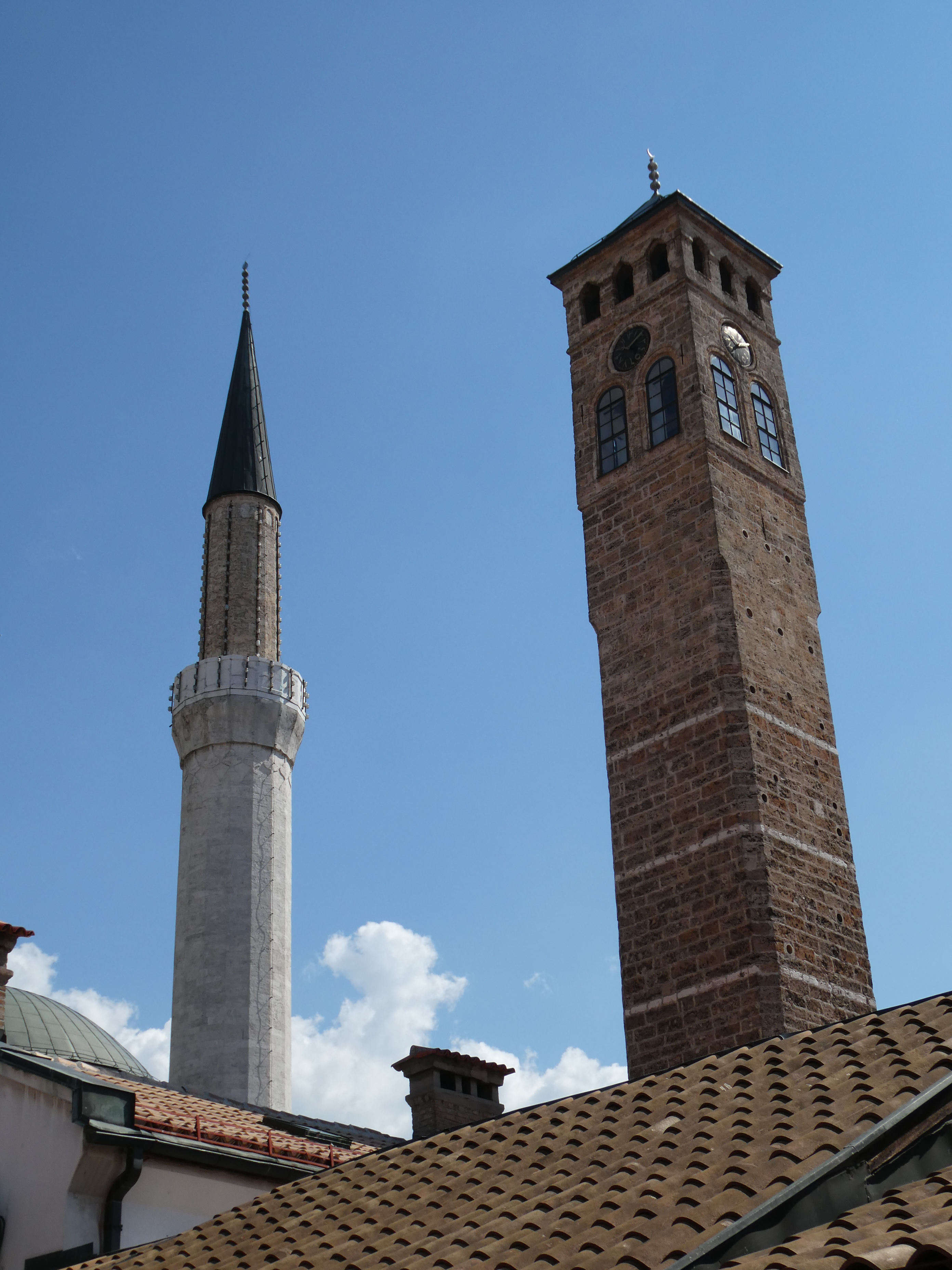
Sarajevo lies at the exact spot in Europe where east meets west: where the Austro-Hungarian Empire bumps up against the Ottoman Empire. In the main street through town there is literally a line in the road where this can be observed most starkly. Face one way towards the bustling old town and you could almost be in Istanbul, with the minarets of historic mosques, and a covered bazaar next to the ruins of a caravanserai. Turn around and face the other way and you’re immediately in central Europe, in a city such as Vienna or Budapest, with cathedrals and other grand buildings.
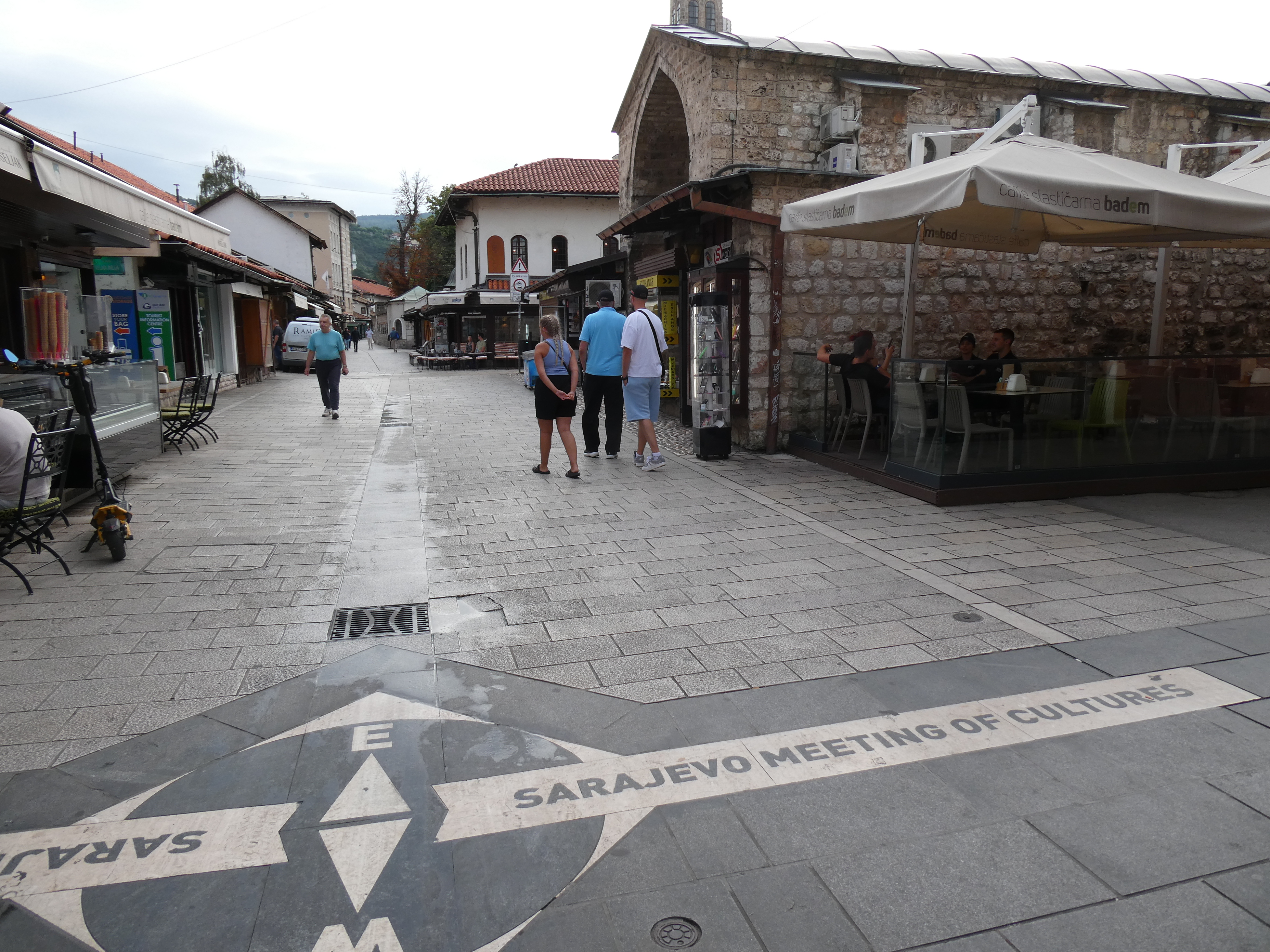
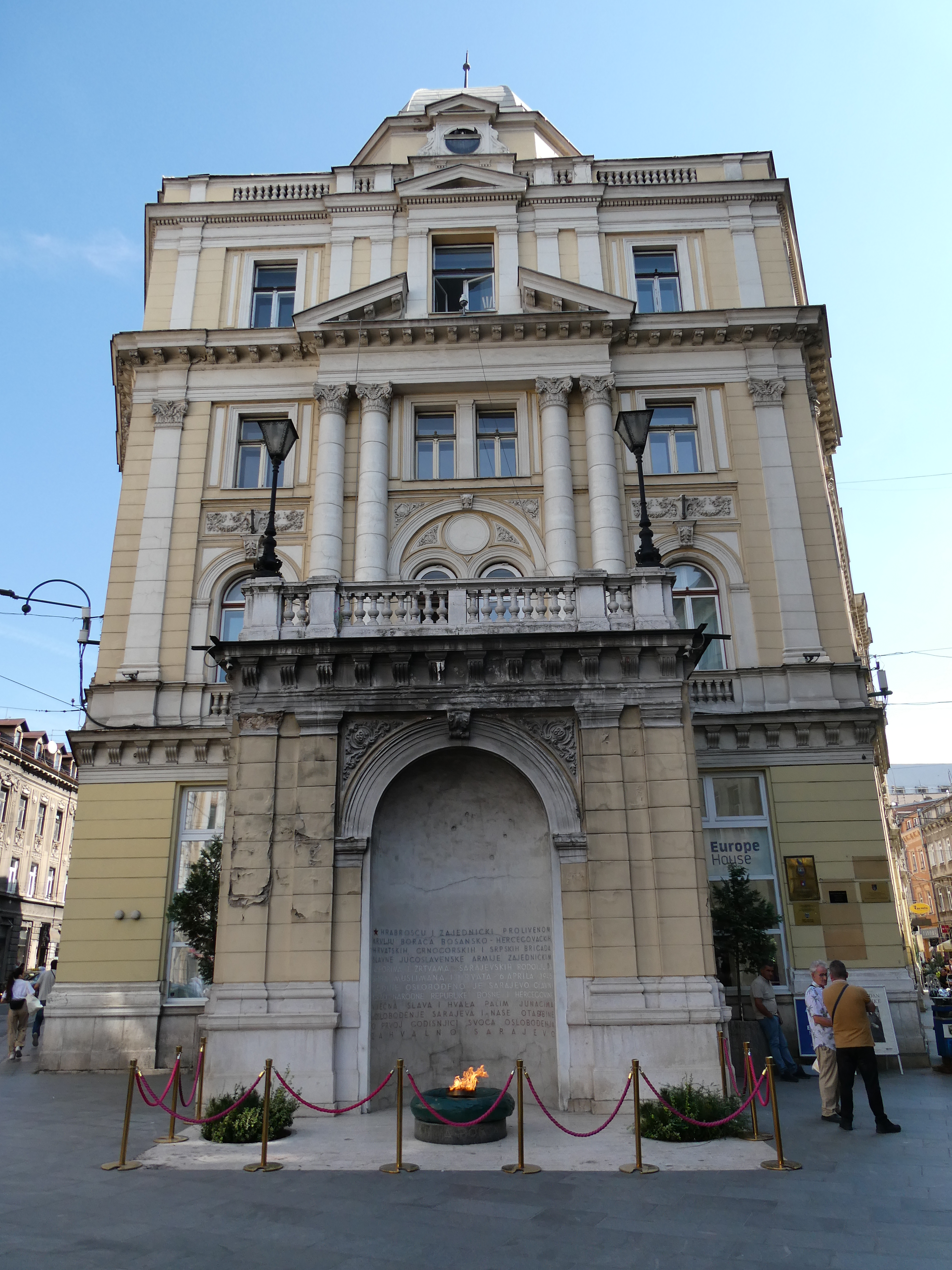
My hotel was in the old town of Baščaršija, and by mid-morning the streets were already filled with the pleasant smell of strong Bosnian coffee and meat grilling on smoky barbeques. I started each day with one of these coffees and a slice of baklava, and I was then ready for a day of sight-seeing.

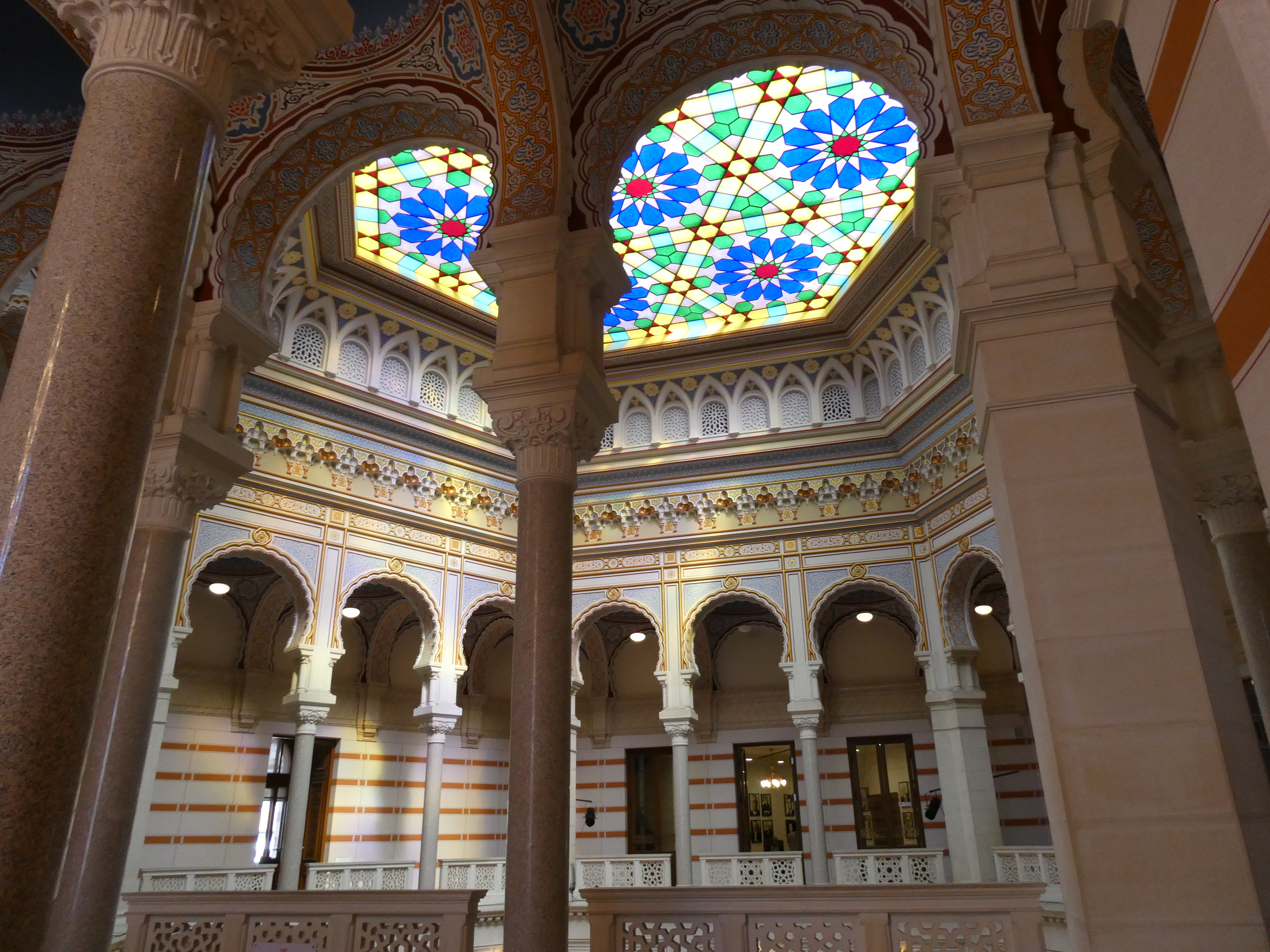
Near to my hotel was the stunning City Hall – built during the Austro-Hungarian period but in an Islamic style, and brightly coloured both inside and out. It has an art gallery inside, as well as a series of interesting displays about the siege of Sarajevo, the subsequent trials at the Hague, and the assassination of Franz Ferdinand. Most moving of all was the display in the basement showing how the building was destroyed by incendiary bombs in 1992 and completely rebuilt, making the exquisite interiors even more remarkable. A video shows the Philharmonic Orchestra of Sarajevo playing Mozart’s Requiem in the ruins.

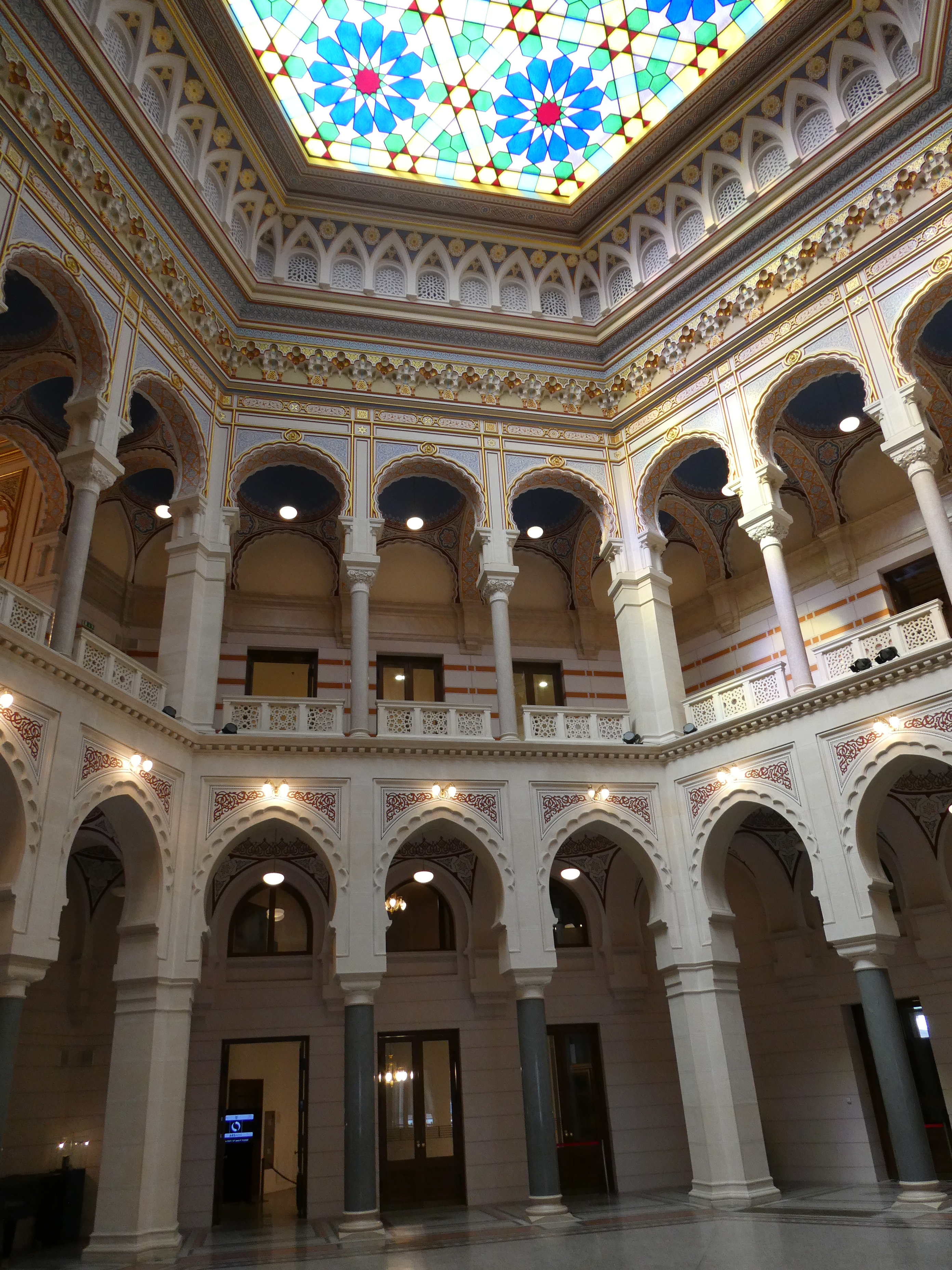
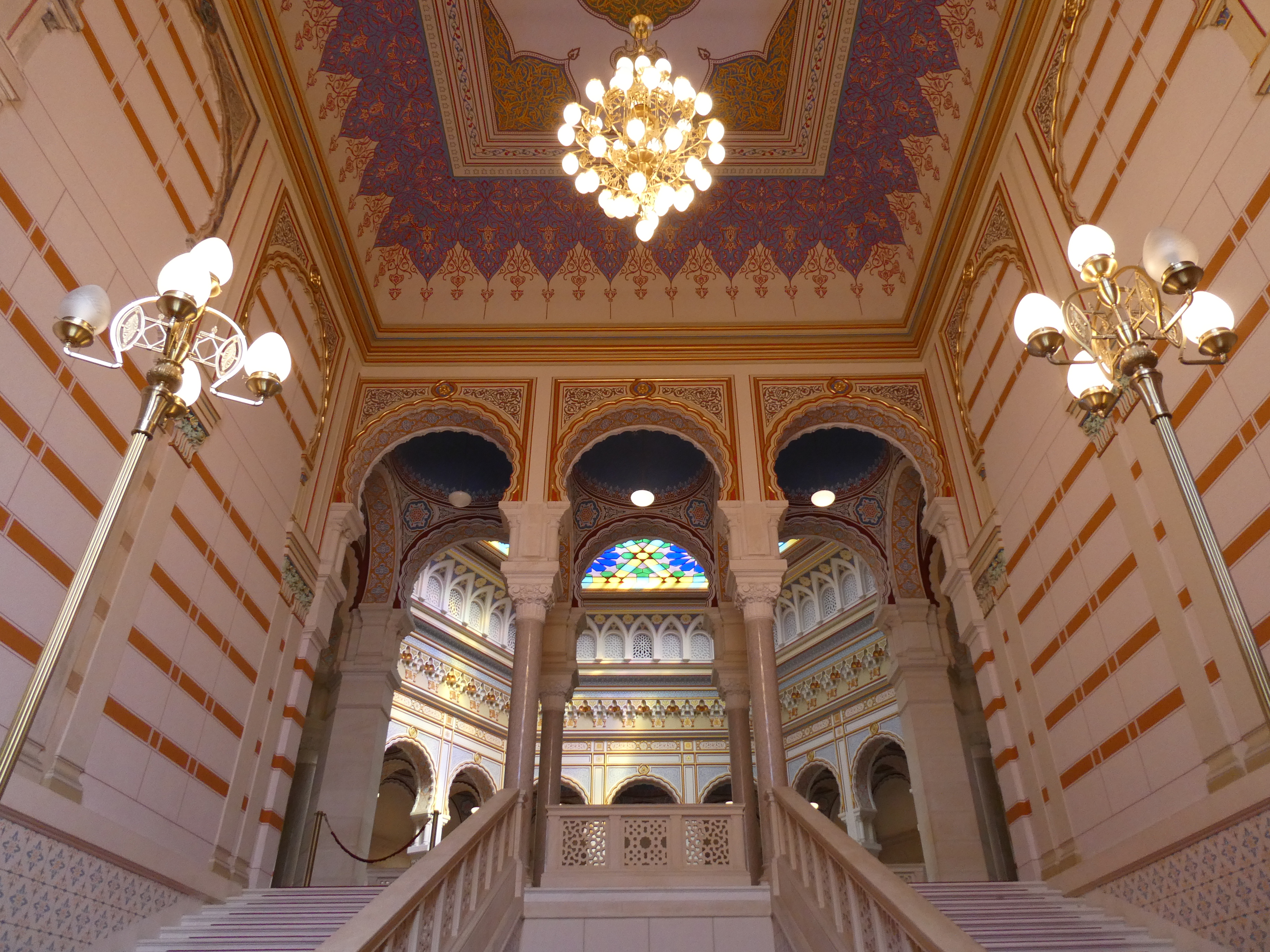
There were more historical displays at the Cultural Centre located in an old Turkish Hammam (bath house), and the very grand National Museum of Bosnia and Herzegovina consisting of four buildings around a central courtyard garden where lizards, tortoises, and terrapins roamed. The largest building had archaeological exhibits from the Stone Age, Copper Age, Bronze Age, Iron Age, Roman occupation, and Medieval period – all very beautifully displayed in large, spacious and uncluttered halls.
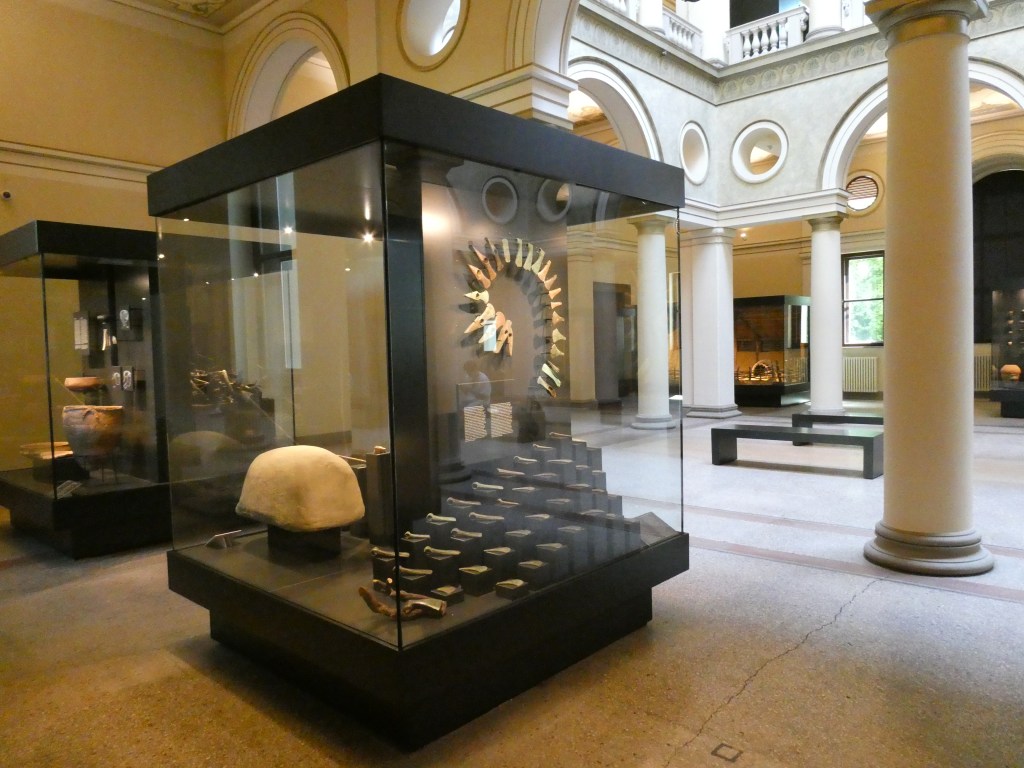
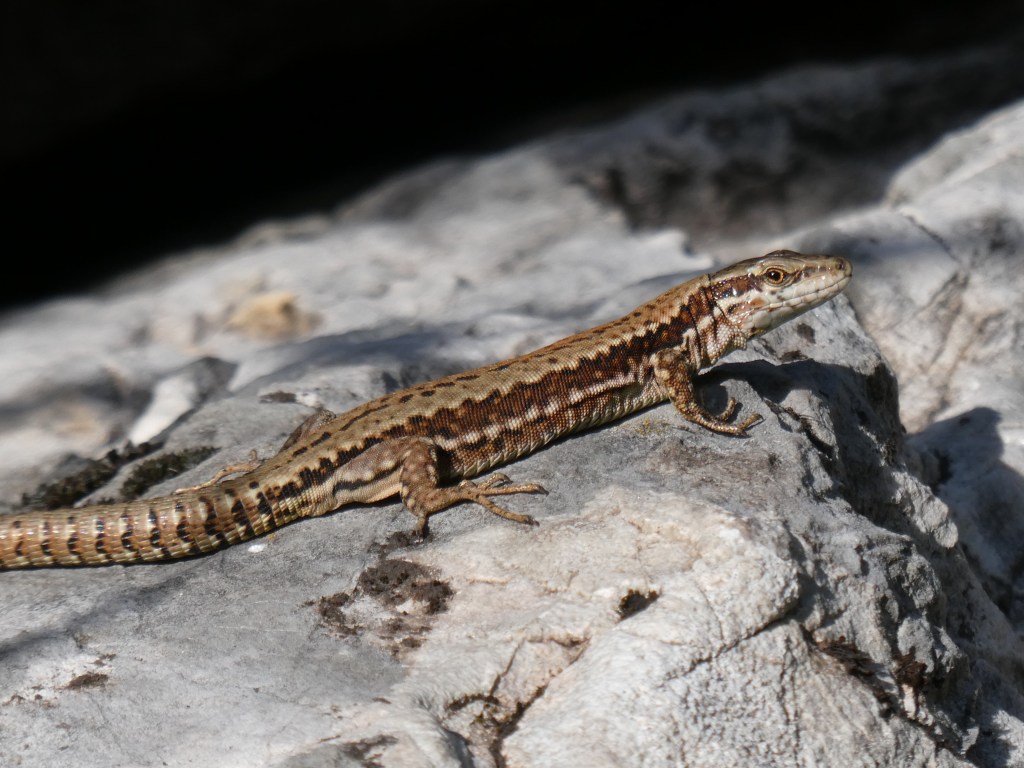
A separate building held ethnographic displays, with rooms set up to show typical life during the Ottoman period, and another large building was given over to Natural History, featuring local birds and mammals, wildlife from across the World, rocks, insects, birds’ eggs, and other treasures. My favourite display, which might sound strange, was a set of realistic models of all the amphibians and reptiles found in Bosnia in their typical habitats. They were all beautifully made and looked exquisite.
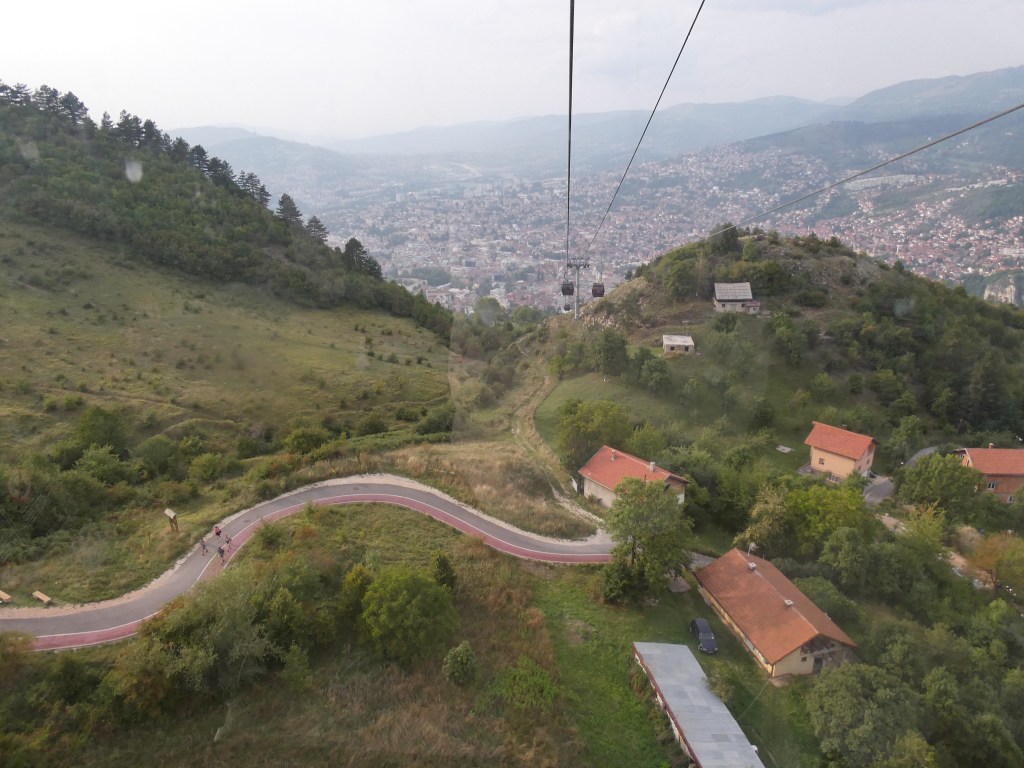
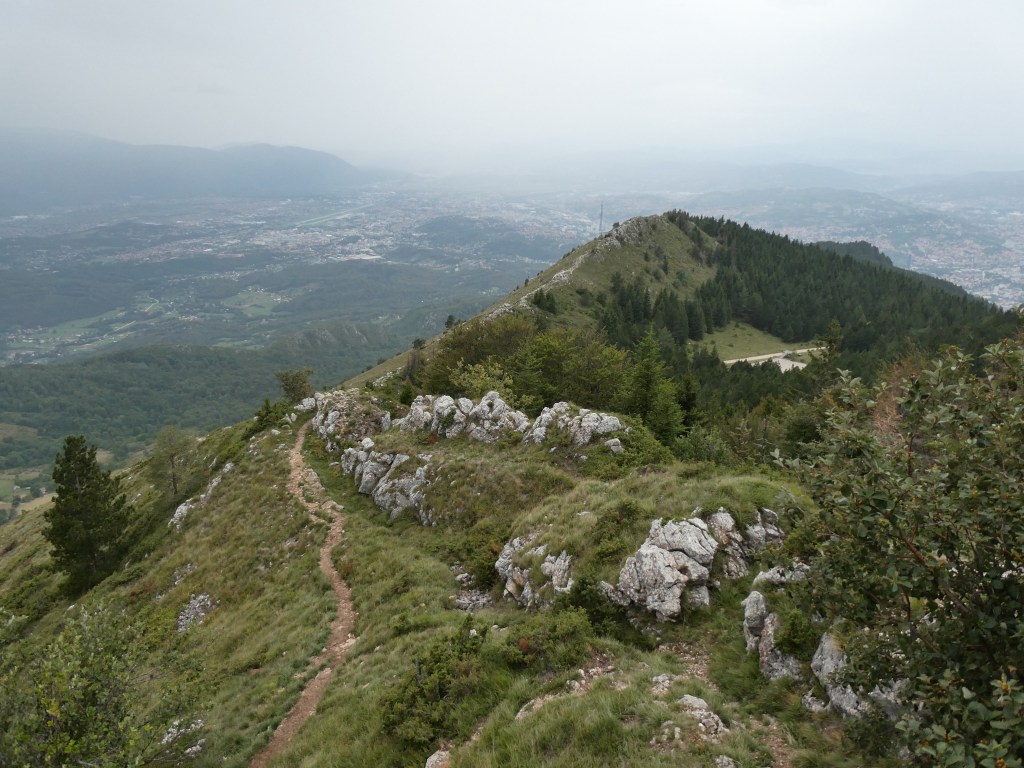
Twice I rode the cable car up Trebević, one of the surrounding mountains and a vantage point from which Serb forces shelled the city during the four-year siege. The first time was for a quick look at the spectacular views when I first arrived, and the second time was on my final day when I hiked up through the forests to the peak. There the landscape opened up into grassland with higher mountains and ski slopes beyond. Later, while looking at a map, I noticed that the walk to the peak had taken me across the ‘border’ into Republika Srpska – the only time I set foot in this Serb region.
A highlight of the mountain is the abandoned bob-sleigh track from the 1984 Winter Olympics. Nowadays it is covered in graffiti and was slowly being consumed by the forest, but it is still possible to walk down its entire length and imagine what it must be like to hurtle along it in a metal can.

The walk back into the city was long and very steep. I know because I did it twice – once at night and once during the day. With my interest in the Winter Olympics piqued, I later visited the small but interesting Winter Olympics museum. It had started raining when I reached the peak of Trebević and continued into the afternoon, and the museum was a convenient place to shelter until it passed.
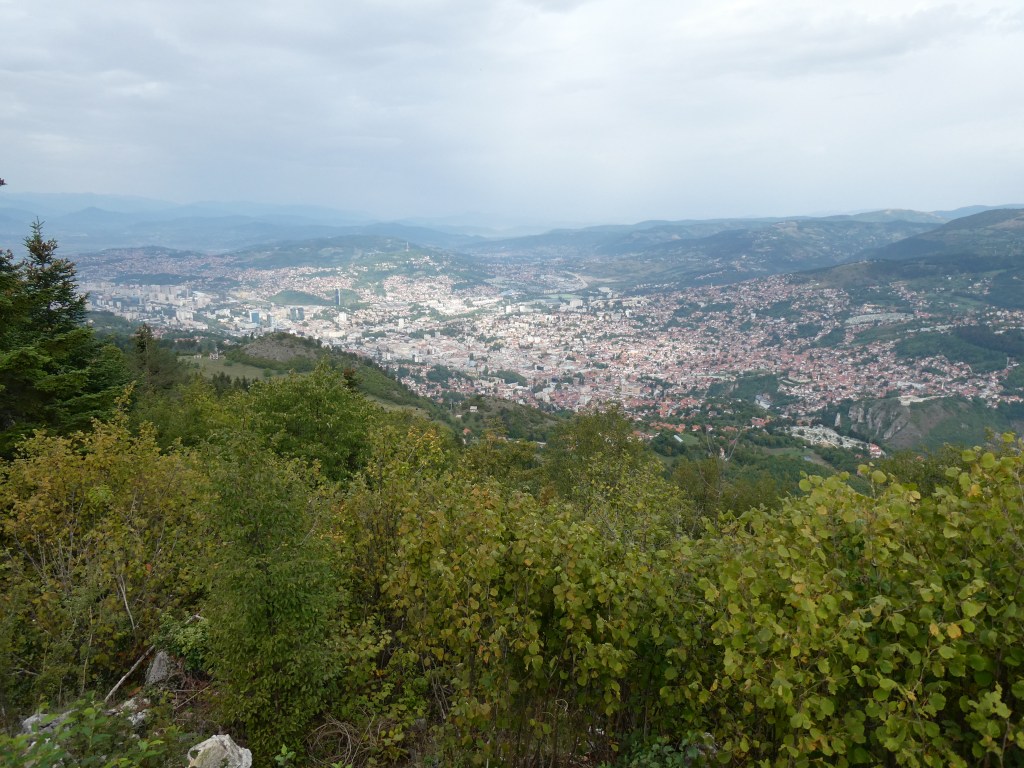
Other than the museums, Sarajevo was an excellent city for just wandering around – visiting markets, mosques and churches, drinking in bars, and dining on pastries from the many bakeries and grilled meat in various forms. Recent history has not been kind to this part of the world, but so far the future is looking much brighter.
Accommodation:
Globus Apartment and Rooms, Mostar – €26 per night
Guesthouse Yildiz, Sarajevo – €26 per night

 Vole Explosion
Leave a comment