Sunday 6th April 2025
HILL TOP (BEAULIEU) TO LYMINGTON PIER
Thirteen months after my last bout of coast walking I return to Southampton by train and catch a bus to where I left off in the heathland of the New Forest National Park. The weather is forecast to be warm and sunny, and I intend to complete the coast of Hampshire over the next two days.
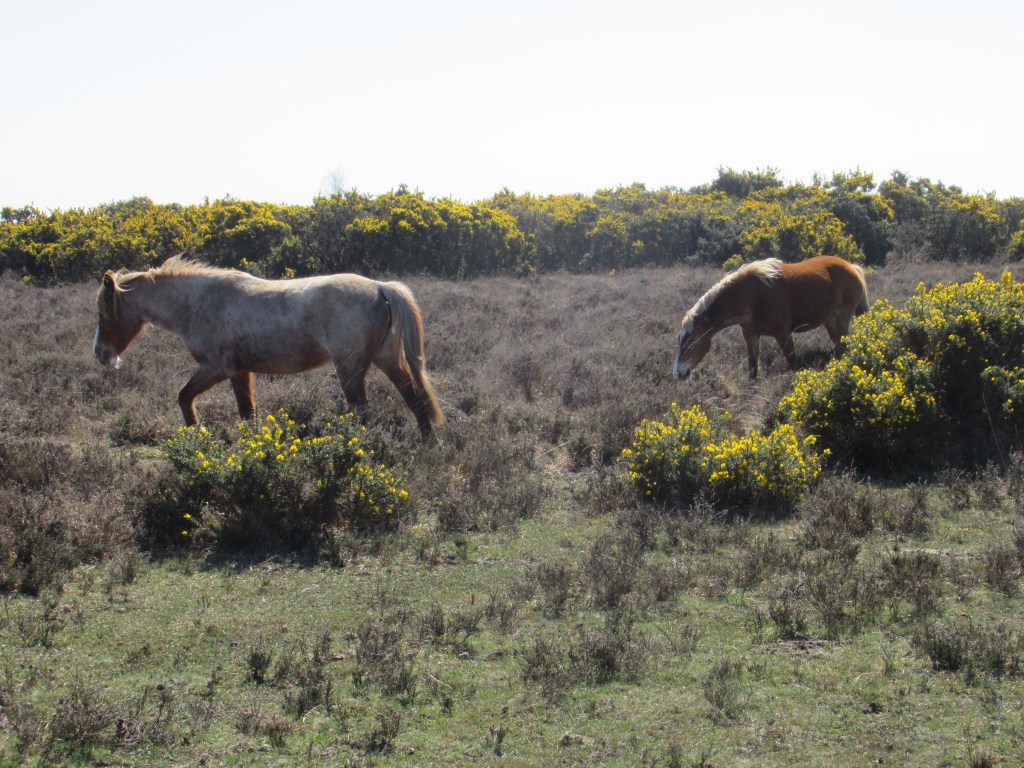
Passing by a number of free-roaming New Forest ponies, I leave the open heath at Hill Top and enter woodland for the short walk into the village of Beaulieu. It is 1pm now and I stop for a drink outside the pub, where House Martins newly arrived from Africa are already building their mud cup nests under the eaves.
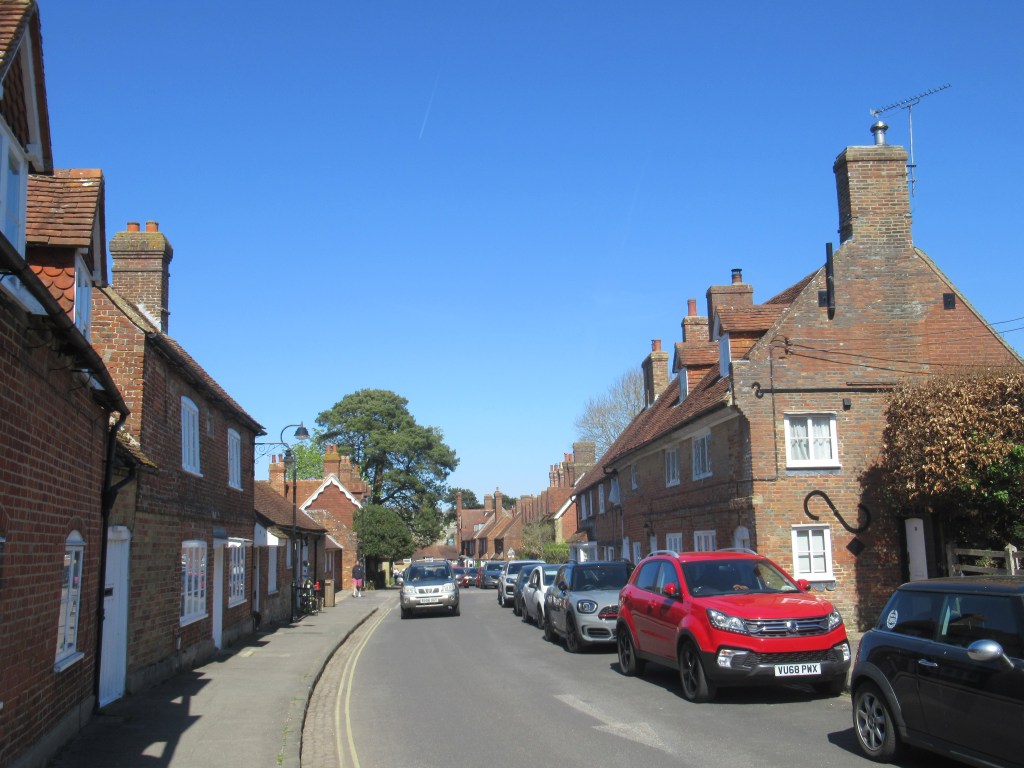
Beaulieu is very pretty but feels slightly unreal – like a Hollywood film set where the producer has asked for ‘Quaint English Village’. It seems like every building is either a twee café or a chocolatier, all built from weathered red brick. The effect is only ruined by too many cars driving through.
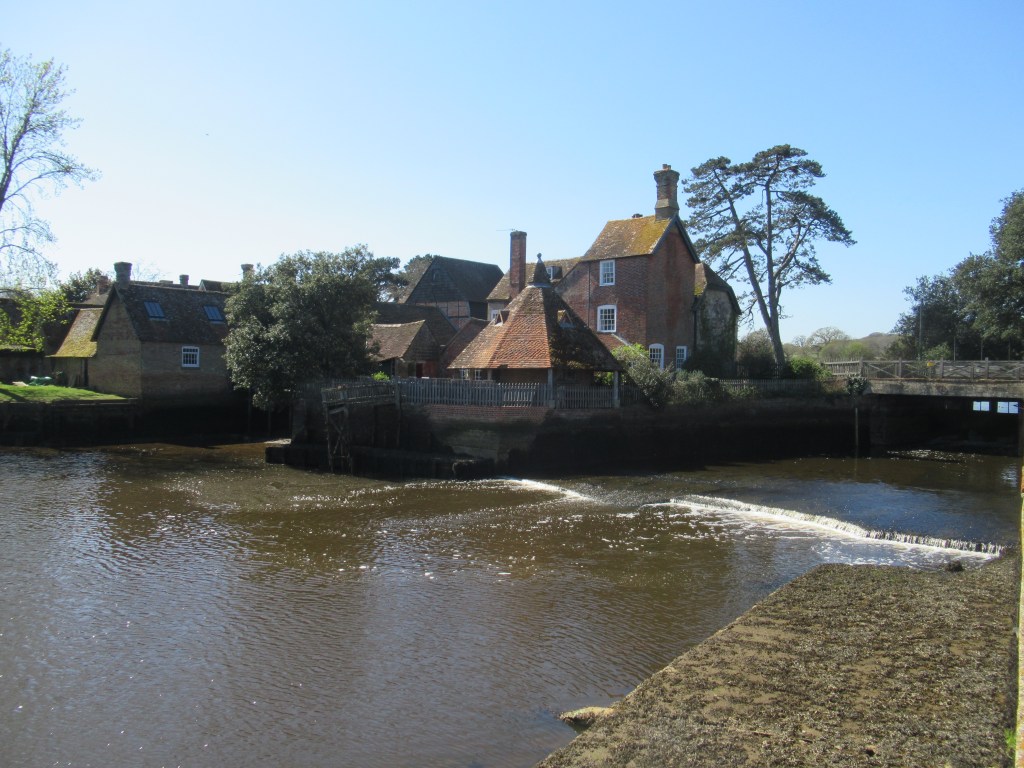
I find a footpath between two buildings that leads out of the village to follow the course of the Beaulieu River back towards the coast. I don’t really see much of the river as the path passes through meadows, woodlands and nature reserves a short distance from the water. It’s a beautiful day and there are plenty of people around in the sunshine. I stop to eat at the one spot where the path meets the river bank, and later I stop at a bird hide and watch a party of Siskins feeding at close quarters.

Soon I arrive at Buckler’s Hard, a riverside village with a history of boat-building. If Beaulieu was quaint, Buckler’s Hard is like a cute outdoor museum. It’s hard to believe anyone lives here. I visit a tiny chapel and an old shipwright’s cottage, both of which are open for members of the public to look around.

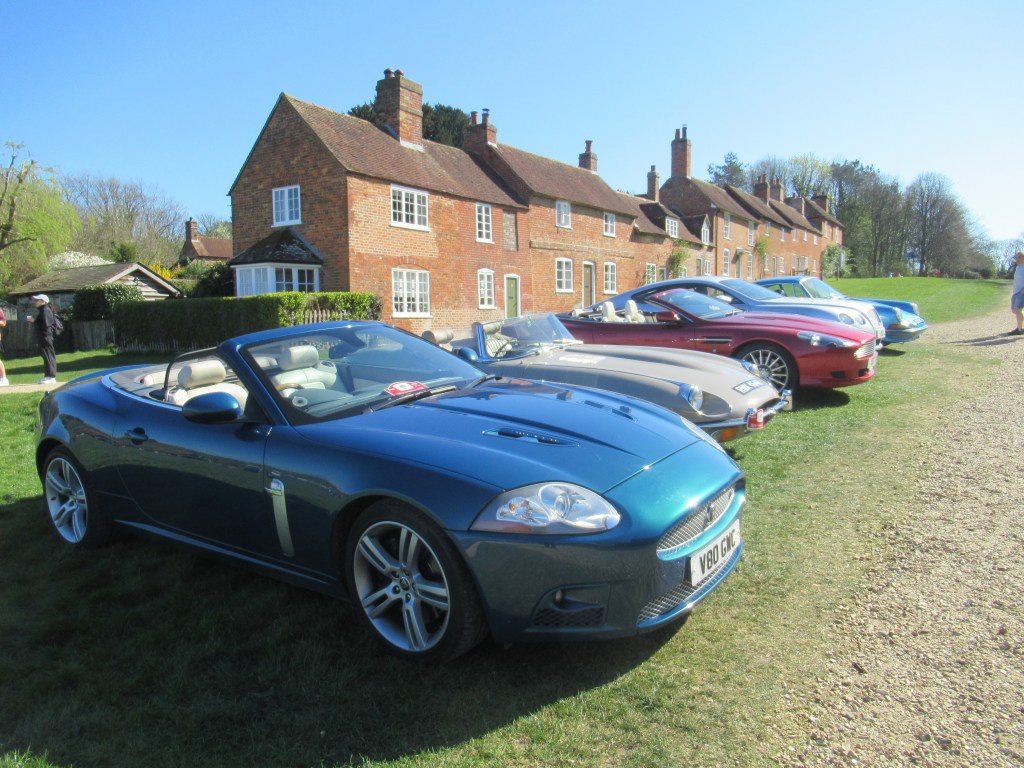
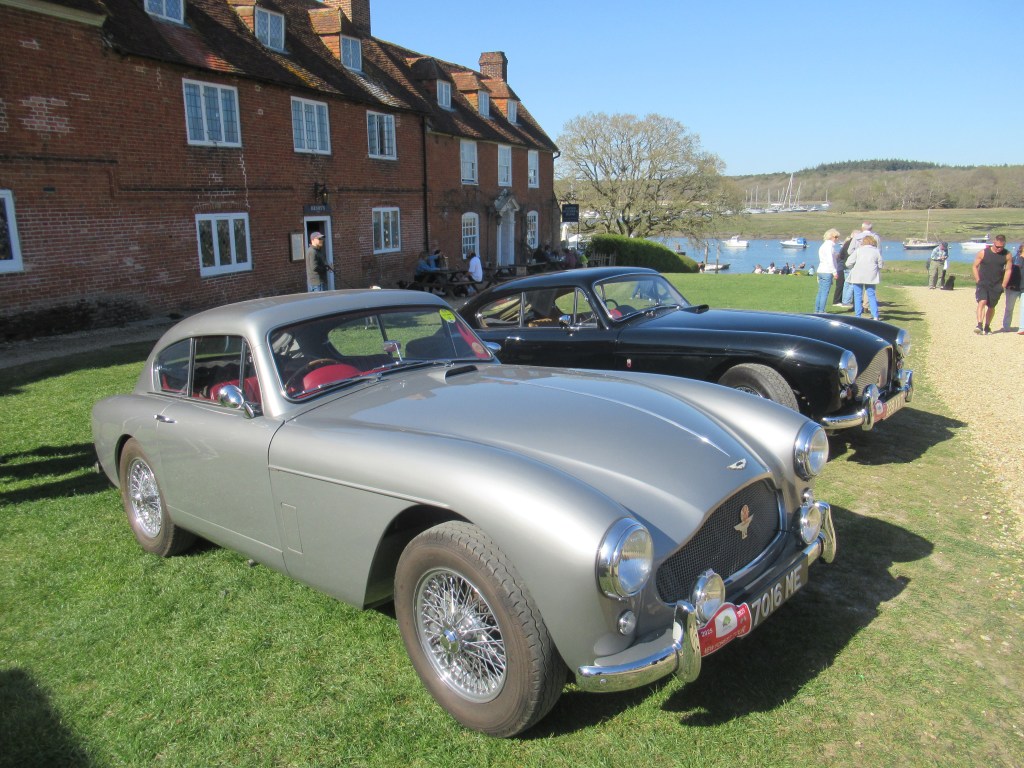
Two rows of immaculate sports cars from different eras have been parked on the main green. I’m far from being a ‘car guy’, but even I am impressed by these, even if I have no idea what I’m looking at. I assume they’ve been brought here from the National Motor Museum in Beaulieu, but I could be wrong.
Finding the route out of Buckler’s Hard is a bit tricky, but eventually I’m on my way again. For the rest of the afternoon I walk along narrow country roads with virtually no traffic or other people. I’m walking further away from the river and I don’t go anywhere near the coast today, but the countryside is lovely and the weather is perfect for walking.

Near an old tithe barn I pass a roadside pond where I’m amazed to see a Water Rail strutting around out in the open. These are normally shy birds that hide away in large reedbeds and are more often heard than seen, but this bold individual seemed oblivious to my presence and to the occasional passing car.
Further on I get some views of the Isle of Wight and I pass by the site of RAF Needs Oar Point Advanced Landing Ground, where an information board tells me that this was a temporary airfield during World War II. In 1944 Hawker Typhoon aircraft flew from here to France to attack road, rail and radar sites in advance of the D-day landings, and then for four weeks afterwards in support of the allied troops advancing through Normandy.
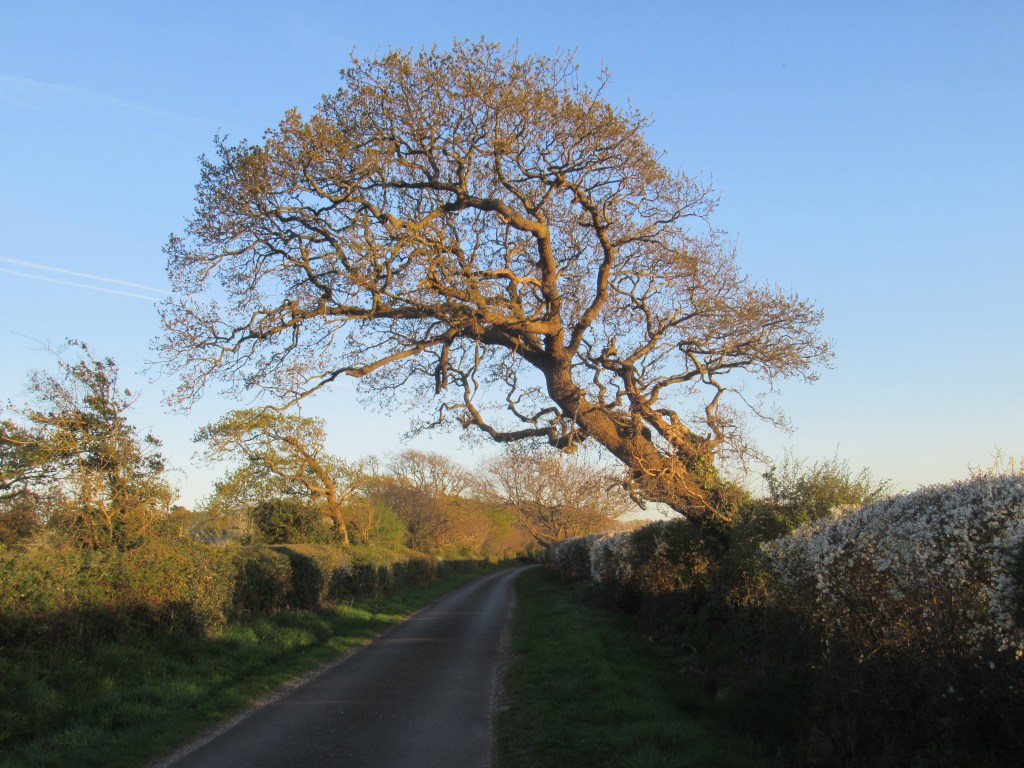
The last hour or so of the walk is idyllic, with small fields and woods bathed in golden light from the setting sun and birds singing in every direction. Masses of Mediterranean Gulls fly overhead towards the coast, having been feeding in a newly ploughed field. A car pulls up beside me and the driver asks if I’m a farmer! It turns out he’s looking for permission to launch his paraglider from one of the fields.
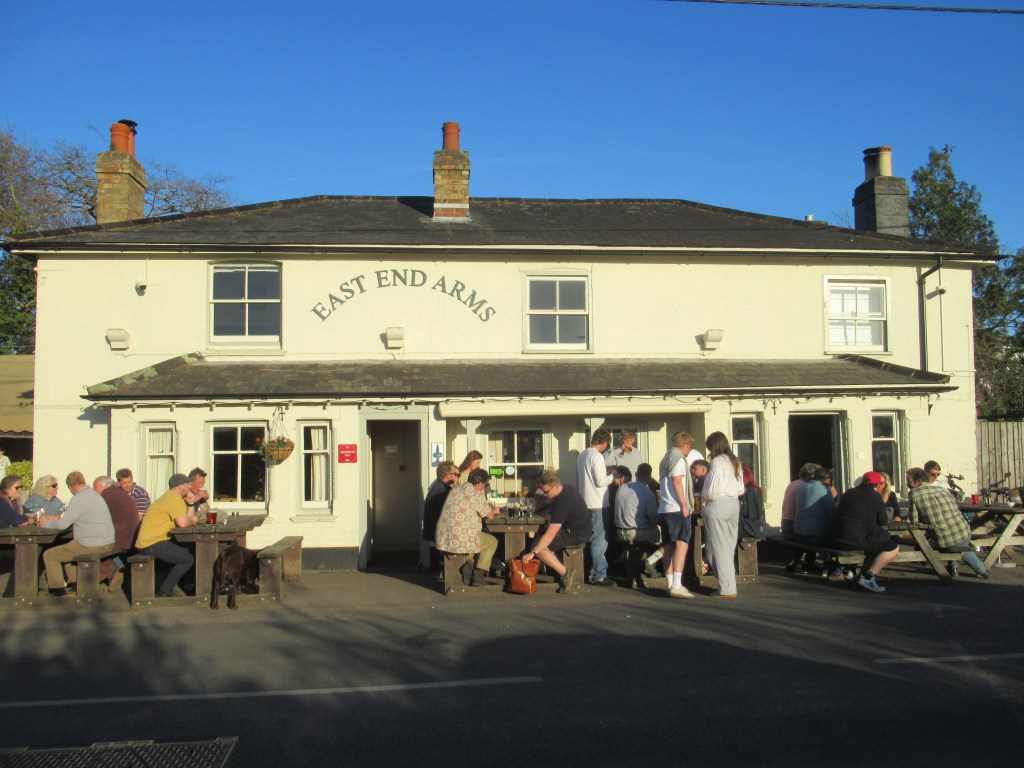
I walk a little bit out of my way to have an early evening drink in a pub shown on the map. Despite being called the East End Arms it’s surprisingly devoid of Cockneys, Pearly Kings, jellied eels or knife attacks. East End is actually the name of a nearby village, and it couldn’t be more different from London’s East End.
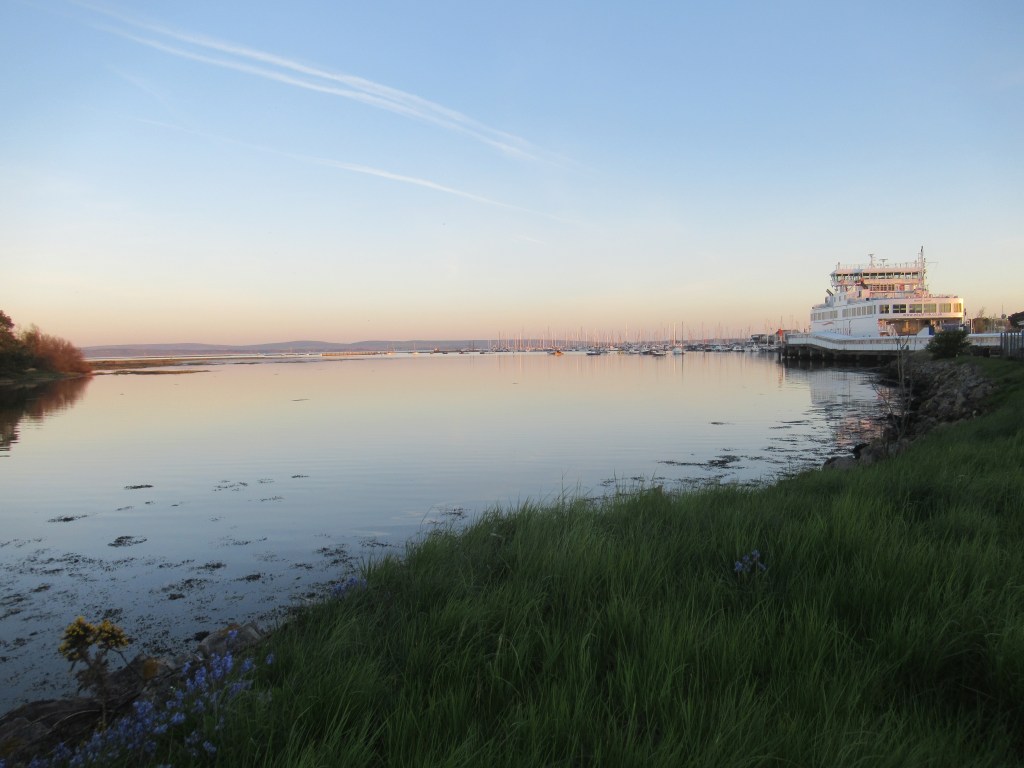
At 7.30pm I reach the end of the walk at Lymington Pier and I’m back at the coast again. Lymington Pier is a small port from where a ferry can be boarded to Yarmouth on the Isle of Wight. It is situated on the opposite bank of the Lymington River from the town of Lymington, and the two are connected by a railway that crosses the river and then continues north to Southampton. Today there are no trains, so I have to catch a rail replacement bus service which takes a lot longer and, after changing in Brockenhurst and waiting for what seems like an eternity at a level crossing, I arrive for an overnight stay in Southampton.
11.5 miles; 18.5km; 7.5 hours
Southampton Travelodge, Southampton (£32.99)
 Vole Explosion
Leave a comment