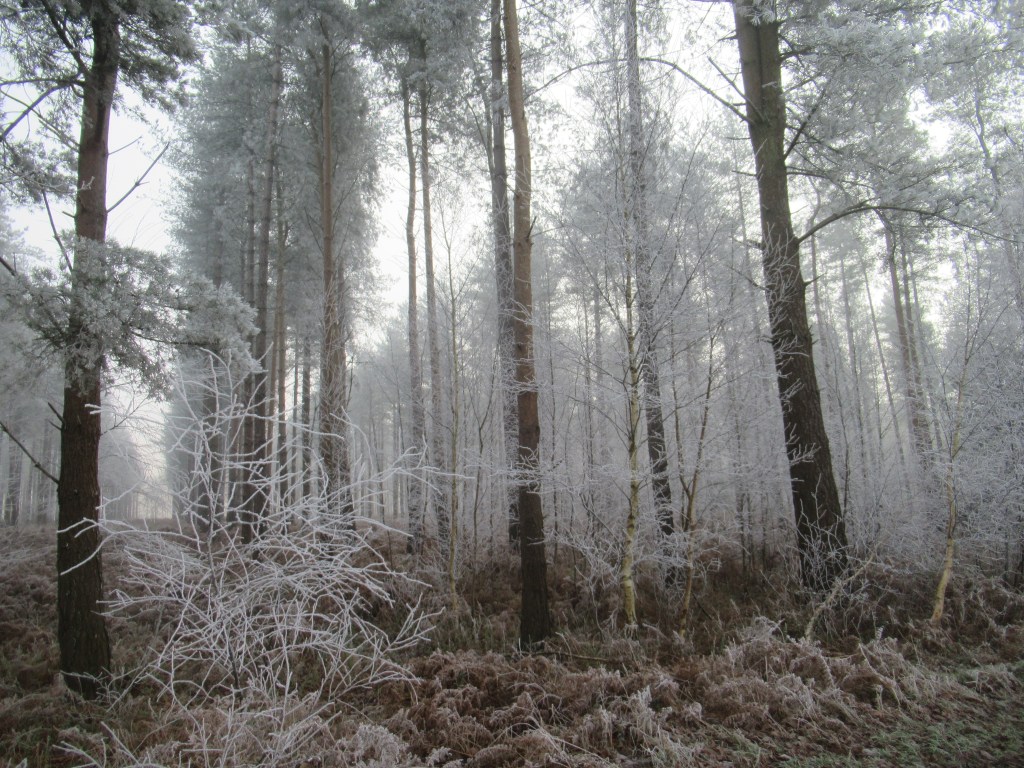
In the heart of eastern England, straddling the border between Norfolk and Suffolk, lies an area known as the Brecklands (or ‘Brecks’ for short). The name is derived from ‘Broken Lands’, as they were known in medieval times. A large expanse of open, sandy country cleared of trees during the Neolithic, by the Middle Ages small areas were farmed on rotation until the poor quality soil forced the farmers to move on to a new section and allow wilderness to return. This resulted in wilder areas ‘broken’ by patches of agriculture. This was ‘Broken Britain’ hundreds of years before that phrase became a media buzz-word.
For centuries the area was maintained as open heathland by the grazing of sheep and rabbits, until just after the First World War when the government used a vast swathe for growing non-native conifers for timber production. This industry still exists today and the area is often referred to as Thetford Forest – complete nowadays with the obligatory Centre Parcs and Go Ape. The Brecklands are also the birthplace of American founding father Thomas Paine and the filming location for much-loved British sitcom of the 1970s Dad’s Army.
Although agriculture still occurs in much of the Brecks, areas of heathland still exist amongst the forest, mostly protected as nature reserves, as well as a large area protected within the British army’s Stanford Training Area and off limits to members of the public. The rest of area is criss-crossed with miles of walking paths and abundant corners to explore. I’ve been coming here all my life but there are still parts I’ve never visited.
DECEMBER 2024
Finding wildlife here is often a matter of knowing where to look. In my younger days I wasted hours searching through pine plantations that are mostly devoid of nature apart from abundant Coal Tits and Goldcrests (Europe’s smallest bird), both of which thrive in these conifers. With experience and a little research I eventually learned that much of the wildlife here is elusive and found in hotspots of biodiversity scattered amongst the plantations.
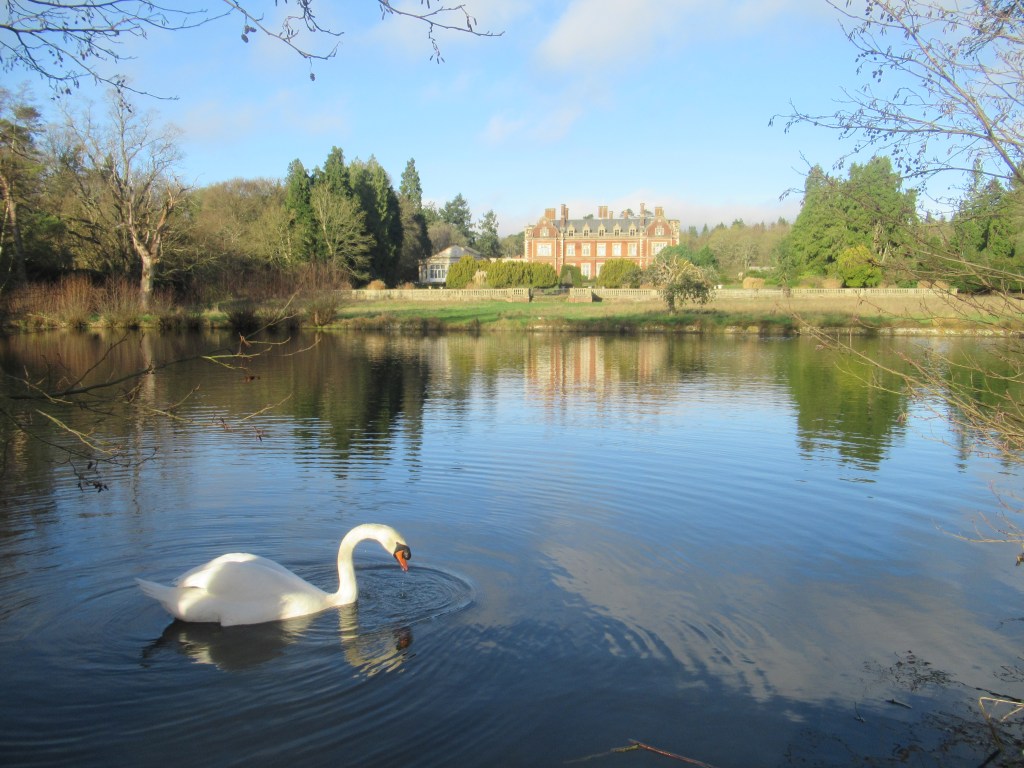
I begin at Lynford Arboretum – a collection of mostly exotic trees and a small lake near Lynford Hall Hotel. Arriving just as dawn is breaking, I flush five Red Deer that run off into the forest.
The lake holds Mute Swans, Canada Geese, Mallards, Gadwalls, and Little Grebes, and nearby there are some bird feeders that come alive with activity, as common woodland birds of at least fifteen species jostle for position and take turns to grab a meal.
These feeders also attract a few mammals in the form of Brown Rats and Grey Squirrels.
Thetford forest is packed with squirrels, but unfortunately they are only of the invasive grey species. This used to be one of the last strongholds of the native Red Squirrel in mainland southern England but, despite attempted reintroductions, they haven’t been seen here since the 1990s.
The main reason birders visit the arboretum is to see Hawfinches. These large, rare finches are normally shy and elusive, but at Lynford their distinctive top-heavy silhouette (with a hefty, seed-cracking beak) can often be seen perched in treetops in the middle of a paddock or, if you’re very lucky, under the bird feeders. This is one of the most reliable sites in the country for this secretive species, but unfortunately this hasn’t been a good winter for them, with only one or two reported, and I fail to see any this time. While searching at the paddock I note a few winter thrushes: Redwings, Fieldfares, and Mistle Thrushes. A Common Buzzard is stalking around in the grass near the foot of the hornbeam trees.
The other star bird of Lynford Arboretum is the Firecrest. These tiny gems, more colourful than the closely related Goldcrest, are now breeding here, having recently spread north from the south coast of England.
Today is sunny and unseasonably mild and as the morning wears on the arboretum starts to fill with visitors. After a coffee from the convenient refreshment hut I decide to move on for a walk through the forest.
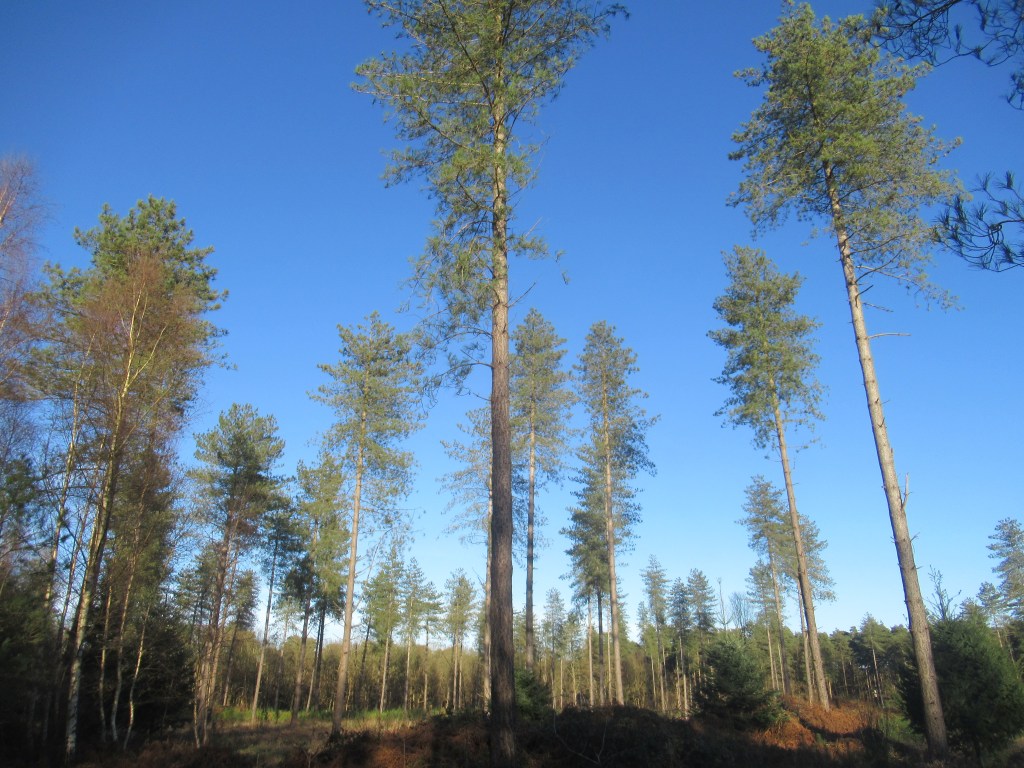
The forestry plantation is divided into blocks with open rides between them. The trees are felled in rotation, resulting in a patchwork of different ages and some open areas of clear fell that have been harvested recently. The younger trees form impenetrable thickets, often gloomy and atmospheric, while the fully mature ones form cathedral-like spaces between their trunks.

Some years flocks of red and green Common Crossbills can be found in the mature pines, extracting pine kernels from the cones with their eponymous crossed mandibles. But these eruptive birds are unpredictable, arriving here from Scandinavia in varying numbers – some years they are everywhere and sometimes there are none at all. 2017 was a particularly good year and they were joined by a long-staying flock of Parrot Crossbills, which are much rarer and seldom seen south of the Scottish highlands.
Some blocks of conifers have a wide strip of native deciduous trees planted along the edge, creating a kind of ‘Potemkin forest’ that hides the less attractive rows of pines.
A short walk from Lynford I come to Grime’s Graves, one of the large open areas amid the forest. During the Neolithic period flint was mined here between 2600BC and 2300BC. The flint was extracted by digging shafts up to 14m (46ft) into the chalk bedrock until a seam of flint nodules was reached. After each shaft was exhausted it was filled with the spoil of the next shaft, resulting in at least 433 separate mines. This has created an otherworldly landscape of grassy heath pockmarked by hundreds of dimples, an effect best seen in aerial photos. Visitors to the site can descend into one of the shafts, which has been excavated to show the mining chambers that radiate out from the shaft and the large flint nodules embedded in the chalk.

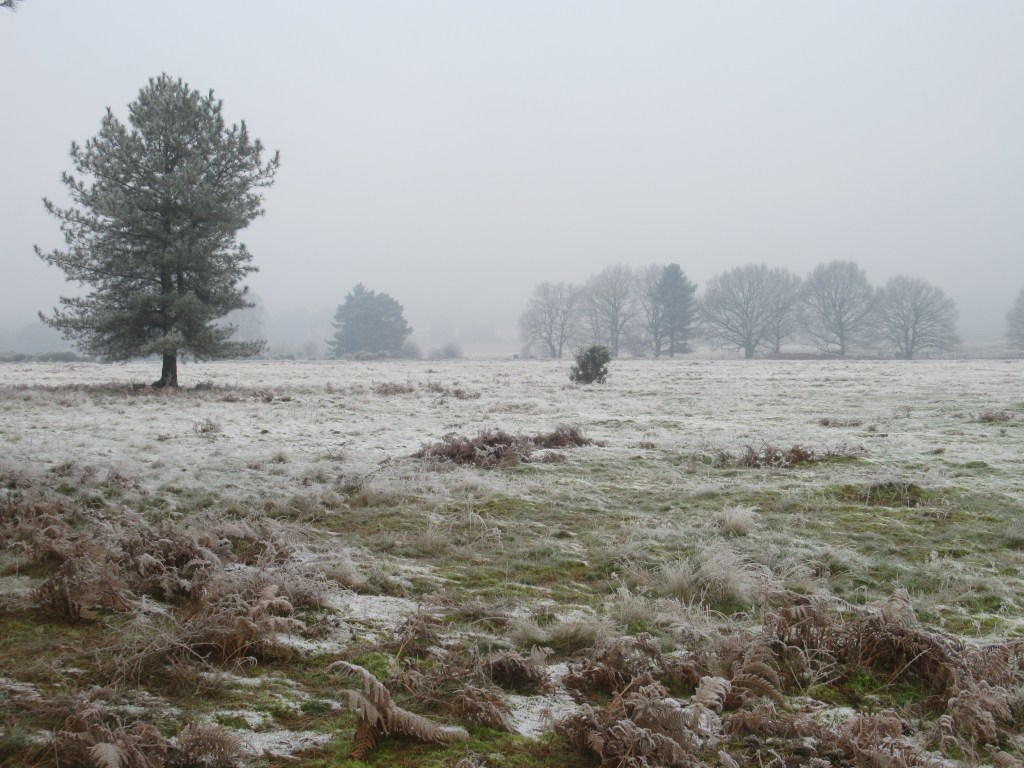
These areas of open heath can appear cold and dead in winter, with maybe a couple of wintering Stonechats perched up conspicuously on low shrubs, or the occasional Meadow Pipit hiding in the grass. Later in the year they burst into life when summer visiting birds arrive in April. Willow Warblers, Wheatears, Tree Pipits, Wood Larks, Skylarks, Hobbies, Stone Curlews and Nightjars can all be seen and heard on Breckland heaths if you know where to look, and the open ground hosts a profusion of heathland plants, invertebrates and reptiles, but those days still feel a long way off.
Grime’s Graves is situated on an area of slightly raised land, giving a wide horizon and a panoramic view over the surrounding forest. On fine, sunny days in March this can be good place to look out for Goshawks performing their soaring display flights above the trees. These ‘Ghosts of the Forest’ are increasing in the Brecks and are found here all year round, but are usually difficult to spot. Much easier are the Sparrowhawks, Buzzards, and Red Kites that can also be seen soaring here. One winter I was even lucky enough to see a Merlin, Britain’s smallest falcon, zipping over Grime’s Graves.
After walking through some more pine plantations and the open heath of Santon Warren I arrive at the River Little Ouse near the sleepy village of Santon Downham. The riverside path runs between the towns of Thetford and Brandon, through some of the best deciduous woodland in the Brecks. The wet soils in the river valley are unsuitable for growing conifers, so the woods here are more natural and diverse. The numerous alder trees attract winter flocks of Siskins, Redpols and Goldfinches in varying numbers from year to year. These three finches can be seen hanging acrobatically from the alder cones to extract the seeds, and ginger Bramblings from Scandinavia can be located amongst flocks of Chaffinches on the forest floor beneath mature beech trees.
I immediately spot a Kingfisher, which are common along here, and then see a male Sparrowhawk narrowly miss a Great Spotted Woodpecker, which flies away shrieking in panic!
Occasionally I see a Barn Owl near here and often hear Tawny Owls as well. Long-eared Owls also inhabit this forest but are so elusive that I’ve only ever had one encounter, last year in a different part of the Brecks.
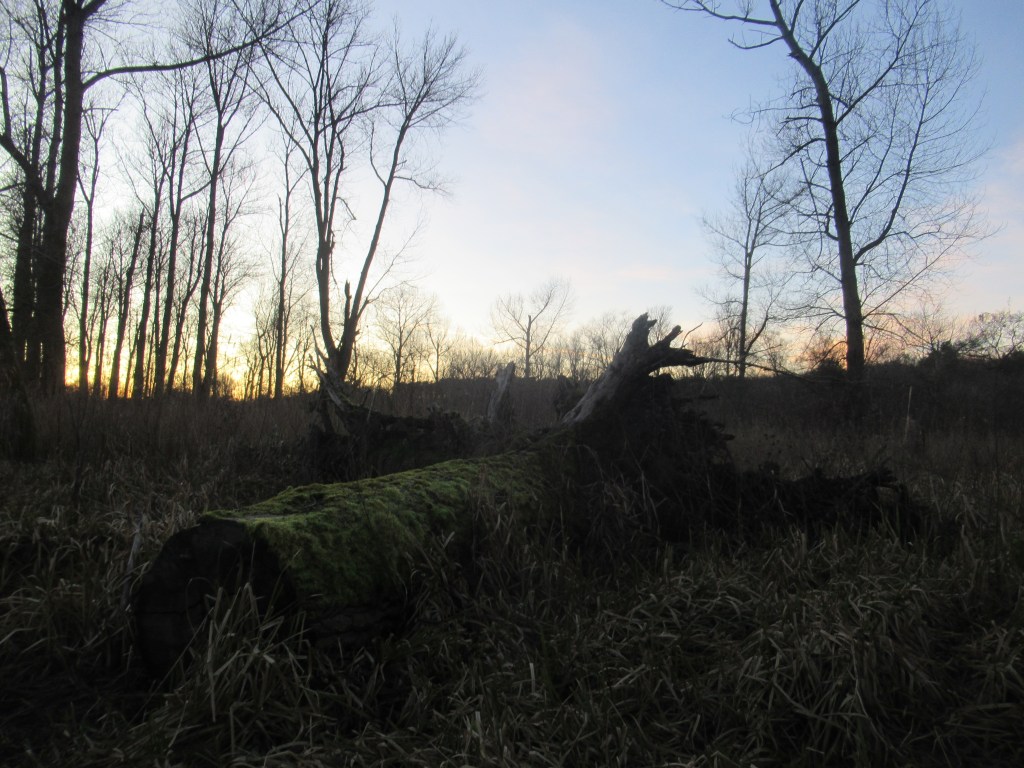
The short winter day means that dusk is falling as I walk along the river. I glimpse the silhouette of a nocturnal Woodcock against the dying blue sky as it flies off to feed, and then the forest falls silent and still.
JANUARY 2025
I visit again a few weeks later, this time starting at the river and walking the same route in reverse. In contrast to the mild weather in December, today is cold and frosty, with a light fog hanging in the air. The mud on the riverside path is frozen solid, making the walk easy, but the river is still liquid.

It is dawn as I standing on the bridge in Brandon and straight away I see two Eurasian Otters swimming in the water, so I hurry down to the riverside as they slowly swim away. They’re not in a hurry to get anywhere and I easily catch up with them and keep them company along a fairly long stretch of the river.
This must be one of the best places in the UK to see otters in a river. Otter hunting was banned in the UK in 1981 and since then their numbers have increased enormously and some, such as these, have become much bolder and unconcerned by humans. I have seen these aquatic mammals all along the river from Brandon to Thetford, and I estimate I get some kind of sighting on about 50% of visits. Today though is exceptional, and I get the best views I’ve ever had. The two I originally saw are joined by a third animal and they forage along the river at about the same pace as I am walking.
I get to watch at close quarters as they interact with one another, hunt for prey under the opposite bank, and occasionally come out briefly onto dry land. One disappears into a hole at the base of a tree that may be a holt. Every time I think I’ve lost them and begin to walk on, they appear again. Even under water they I can track them by the line of bubbles they leave.
There are numerous Little Grebes wintering on the river and one of these tiny dabchicks falls prey to the otters. I miss the exact moment of capture but the sound of the splash and the excited vocalisations of the otters draw my attention. In no more than two or three seconds the bird has been captured, killed, and ripped in two by a pair of these superbly adapted predators. They take their respective grebe halves over to the bank where they tuck in while the third otter watches nearby. The grebe has survived through a freezing night on the water only for its life to be taken in seconds just as dawn is breaking. So it goes.
While I’m watching the otters some other mammals are becoming active. The ubiquitous Grey Squirrels of course, plus some Reeves’s Muntjacs, small non-native deer from China, and a Red Fox foraging in the frosty grass of a paddock on the other side of the river.
One of the notable birds along the river also originates in China. Mandarin Ducks were imported to Britain to liven up wildfowl collections with their dazzling plumage. Some escaped and formed breeding colonies around the country, and this feral population now outnumbers the natural population in East Asia. Unlike many non-native species, they don’t seem to do any harm and this river is ideal for them, with the mature trees providing abundant nest holes. The multi-coloured drakes are spectacularly beautiful when seen in sunlight, but today is a bit foggy and the one I see is not showing himself to his full potential in the gloom. This doesn’t deter him from displaying to an accompanying female, signalling that spring is maybe not too far away.
A couple of Great Spotted Woodpeckers are also beginning to feel the onset of spring and indulging in a bit of half-hearted drumming on hollow branches. In February and March they will be performing with more vigour and the woods will be filled with the sound of percussion as they attempt to attract a mate. With luck you will also be able to hear the drumming of a Lesser Spotted Woodpecker which, with a bit of practice, sounds identifiably different. These tiny, sparrow-sized woodpeckers were relatively common until the last two or three decades but have since undergone a catastrophic decline. There are probably no more than half a dozen pairs left in the whole of East Anglia, and the woods along this river is one of the last places where they just about cling on (with their specially adapted toes!). They are notoriously difficult to find for most of the year, but their drumming makes them more conspicuous in late winter and early spring, and in a few weeks there will be groups of birders along here hoping to catch a glimpse. All three resident British woodpeckers are found in the Brecklands, with the large Green Woodpecker completing the set.
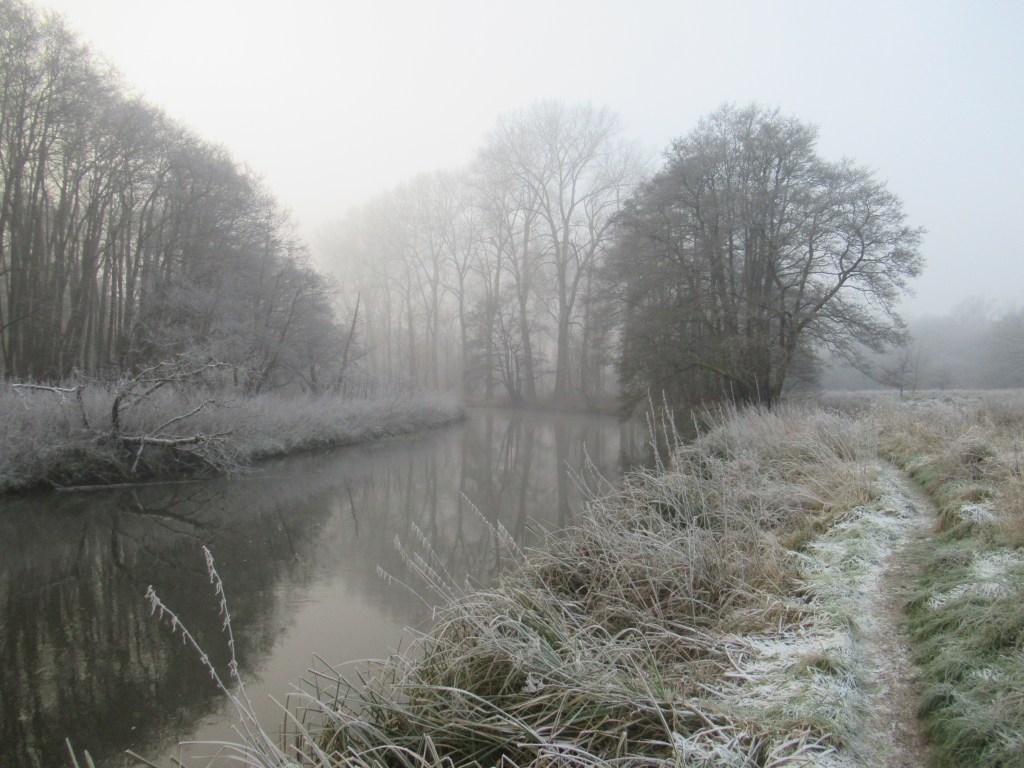
The frozen conditions have turned nearby standing water to ice and resulted in more water birds taking refuge along the river. As well as Little Grebes, Mandarins and the usual Moorhens, I see plenty of Grey Herons, a Little Egret, a Grey Wagtail, a Snipe, and a secretive Water Rail. These are far more often heard than seen, but I accidently flush one from a small area of reeds along the river’s edge.
I complete the walk back through the frosty heaths and plantations to Lynford Arboretum, seeing plenty of woodland specialists along the way such as Marsh Tits, Nuthatches and sneaky little Treecreepers. Despite covering a fair bit of ground on my walk I have only scratched the surface of what the Brecklands have to offer and I know I’ll be back when spring arrives.
 Vole Explosion
Leave a comment