Following a few days in Taipei, my main reason for visiting Taiwan was to join a birding group and travel around the rest of the island searching for Taiwan’s unique wildlife. Taiwan is classified by Birdlife International as an Endemic Bird Area which, at the time of writing, hosts 32 endemic bird species (in other words, those found nowhere else in the world) as well as numerous endemic sub-species which may in the future be upgraded to full species status. Our two week tour plans to target all of these and, by the end, I hope to have added around 70 new ‘lifers’ to my world list.
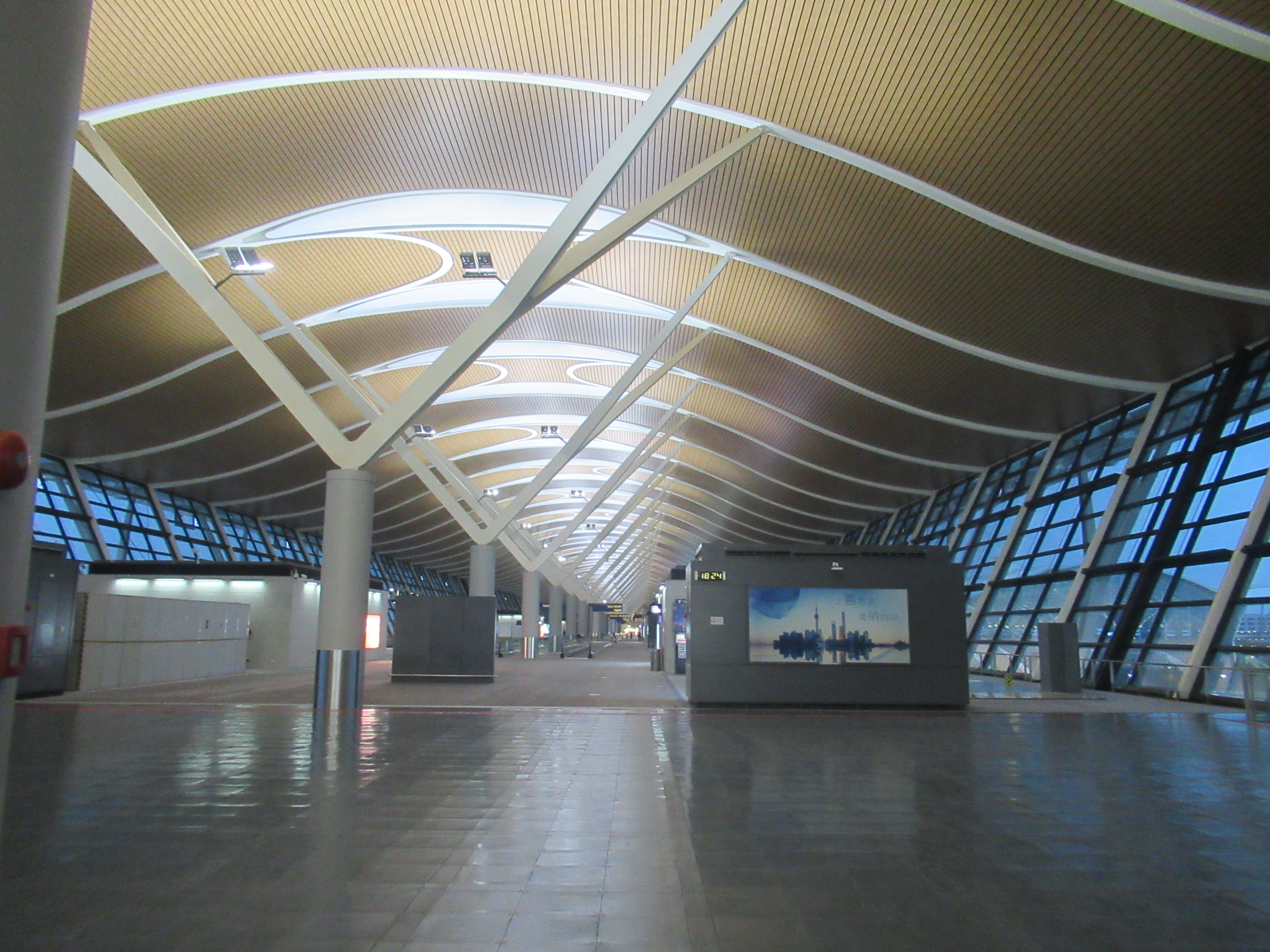
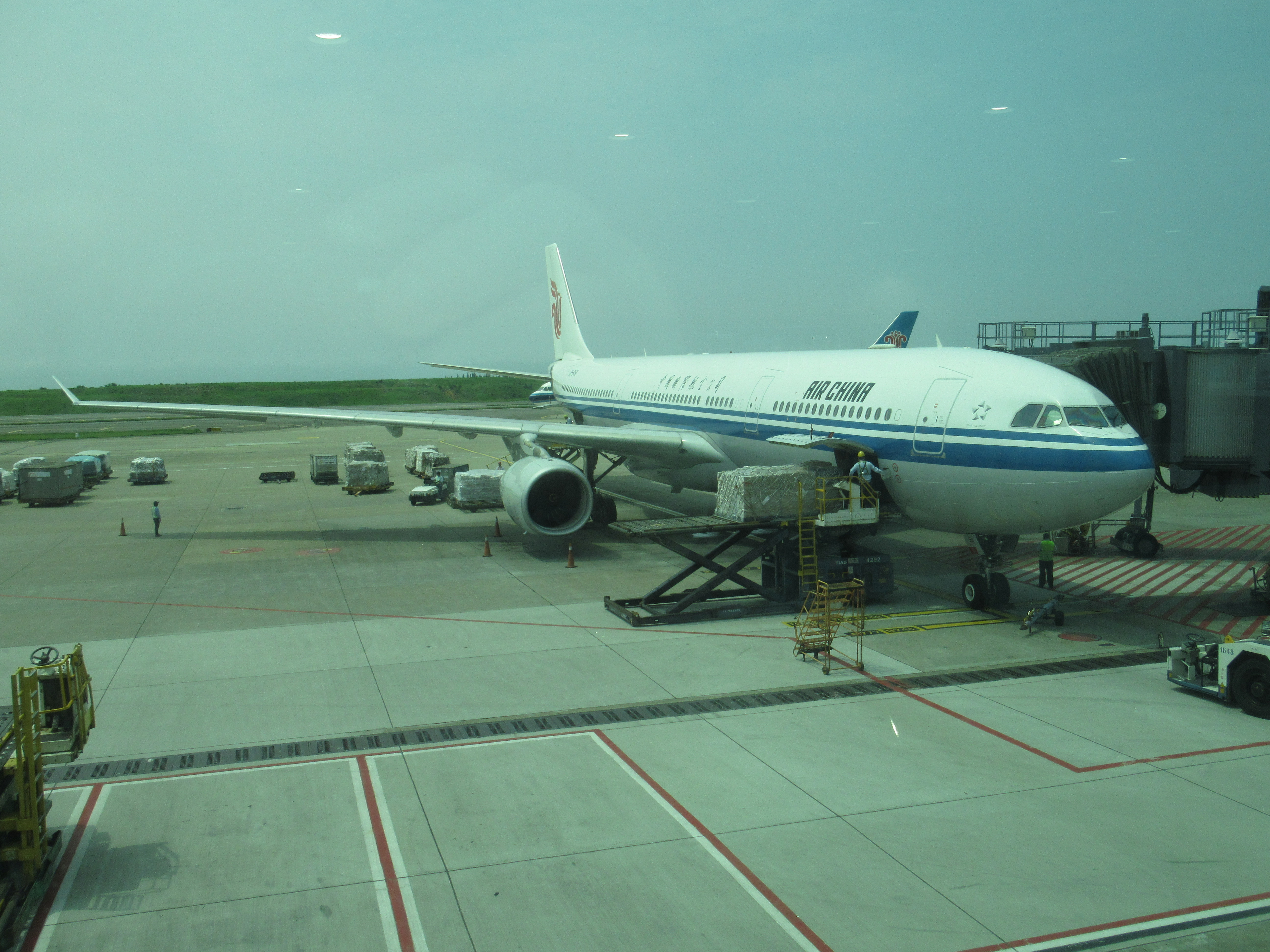
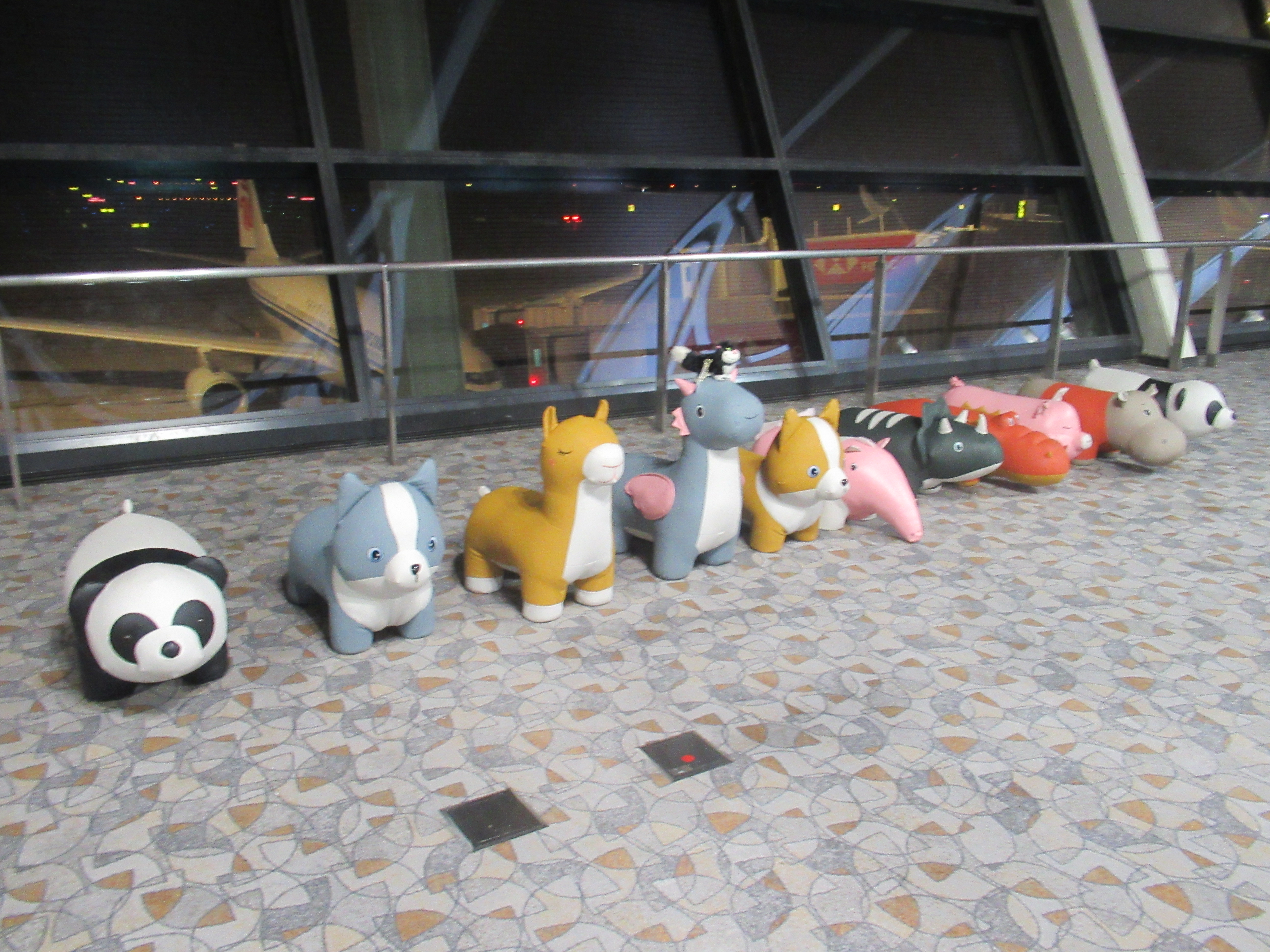
The birding started before I even arrived in Taiwan, with Spotted Dove, Chinese Blackbird, Crested Myna, Long-tailed Shrike, Chinese Bulbul, and the ubiquitous Feral Pigeon all seen through the windows at Shanghai’s Pudong Airport. Once in Taiwan I quickly spotted my first Taiwanese endemic on the train journey from the airport to the city centre: Taiwan Blue Magpie – a flamboyant, long-tailed bird that is often used as a symbol of the country.
In Taipei Botanical Gardens I found a handful of common birds that I would see almost every day of the trip: Eurasian Tree Sparrow, Taiwan Barbet and Chinese Bulbul (again).
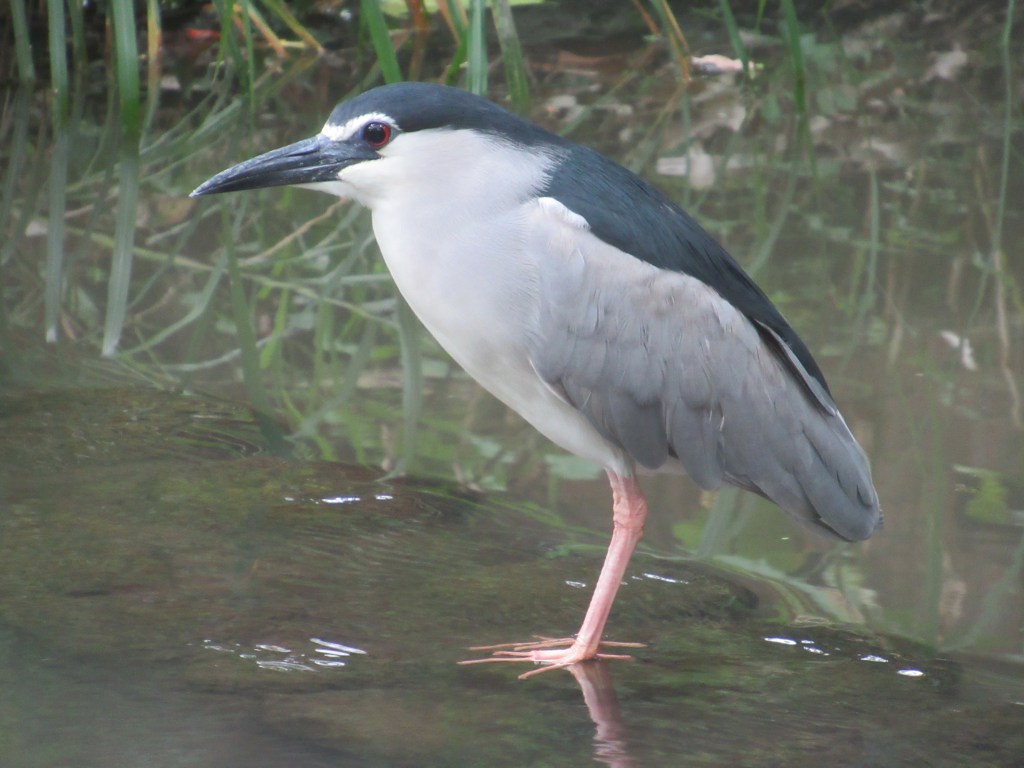
Other common birds found here were Oriental Turtle Dove, Black-crowned Night Heron, Swinhoe’s White-eye, Grey Treepie, and Malayan Night Heron. I have already written about these Night Herons in my previous post – they are shy and almost impossible to see in the rest of their South-east Asian range but, for reasons unknown, are bold and hard to miss in Taiwan.
As in many parts of East Asia, birding is very popular in Taiwan, especially bird photography. Many photographers were stalking around the botanical gardens and at least one species, a Crested Goshawk, was revealed to me by a group of them pointing impressively long lenses up into a tree. This was to be the only one I saw.
Two mammals were also seen in the gardens: Pallas’s Squirrel, which turned out to be common all over the country, and a single Brown Rat (a second rat was also seen on my last day, though almost certainly not the same one).
Two more very common birds were seen everywhere around Taipei, and indeed the rest of Taiwan. These are the introduced non-natives Javan Myna and Common Myna. They are increasing in numbers and pushing out the native Crested Myna. I only saw one Crested Myna early on and about eight more at the end of the trip, also in Taipei.
During the rest of my brief stay in the capital I caught up with a few birds that I would see numerous times elsewhere in the country: Spotted Dove, Red Collared Dove, Black Drongo, Black Bulbul, Barn Swallow, Pacific Swallow, Little Egret, and Eastern Cattle Egret.
Less frequently seen, but still fairly common, were Crested Serpent Eagle, Taiwan Whistling Thrush (endemic), Rufous-capped Babbler and Oriental Magpie (seemingly identical to the magpies I commonly see in the UK, but now split as a different species). Two more introduced birds seen occasionally were Black-collared Starling and Oriental Magpie-robin, as well as a single European Starling.
21st April 2024
Sunday morning marked the start of the bird tour and I had to take an early morning walk across town to meet up with the group. There were six of us in all, plus a tour leader, two Taiwanese bird guides, and a driver. Much of the morning was spent covering the same ground for the benefit of those who had flown in last night and seeing most of the species I had already seen. Another visit to the Botanical Gardens turned up the only Black-necklaced Scimitar Babbler of the trip (another endemic), a migrant Arctic Warbler, and a pair of Black-naped Monarchs at a nest. Also on a nest were another pair of Malayan Night Herons – the second nest of this elusive species I had seen in two days!
Moving on to Quinshan Park, still in Taipei, we added Grey Wagtail and Taiwan Scimitar Babbler (endemic) and obtained superb views of Taiwan Whistling Thrush and multiple Taiwan Blue Magpies, with one demolishing a lizard. We also had a juvenile Malayan Night Heron wandering around.
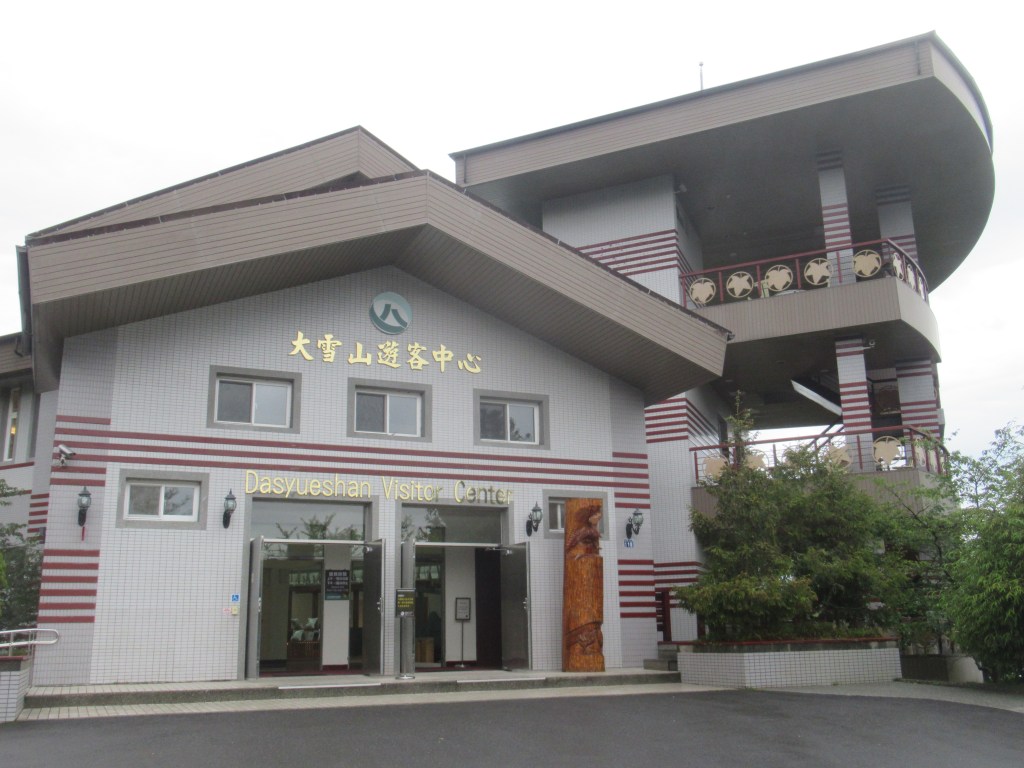
Late in the morning we left Taipei for a long drive into the mountains of Dasyueshan National Forest, adding House Swift to the bird list along the way. Most of the afternoon was spent around an area of forest and small hill farms which initially appeared to be birdless, but once we hit the right spot, new birds came thick and fast: Grey-cheeked Fulvetta, Dusky Fulvetta, and Taiwan Yuhina were all endemics. The cute Yuhinas with their jaunty crests were seen in mobile flocks wherever we went in the mountains, but were always highly active and difficult to photograph, hence the poor quality of this shot:

Likewise, the attractive Black-throated Tits were also common but lively. Other birds seen here (and elsewhere in Taiwan) were Collared Finchbill, White-rumped Munia, White-bellied Erpornis, and dazzlingly colourful pairs of Grey-chinned Minivets.
Bronzed Drongo is the upland equivalent of the common Black Drongos we had seen at lower altitudes, and could be identified by their glossy metallic sheen. It was while watching one of these that I called out a small bird flying in and landing in a shrub. This turned out to be a Chestnut-bellied Tit – one of the harder endemics to connect with, and good news for our bird guides who would now not have to spend a lot of time looking for it elsewhere on the tour. This elusive bird gave us some good views and it turned out to be the only one we saw.

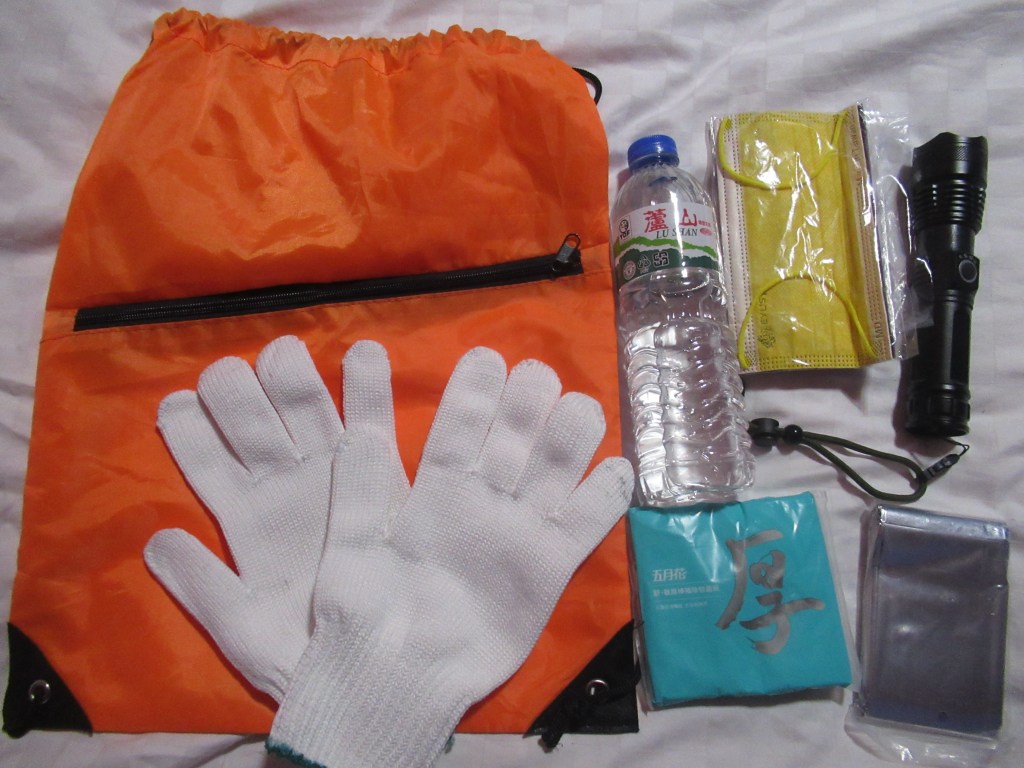
Towards evening we drove downhill to our hotel in the town of Dongshi and went for dinner in a nearby restaurant. It was here that our local guides handed out earthquake emergency kits that we were told to always keep by our beds at night. They contained items that could prove useful should we get trapped in a damaged building, such as a torch, gloves, foil blanket, etc. We were advised to add a bottle of water and a set of clean clothes, and were given some tips on what to do if an earthquake hits. It really brought home to us that we were in a geologically active region of the Pacific Rim.
Walking back to the hotel we had a Savanna Nightjar calling and flying above us around the hotel roof, and we managed to spotlight it in one of the earthquake kit torches. Despite their name, these nocturnal birds seem to be well suited to urban environments.
22nd April 2024
Leaving Dongshi early, we stopped at another area of hill farms to look for Taiwan Bamboo Partridge, an endemic that we failed to find yesterday, and we had good but brief views of a pair walking across the road.
While searching we also saw Large-billed Crow, Oriental Honey-buzzard, Brown Shrike, a couple of Oriental Cuckoos in a tree top high above us on a hill, and Taiwan Hwamei. This is an endemic, split from the Chinese Hwamei of the mainland. I’m told that Hwamei means ‘beautiful eyebrow’, a plumage feature found on the Chinese Hwamei but lacking on the Taiwanese version, so maybe a name change is in order.
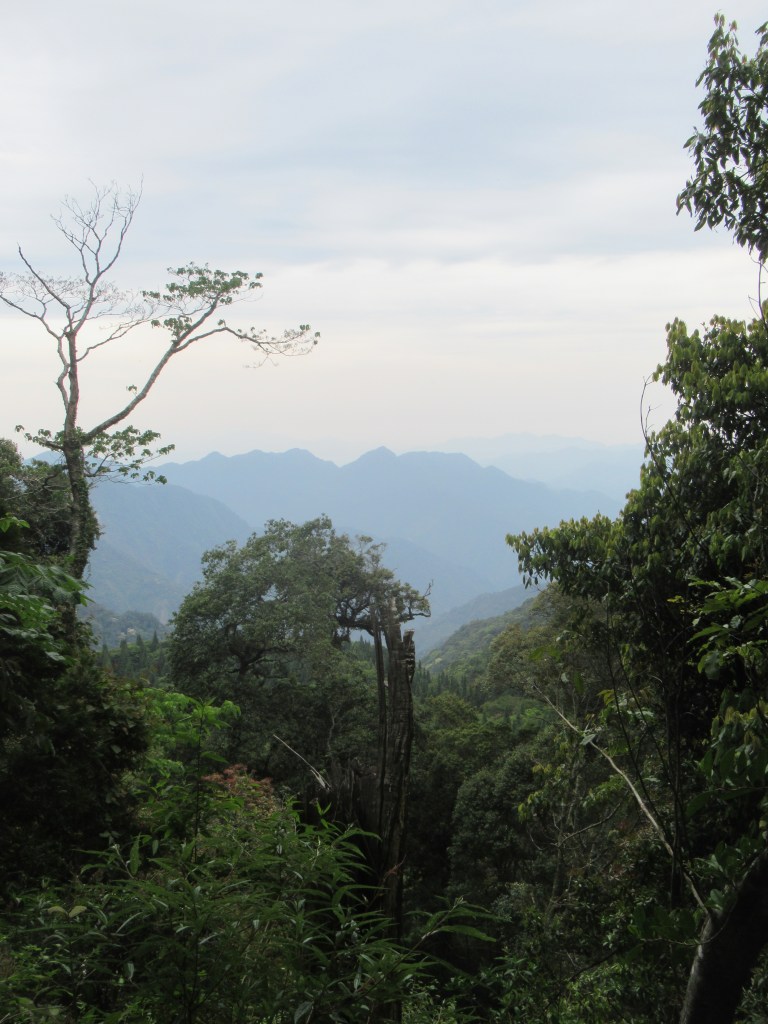
By 8am we had reached the higher altitudes where some of the most sought-after Taiwanese birds are found. At 1500m (4900 feet) – already as high as the tallest mountains in the UK – we were admiring a very obliging male White-tailed Robin (a deep blue-black, with two white lines running the length of his tail) when I noticed a male Swinhoe’s Pheasant standing out in the open just a few metres in front of us. This is one of Taiwan’s most iconic birds and, although we didn’t know it at the time, we were to have more close encounters with this endemic.
At 1600m (5250 feet) altitude we saw our first White-eared Sibias – a common endemic bird all over the mountains. Not always easy to see, but their four-note “Pleased to meet you” call was a constant background sound during our time here.
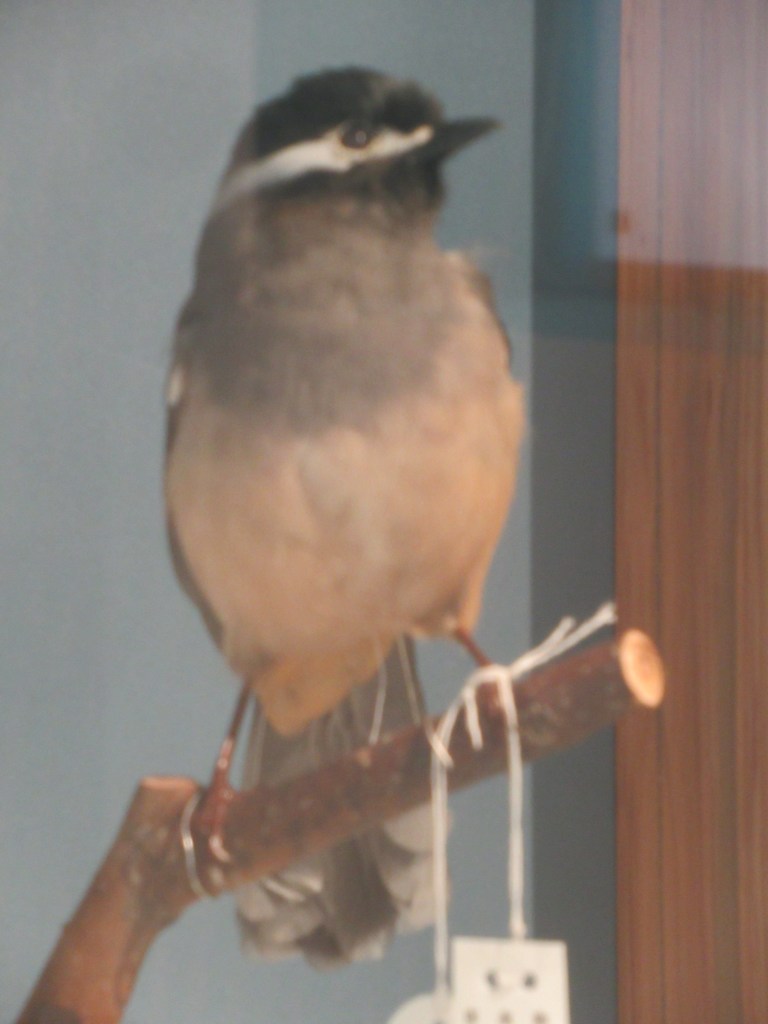
We also added two more endemics: Rufous-crowned Laughingthrush and Steere’s Liocichla – the latter being a very attractive bird that prompted much discussion over the pronunciation of ‘Liocichla’, an issue we never managed to resolve. Personally, I go with ‘Leo-chick-la’.
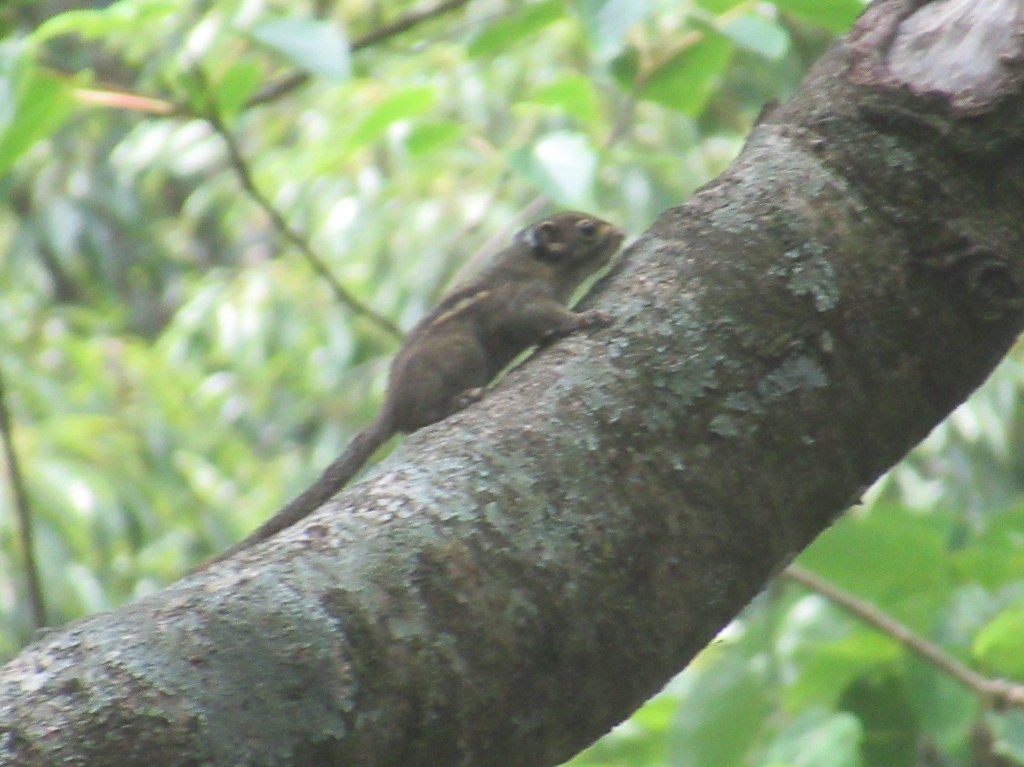
Another new bird here was the Rufous-faced Warbler, and a non-bird highlight was the tiny, chipmunk-like Maritime Striped Squirrels which shot around the tree branches with unbelievable speed. I was pleased to get a photo of one, more through luck than skill:
We managed to connect with two more endemics before lunch: Taiwan Vivid Tiltava at 1850m (6070 feet) – distant views of a singing male, but seen better on subsequent days – and Rusty Laughingthrush at 1950m (6400 feet) – a small flock of these was our only sighting of the trip.
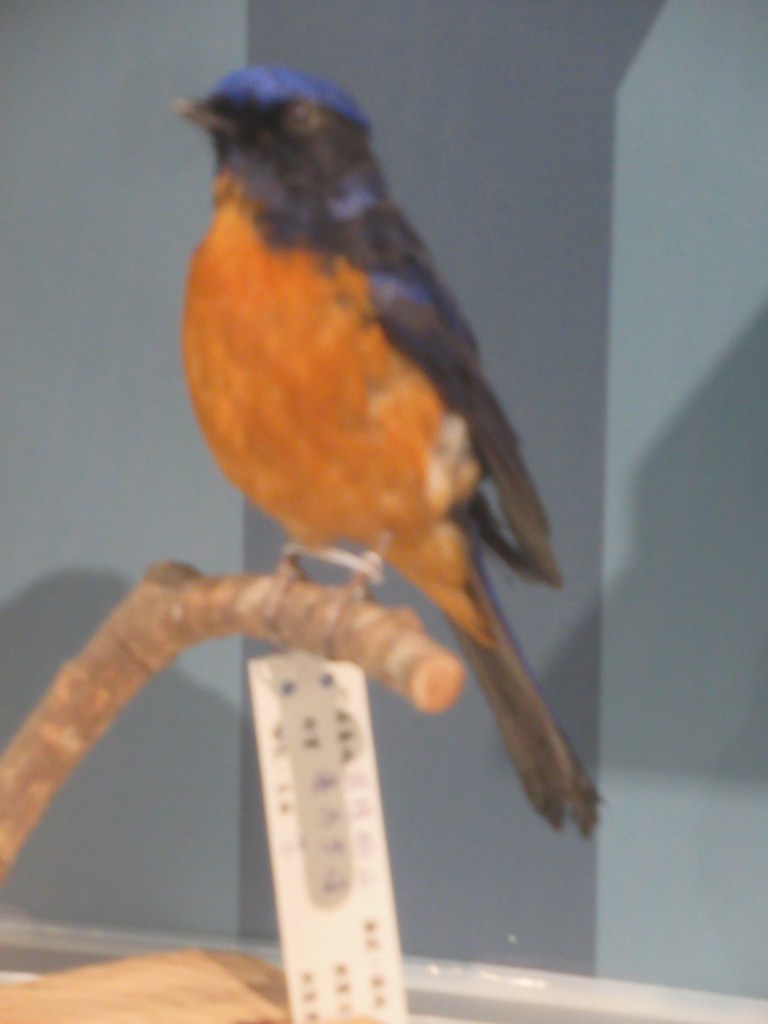
After lunch we found another two male Swinhoe’s Pheasants, including a very tame male rootling around near the park entrance. Despite park rules forbidding it, food is put down around the car parks for the two endemic pheasant species to make life easier for bird guides to show them to clients, and for local bird photographers, of which we met many here.
Two other new birds were Green-backed Tit and Fire-breasted Flowerpecker – the latter a widespread Asian bird, but with a distinctive endemic sub-species on Taiwan that surely merits full species status.
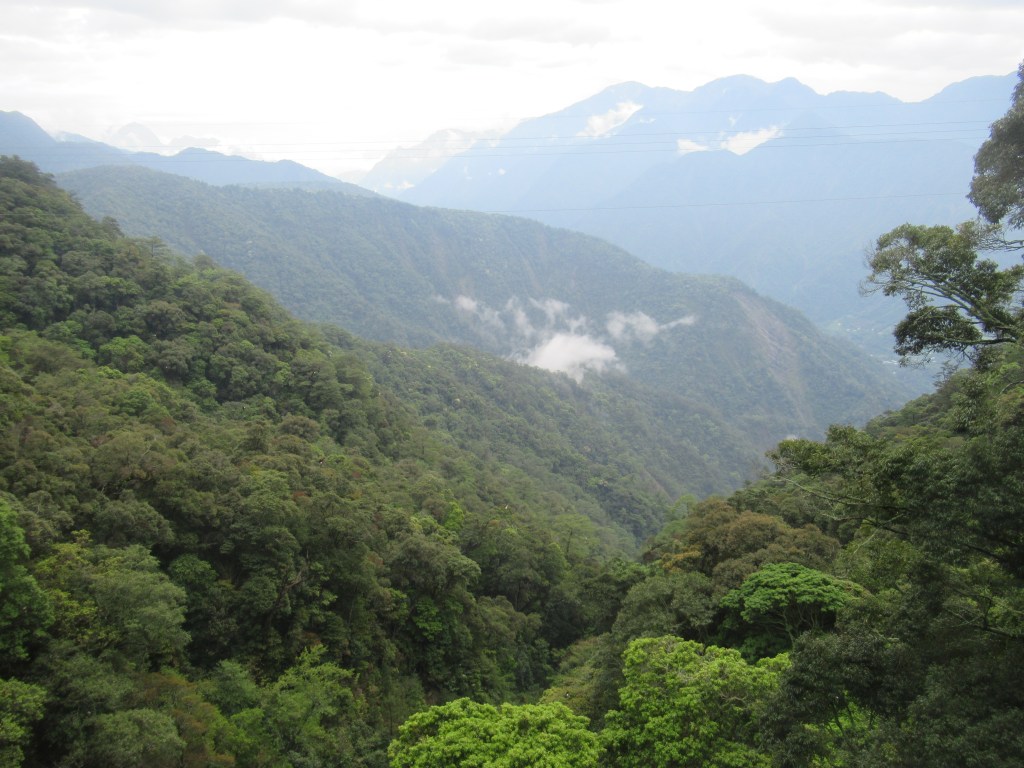
We checked into our accommodation in the park for the next three nights – the only location where we spent more than one night – and after dinner we had a brief session of spotlighting around the lodges. We saw no night birds but we managed to get a Red-and-white Giant Flying Squirrel – an impressively large beast whose long name says it all really. It is obviously red and white and obviously a ‘giant’ by squirrel standards. I didn’t get to see it ‘fly’, but the loose gliding membranes between its front and back legs were visible as it climbed around in the trees. No photo was possible but this one, in the lobby of a later hotel, was much more obliging:

I woke up in the early hours of the morning and at about 2.30am I felt an earth tremor for the first time in my life as my bed shook gently from side to side for a few seconds. About ten minutes later there was a much stronger one that caused objects in the room to move. I felt a mixture of fear and excitement, but mostly I just didn’t know how to react. Despite the advice we had been given, I had no idea at what point I was supposed to panic (I was told later that anything lasting longer than 30 seconds should make me get out of bed and start taking precautions). We had been told that in the event of a full-on earthquake we should get under a table, but there was no table in the room.
I eventually went back to sleep, but was woken by another tremor at about 3.20am, and there were a few very light ones later in the morning just before I got up.
23rd April 2024
On meeting the group, I found out that there had been another series of earthquakes in Hualien last night – measuring about 6 on the Richter scale – and we had felt them all the way out here. This is the closest our tour goes to Hualien. We were supposed to spend a night there but the roads around the city were still blocked by landslides caused by the quake there three weeks previously. Our route had been changed and we would now miss out the spectacular Taroko Gorge.
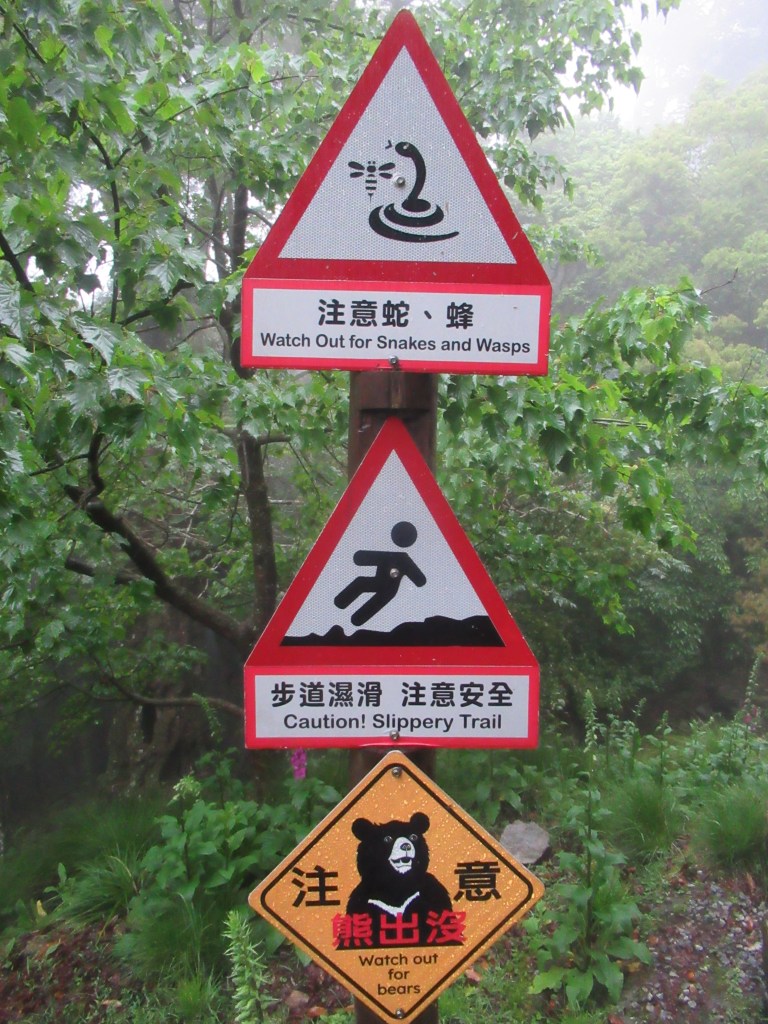
Tectonic movements aside, we also had to contend with the weather. We had a couple of rain showers the previous day but it got much worse today – cold and cloudy, with heavy showers, strong wind, and fog passing through at higher altitudes. This slowed the birding considerably, but before breakfast we managed Ashy Wood Pigeons and a pair of White-backed Woodpeckers. The pigeons were seen in flight and it wasn’t until near the end of the tour that we saw one perched in a tree. The woodpecker has a huge range right across Europe and Asia, and the only other time I’ve seen it was in Estonia. A new mammal for the trip was Formosan Serow – a small, goat-like bovid.
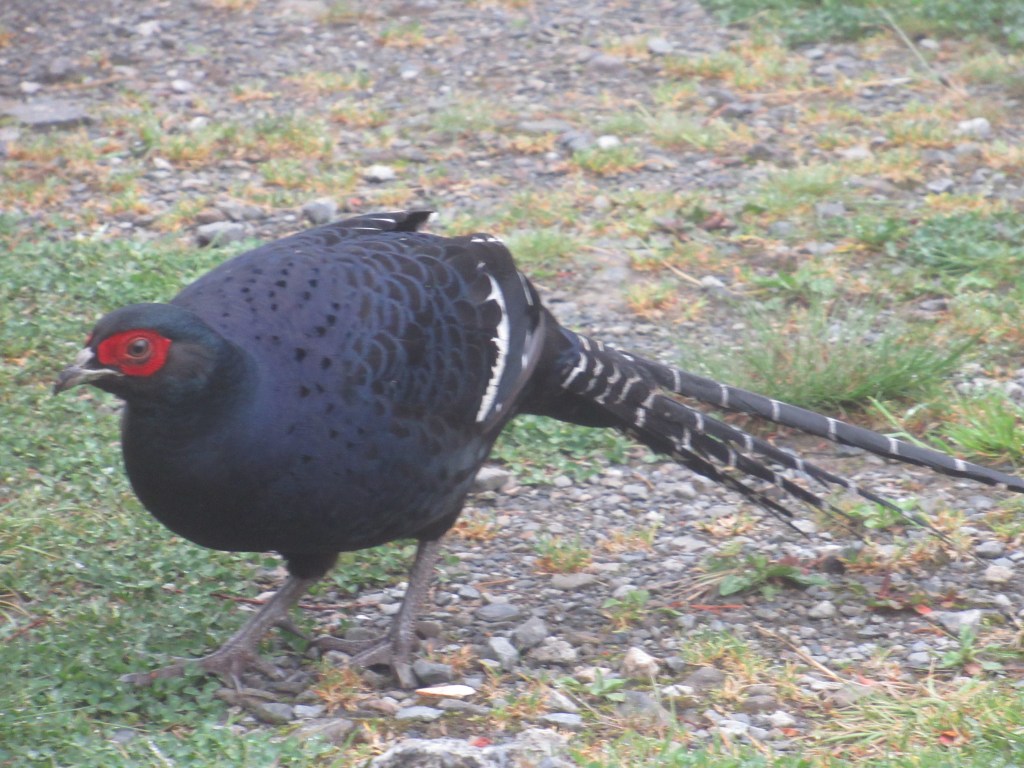
After breakfast we drove up to 2500m (8200 feet) and found the other one of Taiwan’s charismatic pheasants: Mikado Pheasant. We saw both male and female birds, again showing well around one of the car parks.
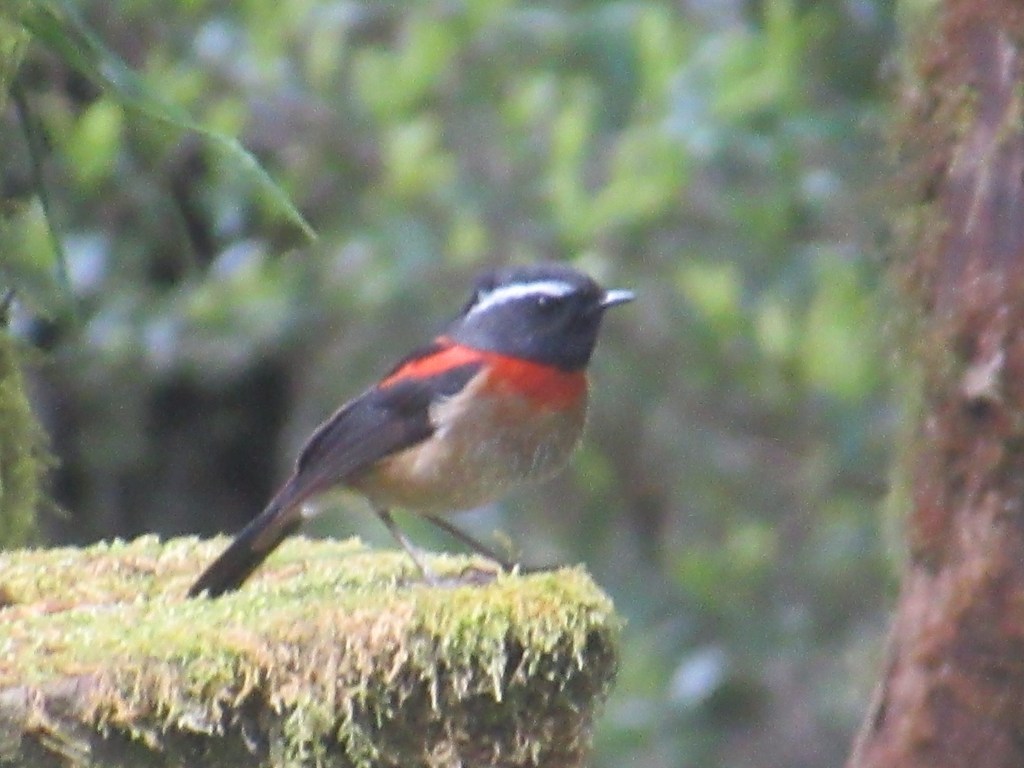
Another handful of endemics consisted of Yellow-bellied Bush Warbler (common and vocal), Collared Bush Robin (exquisitely pretty), Taiwan Bush Warbler (a real skulker that took a long time to lure into view), Taiwan Fulvetta (the most attractive of the three endemic fulvettas).
Also our first White-whiskered Laughingthrushes were seen here. These beautiful birds were very common and inquisitive, appearing everywhere we stopped and coming in close to hop around on the ground.
A non-endemic was the very widespread Coal Tit – looking very different from the sub-species found in Europe – and a Black Eagle flew low overhead. A tiny grey shrew of unknown species took our attention away from birding for a while as it scuttled around in the leaf litter.
In the afternoon we birded between rain showers and had unsatisfactory views of two diminutive endemics: the gorgeous Flamecrest – a tiny bird that was very vocal but stayed frustratingly high up in the tops of pine trees – and Taiwan Cupwing – another miniature marvel that skulks amongst tangled vegetation on steep slopes, rarely coming out into the open. We had a couple of very brief views, but it would be a few days before we got a half-way decent look at this cute little cupcake.
After dark we could hear at least three Mountain Scops Owls calling in the vicinity of the lodge, so went out to see if we could tape-lure one into our spotlight. We couldn’t. This is a notoriously difficult owl to lure and one of the other birders, who chose not to come out with us that night, told me it had taken him more than 20 attempts before he finally saw one, and he hasn’t bothered with them since.
24th April 2024
Thunder and lightning around dawn didn’t bode well. Heavy rain continued all day and the birding was pretty much killed off for the day. We spent most of the time sitting in the minibus and popping out for quick bouts of birding every time the rain briefly eased off a bit. The birds obviously had more sense than us and remained steadfastly under cover. I only managed a pathetic six birds of six species all day. Fortunately two of them were absolute stonkers.
First an endemic Taiwan Partridge gave good but brief views amongst vegetation on a forested roadside slope and, in the afternoon, we finally caught up with Taiwan Thrush – the most difficult of the endemics and the bird most likely to prevent us from getting a full house. Acting on information from another tour group staying at our lodge, we found ourselves on a rainy dirt-track in the forest when our tour leader spotted a female thrush up ahead in the gloom. It wasn’t ideal viewing conditions but that didn’t matter – we had all seen the bird.
Annoyingly, the more strikingly-plumaged male appeared briefly just as I was moving to a better viewing position and I missed him. Oh well.
The second after we had our sighting, and the birds had moved out of view around a bend, the heavens opened with the heaviest rain of the day. It was as if the forest was saying “There you go. You’ve had your thrush. Now get back in your van and sod off”. Something we were only too happy to do.
25th April 2024
Our final morning in Dasyueshan was another rainy one. Fortunately it stopped long enough for some birding before we left. We had good views of many of the species we had already seen, as well as nailing two more endemics: Decent views of the skulking White-browed Bush Robin, and one of my favourite birds of the trip: Taiwan Barwing – far more charismatic than a mainly brown bird has any right to be, and not really done justice by the pictures in field guides.
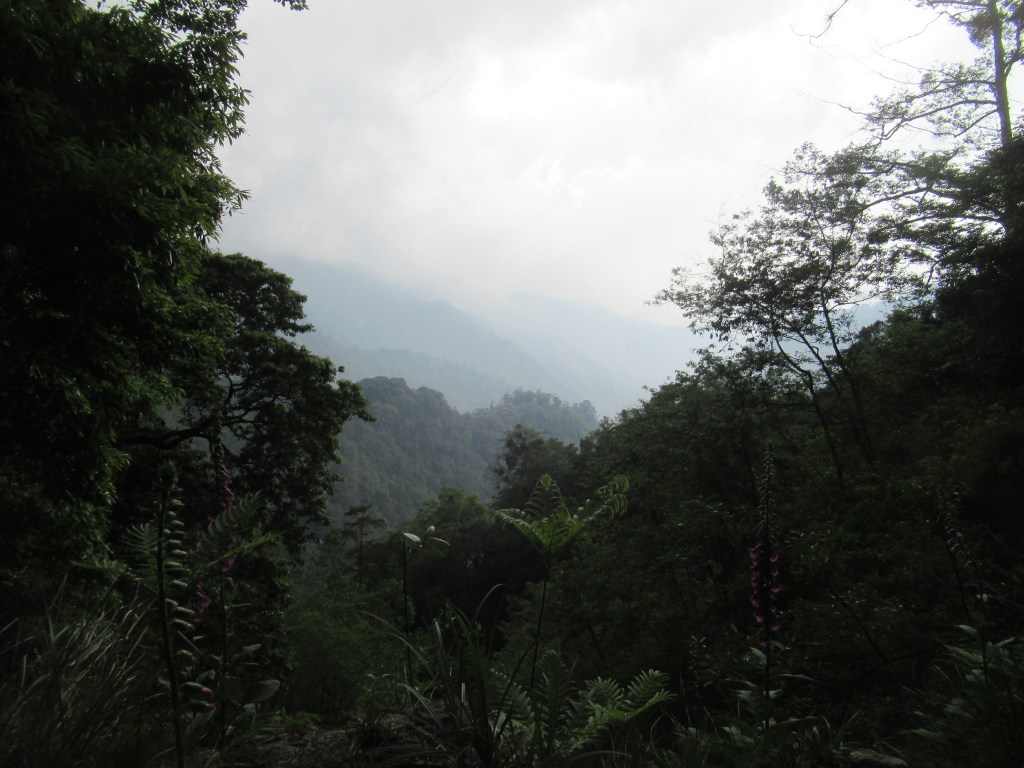
Another highlight of the morning was a return to a Taiwan Partridge spot for a member of the group who had missed it previously. This time we all got excellent views of this forest floor species, as well as finally seeing a female Swinhoe’s Pheasant, which must be one of the most attractive female pheasants.
On the way out of the park we stopped at a high altitude bridge to see a colony of Asian House Martins. This was a lifer for me following its recent split from the Common House Martin of Europe. While on the bridge we picked up a Grey-headed Woodpecker calling high in a tree on the hill above us. This is another woodpecker found all across Europe and Asia.
After driving back into the lowlands and eating lunch we continued on to Wushe for more mountain birding and more rain.
26th April 2024
Our hotel last night was owned by a sheep farm/tea plantation with a shop selling various sheep and tea products. Before breakfast we did a bit of birding around the farm (where the sheep graze amongst the tea bushes but apparently won’t eat them) and got good views of Brown-flanked Bush Warbler before driving off back into the mountains.

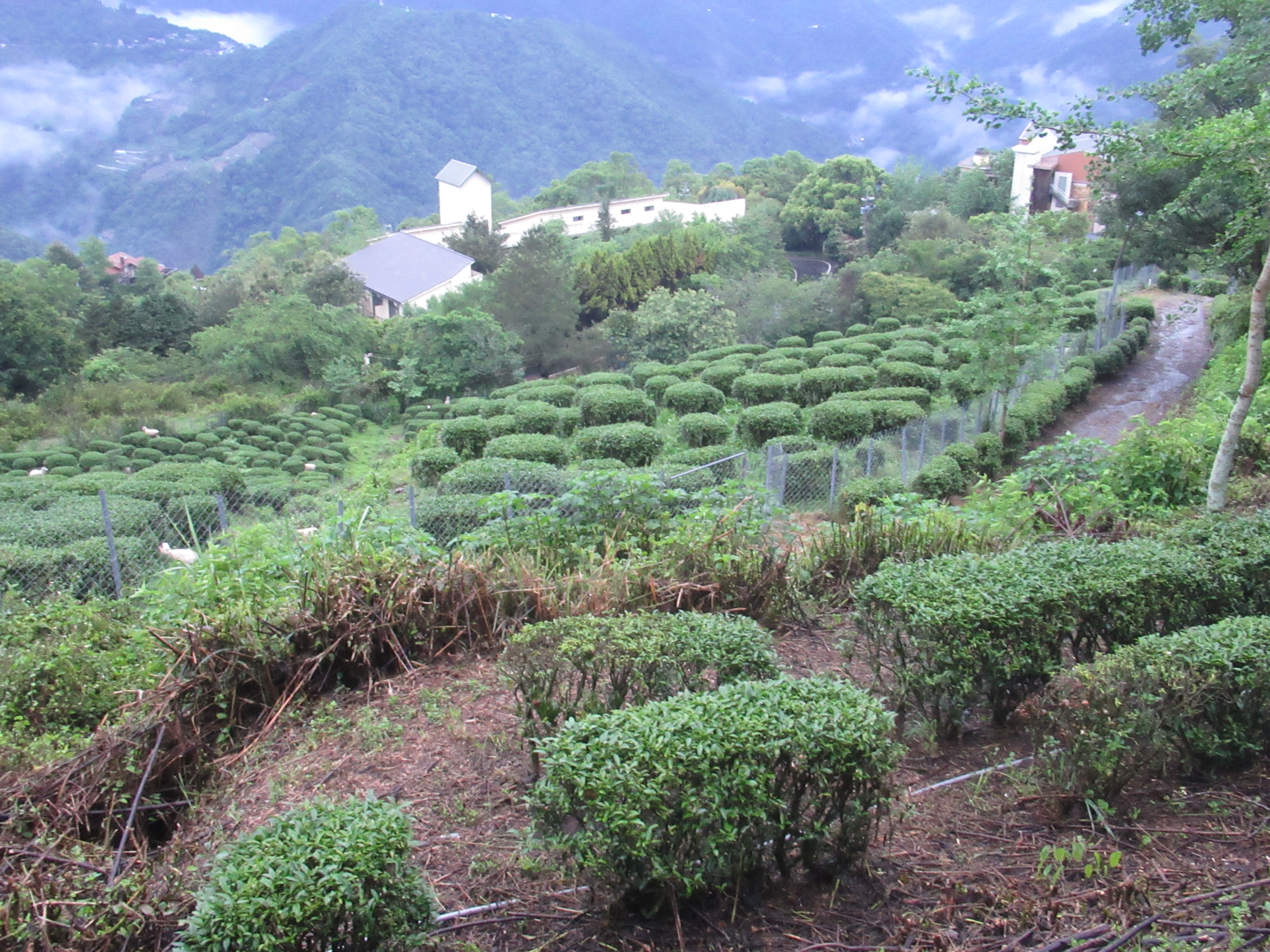
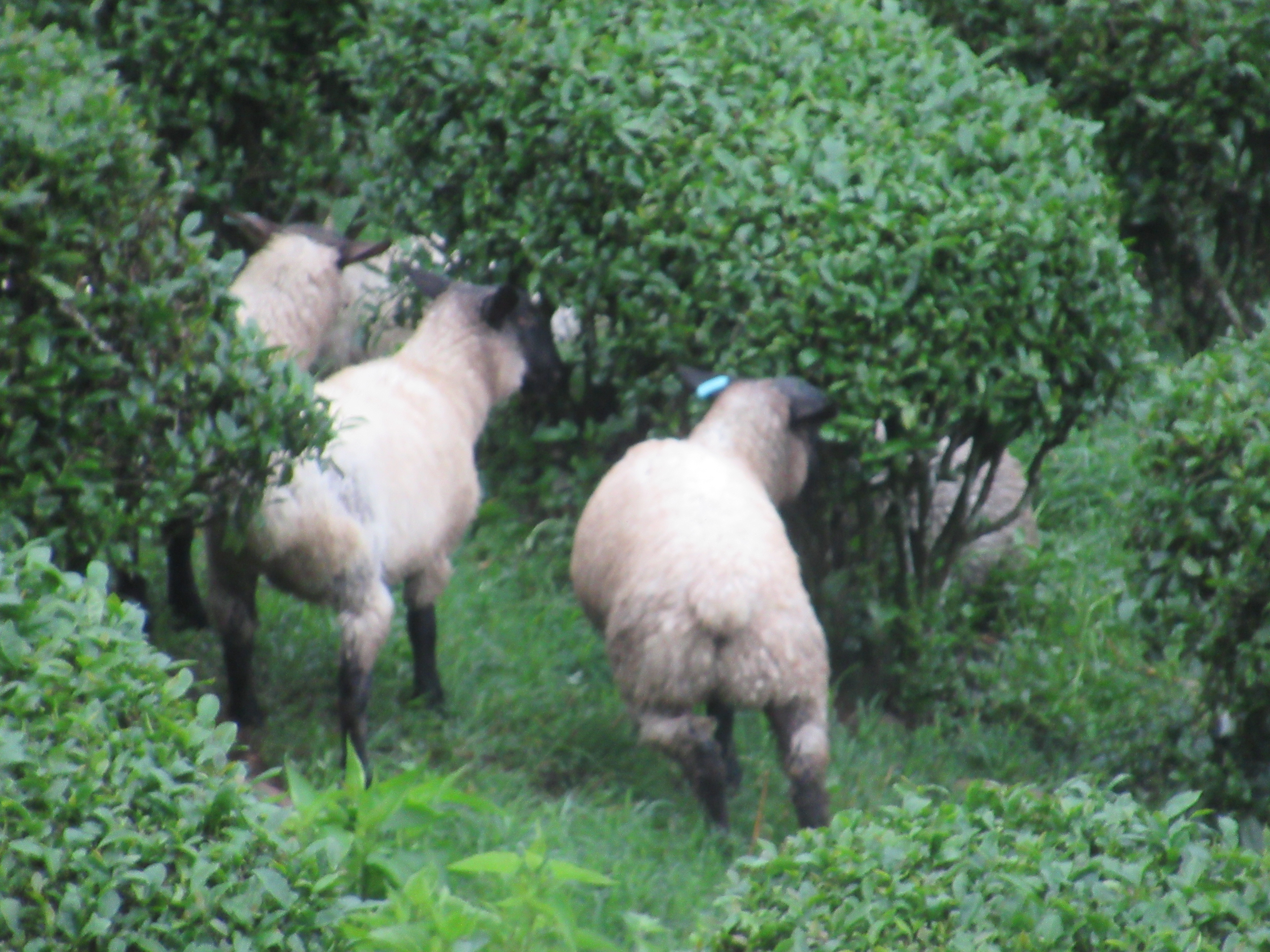
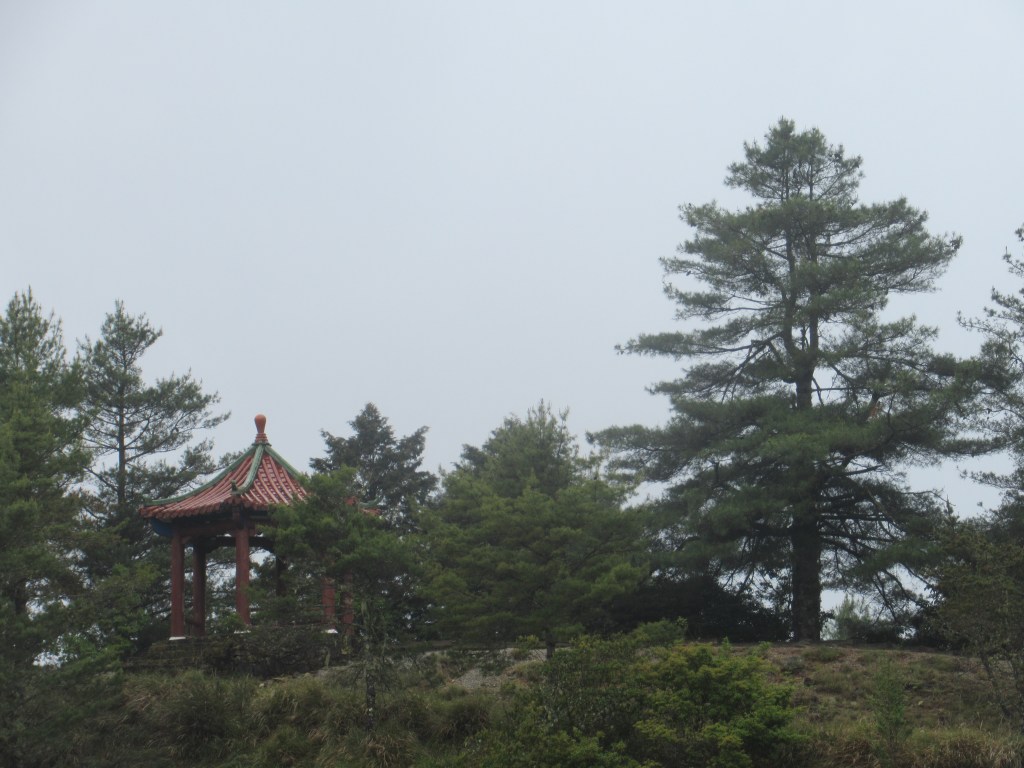
At Hehuan Mountain Dark Sky Park – 2725m (8940 feet) – we tried for ages to lure out an ultra-skulking Taiwan Shortwing. We could detect its movements in the foliage because it sang constantly, but it stayed frustratingly out of view. A few days later we managed to get better views of this species, although there isn’t really much to see – a little brown job with a white eyebrow that really makes you work for even the briefest of views.
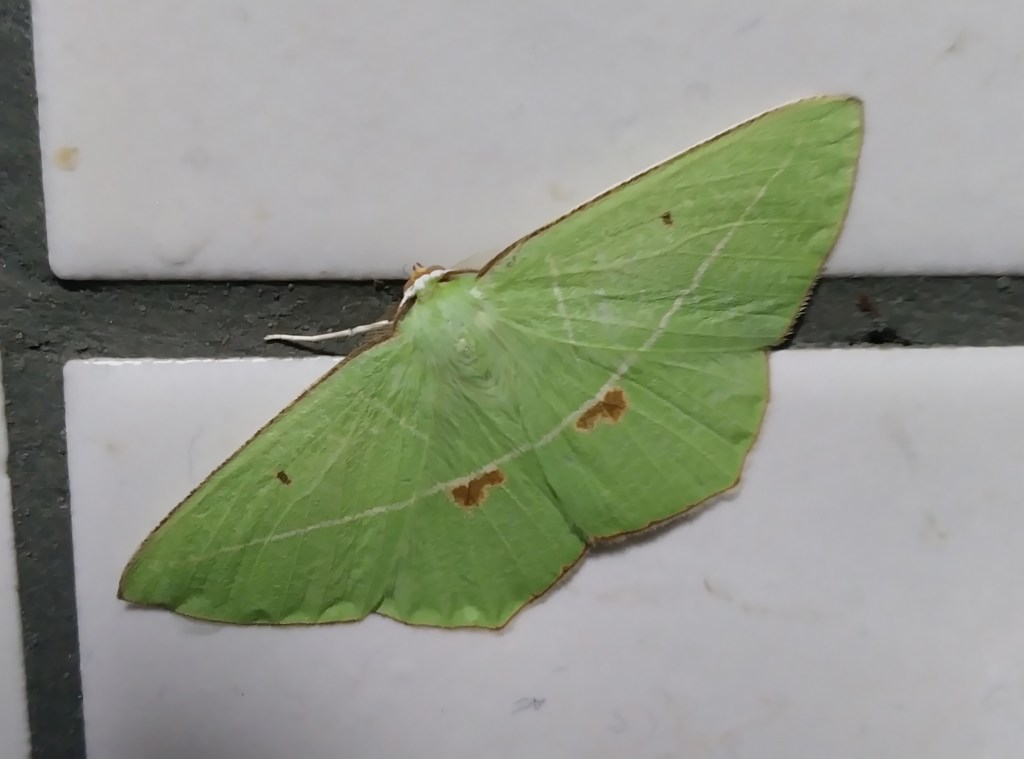
We also got inadequate views of three Golden Parrotbills that dived straight into a patch of bamboo and refused to emerge again. These are much more attractive birds than the shortwing and fortunately we got excellent views of this species towards the end of the tour.
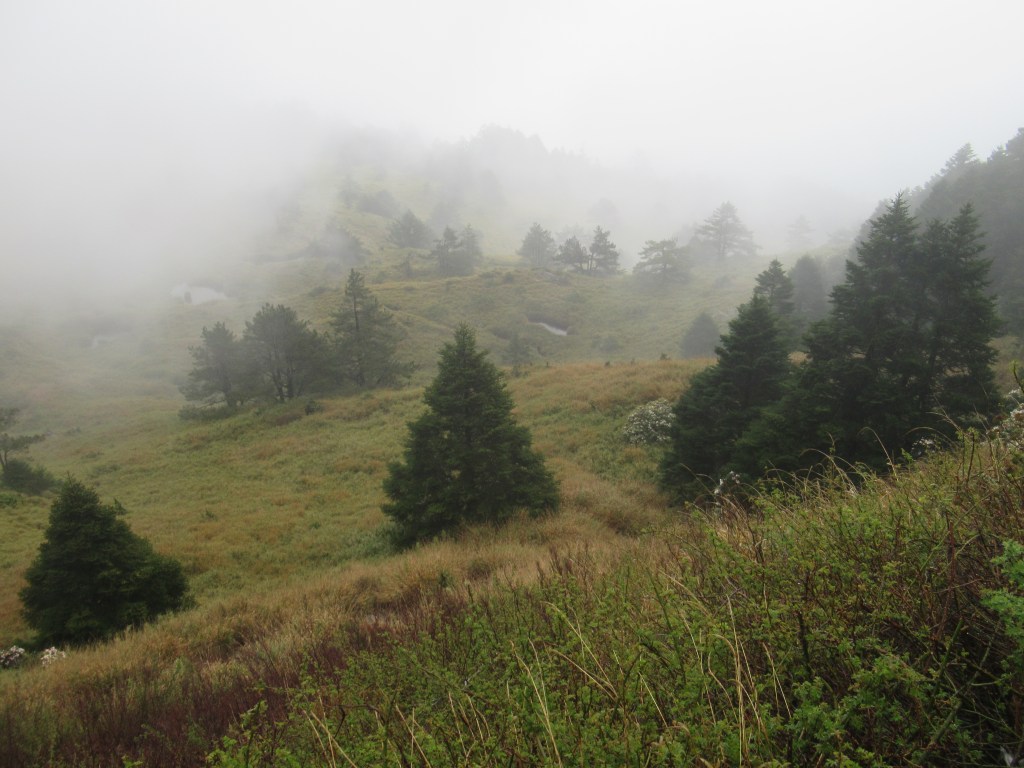
Driving up to a misty Wuling Peak car park at 3275m (10745 feet) we had a female Taiwan Rosefinch hopping around our feet and eating crumbs, and nearby we had a couple of the more colourful males and another female.
And so ended our time in the hills of Dasyueshan and Wushe, as we drove back down to sea level to bird wetlands, the coast, and a tropical island in part two.

 Vole Explosion
Leave a comment