DAY ONE – 18th APRIL 2024
Taiwan is often in the news these days. Usually because of the ongoing friction with China, but recently also due to the magnitude 7.4 earthquake that hit the city of Hualien on 3rd April 2024. This was Taiwan’s strongest earthquake for twenty-five years and, when I first heard the news, I thought my planned trip to the island would be jeopardised. In the end it went ahead with only a minor tweak to the itinerary – nothing at all compared to the plight of the 18 people killed and over a thousand injured.
My Air China flight from London cost a bargain-bucket price of £450 and came with a free six hour wait in Shanghai’s Pudong Airport, with no wi-fi and very limited food options.
From a sunny Chinese mainland, I arrived early afternoon into a cloudy and humid Taipei, under a sky that threatened to rain at any moment. An efficient and easy-to-use express train whisked me from Taoyuan International Airport, through lush, forested hills, and into the city centre where, with a bit of effort, I managed to navigate my way out of the vast and labyrinthine Main Station.
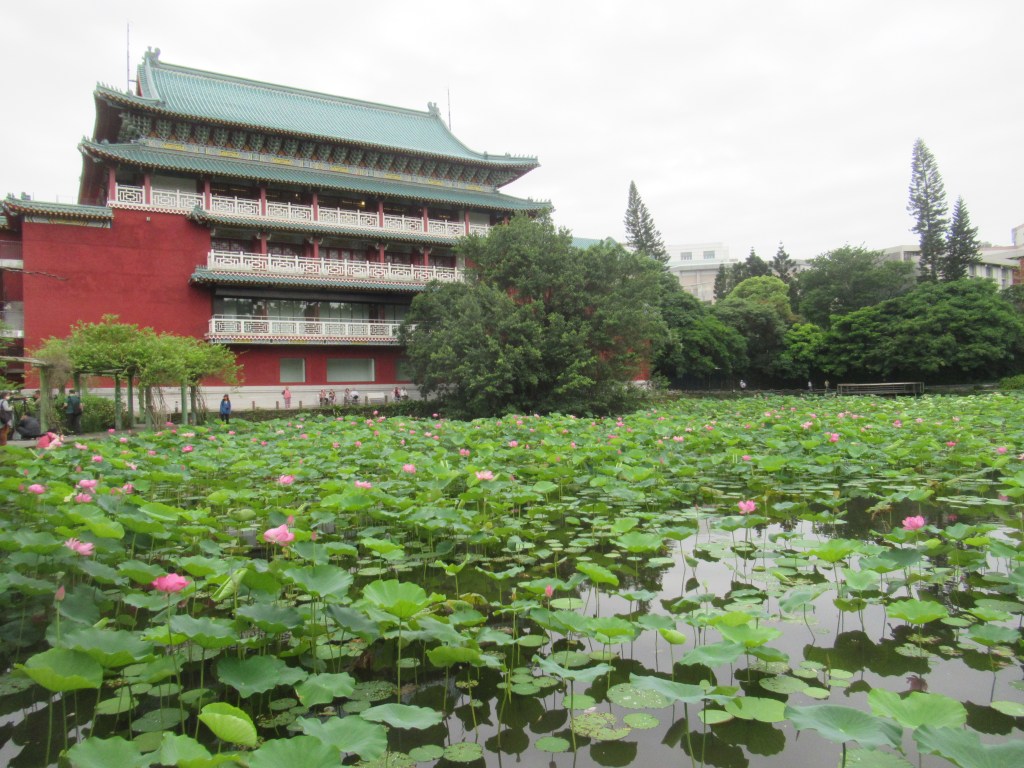
Once I was checked into my hotel, I had a couple of hours of daylight left so, despite my fatigue, I went out to explore some of the city, starting with the nearby Taipei Botanical Gardens. My main reason for going there was to find a strange bird for which the gardens have become well known. The Malayan Night Heron is found in much of South-East Asia but is a mysterious, almost mythical bird that skulks in deep forests and can be fiendishly difficult to see. For reasons nobody really understands, the herons in Taipei Botanical Gardens (and other parks in Taiwan) behave differently and can be seen boldly swaggering around like they own the place and paying no regard to the humans walking by only a couple of metres away. Sure enough, it didn’t take me long to find a couple of these oddities strutting their weird stuff out in the open amongst the park’s numerous post-work visitors.
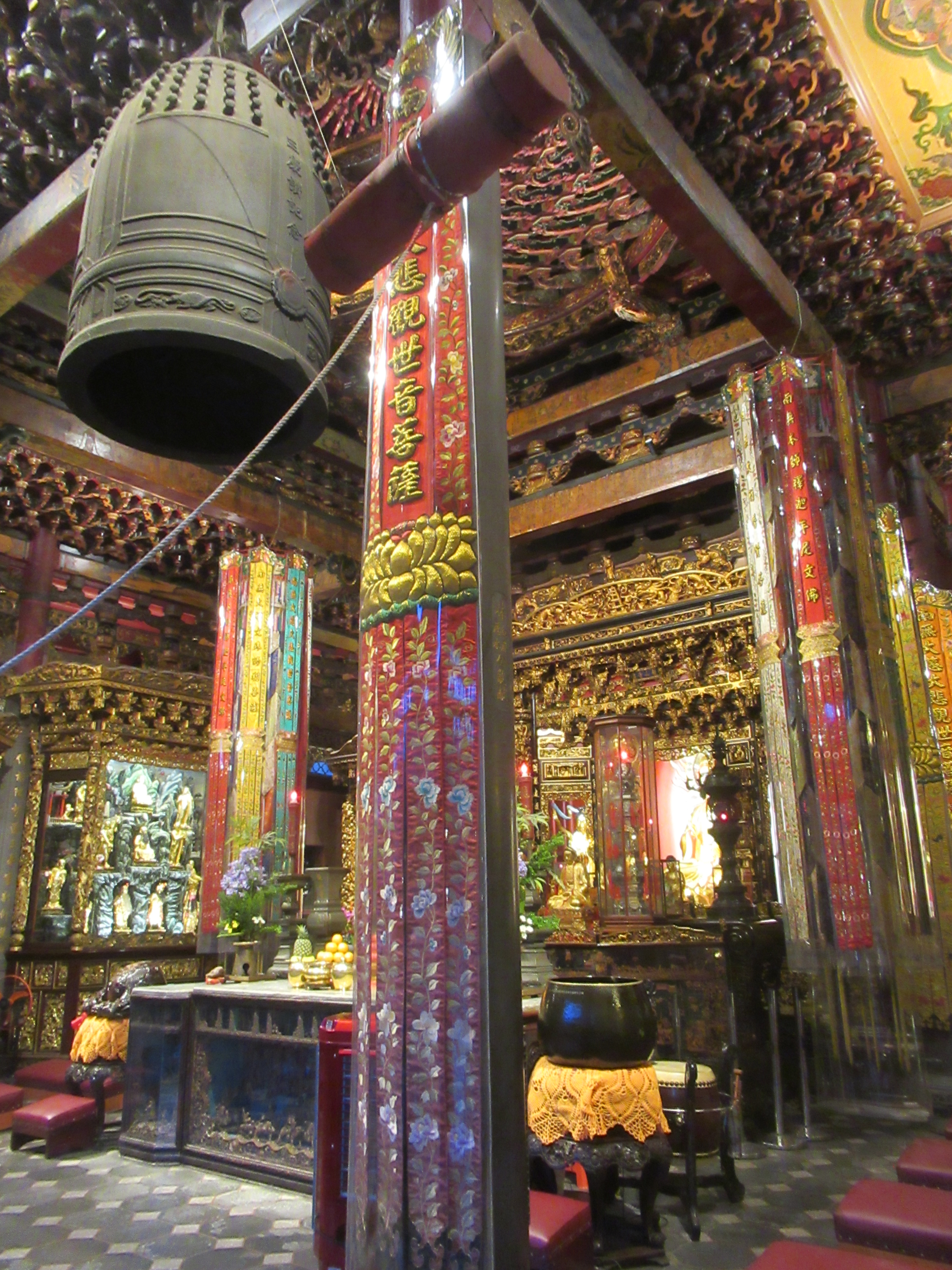
Towards dusk I walked over to Longshan Temple via Bopiliao Old Street – a short street of newly-renovated historic shop houses. First built in 1738, Longshan Temple is Taipei’s oldest and most important. In 1957 it was partially rebuilt following damage caused by allied bombing of the occupying Japanese during World War II. This Buddhist temple stays open late and, as dusk fell, the riotously colourful building was lit up beautifully, and was busy and vibrant with worshipers and visitors. The courtyard outside features a man-made waterfall and a calming pond filled with koi carp.


After dark I walked slowly back to the hotel through the night markets in Guangzhou Street and Huaxi Street, where an abundance of interesting snacks was on sale, alongside foot massages – wrapping feet in cling film seemed to be a popular treatment.
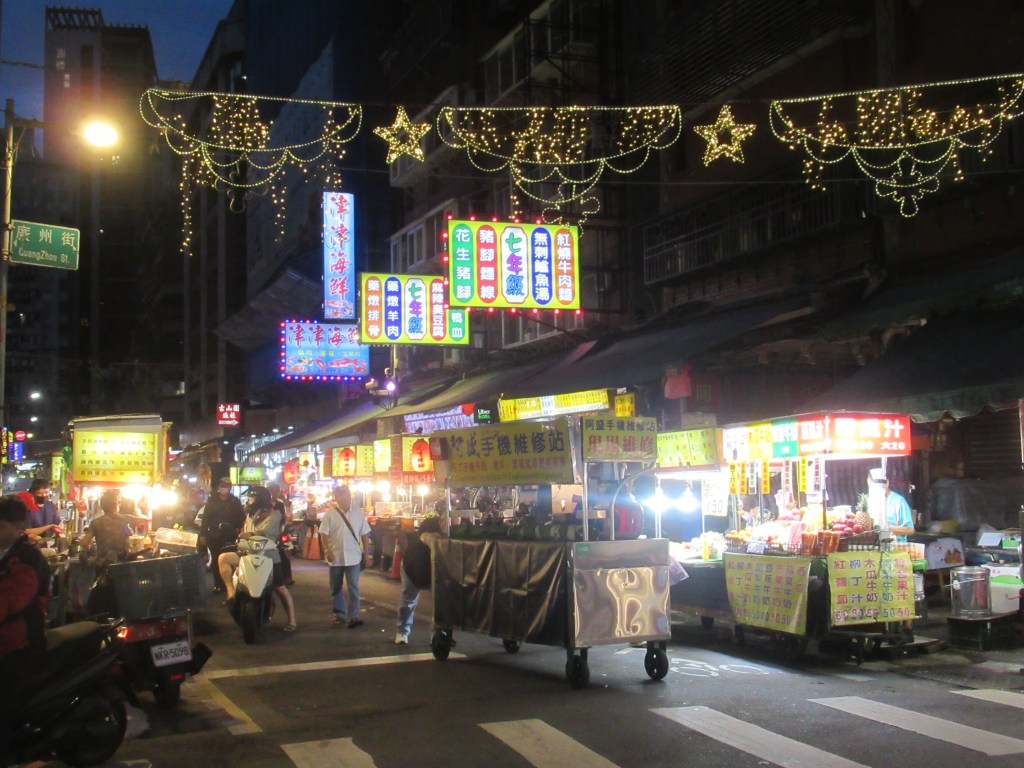
Along the way I visited another historic temple – the much smaller Qingshan Temple, built in 1854, before arriving back at the hotel.
DAY TWO – 19th APRIL 2024
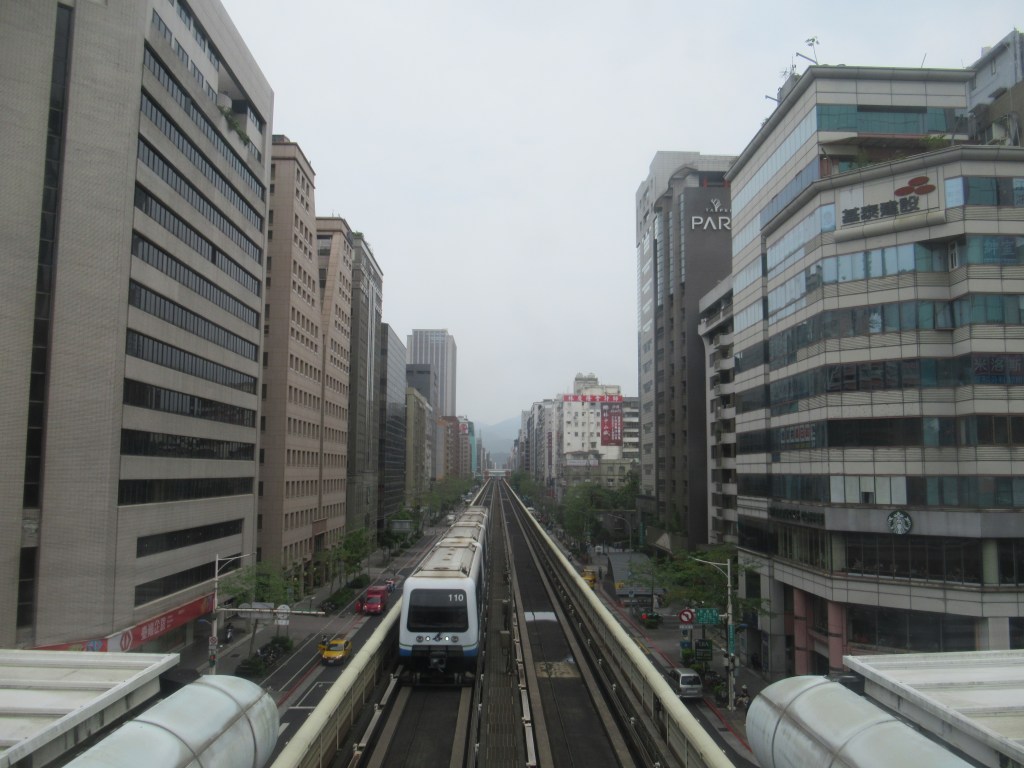
This morning I tried out Taipei’s extensive metro system. It turned out to be very easy to use and, at Taipei Main Station, the arrival of the train is heralded by a melancholy little tune played over the tannoy. With the metro reaching most parts of the city, I thankfully never had to use Taipei’s bewildering bus network.
I was heading to the outskirts of the city to take the cable car into the hills to the district of Maokong. I opted for one of the glass-bottomed ‘Crystal Cabins’, which required a slightly longer queuing time. In the end I only waited half an hour, which wasn’t too bad – I had read that the wait can be as long as three hours at the busiest times! To be honest though, the glass bottom doesn’t really add much to the experience, providing none of the expected fear and excitement.
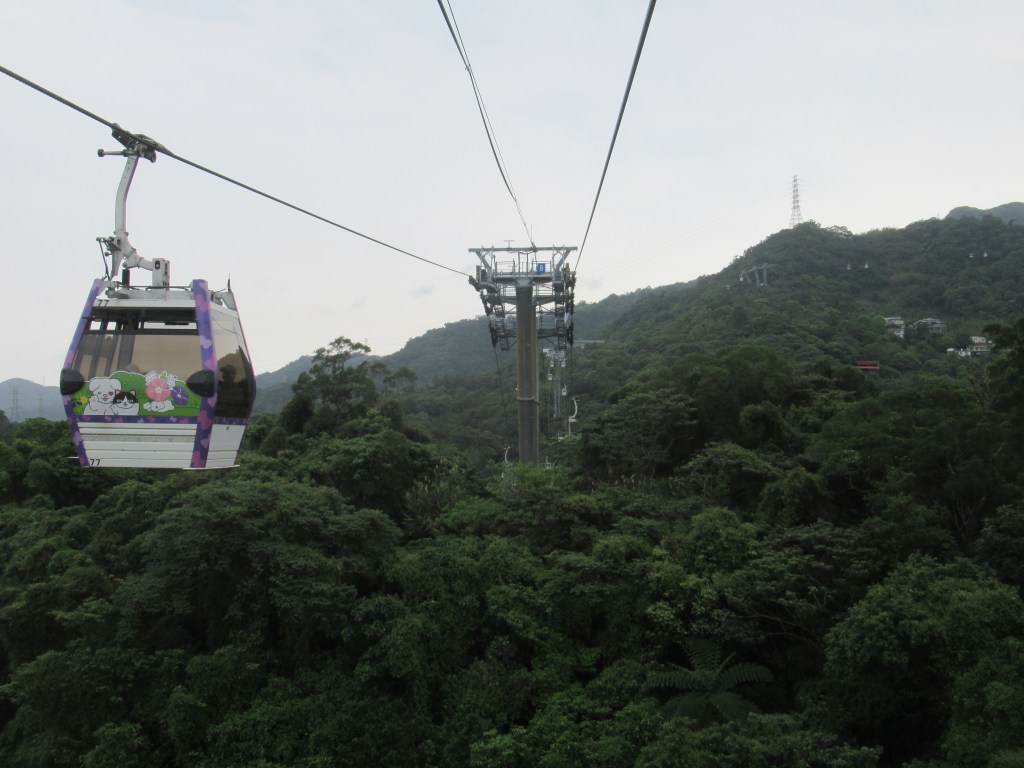
The half hour ride up to Maokong was already enjoyable enough without such extra thrills – high above thickly forested hills and valleys, with increasingly spectacular views of the city retreating below me. There was a brief rain shower on the way up but, by the time I reached the last of four stops, the sun had come out.
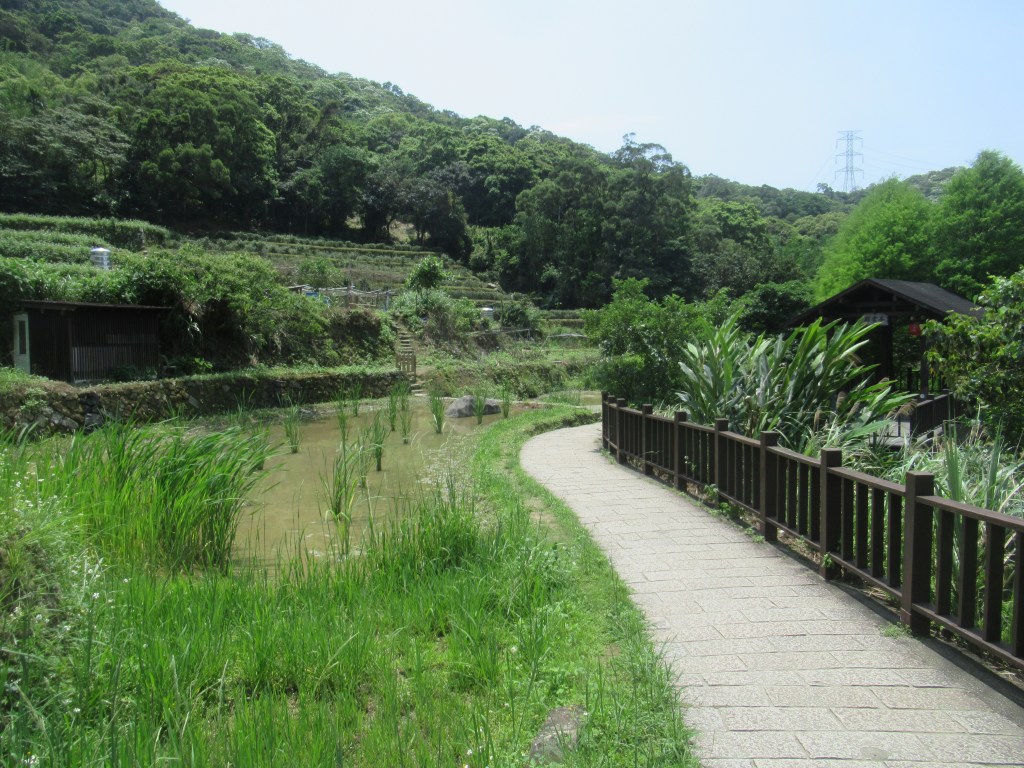
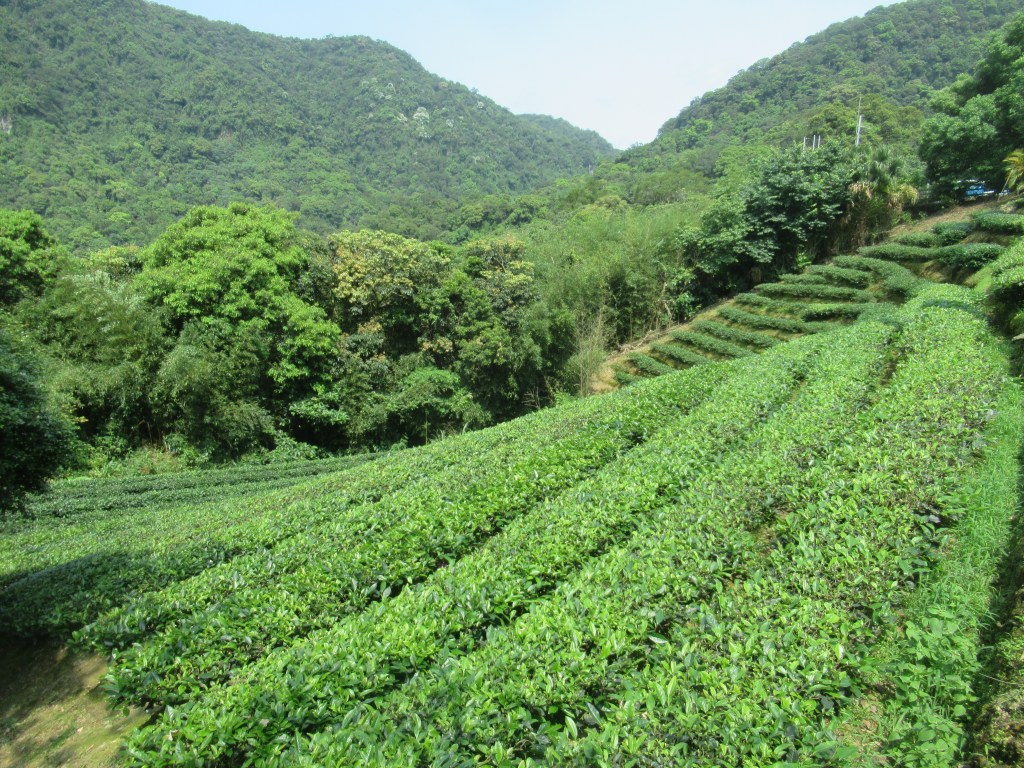
I ate a large filled bao from the café at the top then set off to explore the network of short hiking trails around Maokong. A winding stone path passed through tiny, scenic farms, and then a quiet road looped around and brought me back to where I started. Continuing along this road brought me to Tian En Temple and then to a small museum at the Taipei Tea Promotion Centre. This is tea growing country and I passed several small tea plantations and many tea houses, mostly catering to tourists.
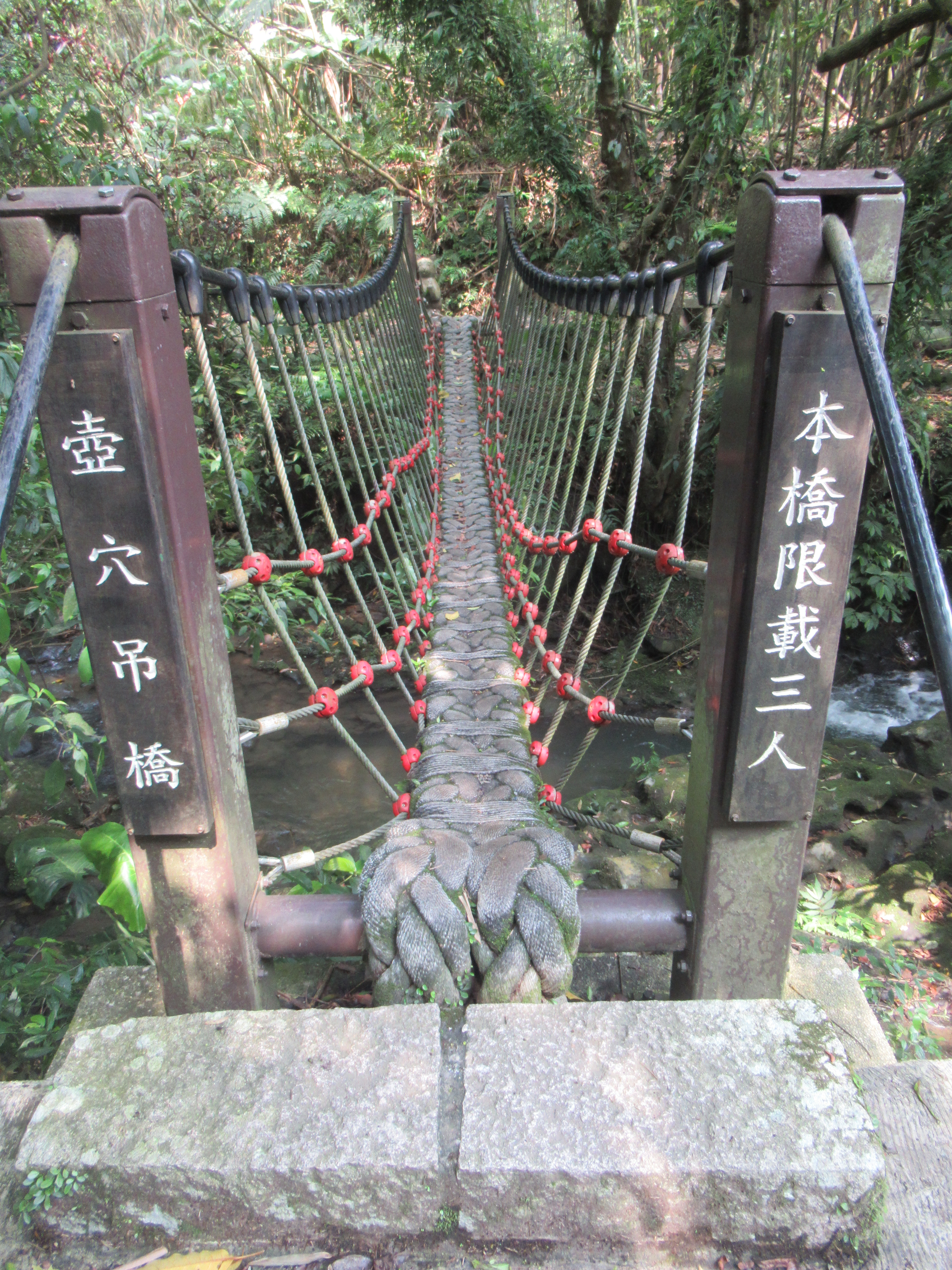
I then took the Pot Hole Path down into a forested valley. This isn’t the result of council budget cuts but the work of a stream flowing through limestone in the valley bottom and eroding numerous ‘potholes’ in the rock.
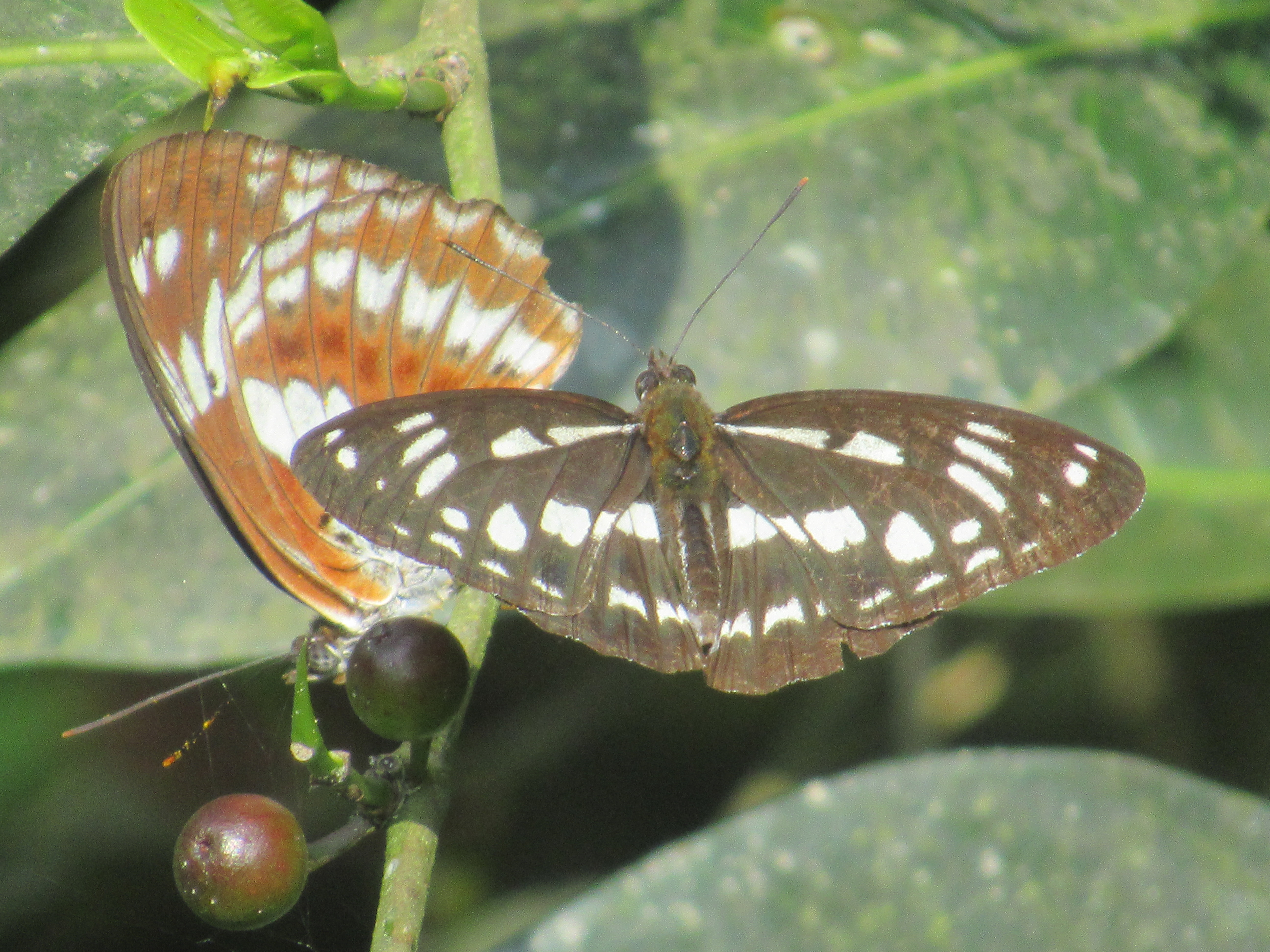


I spent an idyllic day, in perfect sunny weather, wandering through a beautiful landscape filled with scenic views, abundant flowers, singing birds, colourful butterflies and dragonflies, and scuttling lizards. In the forest a troop of endemic Formosan Macaques melted away into the trees at my approach, with the alpha male waiting behind and vocalising at me until all the females and young had disappeared safely. These monkeys are seemingly much shyer than the bold macaques found hanging around temples and urban areas elsewhere in Asia.
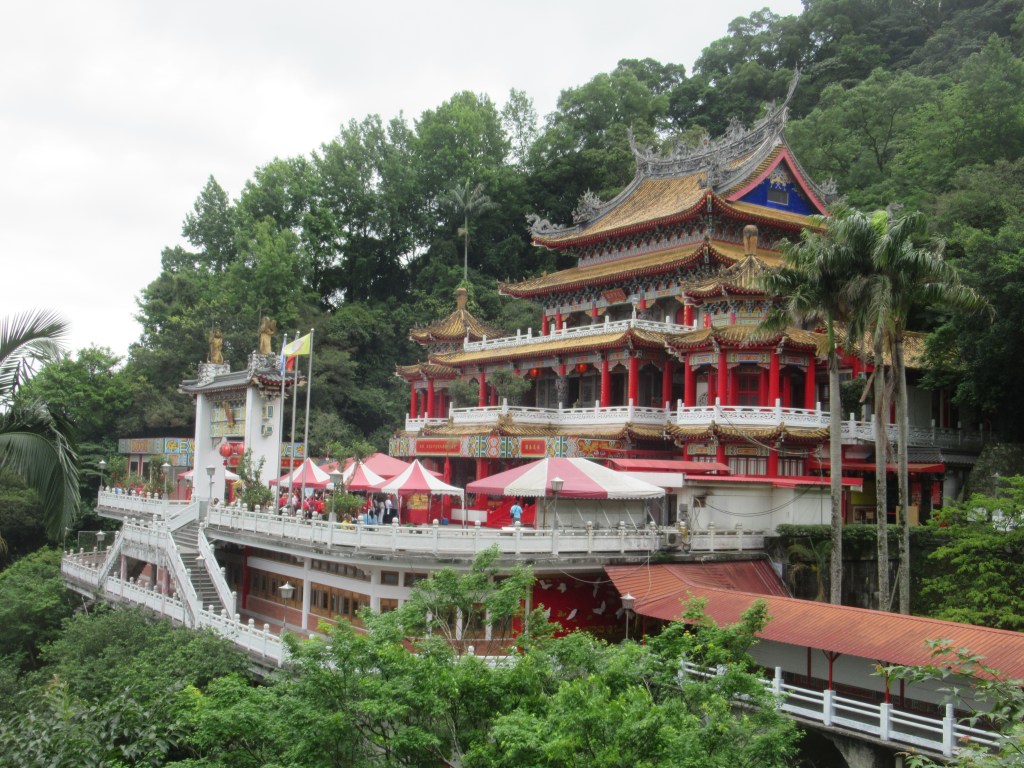
A short but tiring stone path led steeply up through the forest to the sprawling Zhinan Temple complex. There was another cable car station here, but I ended up walking a long, straight path downhill without really knowing where I was going. Eventually I accepted that I wouldn’t have the energy to walk back up, so I continued downhill and thankfully arrived in the suburbs of Taipei. It was only a short walk to another cable car station, and I was able to ride a gondola back into the city.
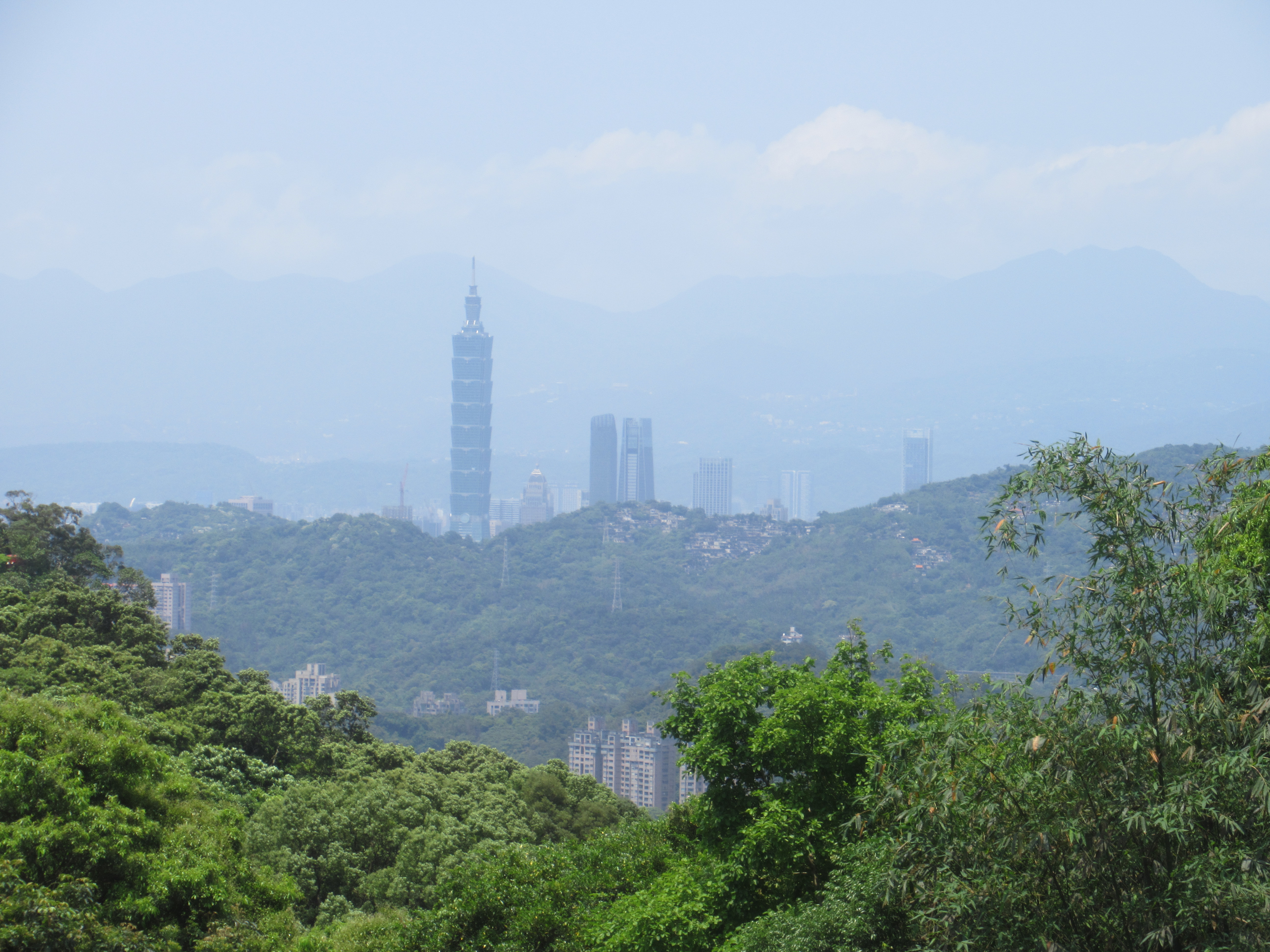
By the time I emerged it had started raining and I began to re-think my plan to go up Taipei 101 – the tall tower that has become a symbol of the city. I wanted to go up before dusk to get views over the city both in daylight and at night, but the views would now be severely restricted by the rain and low cloud. I decided to try anyway, so made my way there on the metro and, by the time I had bought a ticket in the Taipei 101 shopping mall, the rain had eased off and all but the most distant views of the surrounding hills was visible.
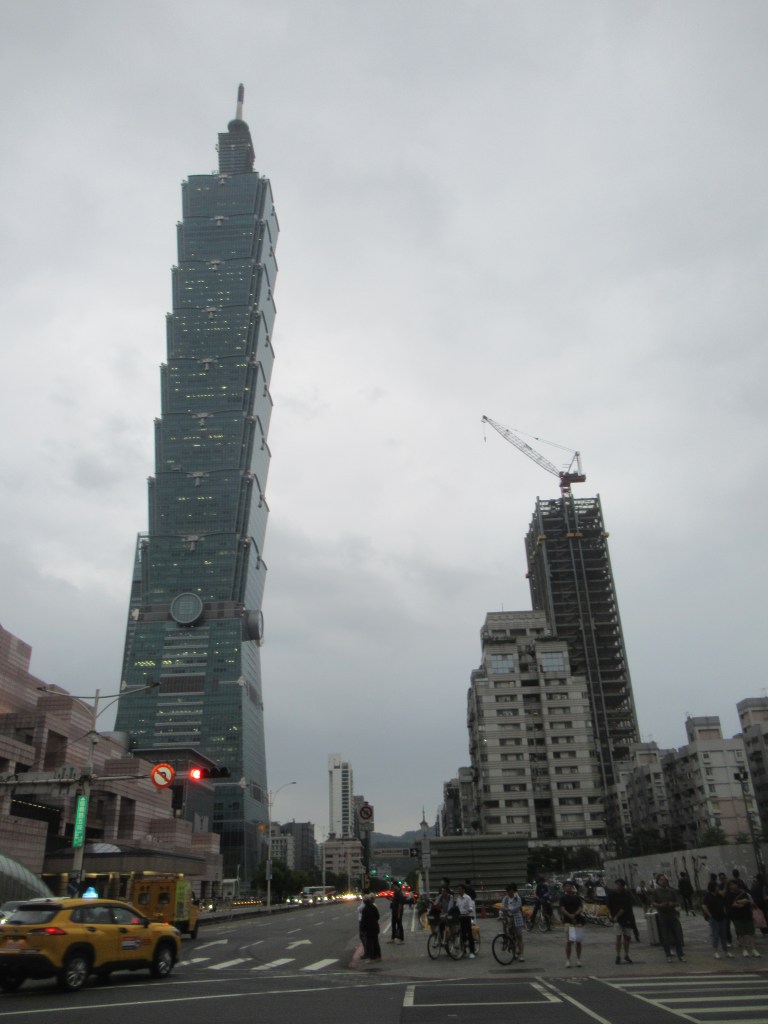
The lift to the top is the World’s fastest elevator – climbing 89 floors in just 37 seconds. When it was built in 2003, Taipei 101 was the World’s tallest building until Dubai’s Burj Khalifa was built six years later.
The viewing gallery is large and takes up an entire floor, with views over the city from all four sides. You can walk up two more stories to an exhibition on floor 91. This is also where you can access the outdoor viewing gallery, which unfortunately was closed on the day I visited due to the weather.
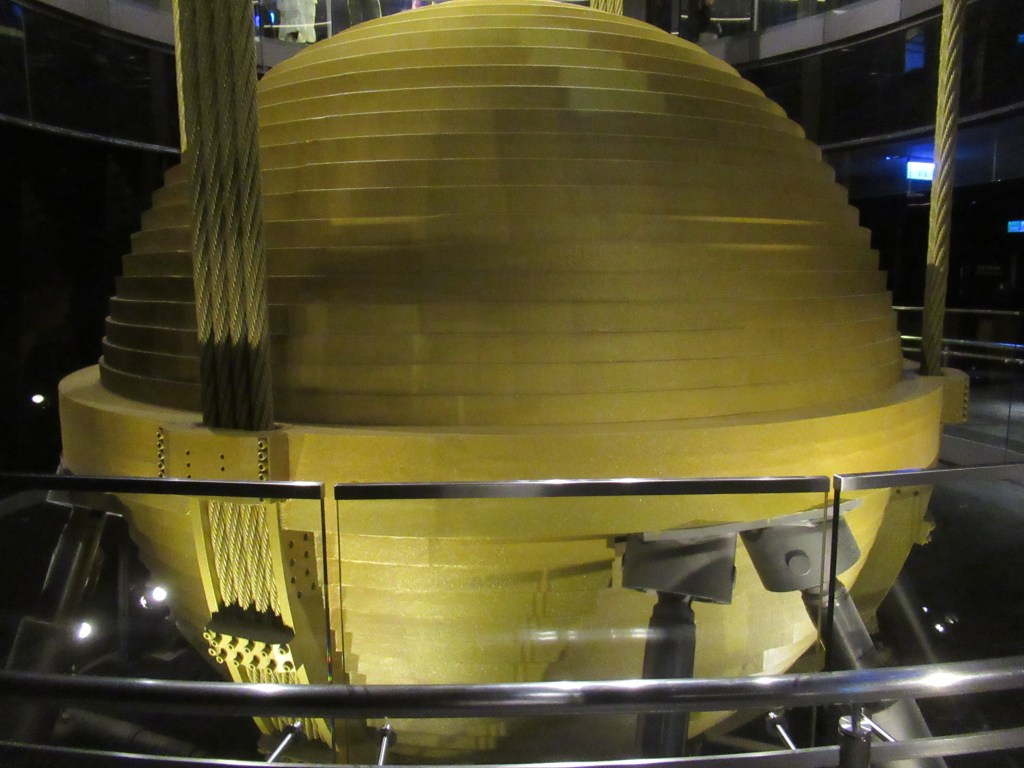
Housed in the interior of the top five or six floors is the damper ball – a huge golden ball weighing 660 tonnes which stabilises the building during typhoons and earthquakes. There is a display explaining how this works and, from what I could understand, it had something to do with either physics or magic (which to my limited knowledge are more or less the same thing). Either way, I watched some slightly hair-raising footage of people at the top of the tower during an earth tremor: terrifying!
I spent a long time at the top of the tower, circling from window to window, mesmerised by the spectacle of the city lighting up as night fell.
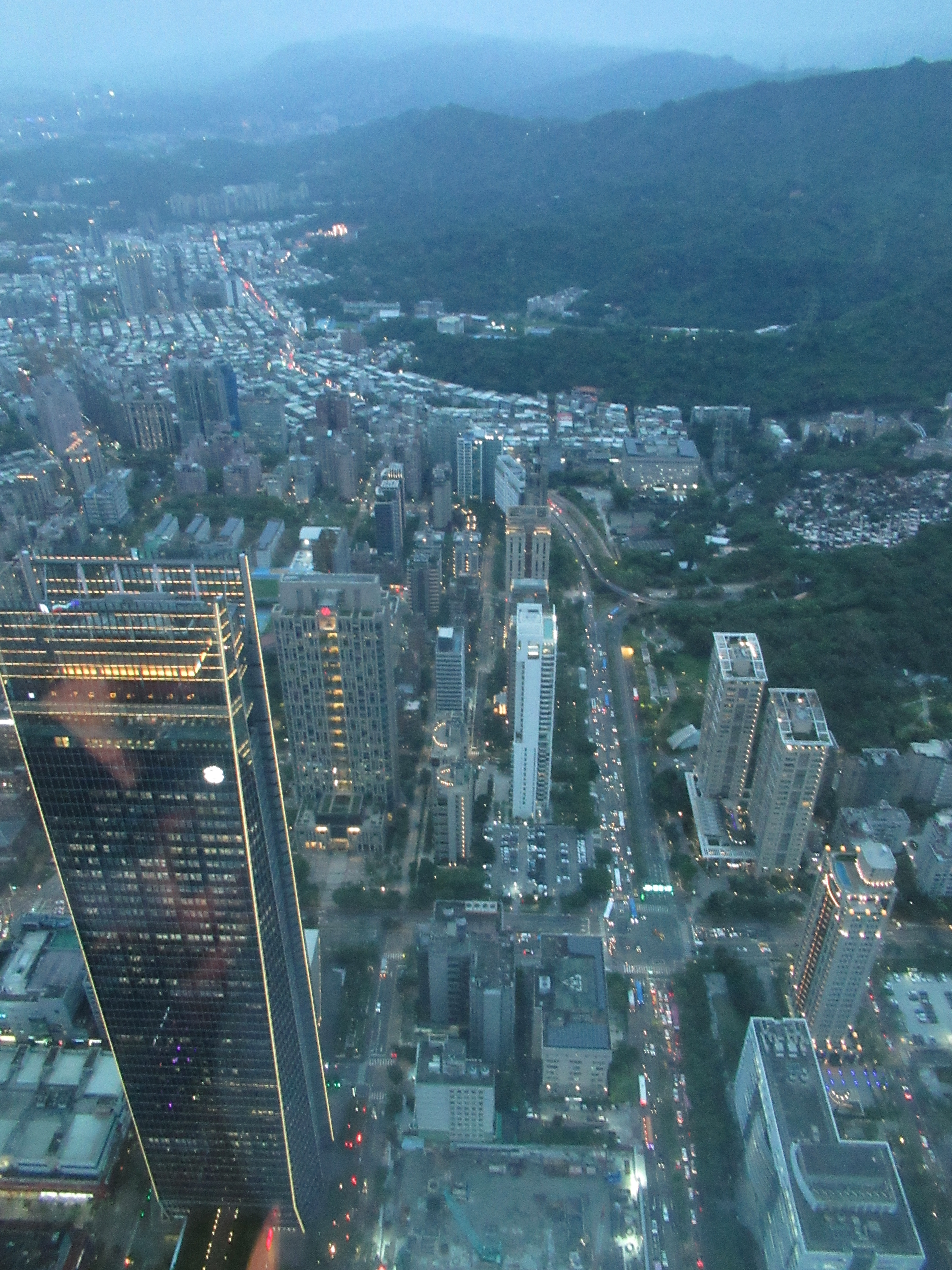
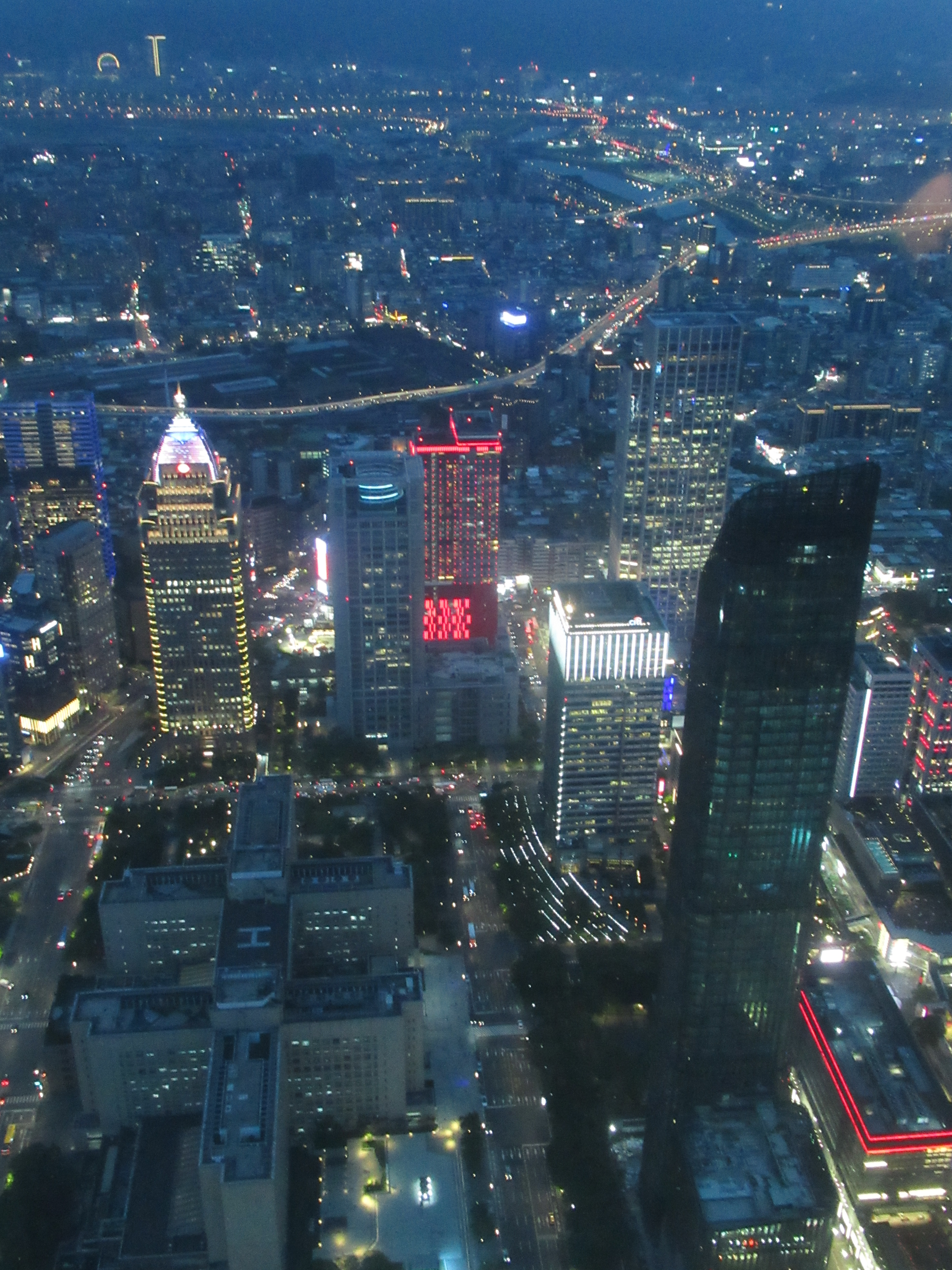
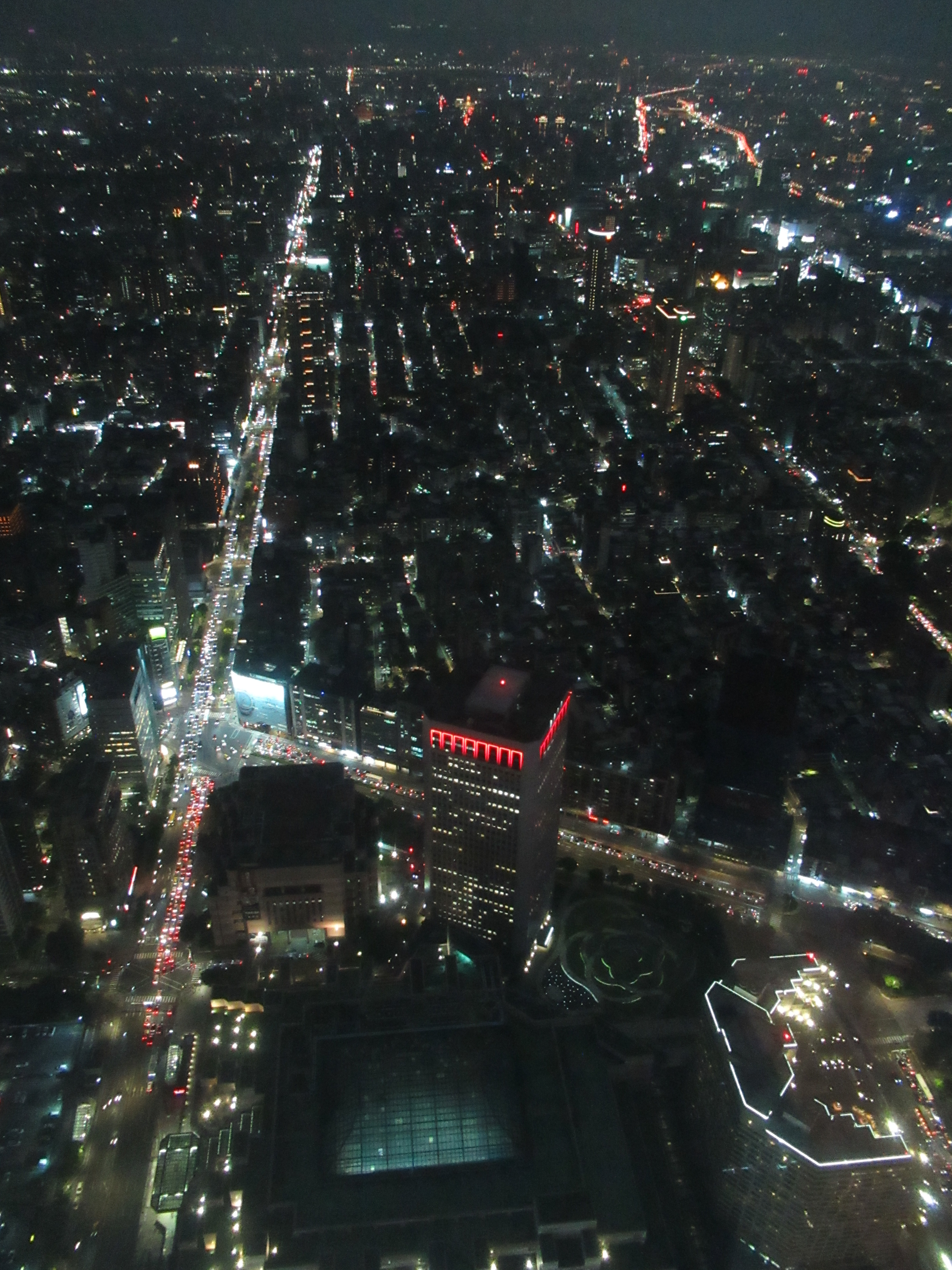
For dinner I descended to the mall’s food court and had a large noodle hot pot containing dumplings, pork slices, tofu, mushrooms, cabbage, onions and cucumber, plus a few things I couldn’t put a name to but were delicious anyway. My clunky chopstick technique seemed to provide some amusement to the diners at the next table.
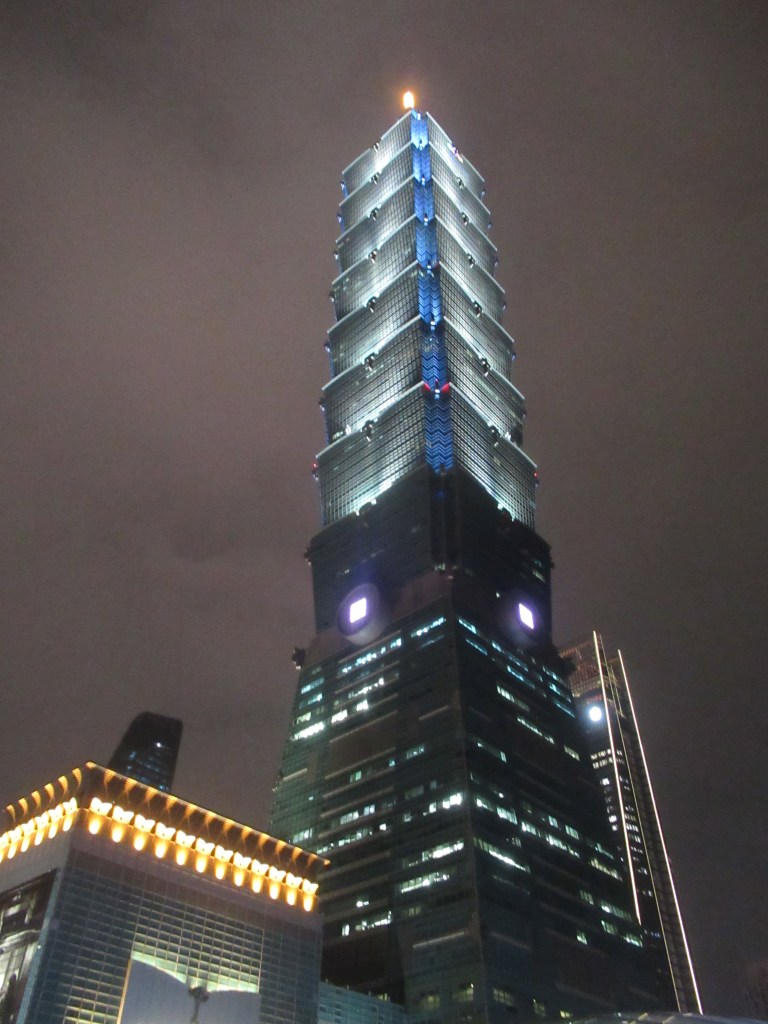
So, a day for reaching new heights then – first rising above the city in a crystal gondola, then ending the day at the top of the 11th tallest building in the World.
DAY THREE – 20th APRIL 2024
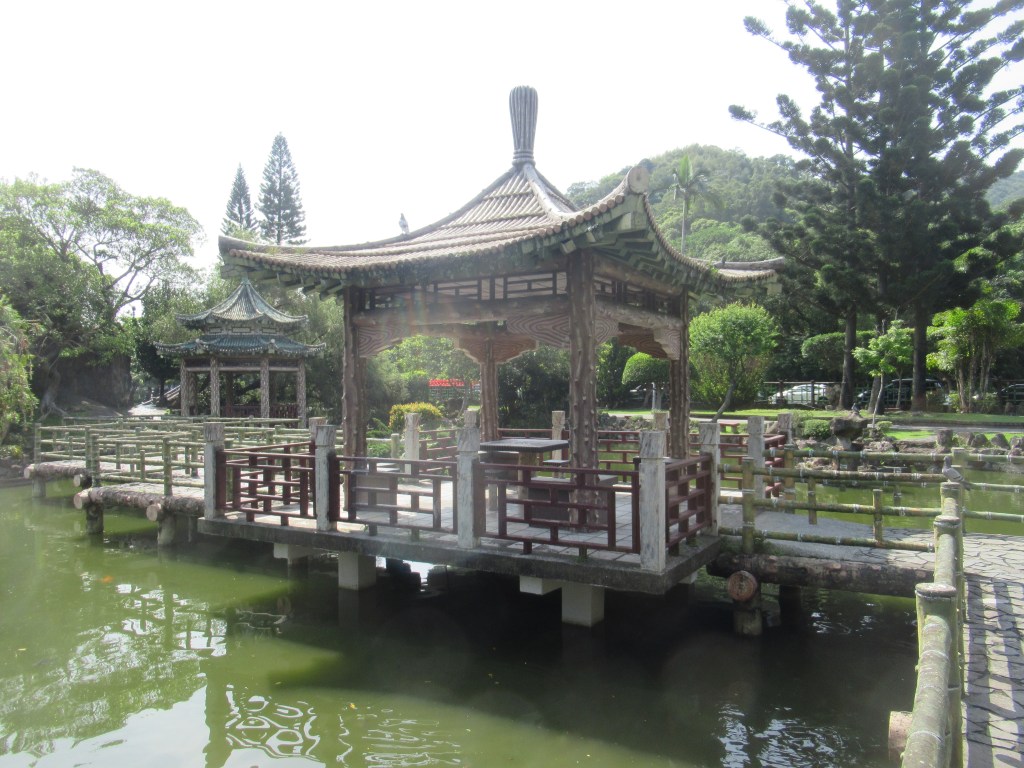
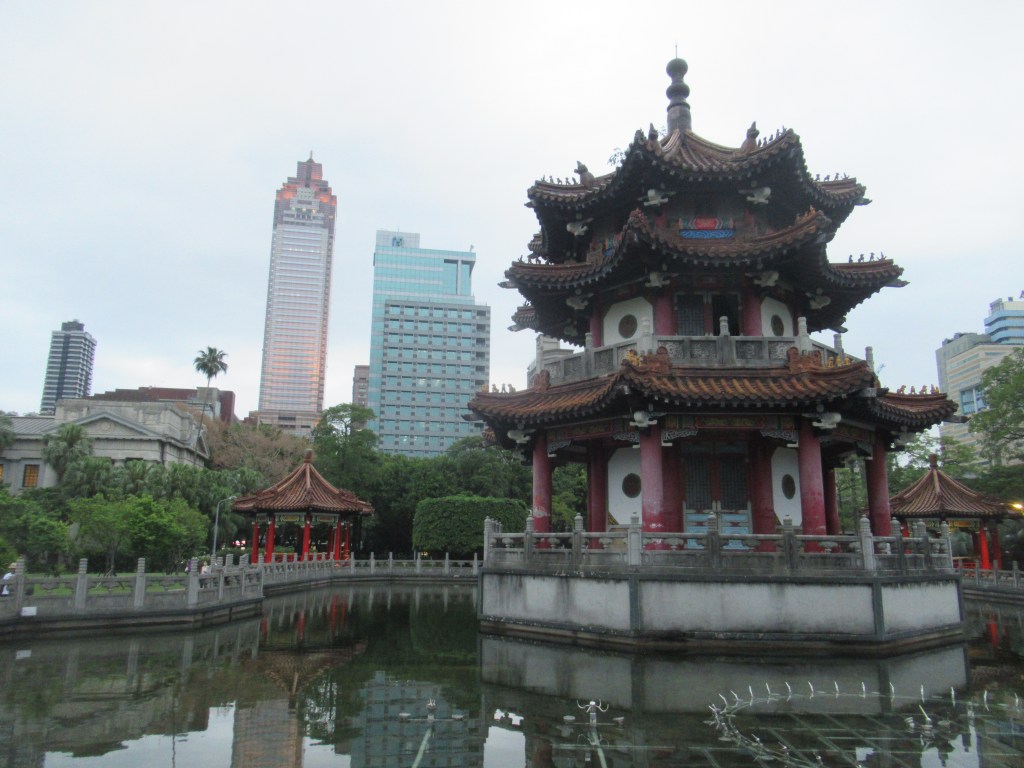
It was my final full day in Taipei and first on my sightseeing itinerary was the National Palace Museum. On the way there I walked through Shuangxi Park, a small but beautifully landscaped space with scaled-down, man-made versions of natural features – a lake, a cave, a mountain – all scattered with bridges and pagodas.
The National Palace Museum is built on a much grander scale and houses probably the best collection of Chinese art treasures anywhere in the World. It has more than 700,000 items in its collection, spanning 8000 years of Chinese history from the Neolithic to the modern day. The collection was originally housed in Beijing’s Forbidden City over on the mainland. In the early 1930s most of the treasures were packed up and moved to avoid capture by the advancing Imperial Japanese Army. After Japan’s defeat in World War II, the Chinese civil war saw the collection evacuated to Taiwan following the Communist victory.
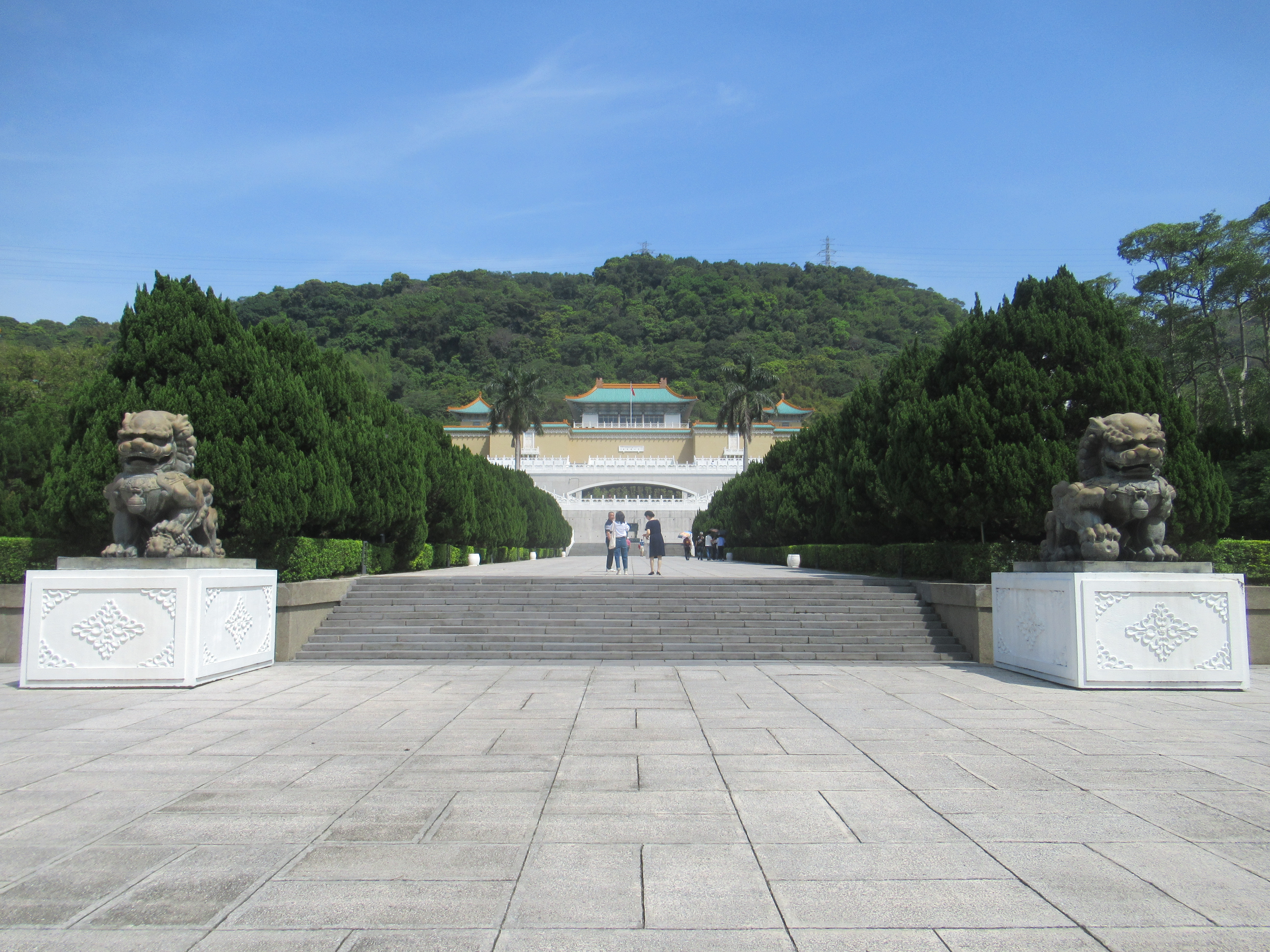
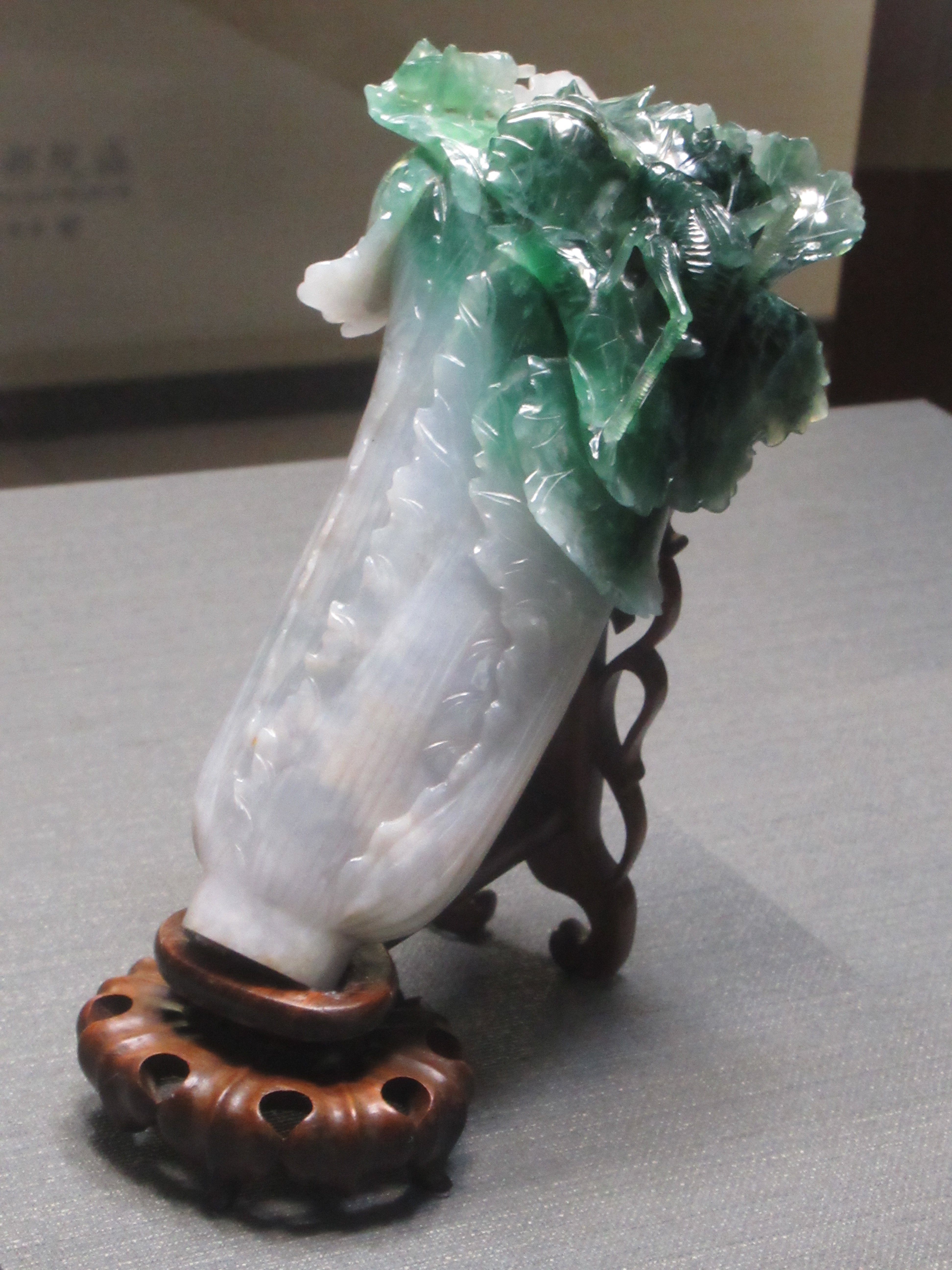
As you would expect, the collection is very impressive and a visit here would be greatly enhanced by some knowledge of Chinese history – something I don’t have – but all the same, it was nice to spend a morning wandering the rooms filled with exquisite beauty and craftsmanship. On a more prosaic note, the air conditioning was a blessing on this hot and humid day, but the many large tour groups made it hard to get a close view of some exhibits.
After a short walk along a riverside park I arrived at Zishanyan, a wooded hill surrounded by suburban streets. Boardwalks and steps formed a trail around the whole area, giving access to some interesting birdlife and, inevitably, an attractive temple. I spent a relaxing couple of hours wandering around here and appreciating the shade of the trees.

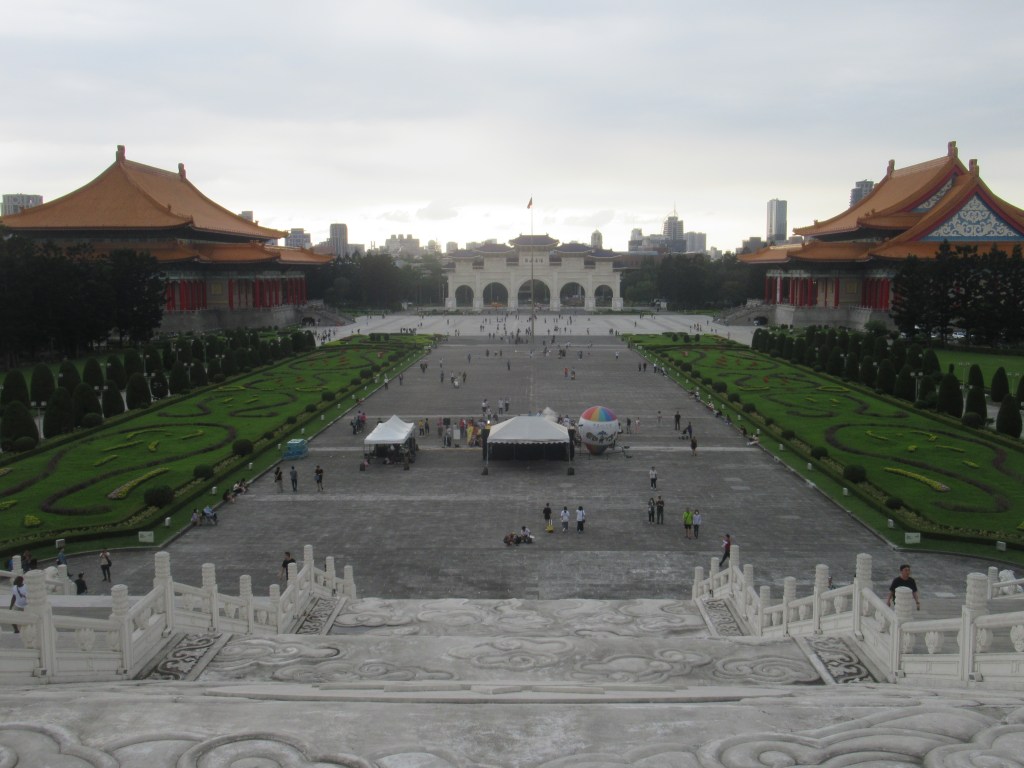
After lunch I took the metro to Liberty Square. This is a vast open space with the Liberty Square Arch at one end and two huge, identical buildings facing each other on either side. These are the National Theatre and the National Concert Hall, and they look very impressive.
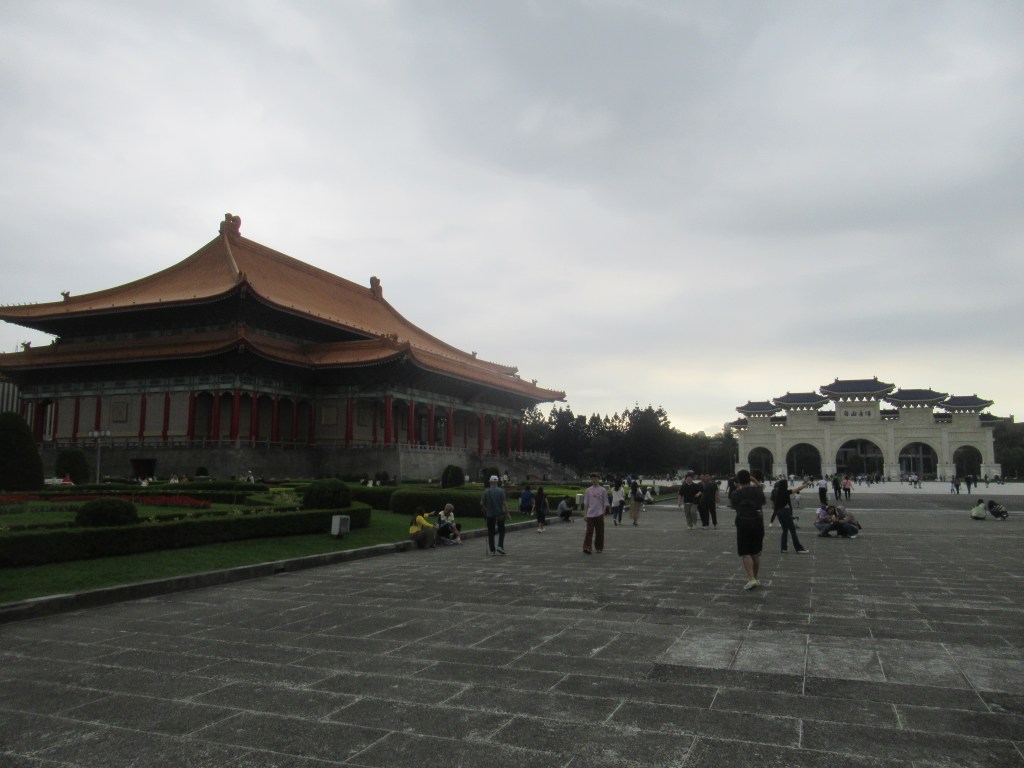
The most imposing building on the square is the Chiang Kai-shek Memorial hall, containing a massive seated statue of Chiang Kai-shek and, in the floors below, a museum of his life. Chiang Kai-shek led the resistance against the Japanese occupation of China before World War II, and later, as President of the Republic of China, he fought the civil war against the Chinese Communist Party. When the Communists won, he evacuated to Taiwan where he remained President until his death in 1975. To this day Taiwan is still officially known as the Republic of China, as shown on my passport stamp, and considers itself independent from the mainland People’s Republic of China.

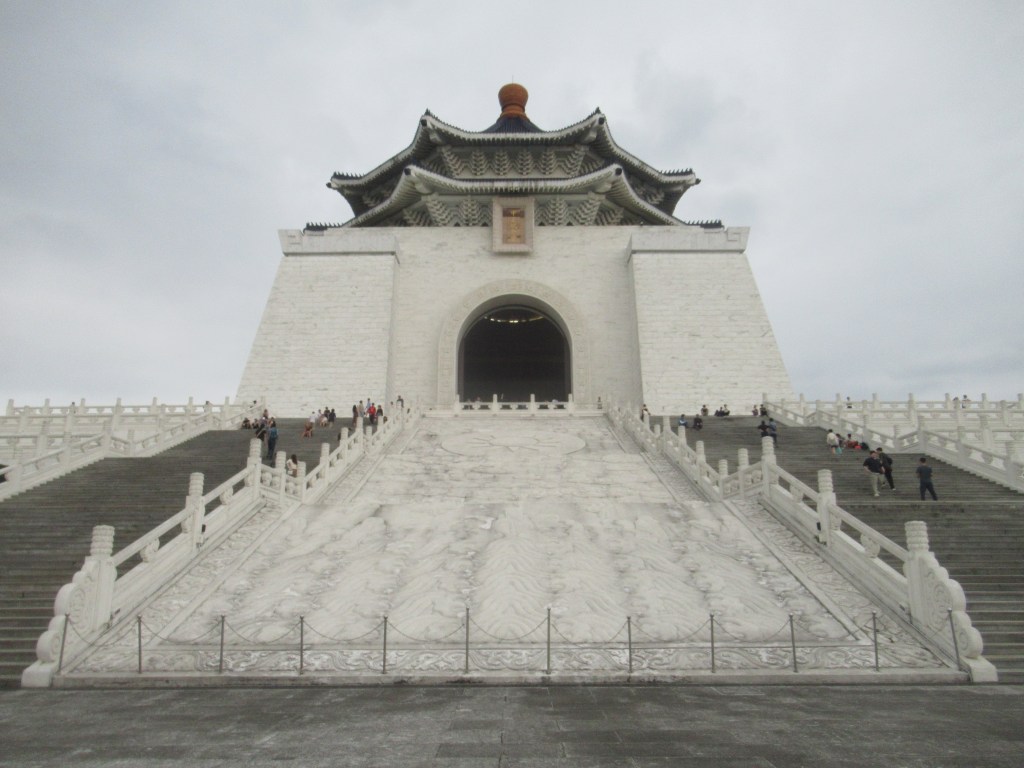
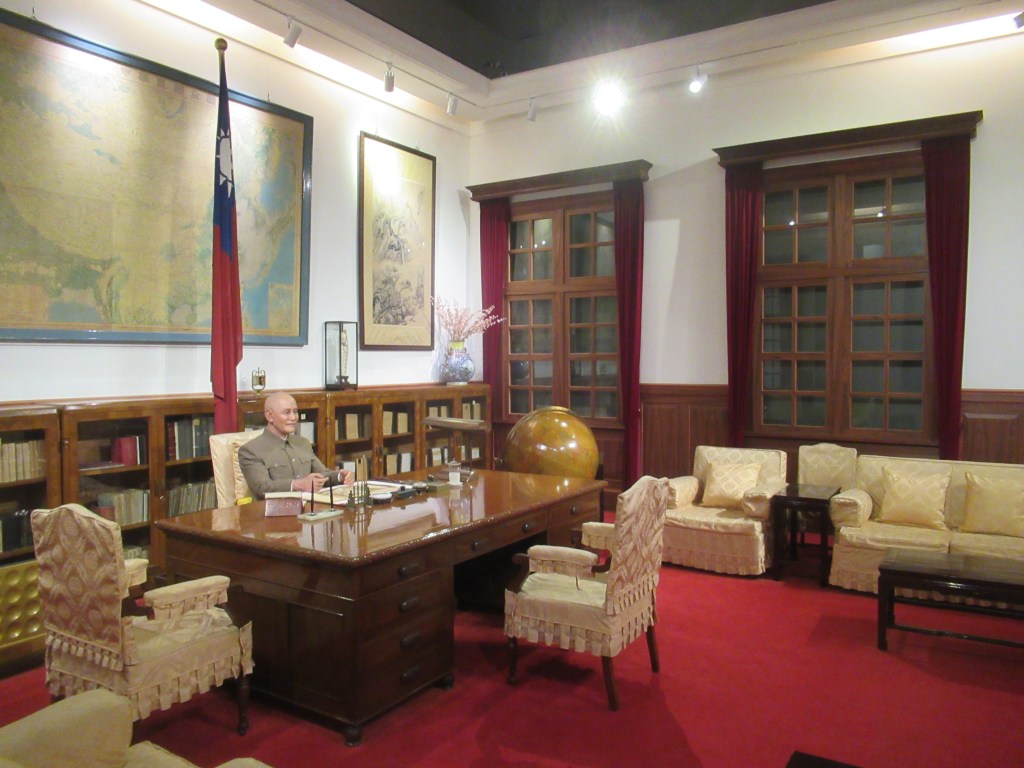
By chance, I got there just in time to see the hourly changing of the guard, then I looked around the museum which included Chiang Kai-shek’s two bulletproof cars and a reconstruction of his office with the original furnishings.

A walk around the outside of the square revealed another two Malayan Night Herons wandering around on the lawns. Some Night Heron-shaped signs warned human visitors not to emulate the birds and to stay off the lawns.
In the evening I walked slowly back to the hotel through another park: 228 Peace Memorial Park – Taipei has a lot of parks. I spent a while relaxing here – it had been a hot day and I had walked a lot. Just as I was leaving, a sound above me in a tree drew my attention to a nest a little way above head height. Three well-grown chicks stood on a platform of sticks and, when an adult flew in to feed them, they were identified as more Malayan Night Herons. Outrageous! In a little over two days I had seen nine of these supposedly elusive birds, including an active nest.
My time in Taipei was coming to an end and the next day I would be starting a tour around the rest of Taiwan. I had made the best of my short time here, and seen a fair bit of the city, but no matter how many times I passed through the confusion of Taipei Main Station I never figured out the correct exit.


 Vole Explosion
Leave a comment