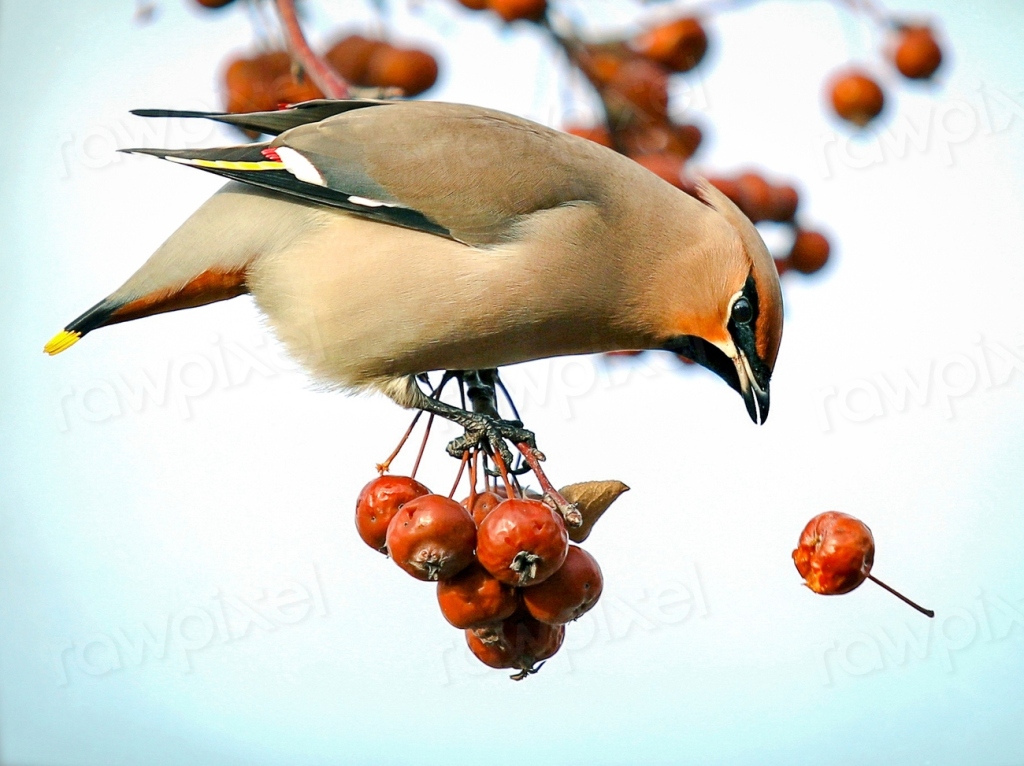
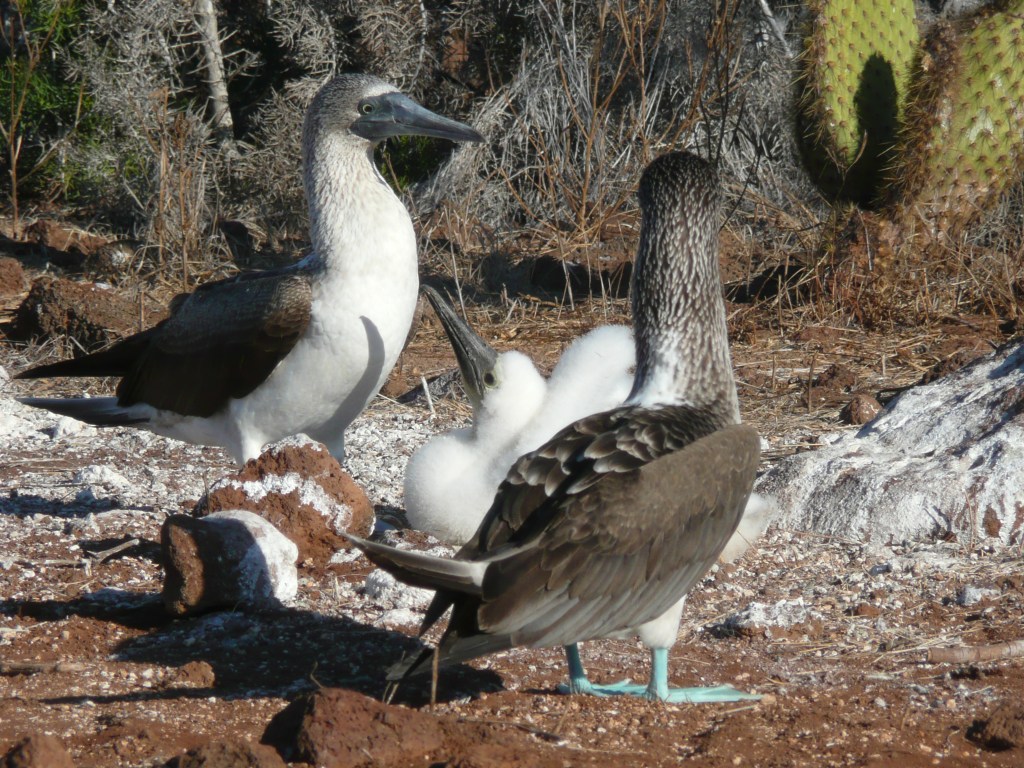
I’m fairly sure a ‘congregation’ isn’t the correct collective noun for a group of Waxwings, but then I’ve never really seen the point of collective nouns for birds. Who comes up with them? Who actually uses them? Ok, some of them are poetic I guess: ‘a charm of Goldfinches’, ‘a murder of Crows’, ‘a wisdom of Owls’… these ones are fairly well known and occasionally used, but mostly by people who just want to show off that they know the collective noun, never for any practical purpose. And that’s before we get into ‘a confusion of Chiffchaffs’, ‘an asylum of Cuckoos’, ‘an orchestra of Avocets’, ‘a swatting of Flycatchers’ or ‘a prayer of Godwits’. No birder has ever used any of these in everyday conversation. ‘A booby of Nuthatches’? Seriously? So what do you call a flock of Blue-footed Boobies then? Don’t tell me it’s ‘a nuthatch of Boobies’!
So, ‘a congregation of Waxwings’ may not actually be a thing, but Waxwings certainly like to congregate, and this winter they’re congregating in my neighbourhood and feasting on the abundant red berries growing in a local church yard. These God-fearing birds are Bohemian Waxwings (Bombycilla garrulous) and they breed in the northern forests across Alaska, Canada, northern Scandinavia and Siberia. They are one of three waxwing species, the others being Cedar Waxwings of North America and Japanese Waxwings of East Asia.
The UK does not form part of their normal range but every few years a good breeding season will coincide with a poor autumn berry crop on their nesting grounds and they will erupt out of the boreal forests and head south in search of food. In these years they can appear in Western and Central Europe in huge numbers. The last time this occurred in Britain was about ten years ago, but this winter it is happening again.
They started appearing in Scotland last autumn and have steadily been moving south through Northern England, devouring berries as they go. I knew it was only a matter of time before they arrived in my part of Southern England. The first reports near my city came from a nearby village in mid-December, and on Christmas Eve they were seen within the city itself feeding on, appropriately enough, mistletoe berries. I walked out to the spot on Boxing Day but failed to find them. They had already moved on.
Midway between Christmas and New Year my luck changed. I didn’t have to go looking for Waxwings because the Waxwings came to me. I glanced out of my back window and there they were – a flock of twelve feeding on berries in a neighbour’s garden. I opened the window to try for a photo, but the birds were flighty and flew up to a nearby treetop. They briefly returned to the berries and then back to the treetop, before flying away. These Waxwing eruptions are far more often found in suburbs and town centres than in the countryside. They have no fear of urban areas but can often be nervous and flighty as they try to feed.
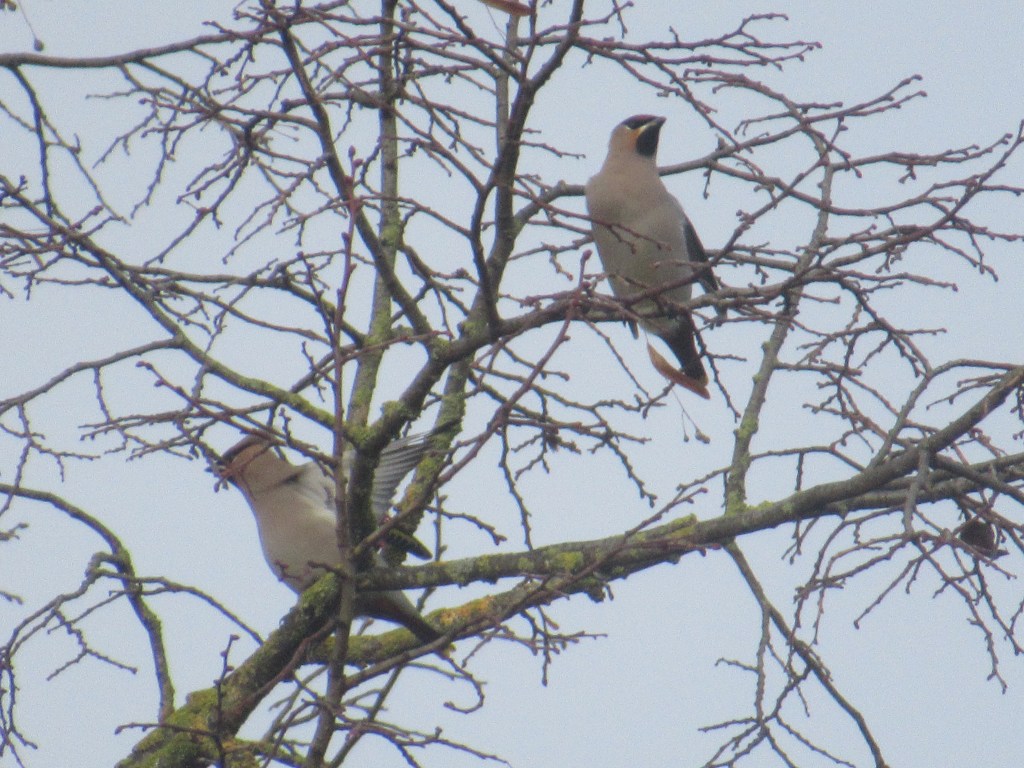
On the same day that I encountered these birds from the comfort of my home, a flock of twenty were reported from a railway station on the outskirts of the city. These seemed to be sticking around and were being reported on and off throughout the day, so a couple of days later I went out to try and get some photos. Despite waiting around for a couple of hours with a small group of other birders, the Waxwings stayed away. So much for ‘seek and ye shall find’.
Meanwhile, however, eight of my neighbourhood flock had returned and settled into a feeding routine at a church across the road from my flat. On the morning of New Year’s Eve, I finally caught up with them. With it being a Sunday, a church service was about to begin, and the comings and goings of the human congregation kept the Waxwing congregation away from their berries and high up in a tree. Eventually they flew off to God only knows where.
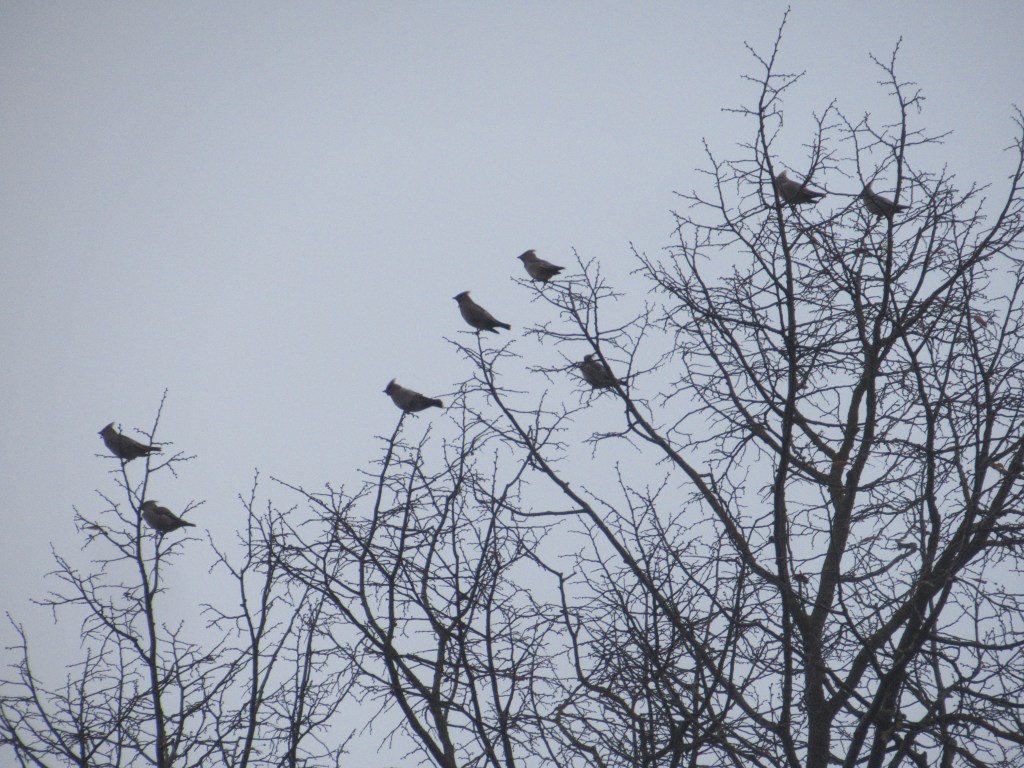

A few hours later, in the early afternoon, my phone pinged to say they were back. I went back out and found them again, this time in a tree on the other side of the church. Again, they were reluctant to drop down to feed, this time disturbed by shoppers going in and out of a nearby mall. A few of them approached us to ask what we were looking at and seemed genuinely interested when we showed them. It’s always a pleasure to spread the birding gospel and show birds to non-birding members of the public, especially ones as attractive and exotic-looking as Bohemian Waxwings. Even the least knowledgeable passer-by can tell that they’re looking at something a bit special and out of the ordinary.
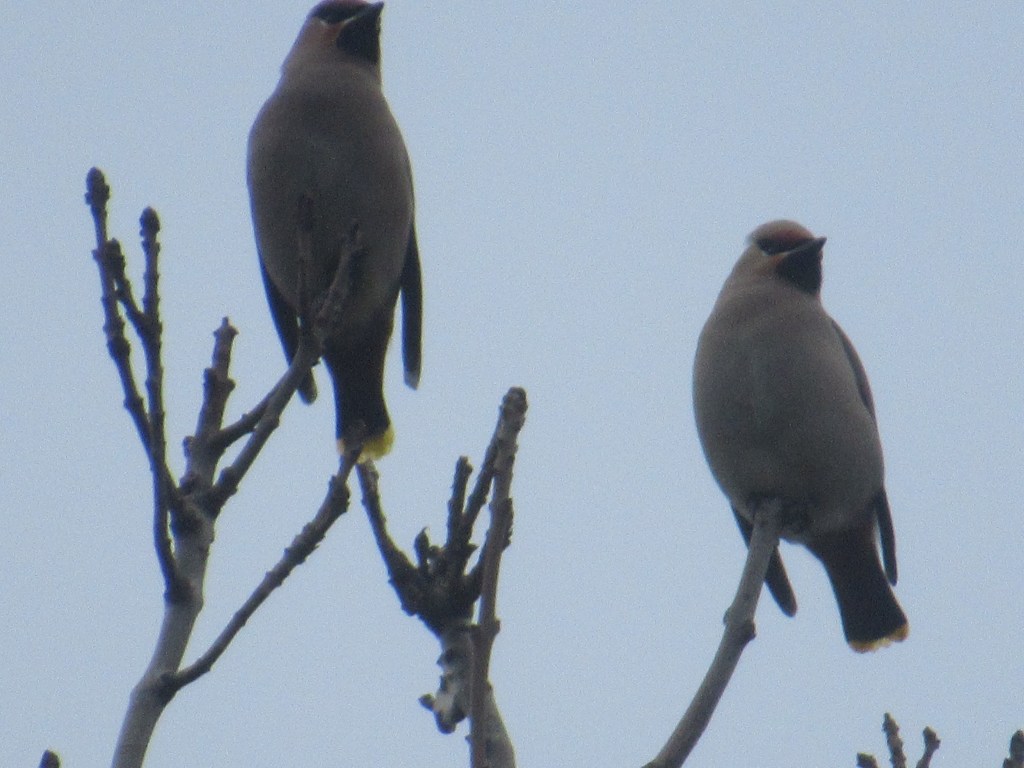
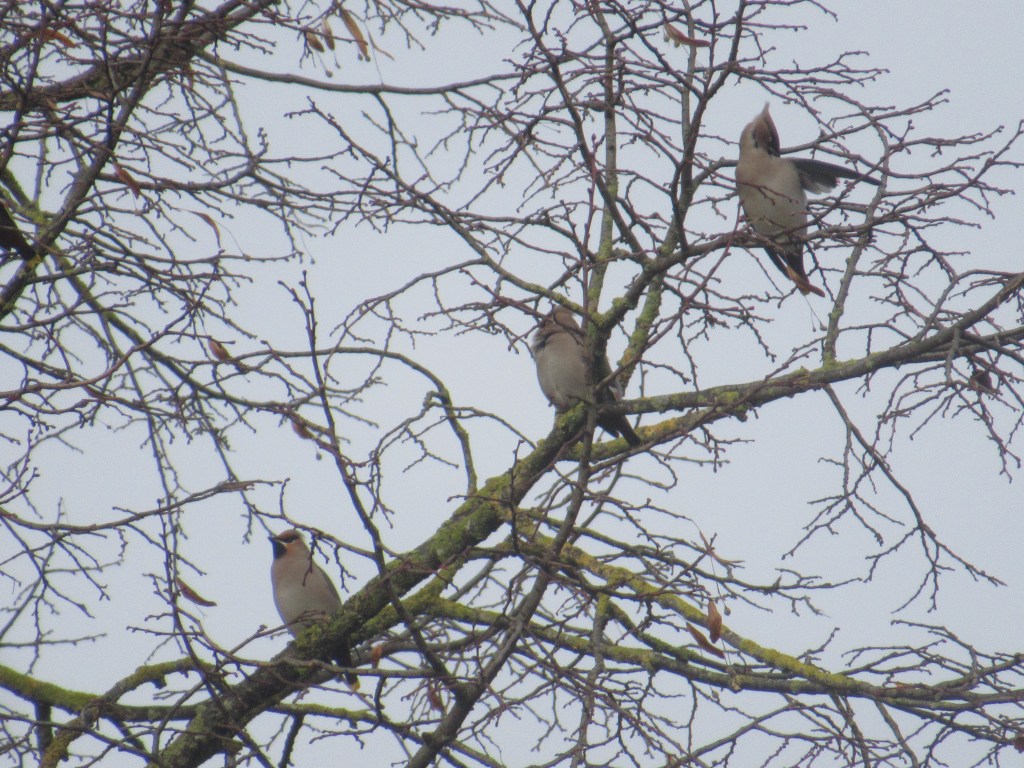
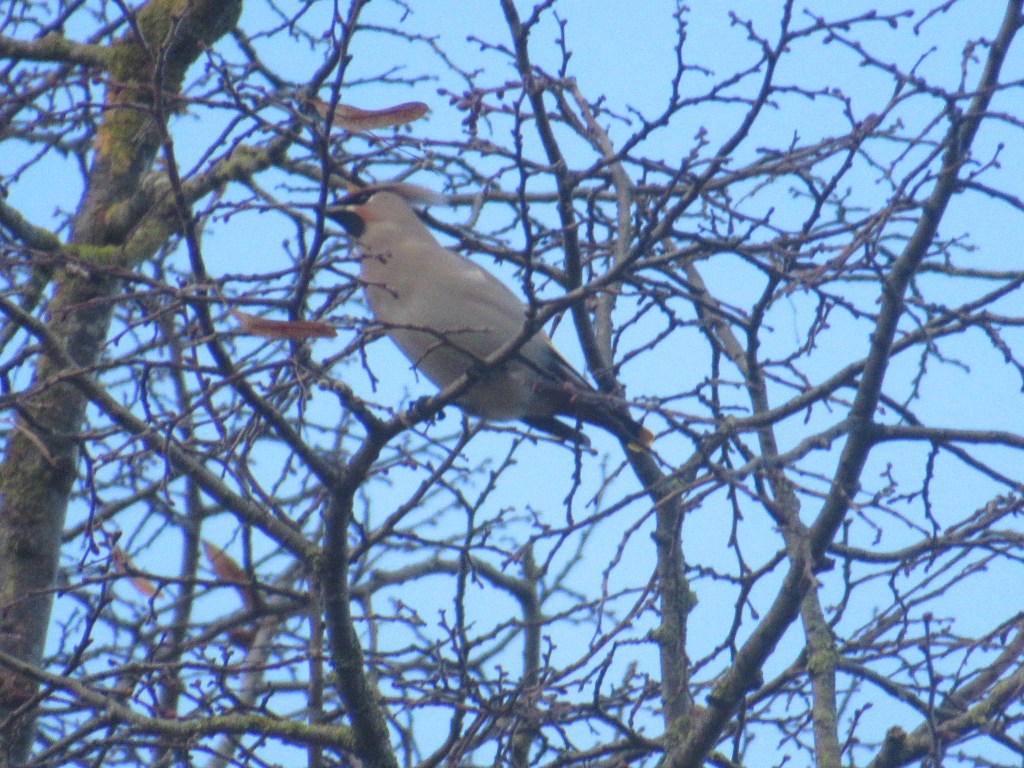
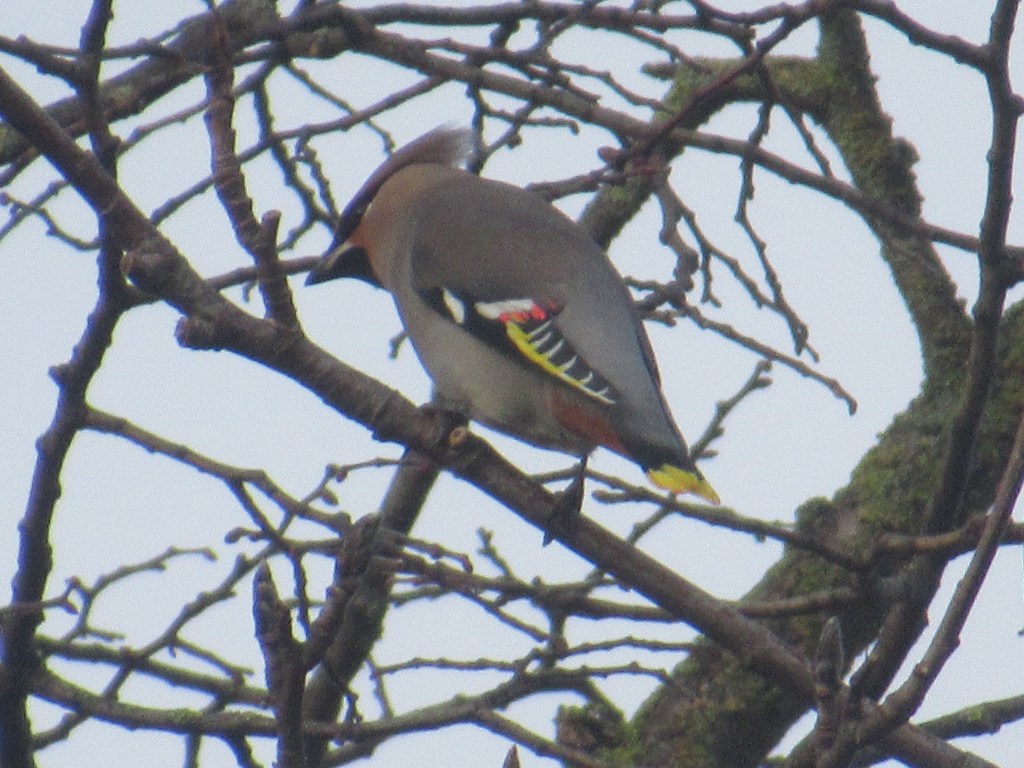
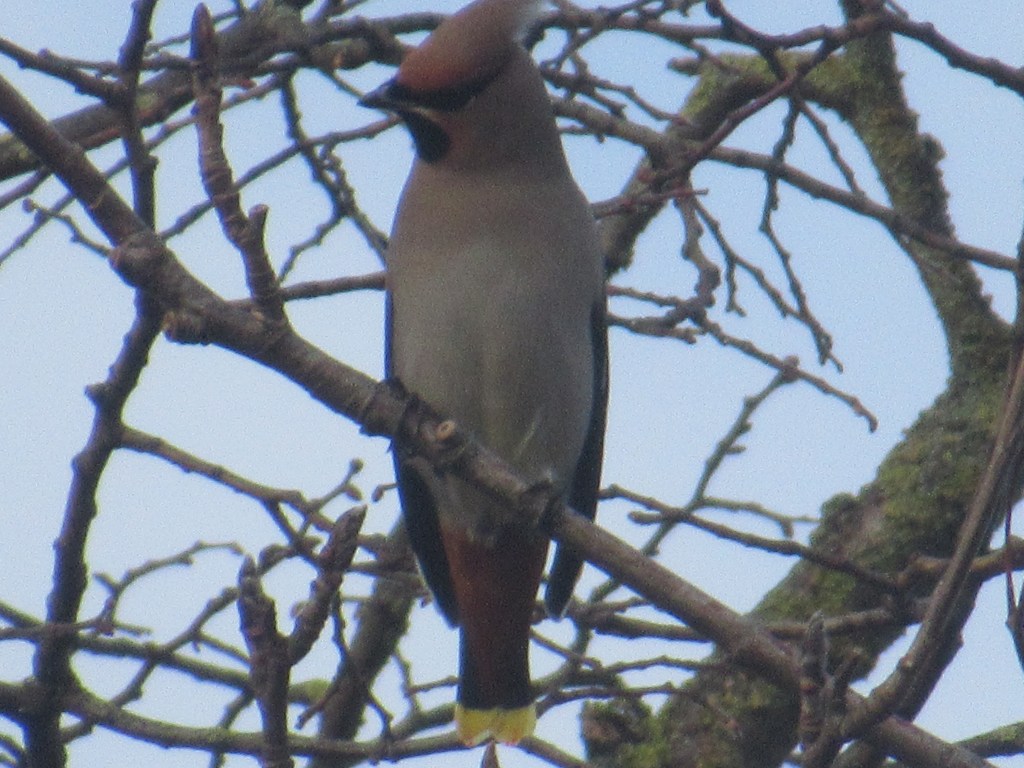
Unfortunately it was a dull, overcast day and, with the birds being up on high, my photos turned out terrible and didn’t really do these stunning creatures justice (which is why I had to use a stock photo at the start of this post!). Only one of my pictures caught the red blobs on their wing feathers, looking like the red wax used to seal documents, from which Waxwings derive their name. As well as their striking good looks they also make very attractive soft trilling calls to one another as they feed.
On the afternoon of New Year’s Day I had another walk around the church but, despite a few birders searching, the Waxwings weren’t located. Returning to work after the holidays, I wasn’t able to do any more Waxwing spotting until on January the 4th I got a message on the local WhatsApp group just before my lunch hour – the flock was back at the church… and it had grown from eight birds to more than forty! This I had to see, so I quickly headed over there, and my prayers were answered when I was just in time to see this large flock in a treetop. I got a couple of horrible photos on my phone, they briefly came down to the berries but a photographer with a huge lens got too close and they flew away. By this time more people were turning up to see them, and not just birders now but members of the public who had seen them on TV or in the press. A couple of builders carrying materials from their van to a nearby house gave me suspicious looks every time they walked past before curiosity got the better of them and they asked what I was looking for. As with everyone else I had spoken to, they were genuinely interested, saying they would keep a look out for them.
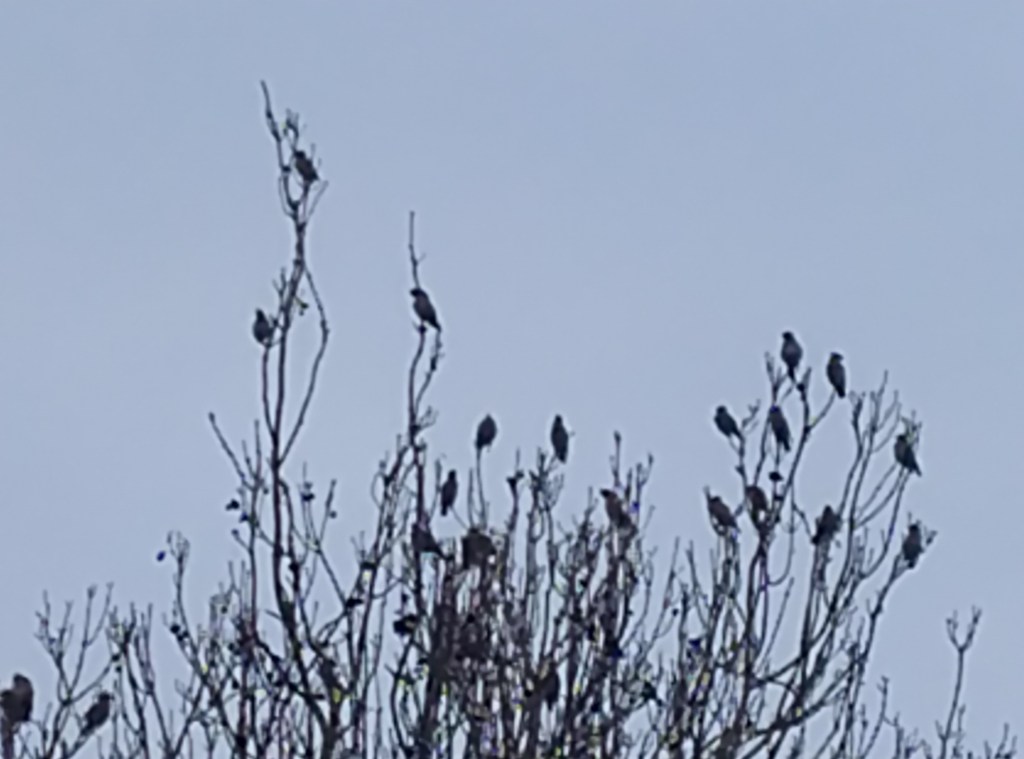
These church-going Waxwings continued to be reported over the next couple of days, but the next time I had a chance to look for them was Sunday 7th January when they weren’t reported all day. I did meet a few new faces while waiting though. By this time the local residents were coming out of their houses to excitedly tell us about the sightings they had over the last few days. Another church service was in progress and a woman from the congregation came outside with her binoculars, which she had brought with her to see the birds.
As far as I know the Waxwings weren’t seen again in my parish, despite there still being a decent crop of berries. Perhaps it was due to too much human disturbance or maybe fear of the local Sparrowhawk which I saw passing through numerous times on hunting forays, but the flock had gone elsewhere. They are still being reported in other locations around the city and they will probably be around for a few more weeks, at least as long as there are berries to plunder, before heading back to their northern breeding grounds in the spring.
Oh, and it’s ‘a museum of Waxwings’ if you really want to know the collective noun, but I doubt any of us will ever use it. Here endeth the lesson.
Amen to that.
++++ WAXWING UPDATE ++++
24th January 2024: A flock of about 20 Waxwings were back at the church briefly when I passed by on my way to work.
3rd February 2024: Looked out of my back window in the morning and saw five Waxwings perched in a nearby tree for about five minutes before flying off (video below):
 Vole Explosion
Leave a comment