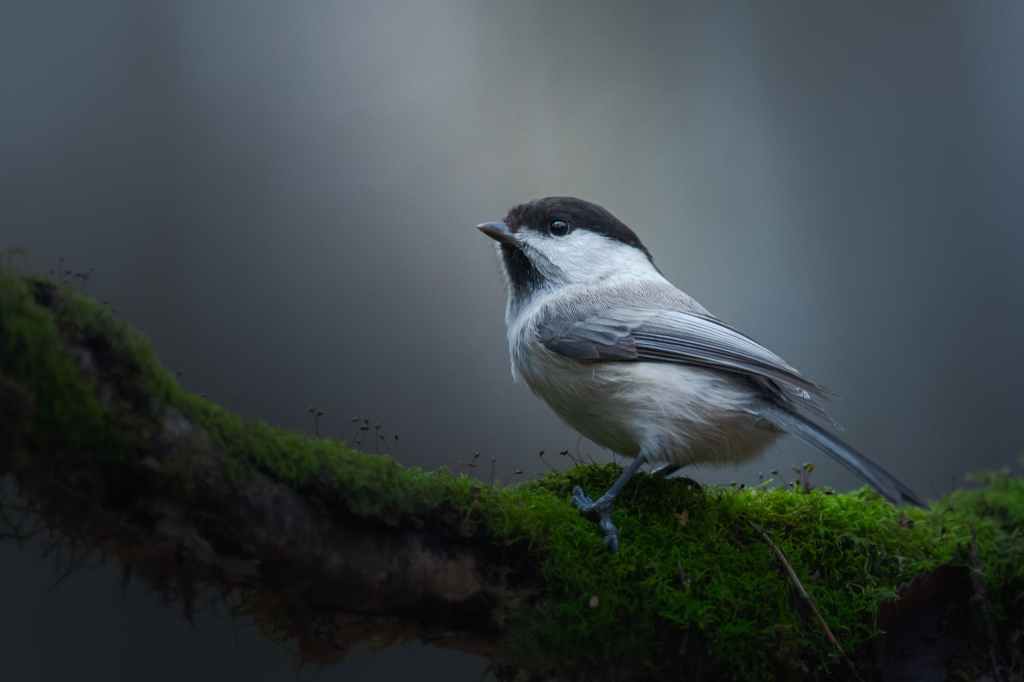
No one would say a Willow Tit was a glamorous bird. Few people will ever see one, and even fewer would be impressed by one if they did. Closely related to the Chickadees of North America, it is mostly pale brown with a black cap and chin. Its call is harsh and unattractive. When it becomes extinct in Britain, most people won’t notice and maybe only a few will care. And it will become extinct if it carries on along its current trajectory. Since 1970, 94% of its British population has disappeared, and its home range has contracted by 50%, the largest decline of any resident British bird.
Although Willow Tits are found in a huge swathe across Europe and northern Asia, from Britain to Japan and eastern Siberia, Britain holds an endemic sub-species, found nowhere else and distinct from those found on the continent. If it disappears here, the World’s biodiversity will be reduced by yet another tiny increment.
It used to be fairly common across the whole of England, Wales and southern Scotland, but is now rare, local and still in decline over most of its range, disappearing almost entirely from the south-east. It maintains something of a stronghold in the north of England across County Durham, Yorkshire, Derbyshire, Staffordshire, Cheshire, Greater Manchester and Merseyside. In this area it has found a surprising niche in the ex-industrial sites that have been turned to scrub and wetlands. This is where it finds its best hope for survival.
The few Willow Tits that I’ve seen personally have been at the nature reserves of Fairburn Ings and Potteric Carr, both in Yorkshire. I don’t remember ever seeing one for definite in East Anglia even when they were common, but I suppose I might have. The reason for my doubt is that the Willow Tit has a looky-likey: the Marsh Tit. So similar are these two species that nobody even realised they were different species until the end of the nineteenth century. Fortunately, their calls sound very different and this is still the best way to tell them apart, rather than their very subtle differences in structure and plumage. They also have slightly different habitat requirements, though they can be found together in the same places. The inappropriately named Marsh Tits are actually found in mature woodlands, whereas Willow Tits prefer early successional scrubby areas around wetlands and gravel pits. Marsh Tits are also in decline but are not (yet) in nearly as much trouble as Willow Tits. They can still be found thinly distributed in many good quality woods and forests.
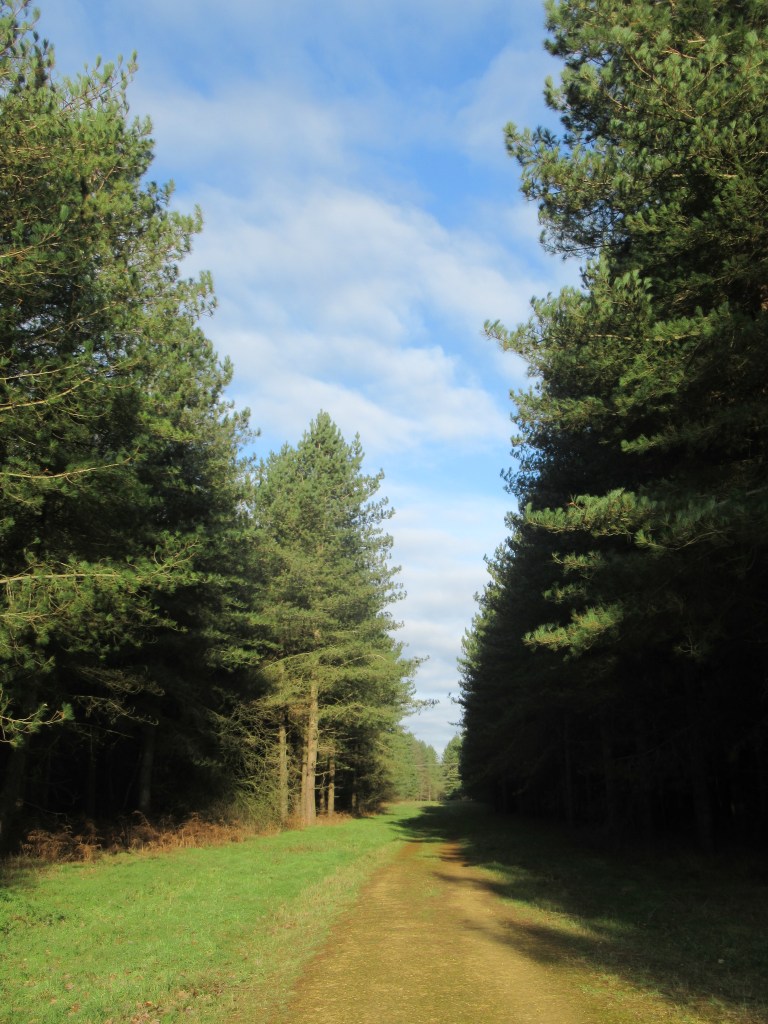
In East Anglia, Willow Tits were rumoured to be hanging on in just one place. Wanting to see a genuine East Anglian Willow Tit, I set myself the task of tracking them down to their top secret location in central Norfolk. Well ok, is wasn’t particularly secret, but after learning of their presence it took me a few years before I found out where they were. I wish I hadn’t left it so late as they are almost certainly declining here as well and may already be gone. The most recent Rare Breeding Birds Report (2020) lists only three pairs in Norfolk.
This was actually my second attempt, having already failed to find them last year. This year I arrived at the large area of commercial conifer plantation and planned a walking route that would take me through the most likely looking spots and cover as much of the area as possible. I found a Marsh Tit early on along a roadside, its call making identification easy. I also found a Mediterranean Gull following a plough in a mixed flock of Common and Black-headed Gulls. This recent colonist to Britain is now fairly common in scattered parts of coastal southern England but is a great bird to find this far inland.
So, a pleasant day was spent in a relaxed walk around the habitat listening for the harsh scolding calls of my quarry. The habitat here is nothing like that in their preferred northern strongholds. It is very dry for a start and has very little scrub.
The reasons for the Willow Tits’ decline are not yet fully understood. The usual suspect of habitat fragmentation is probably involved. For such a tiny bird, a pair of Willow Tits needs a fairly large nesting territory. As their habitat becomes chopped into smaller and smaller chunks it becomes a less suitable place to raise a family. These birds are also extremely sedentary. They won’t move far from where they were hatched, and then only through interconnected habitat, not across open farmland. If new habitat were to become suitable in a different part of the country, no Willow Tit would ever find it unaided.
The huge increase in deer numbers is also having a devasting effect on scrub and woodland understory, affecting not only Willow Tits but also other declining low-nesting birds such as Nightingales and Willow Warblers.
Great Spotted Woodpeckers are very effective nest predators, capable of chiselling their way into tree holes and devouring the eggs and nestlings. In the same time span that Willow Tits have declined by 94%, Great Spotted Woodpeckers have increased by more than 300%!
Another factor that has been brought to light recently is the unintended consequences of bird lovers trying to help their feathered friends. It is now thought that the provision of nest boxes and bird table food has resulted in unnaturally high numbers of Blue Tits and Great Tits. These highly adaptable species are larger and more aggressive than the shyer Willow and Marsh Tits and can easily bully them out and take over their nesting holes in the breeding season. Blue, Great, Coal and Marsh Tits will all readily take to nest boxes. Willow Tits, on the other hand, will not, and must excavate their own nest hole for each brood that they raise, usually in a crumbly, rotting tree stump. Having gone to all that effort, if they are evicted by another bird, they will make a second attempt, assuming their habitat holds enough tree stumps to build a new nest. If they are also pushed out of the second nest, there will not be enough time in the summer season for a third attempt. Result: a blank year with no chicks raised to adulthood. Small birds have short lifespans, so very few opportunities to replace themselves with offspring. If the dying adults can’t replace themselves with new generations, the species will decline towards extinction.
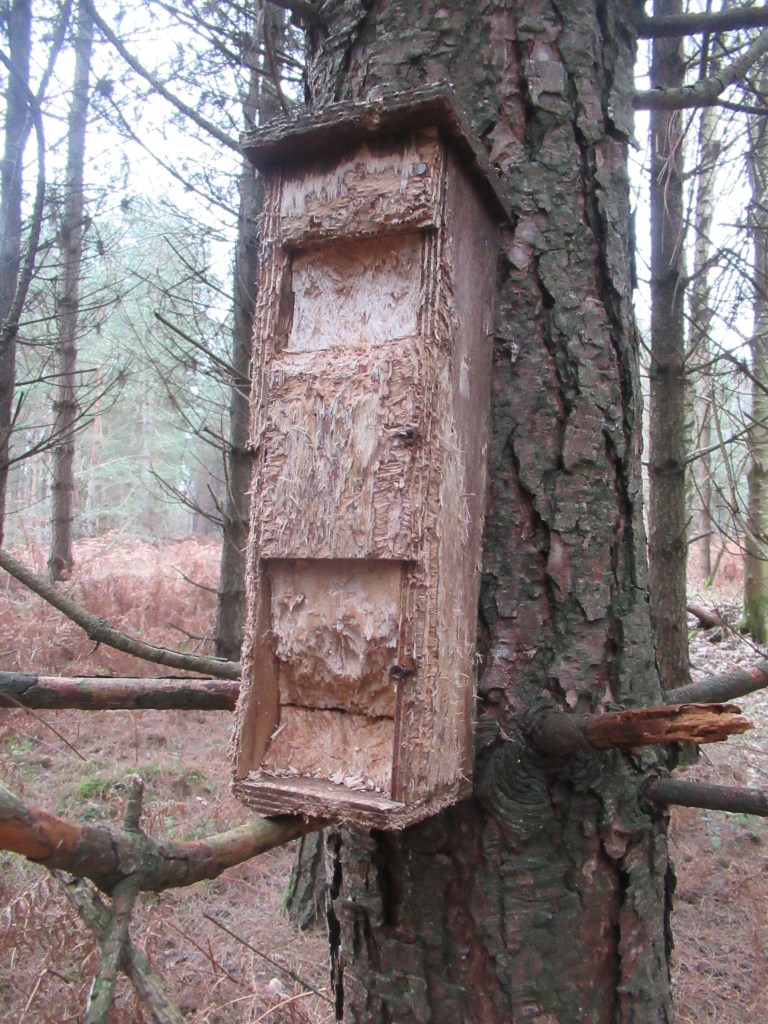
As I continued my search, I found a nest box that was obviously intended for Willow Tits, with a block of balsa wood into which the birds could excavate a nesting chamber. Willow Tits are not woodpeckers. They have none of the awesome adaptations that woodpeckers have for drilling into even the hardest trees. The tiny beaks of Willow Tits can only make an impact on the soft, rotten wood of well-seasoned tree stumps. Attempts have been made to encourage them to nest by filling a regular nest box with a block of polystyrene (Styrofoam) or with packed down wood chips, to allow them to carve out their own home. These attempts all failed (and the polystyrene option isn’t exactly environmentally friendly anyway).
Experiments are being conducted in the northern counties with suitable logs tied to living trees in the hope that they will eventually rot down a bit and become suitable for nesting. These are showing some hopeful early results. The simplest measure currently being taken is to cut down young pine trees two metres from the ground and leave these stumps to rot.
As the afternoon wore on, I began to realise I was unlikely to hear the Willow Tits’ call today. I still had a great day’s birding though. The forest was full of life, with all the expected woodland sprites going about their business everywhere I looked: Blue, Great, Coal and Long-tailed Tits, Nuthatches, Treecreepers, Goldcrests, and Jays. I saw another two Marsh Tits, this time on garden bird feeders. They weren’t calling, but there was nothing about them to suggest they might be Willow Tits, although I guess they could have been. I would have liked to stay and scrutinise them for longer, but I started to get worried that someone might call the police on the weirdo pointing binoculars and camera into peoples’ gardens.
In this clip, a garden feeder is crowded with Blue, Great and Coal Tits. A Marsh Tit appears to the left at 1min 16sec, and a Nuthatch on the tree trunk on the right at 1min 35sec.
Many of the birds were singing now and starting to pair up. I heard my first Great Spotted Woodpecker drumming for the year and, especially during the sunny spells, I could feel that spring was on its way. Small numbers of Redwings, Bramblings and Lesser Redpolls reminded me that it was still winter.
As I started to leave the woods and head home I wish I could report that I heard a last minute burst of that distinctive call, and I could confirm the presence of Willow Tits in East Anglia for another year, but nature doesn’t care about our narratives and I had failed again. I’ve no idea if these birds are still there, if the area is just too big to easily find the last few individuals and more time would be needed, or if I’ve already run out of time to see the last East Anglian Willow Tits.
On a more positive note, I got to the end of this post without making any immature ‘tit’ jokes. That’s surely an achievement, so let’s end on a song…
 Vole Explosion
Leave a comment