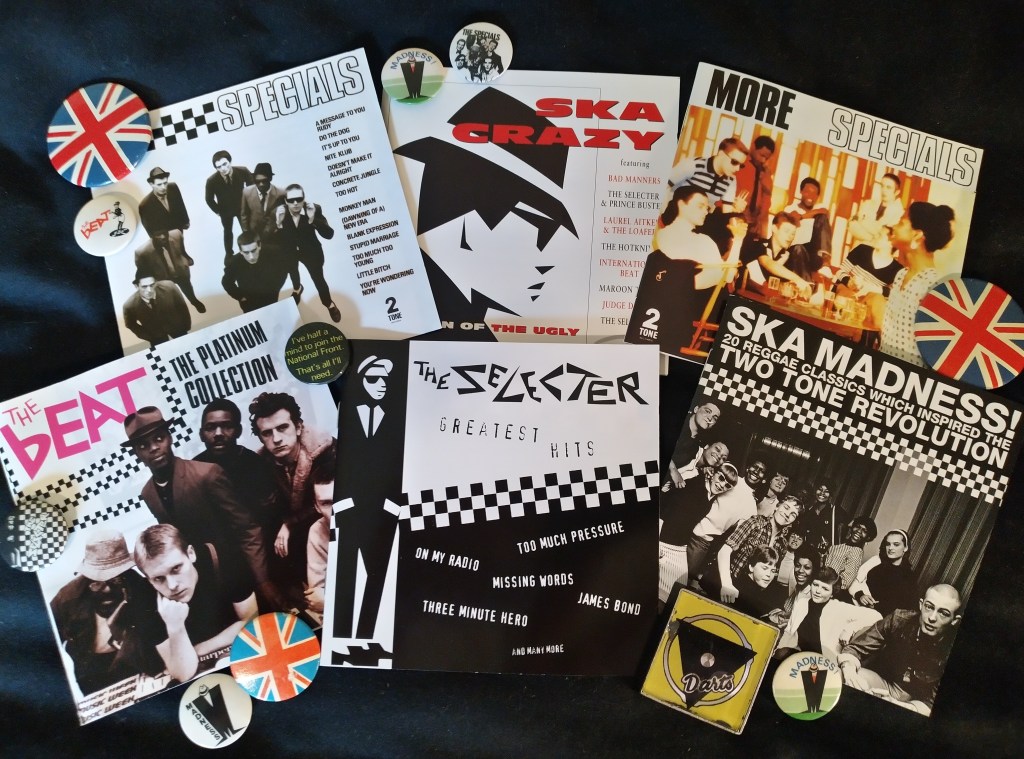
Last month we lost a key figure in British music – Terry Hall, lead singer of The Specials, Fun Boy Three, and numerous other projects died at the age of 63. In August of the previous year another lead vocalist died with none of the same media attention. His name was Bob Fish. I’ll get back to him later and I’ll explain why he mattered.
In the dying days of the 70s The Specials were the driving force behind the 2-Tone Ska revival, when white kids in the UK adopted the sounds, fashions and dance moves of Jamaican migrants from the 1960s, often without even knowing what we were emulating. Prior to this, my musical tastes were dictated by my dad’s 50s Rock’n’Roll albums, my older sister’s Disco and post-Punk, some weird Spanish pop (thanks, mum!), and whatever Top of the Pops threw out at me on a Thursday evening. But 2-Tone was different. This was the first music that I had discovered for myself and could truly call my own.
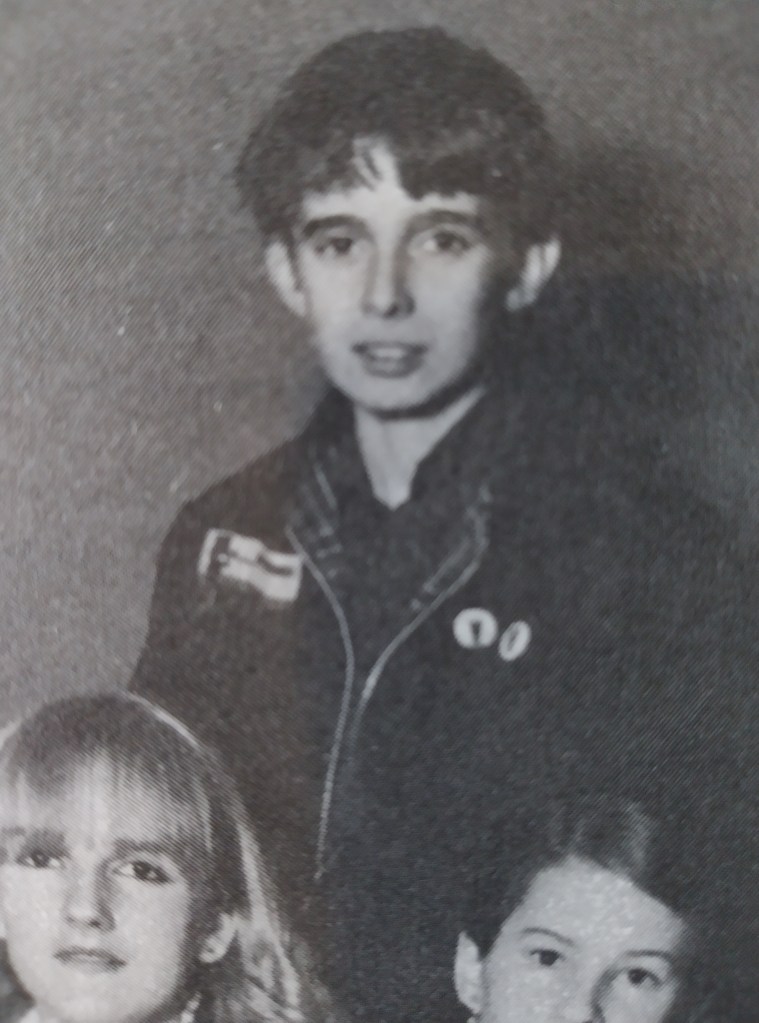
I’m sure I must have heard Ska before without really noticing – if nothing else, I was familiar with My Boy Lollipop by Millie – but that day in late 1979, when twelve-year-old me walked into the family living room just as Madness started playing One Step Beyond on TV, I froze and stood there open-mouthed. Never before had I heard anything so lively, catchy and effervescent. As the video played I was captivated by their sharp-suited monochrome aesthetic and the geometry-set angularity of their dance moves. The sheer joyfulness of this music really spoke to me, despite the lack of a lyric other than Cathal ‘Chas Smash’ Smyth’s echo-y bellow of the song’s title. In little more than two minutes my life had been changed – for the next couple of years every birthday and Christmas present list featured records by Madness, Bad Manners, The Specials, The Selecter, and The Beat. Every Saturday afternoon was spent in my small town’s one record store trying to decide which 2-Tone pin badge to spend my pocket money on, to add to the growing collection proudly displayed on my Harrington jacket. Trousers never seemed to be quite narrow enough and I had to constantly nag my mum to unpick the seams of my 1970s jeans and take them in a bit, oh and while you’re at it, make them just another inch shorter to show off my tasselled loafers and white socks. This she agreed to do as long as I assured her I wasn’t trying to look like one of those nasty skinheads she’d heard about.
As well as a sharp look and some timelessly cool records, the Ska movement (and especially The Specials) gave me and many others of my generation something else – a much fairer and more open-minded attitude towards people who didn’t look like us. While the hippies and punks had decent non-racist credentials, the 2-Tone movement pushed these attitudes front and centre. It was the defining attribute of the genre.
Growing up in a small town in Suffolk, my friends and I rarely encountered anyone who wasn’t white, but this didn’t stop us from endlessly trying to call out perceived racism and trying to catch one another out. Thanks to Ska, and later on the Alternative Comedy boom, ‘racist’ and ‘fascist’ quickly became our insults of choice. We must have been insufferable! The 70s and early 80s are popularly thought of as a time of rampant, unchallenged bigotry, but this doesn’t tell the whole story. While racist views were all too commonly encountered, there was also a lot of push-back that these days has been largely forgotten. UK sitcom The Young Ones first aired in 1982, and by that time political correctness had already spread enough for the tiresomely woke character of Rik to be a recognisable archetype. The character worked because everyone knew someone who was a bit like that. Of course, the terms ‘woke’ and ‘politically correct’ weren’t in popular usage back then. Such people were still referred to by their 60s epithet: ‘right on’.
So… Terry Hall, The Specials, and the rest of the 2-Tone scene gave us our first taste of groups with a multi-racial line-up right? Well, no… not really. There had been others previously. This is where I would like to bring Bob Fish back into it. He was one of the vocalists with 1970s Doo-Wop revivalists Darts, a group with a diverse Anglo-Celtic-Ghanaian line-up to whom I would now like to pay tribute. While Punk and Disco were the cool kids of the mid-to-late 70s, there was also another subculture of nostalgic 1950s revivalism running parallel. Cinemas were screening That’ll be the Day (1973), American Graffiti (1973), and Grease (1978), while Happy Days enjoyed immense popularity on TV (before inevitably jumping the shark, while simultaneously inspiring the phrase ‘jumping the shark’). Darts were part of a slightly tongue-in-cheek musical scene that also spawned Alvin Stardust, Shakin’ Stevens, Mud and Showaddywaddy (themselves a multi-racial band). Emerging out of Glam Rock, these Rock’n’Rollers always had a slight whiff of novelty act about them, and they have now been largely forgotten and deemed uncool. You’re unlikely to see documentaries about them on Sky Arts or BBC4, which is a shame really. They were massively popular at the time and they contributed to the ridiculous and preposterous explosion of fun that was the 1970s pop scene.
Darts enjoyed a string of chart hits between late 1977 and early 1980, most of which can be found on YouTube. I’ve chosen their cover of Gene Chandler’s 1962 hit Duke of Earl. If you watch this video you might also notice that they pioneered colour-blind casting in period dramas. In your face, Bridgerton!
So Darts then… they weren’t as culturally important as The Specials and they weren’t the first group with a diverse line-up, but they did beat 2-Tone to it by a few years. That must surely be worth celebrating.
“There’s only one word for that – magic darts!”
Sid Waddell, sports commentator
 Vole Explosion
Leave a comment