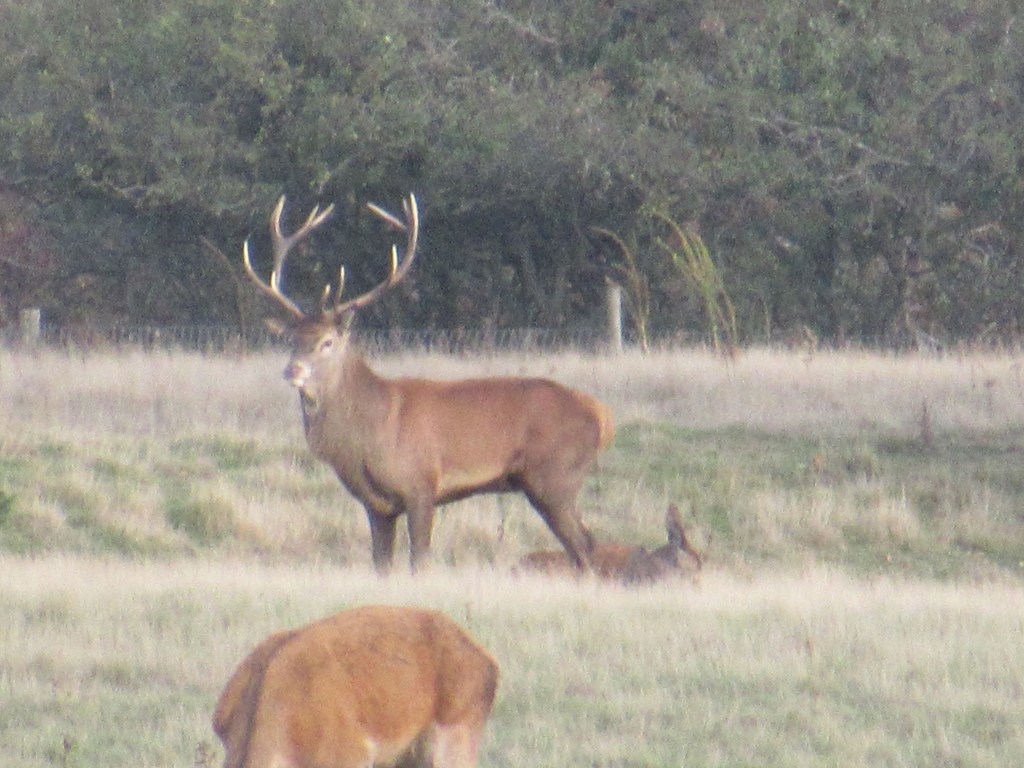
A ‘STAG WEEKEND’ WITH SUFFOLK’S RUTTING RED DEER
15th and 16th October 2022
East Anglia is arguably the best region of Britain for viewing deer in the wild. While many people might associate deer with the Highlands of Scotland, I would say that the presence of five out of the six British deer species in large numbers marks out the eastern counties as deer central, with both of the native species and three out of the four introduced species.
If anything, we have too many deer. This is due both to previous generations importing exotic species and eliminating large predators, and to our own generation’s reluctance to reintroduce those same predators. This has allowed all the deer species to proliferate and generally strut around like they own the place.
In my home county of Cambridgeshire, native Roe Deer are abundant and seemingly fearless. Family parties and small groups of this once-shy woodland denizen are now commonly seen in open fields during the day, showing little concern for humans passing by on public footpaths. The ‘Landscape of Fear’ concept, whereby prey animals have their impact on the habitat reduced by being constantly moved around the landscape by predators, has been completely withdrawn from British ecosystems.
Another beneficiary of this is the small, dog-like Reeve’s Muntjac. Introduced in the early twentieth century from Asia and now abundant in all my local habitats, including some urban parks and gardens.
Much larger is the Fallow Deer, the spotty, palmate-antlered deer familiar from stately home deer parks such as Holkham Hall on the north Norfolk coast. These were once native to Britain, dying out during the last ice age and then being reintroduced by either the Romans or, more likely, the Normans. They now exist in a wild state across much of the region in isolated patches of woodland surrounded by farmland. Often in very small woods, they emerge onto open land in the evenings in surprisingly large numbers that make me wonder how such large animals can simply melt away into the undergrowth during the day.
East Anglia’s final non-native deer is the Chinese Water Deer. Introduced in the nineteenth century and escaping during WWII, they have spread from their Norfolk Broads stronghold and can now be seen fairly easily in other wetlands such as the north Norfolk coast and the Cambridgeshire Fens. These small deer are the only British species that can’t grow antlers, but have instead decided to equip themselves with a comical set of long tusks. Their cute faces and large Mickey Mouse ears give the impression of a Teddy Bear wearing a pair of joke shop Dracula fangs.
So this brings me to the fifth and final East Anglian deer, the native Red Deer. Apparently coastal east Suffolk holds Britain’s largest Red Deer population outside of Scotland. The September and October rut, when the finest stags gather their mating harems and then try to defend them from the attentions of other males, is amongst Britain’s best-known Autumn wildlife spectacles. It is something I’ve never witnessed for myself, so this year I decided to spend a weekend in the company of Britain’s largest extant land mammal while it practiced the rituals it considers necessary to bring forth the next generation. And I’m not even judging them – I’m sure we’ve all done some pretty weird stuff in the same situation.
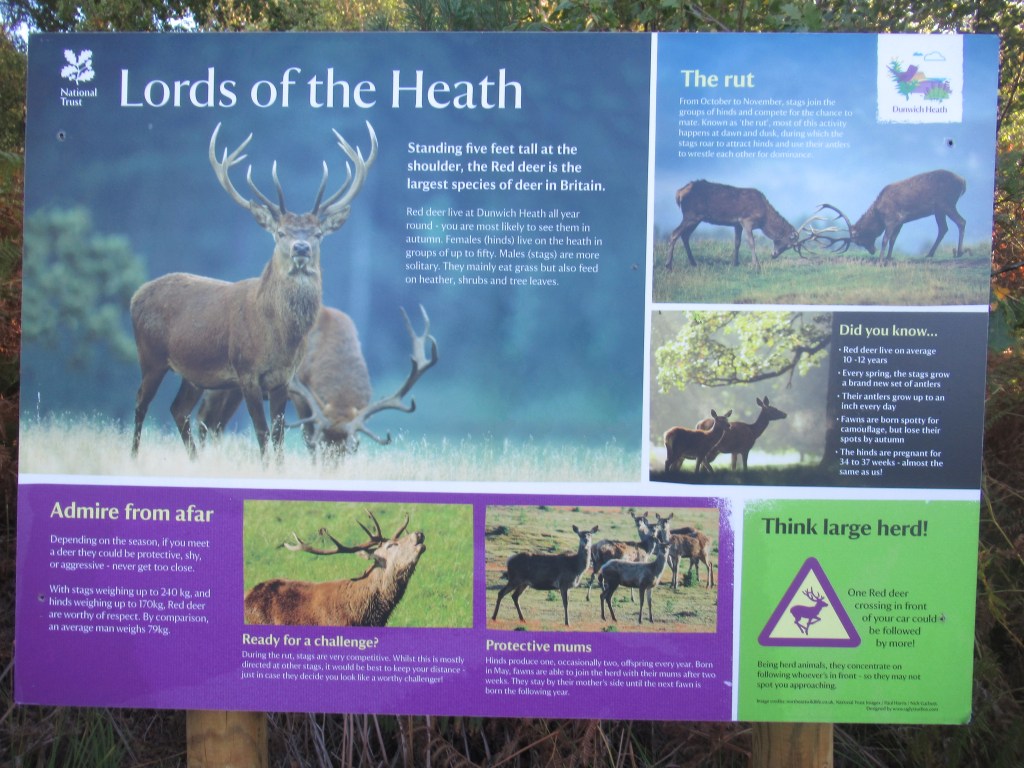
The action doesn’t really kick off until at least late afternoon, so I had plenty of time to look for any other wildlife that might be around. Starting with a morning coffee in the warm sunshine outside the beach café in Sizewell.
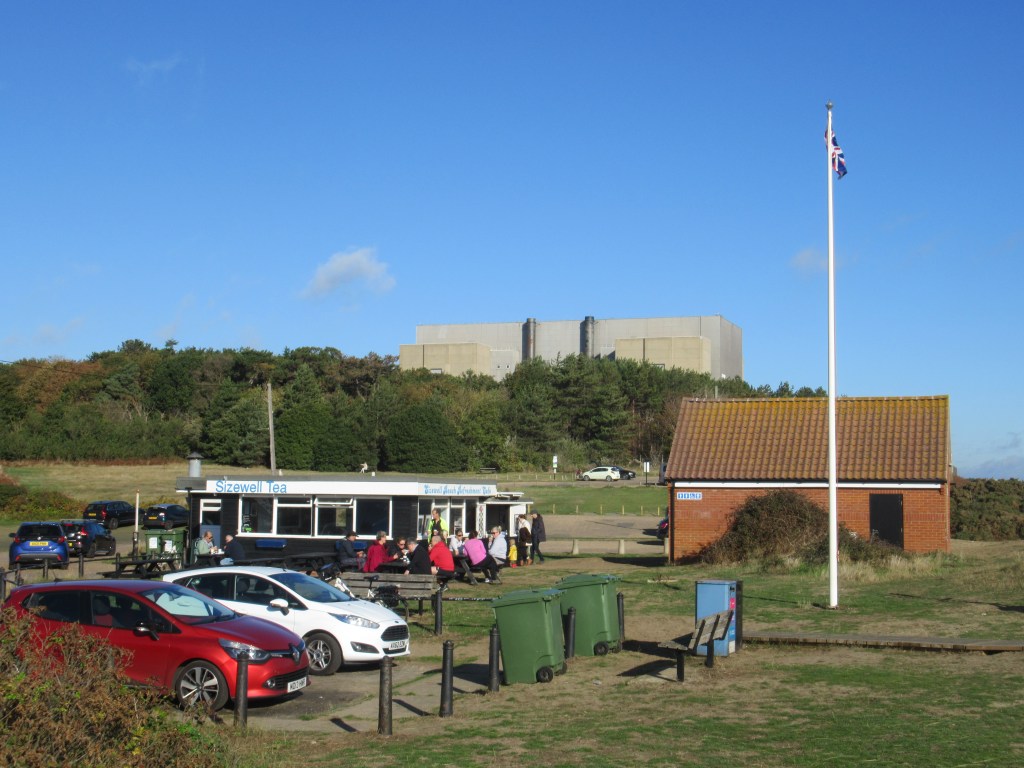

I then moved on past the nuclear power station, where the controversial Sizewell C reactor is soon to be built, and had a quick look around the site for Black Redstarts. A couple of pairs of this rare breeding bird nest here but I didn’t find any, but a few Meadow Pipits and a pair of Stonechats were seen on the dunes. Stonechats form pairs on their winter territories but not necessarily with the same partner with which they nested.
The first deer of the day was a young Muntjac that bounded off into the woodland undergrowth at Sizewell Belts. I didn’t see any more of this species but I heard a couple more later on, doing their dog-like bark. Further along the coast I spotted the first herd of Red Deer about a kilometre away on Minsmere Levels – a stag with nine hinds, but too distant. A single Hobby over the Levels was a nice find, and a hangover from the Summer. It was a warm day and there were still plenty of dragonflies on the wing for it to hunt. The first Kestrel, Little Egret and Grey Heron of the weekend were also seen on the Levels.
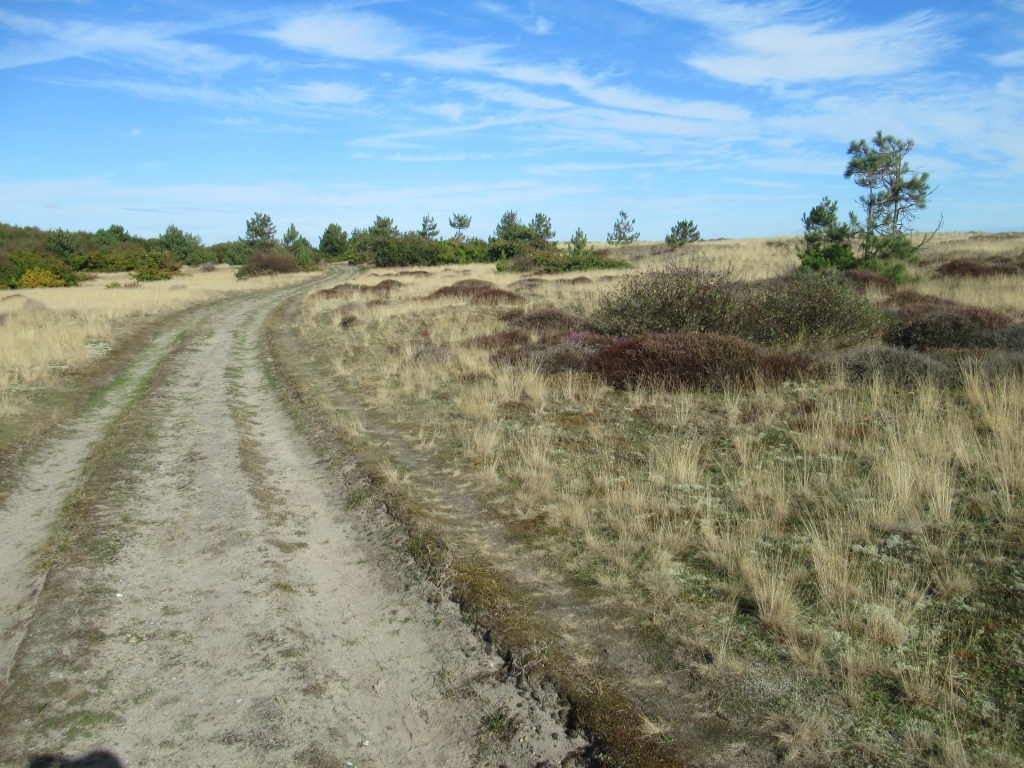
Arriving at the RSPB’s flagship reserve of Minsmere, I found the East Hide closed and the East Scrape drained of water as they are building an accessible boardwalk from the North Wall. The rest of the scrape held water and a decent concentration of ducks: mostly Teal, Gadwall, Shoveler and Wigeon – all still in their boring brown eclipse plumage and looking pretty dull. Three Avocets, a Ruff, a Redshank, and a few Lapwings were all that remained of the Autumn wader passage.


Along a dirt track a Common Toad had been disturbed and froze mid stride, keeping stock still and presumably thinking it couldn’t be seen.

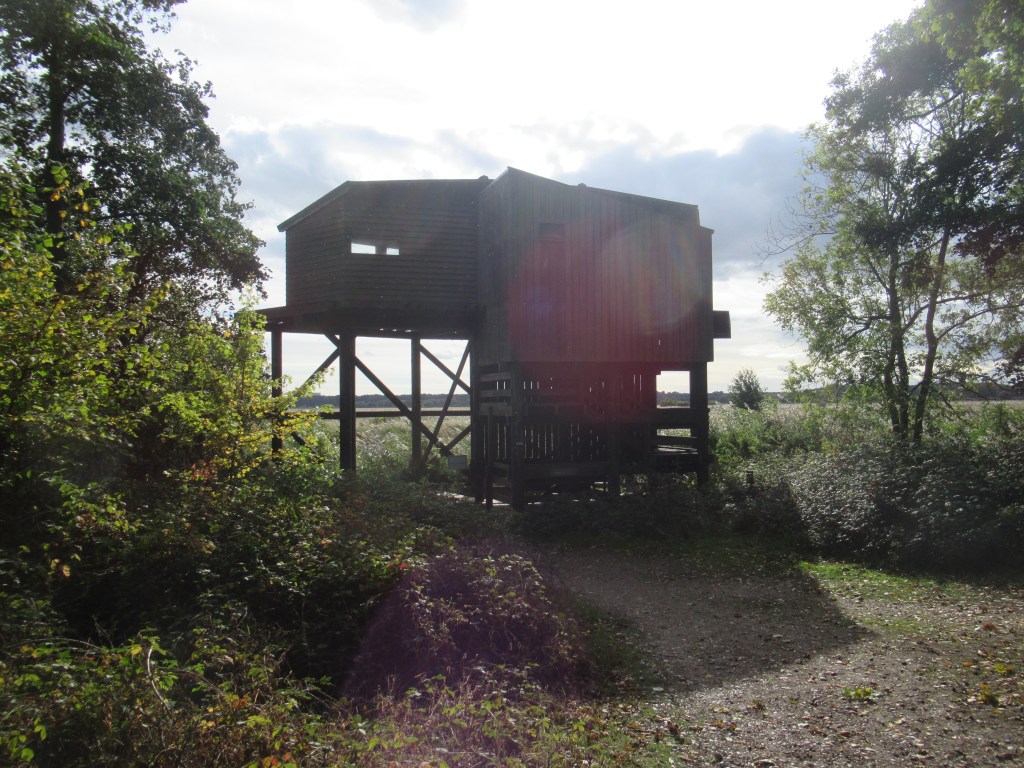
I went up to the seven-metre-tall Bittern Hide overlooking the reedbeds and only had to wait less than five minutes before an elusive Bittern performed a fly-past.
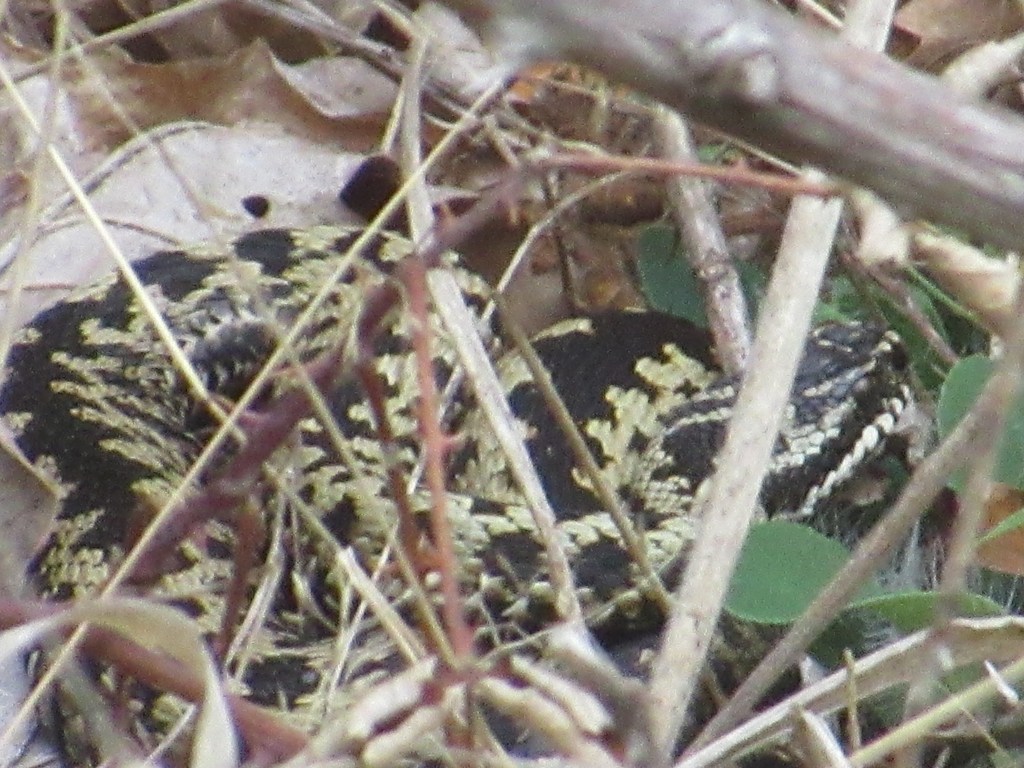
I’ve seen Adders in various places around this site, but never on the so-called Adder Trail. Today it was easy when an RSPB volunteer pointed one out to me, curled up in a sunny patch by a log. He explained that this individual had been named Stranger as part of a study of the reserve’s Adders.
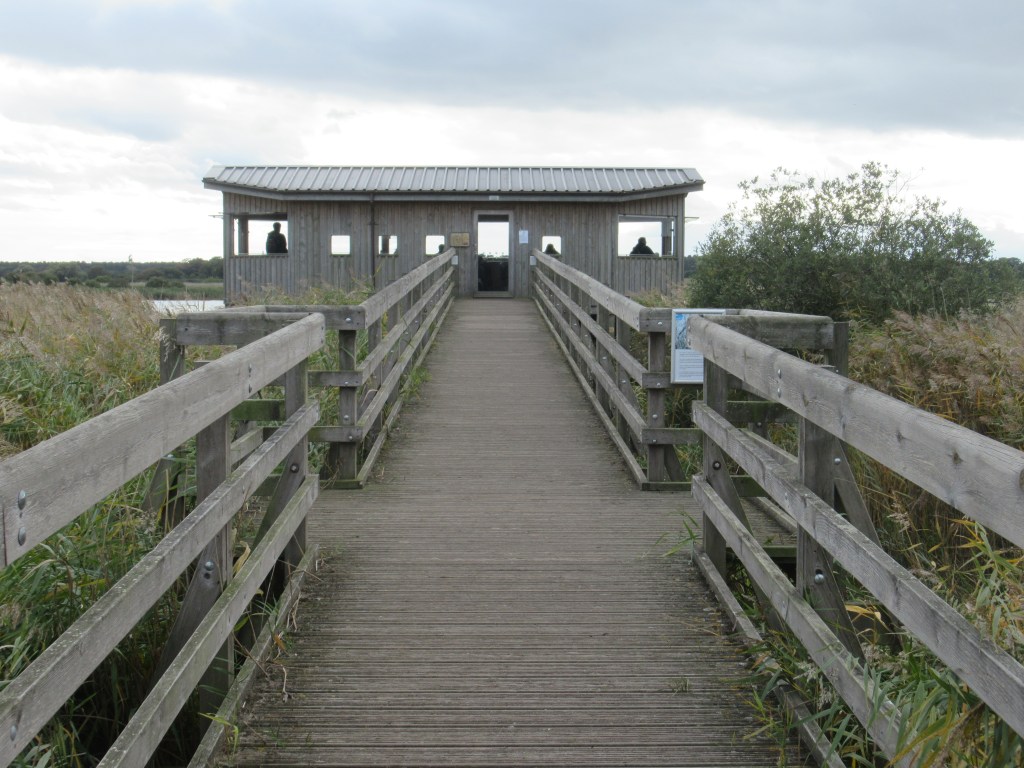
At the Island Mere Hide there was a flock of eight eclipse-plumaged Pintails, four Shelducks, thirty Greylag Geese, a Great White Egret, lots of Cormorants, and some Little Grebes. While I was in the shelter of the hide, a very brief rain shower passed over and then the sky quickly cleared again.
By this point it was time to head over to Westleton Heaths to find the Red Deer herds. On the way I had fly-over Buzzard and female Marsh Harrier.
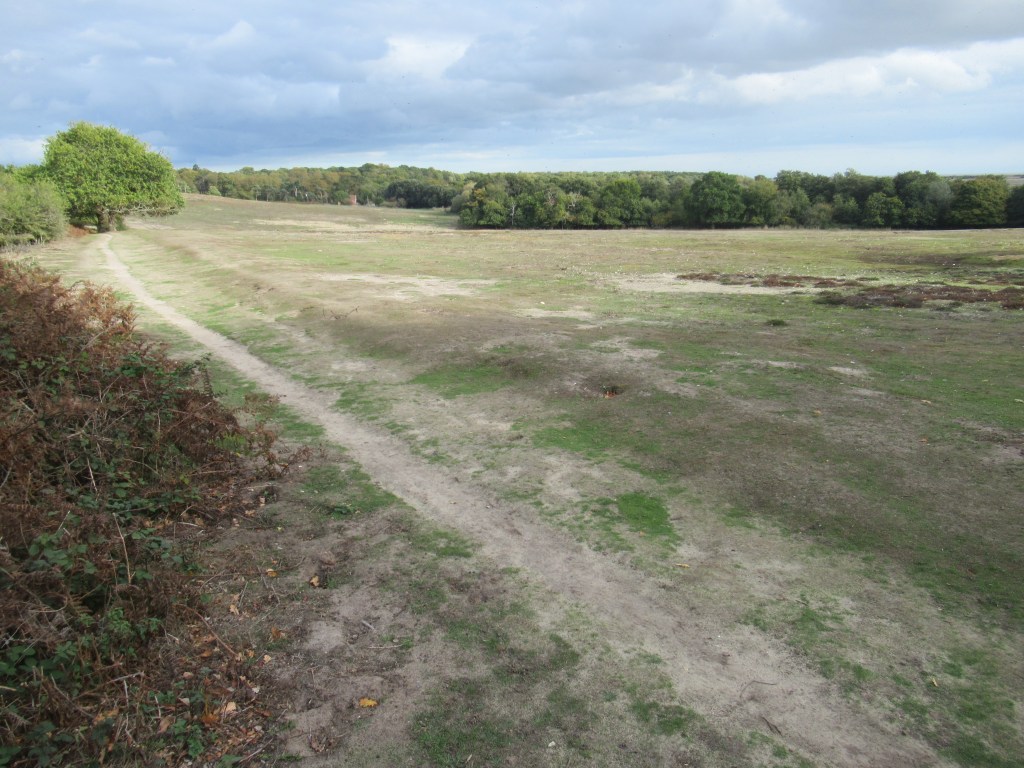
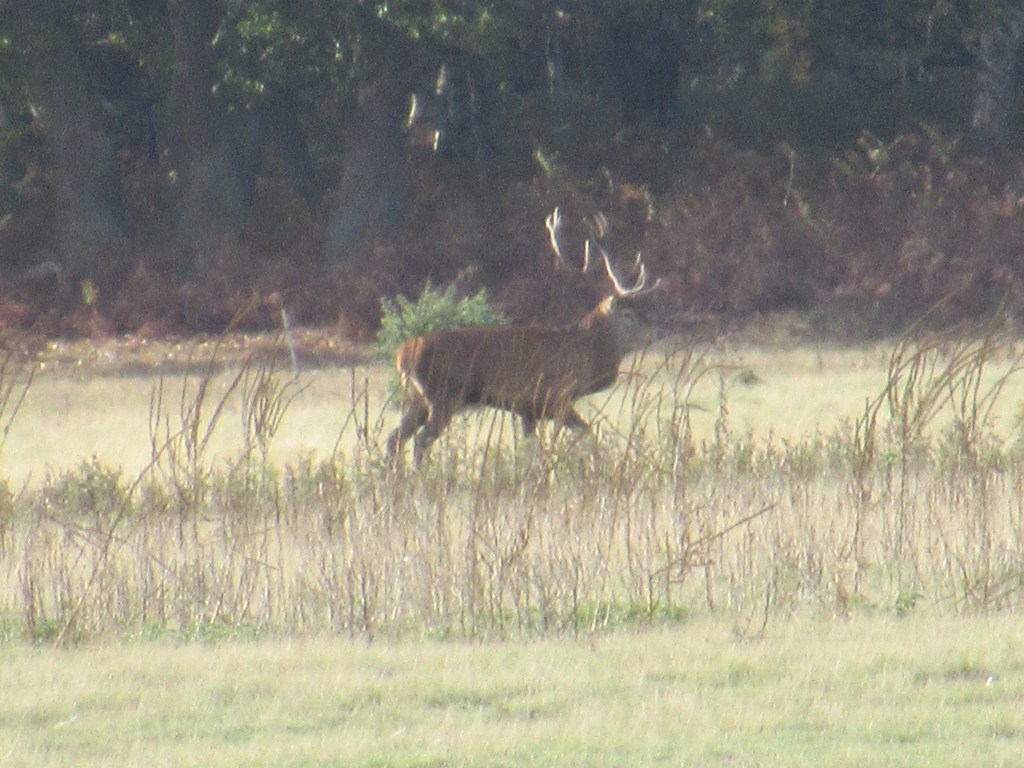
The deer themselves were easy to find by following the sound of the stags’ bellowing, which I first heard at 3.10pm. This male was seen at a distance of about half a kilometre as he bellowed and chased after hinds that were initially hidden in the undergrowth. This first attempt at filming this behaviour was somewhat hampered by the distance and windy conditions:
A bit further on I met a man who showed me a different viewing spot where the deer were much closer – approximately 200 to 300 metres. It’s his camera and voice that can be heard in some of these clips.

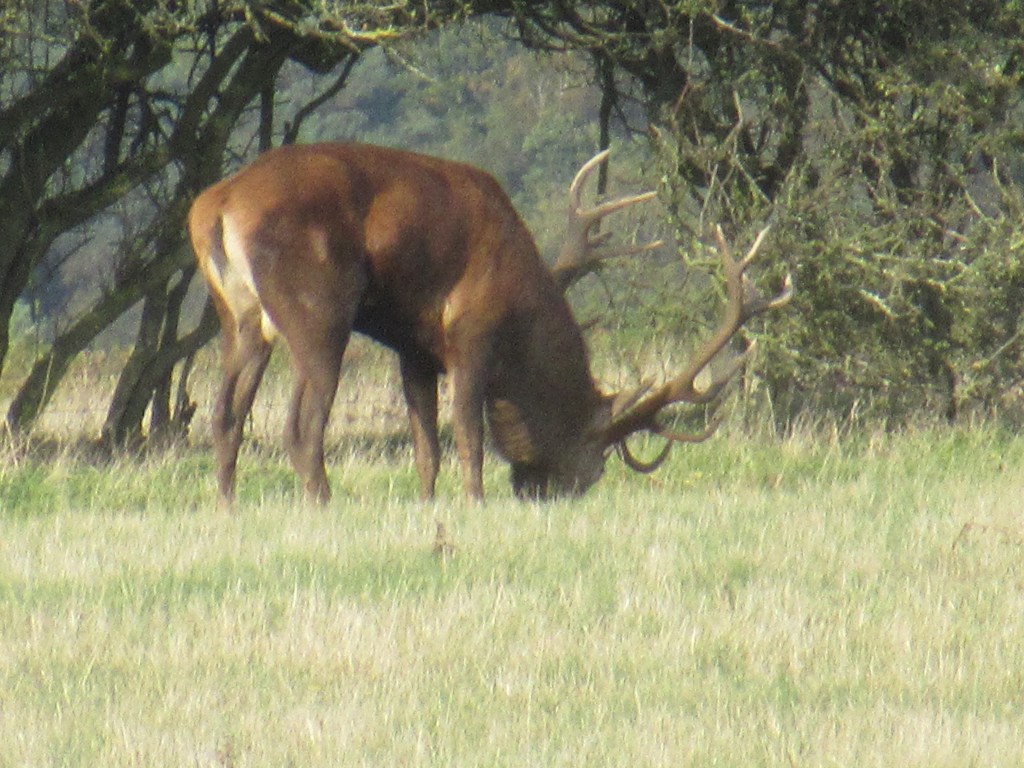
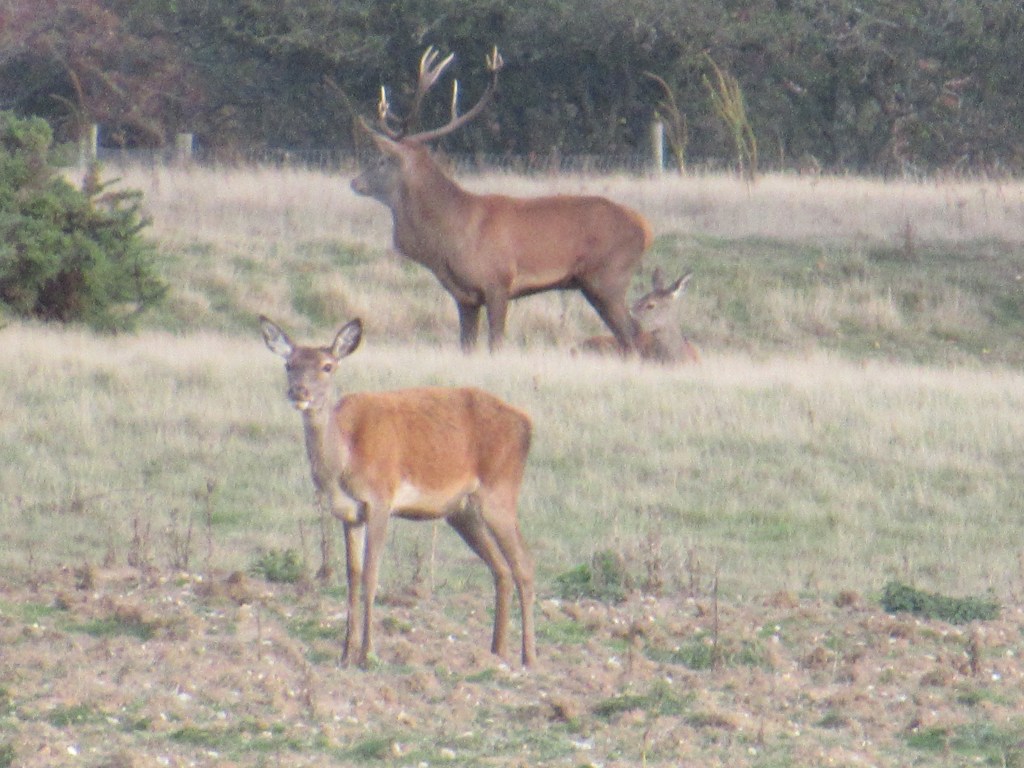
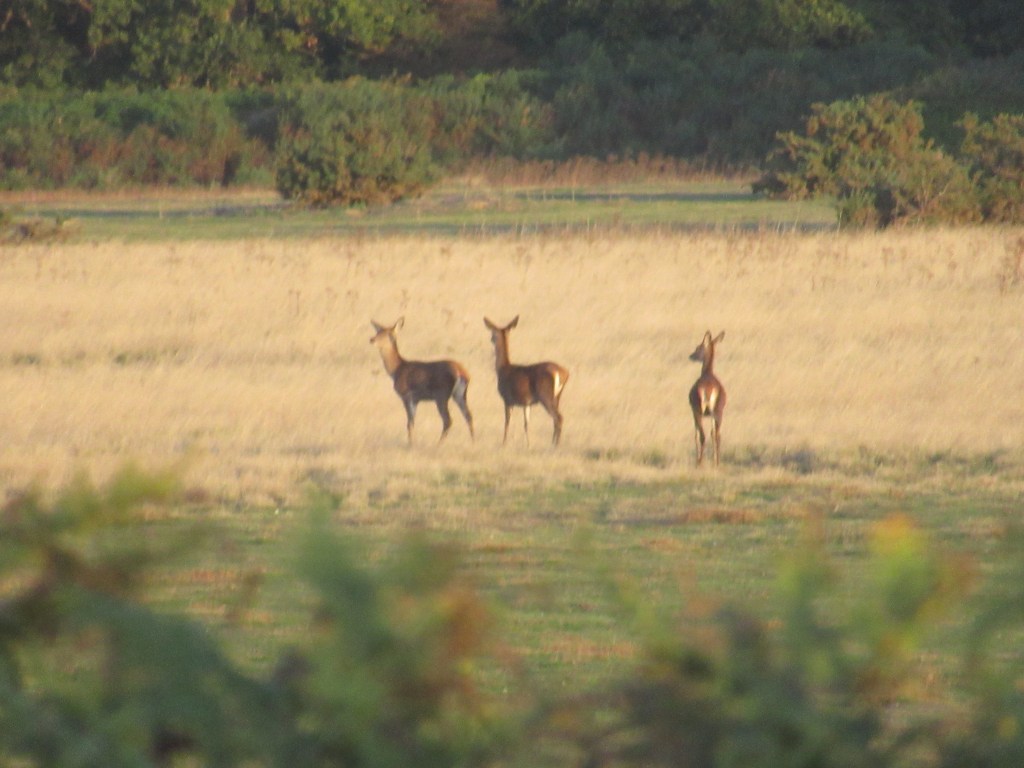
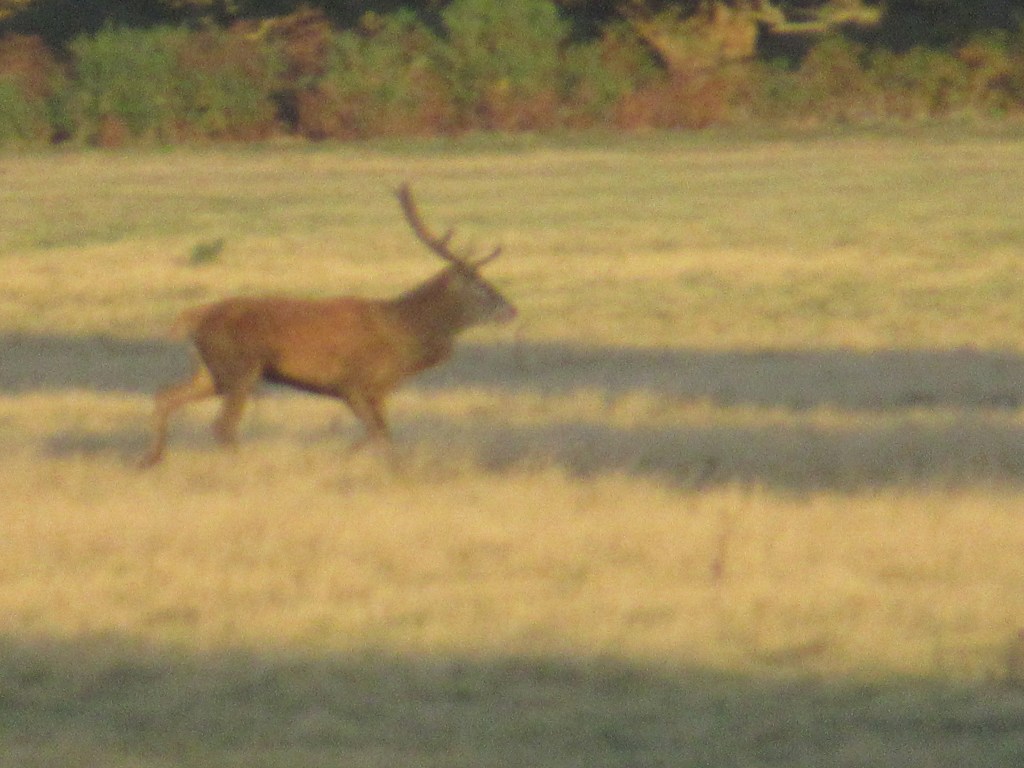
There were three stags here, a dominant male with fifteen antler points, and two smaller mature males. This was also the largest group of hinds I observed. The large stag seemed to be remarkably tolerant of the presence of the smaller ones, but they were careful to keep out of his way. These were the only stags I saw that were not bellowing. I was hoping to see some of the battles between stags that are often shown on TV, but apparently these rarely happen, and only when two evenly matched stags compete for mating rights. Stags can and do kill each other, so smaller, less dominant stags will quickly back down to a larger rival without fighting. I also didn’t witness any mating, possibly because it was already late in the rutting season. The males were constantly sniffing around the females to test their receptiveness, but all the females I saw quickly moved away. These are some of my shots of this closer group, but again the quality isn’t great with my hand-held compact camera. You can see that many of the hinds are aware of my presence and are staring straight at me:
At another spot I found a fourth (small) harem at a distance of about half a kilometre. A noisy pair of dog walkers came along to watch the deer, so I had to wait until they moved off before I could film some clips without their voices in the background. Despite the fact that I was fairly well hidden in the woodland edge and wearing muted colours, the deer were always aware of my presence. The hinds were especially alert to danger, stopping their grazing and staring directly at me even at quite long distances. Any deer inadvertently walking too close to me would run off as soon as they saw me.
The bellowing can be heard fairly well in these next two clips, despite the distance (turn up the volume):
It was quite common to see Magpies sitting on the backs of the deer to feed on parasites, as this one is doing here, the stag conveniently turning away to give me a better view of his avian passenger:
The same stag spotted two very young males with antler starter kits and quickly chased them off his patch. Once out of his territory they were seen walking along the horizon further away:
Having seen off the two potential rivals, the stag strutted around for a while looking very pleased with himself:
The two young deer were seen again further along, where they ran fairly close by me and through the woods, jumping over two fences and disappearing out of view:
After 6pm I wandered off and found a great camping spot. Set my tent up just as it got dark and I could be fairly sure nobody was going to come along and move me on. It was a very warm and pleasant evening and I sat outside with a couple of cans of beer and watched the cloudless sky fill with stars. I looked at a planet, Jupiter I think, through my scope and clearly saw four moons. A Tawny Owl called briefly nearby and then later another hooted further away. Deer were still bellowing from all directions. I didn’t sleep very well and I could still hear the deer every time I woke up in the night.
At 5.30am I was woken by a deer bellowing loudly at what must have been less than 100 metres away. The sound is incredible at this distance, but I was glad I was in a tent as the aggressive, testosterone-fueled stags can be dangerous at night.
I got up at 6am and was packed by 6.30am so I could be away before it got light. In the morning the deer herds were much harder to find and the only one I could see was very distant.
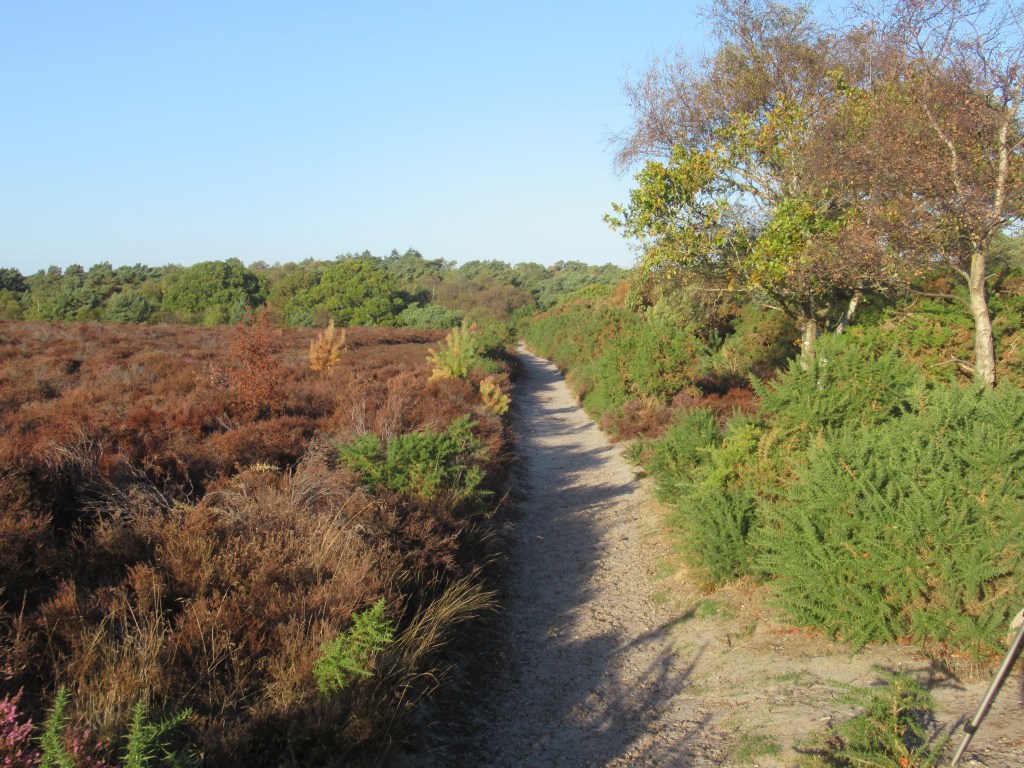
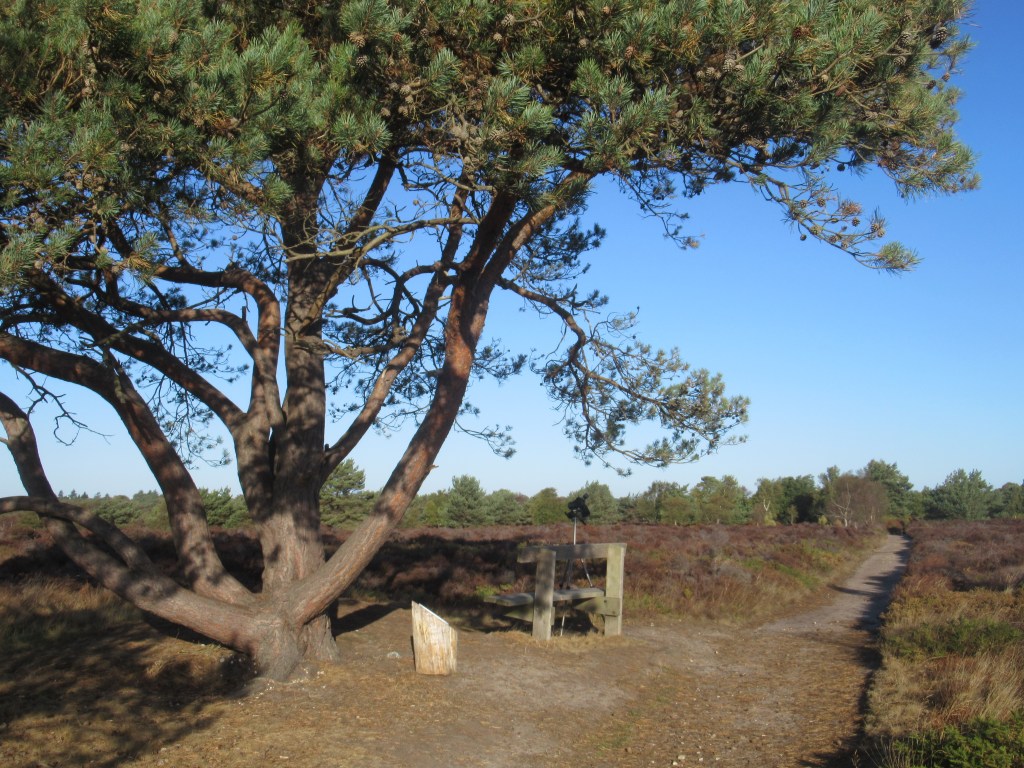
I walked over to Dunwich Heath, which is probably my favourite part of the whole Minsmere area. Every year I usually try to spend one evening here at the height of summer to see the Nightjars come out at dusk and sing their weird churring songs, alongside some of the last Nightingales in the area. Both species are now long gone until next spring, but a flock of a dozen Bramblings was a nice find and a reminder that Winter is on the way. A mixed flock of Coal Tits, Goldcrests and Treecreepers was also present in the woods, while on the open heath I only found a single Dartford Warbler amongst the Autumn heather, a real speciality bird of this heath. On sunny days in August, when the heather is in bloom, you can stand on the heath and be overwhelmed by the intense purple colour stretching out in all directions.
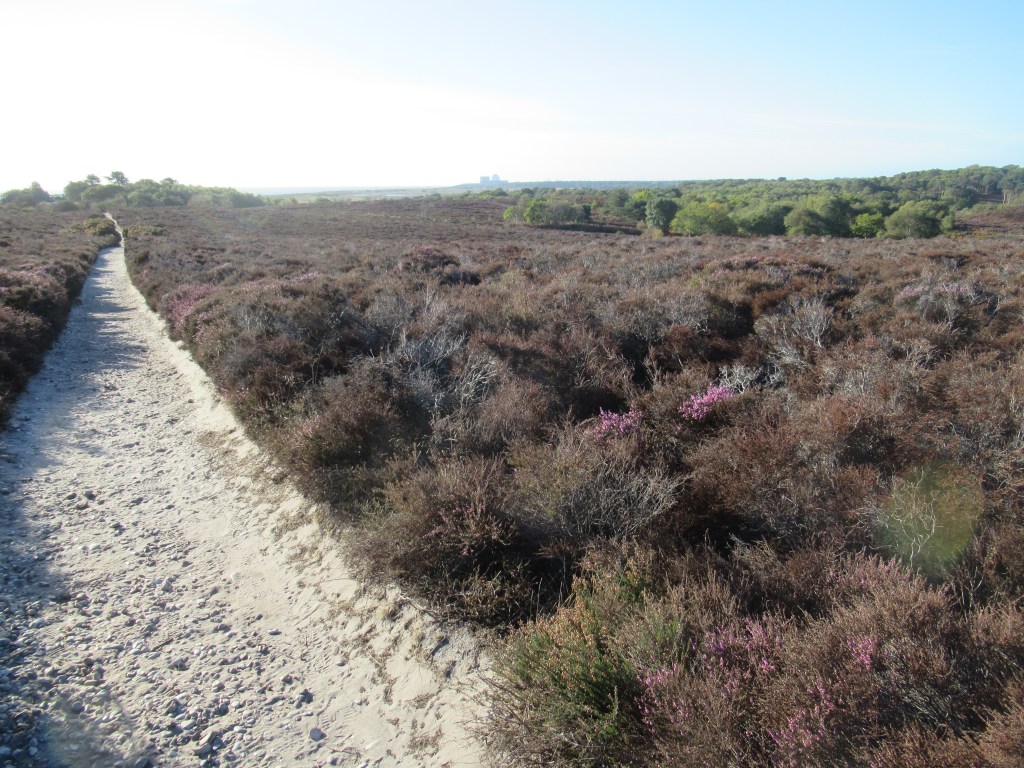
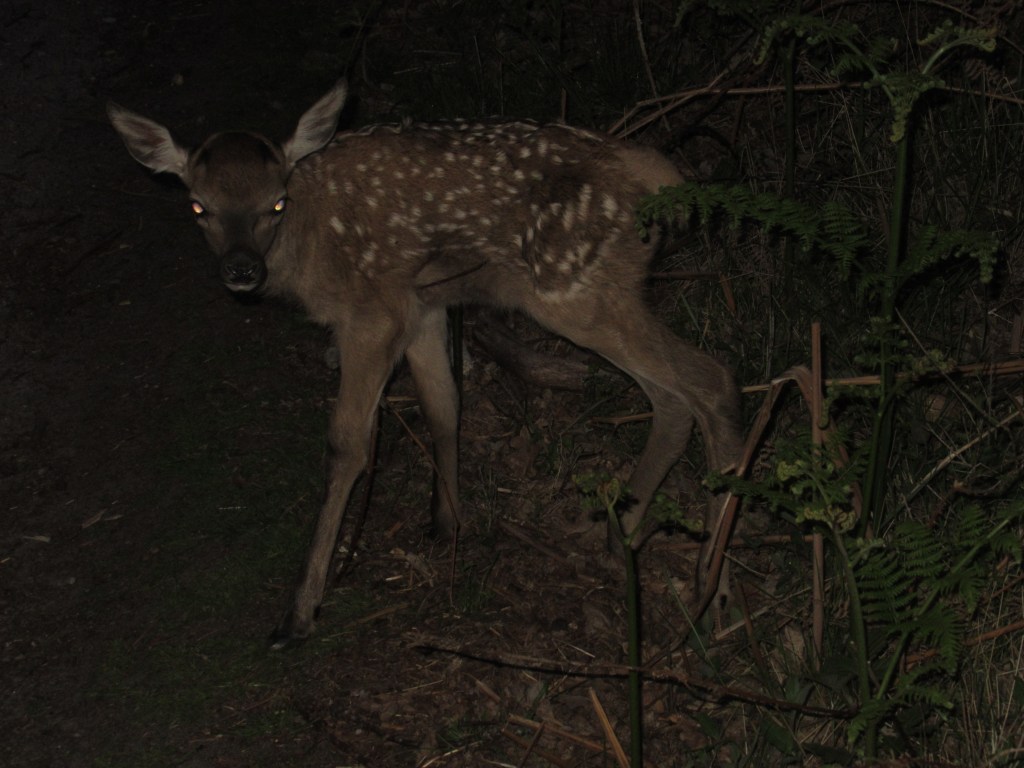
One pre-dawn morning in May 2021 I came across this Red Deer calf in this area:
Heading back to Minsmere RSPB, I stopped for a mid-morning coffee and snack at the visitor centre then I headed for home, stopping for another quick look at the Adder in more-or-less the same place as yesterday. And just to illustrate the point I made at the start of this post, on the way back to Cambridge I saw good numbers of three deer species from the train: at least eight Chinese Water Deer on the wet grazing marshes between Lowestoft and Norwich, double figures of Roe Deer on Cambridgeshire farmland, and two Muntjacs beside the railway line. Deer – they’re everywhere!
 Vole Explosion
Leave a comment